Category Archives: My Story

Gambling on Madame Melville

MAGIC MADAME Stephen James King and Susie Lindeman in the Australian premiere of Madame Melville.

A Writer learns the cost of casting.

HAVING started out in the Australian theatre scene as a designer, and reinvented myself in England as just about everything else – director, writer, producer – I eventually re-trained as an actor on Sydney’s fringe, made a splash in a couple of college shows, and then spent a year totally unemployed in that field apart from a stint in a car commercial. Probably an average result, in hindsight.

My big question was always this: how did actors without agents even hear about roles that were going, let alone get cast in one?

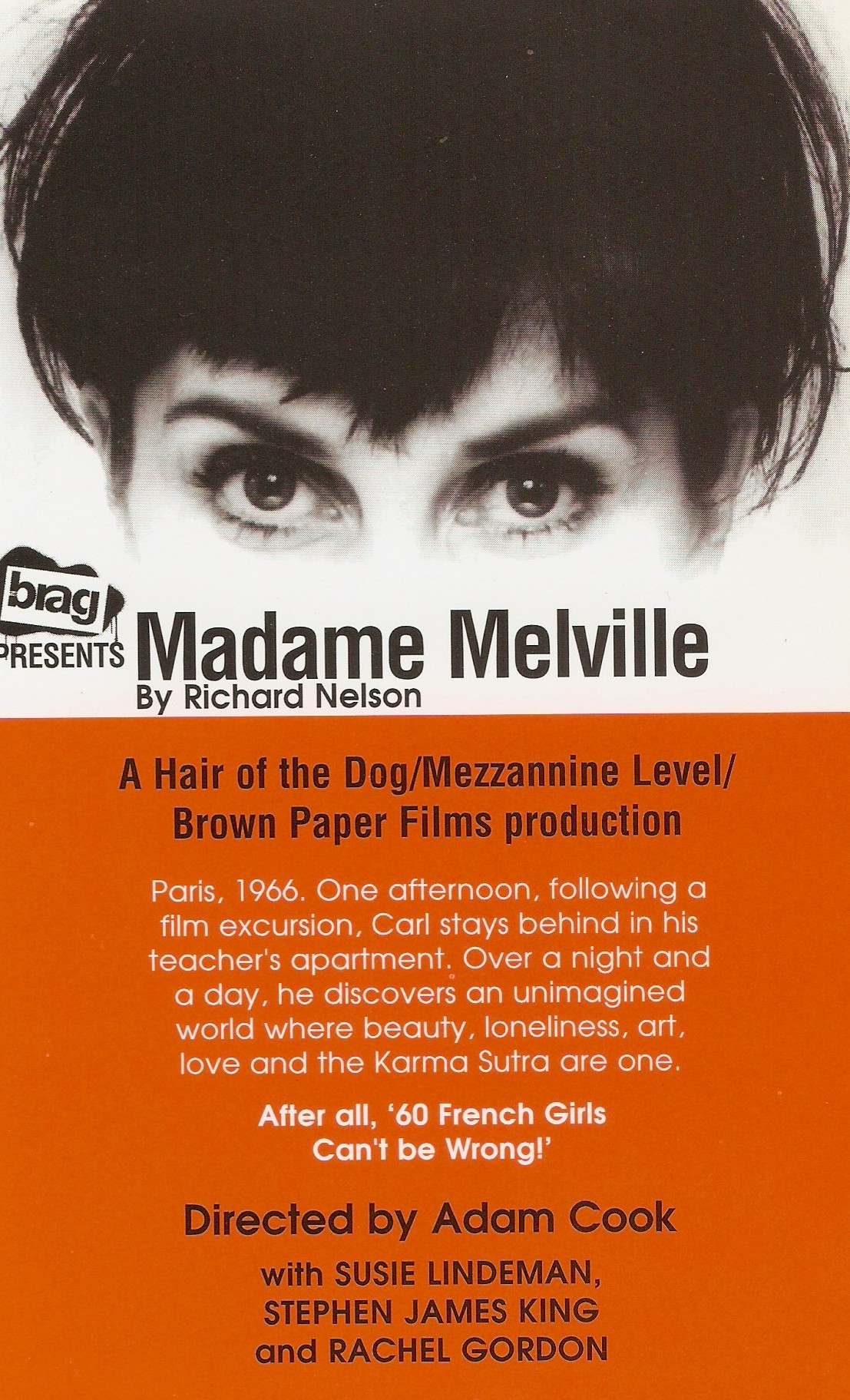
When an independent theatre company was producing the Australian premiere of Richard Nelson’s beautiful play Madame Melville at the Belvoir Street Theatre in Sydney, I found some answers.

A friend in the cast loaned me a copy of the script. Nelson’s sentimental study of his sexual awakening at the hands of a Parisian teacher in the 1960s is so evocatively written I could envisage it on the stage after just one read. There was also a part in the play I thought I had half a chance of getting cast in.

It’s impossible to explain this role without providing the worst spoilers for anyone who has not seen a production of Madame Melville. Suffice to say the character is the very rarest of roles in the modern theatre – a short, devastating attack on the protagonist, bringing the play to a swift, bittersweet conclusion.

So I pushed, a little, and put myself forward.

The offer of an audition hung in the air while the production company deliberated over theatre dates. Eventually, my friend called and said the show probably wouldn’t go ahead – there was a hole in the budget, and the highly experienced director would not work for free.

Disappointed, and experienced in putting budgets together, I asked, “How big is the hole?” I was in an excellent position to ask – I’d just sold my house, and was about to buy again in a cheaper market. I could afford to invest in my career a little.

My friend cried on the phone when I said I’d be happy to put up the money, which was nothing, really, just a fair fee for the director.

As a firm believer that everyone should get something from a professional collaboration, I understood his bottom line. I also understood mine – all I wanted in return was to remain an anonymous donor, and an audition for the role.

In due course, I got the call. The slightly scary part was having to front-up at NIDA, which was always imposing for this graduate. I’d left without really saying goodbye, my mind focussed on desperate family matters at home.

I’d been back for the place’s 40th birthday, and stood in a crowd watching a video clip on a huge screen celebrating student work across those four decades, and been part of the admiring-yet-envious silence, when Cate Blanchett’s picture flashed-up on the screen.

Because, like it or not, we who were watching comprised the 99 percent that NIDA’s dream factory told us would be unemployed for 99 percent of the time.

The director greeted me generously – we’d been NIDA students about the same time – and he took me upstairs to one of the familiar rehearsal rooms, explaining he was on a break from the annual NIDA applicant actors’ auditions.

That made me even more nervous – he’d been auditioned-for by even younger, hungrier, more hopeful actors than me all morning!

My first piece was a disaster. The other seemed to take him by surprise, and got a genuine laugh. He said that if he’d seen me do that in the morning, he’d have asked me back for the afternoon.

I took my leave and walked back past the young people posturing around the lunch room waiting for their afternoon call-back. I’d’ve been ‘asked back’ too, I muttered to them in my imagination.

MADAME MELVILLE 2

Weeks later, I heard that Madame Melville was going ahead. We’d secured a slightly awkward slot, right off the back of New Years, which was only weeks away, meaning the production would open to little advance publicity.

But I decided to enjoy not having to worry about such matters, and just act.

The professional cast was welcoming and generous, and I embraced the chance to inhabit the half-light of theatre wings once again. Nelson’s script calls for offstage voices throughout, and I had fun with those, whiling-away the hour or so before my entrance.

A one-line role over an extended season was a bit like a marathon of self-amusement. I created my character’s back story, went through serious preparations while listening the others onstage over the tannoy, gossiped with the cast of the upstairs Belvoir show, and duly took my cue.

Entering through the audience, I regularly heard their gasps of surprise and shock as I did battle with the protagonist … it was a joy to be part of such dramatic impact.

My technique of getting an audition got me nowhere beyond this production, the curtain call sometimes seemed longer than my time on the stage, but we got good audiences and well reviewed as a creative team, and a modest profit-share cheque eventually arrived in the post.

Odds aside, it was life-enlarging to be back in the theatre as part of the one per cent for a Summer.

© Michael Burge, all rights reserved.
Back in town

Inverell Court House, built in 1886 (Photo: Cgoodwin).
DAY IN COURT Inverell Court House, built in 1886 (Photo: Cgoodwin).

A Writer returns to the scene of the crime. 

MORE than 20 years after my family moved away from the country town of Inverell, leaving behind failed dreams and a broken marriage, I returned on a rainy evening in late 2003 with some unfinished business.

I’d called ahead to my grandmother, who was still living there in a nursing home. Before taking her to lunch the next day, I dropped into the local courthouse, an imposing clock tower at the centre of town, where a helpful woman proceeded to assist me in finding my mother’s name in the court records.

The court staffer didn’t flinch when it quickly became apparent we were not looking for a plaintiff of any kind, but rather a defendant. Trouble was, I had no specific dates to search, only the barest clues from what I’d been told about mum’s appearance in the court on a shoplifting charge sometime in the 1970s.

That meant mum’s name was still on the police computer database, in which the dates became brutally clear: just before Christmas, 1977, the police had made their way to our property off the Bingara Road, with complaints from two Inverell shops that mum had stolen childrens’ clothing and kitchen implements.

All court records prior to 1980 were stored in the archives of the New England University at the nearby city of Armidale. Would I like them faxed over? I agreed to return to the police station adjacent to the courthouse when they were ready.

Next, I dropped into the council chambers with a request. I had in my possession a hand-sized flat stone which had been picked up off the driveway of our farm, a flint-like rock with a broad space for a thumb to hold the sharpened edge to use it for cutting – an aboriginal hand axe of indeterminate age.

I asked if there was any kind of Aboriginal cultural heritage centre, or perhaps a museum, which would be interested in taking this stone tool off my hands?

The council staffer held her gaze with an open, shocked mouth, and shook her head, muttering “no…,” and, “good luck with that,” before leaving.

The tourist information centre had the name of an Aboriginal elder who lived locally. I drove the streets of our old neighbourhood searching for the address, but there was no-one home, and the only Aboriginal public office was well and truly closed.

SHOW & TELL Aboriginal hand axes from Arnhem Land.

I began to wonder whether the stories I’d been told about this stone were true, or if they’d been elaborated into family myths? I had taken it to school for ‘show and tell’, with the family name written on it using thick black marker pen in my mother’s hand. She was interested in anthropology, and we had inherited all kinds of fossils and artefacts at her death at decade before.

But on returning to the riverside shopping centre to buy grandma a present, my doubts were allayed by the wall built of local stone at the gateway, the very same blue, brown and ochre basalt. The wall was all that remained of the department store built by my ancestors in the town. I knew then I had the right rock back in the right region.

Grandma was dressed and eager to get out and about, waiting for me outside the door of the nursing home. We laughed as I lifted her into the passenger seat of my four-wheel drive, me allaying any embarrassment she felt by reminding her of the hundreds of times she had lifted me into a car when I was a child.

We had a lovely lunch. She enjoyed the meal and hearing all my news about life in the big city. We’d corresponded about family stuff many times, and it seemed a waste of time to go over it all again – she and I had come to terms already. We loved one another, that’s all that mattered.

I dropped her home when she started to tire, and headed out of town, along a well-trodden road into the uplands south west of Delungra, where fields of wheat in black soil run for miles and miles under enormous skies.

I’d met the present owner a few years before, but I hadn’t come to see the house again. I’d picked-over the traces of my family’s dream many times before: the room where my baby brother died, and the hopeful imprint my parents had made on a property which was derelict when they moved there.

I looked over the stones on the driveway, and sure enough, scattered along the verges were more of those flinty fragments like the larger one in my pocket.

I was headed a few kilometres further west, to a lonely place on the Bingara Road, where a memorial had been built in the year 2000 to the Aboriginal men, women and children who were slaughtered on a hillside in 1838 at the hands of European settlers in what came to be known as the Myall Creek Massacre.

MASSACRE SITE: The Myall Creek Massacre Memorial (Photo: Department of Environment: Mark Mohell).

There, I walked along the trail which marks the gruesome milestones of this iconic event – the first time in Australia’s history that settlers were tried and hanged for the murder of Aboriginal people.

I took the Aboriginal axe, with our family name impossible to erase from it, and buried it at the site, not only out of respect for the Aboriginal lives lost, but also those in my own scattered family.

Night was falling when I arrived back at the Inverell police station, where a large envelope awaited me. At a motel out of town I pored over its contents, like some terrible play in which my parents were protagonists.

Buried deep in the court transcripts, describing in detail how mum was found guilty of multiple counts of theft, was the news of one shop owner who’d waived all charges in the light of the psychologist’s report, and the one who’d refused.

The sentence in Mulawa Womens’ Prison in Sydney, a day’s drive away from her children, detailed the number of days’ imprisonment resulting from the value of each item of clothing stolen.

The transcripts of friends who stood in the dock spoke of her good character.

The psychologists’ report itself – one clinical, succinct letter linked mum’s behavior to deep feelings of guilt and shame about the death of her third child, the result of Sudden Infant Death Syndrome (SIDS).

And then the suspended sentence – no jail time to be served, in exchange for a warrant of good behaviour.

I suddenly understood why mum did not put up a fight for her financial share of the marriage settlement. Buying her freedom had cost our family dearly, and walking away with nothing but a car and some furniture, she might have felt she’d repaid her dues.

I could also see why she eventually left town, allowing the myth to emerge that she’d left dad, not the truth, which was all the other way around. Our family name on ‘Burge Bros.’, an Inverell shopfront, speaks of our pedigree as descendants of proud local shopkeepers, which mum might have felt was brought into disrepute by a depressed city girl. Housed in the same precinct was the shop whose owner would not forgive her.

I remembered how mum recalled being interviewed by the police after my brother died. It was a matter of course, apparently, that the mother was the first subject of investigation after the death of a child who had been laid in his bed by her arms only hours before. Lindy Chamberlain was to face that same moment only seven years later.

And I remembered it was mum who told me about the Myall Creek Massacre. While the other adults were playing tennis at the courts near the creek, she pointed to the hillside and whispered to me about what had occurred. Whispered. Not to the other kids, or any of the white adults enjoying weekend sport, but just to me.

The Myall Creek Massacre memorial was eventually the subject of an Australian Story episode in which descendants of the settlers who committed the crimes reached out in reconciliation to the descendants of the Wirrayaraay people who were slaughtered.

SET IN STONE Plaque at the Myall Creek Massacre memorial.

But in its first decade, it endured vandalism. Not brainless destruction, but calculated censorship of the facts about the case and its impact on lives.

It’s a beautiful part of the world, the place I was born, but it can be a harsh place too.

The shock and grief wrought on one family in the wake of the sudden death of one baby tells us how magnified the same emotions would have been after the sudden slaughter of multiple defenceless women, children and old men at Myall Creek, but despite the well-known contributing factors of depression and grief-related kleptomania, there was little reconciliation or understanding on offer for my mother in the 1970s. The community was still coming to terms with what happened to the Wirrayaraay.

Mum got away from Inverell and made a new life. Grandma died in 2008 and we gathered in Inverell for her funeral, but no-one in our family lives there anymore.

I’ll go back to Myall Creek one June for the annual memorial service. Hearing the true story of the place probably marks the start of my journey to being a writer.

© Michael Burge, all rights reserved. 

Frocking-up for Fight Club

CI2k6DCUYAEVj9n
MAX FACTOR Jamie Farr as Klinger in M*A*S*H.

AT the point when rejection of my writing was getting too much, I foolishly turned to another element of the performing arts and took up an even worse pastime if rejection was not my thing – I went back to school and studied acting.

Five years on the stage opened my eyes wider to the inner workings of the performing arts industry, yet I learnt no more about how to get ahead in showbiz.

But the experience gave me some of the most exciting days of my life up to that point, and one production in particular sums up the wacky life led by the actor.

After securing an audition with an independent theatre company in Sydney – we’ll call it Slash Theatre – I was cast in a paid gig (tick), performing Shakespeare’s King Lear (tick), for an established company with a loyal audience (tick), at a real theatre (tick, and don’t laugh, often you’re expected to perform in pub cellars with sewerage pipes at nose level).

The first week saw everyone co-opted into detailed sessions of transposing the text, during which the director made no secret of her willingness to be open to ideas from the actors (tick, and great fodder for a writer).

Then I had an idea …

My character, Kent, is a loyal friend to the King, and spends the bulk of the play in disguise. Casting all Shakespeare’s male characters as female, the director had interestingly changed the power structure of the play, but there was one thing she didn’t do – my role was male in Shakespeare’s original, and remained male in this new vision. Why?

That’s where my idea came in – if being female meant access to power and security in this director’s vision, then surely, I thought, Kent should disguise himself as a woman in this production?

It would add to the comic possibilities, but, like Max Klinger in M*A*S*H, the cross dressing could also be for a purpose that wasn’t entirely funny.

Far from being dismissed, the idea was pondered, and eventually approved. I hasten to add it scared me shitless – I am not a man who would ever pass convincingly as a woman, and so, my courageous offer would need some rationale, some device from within this interesting world, to support my disguise, which was an unchangeable plot point of Shakespeare’s play. It would certainly need an effective costume.

But I completely placed my trust in this director, donned a rehearsal skirt, and experimented with my voice and my character’s journey.

BIG FIGHT Learning stage fighting sorts the men from the boys.
FIGHT CLUB Learning stage fighting sorts the men from the boys.

Concurrently, we were put through our paces by a fight director, daily, to achieve complicated sword fighting sequences. Seeing empowered women wielding swords in pivotal Shakespearean roles was an amazing experience.

Conversely, seeing Lear’s daughters – sketchily drawn as bitchy and evil – played by men, was fascinating.

Many of the cast had been selected for their stage fighting skills and experience. A few of us were totally new to the discipline, so we trained from the ground up. Nevertheless, the cast quickly fell into two groups: the ‘Fight Club’, and the rest of us who were learning to execute the moves.

At last came the moment when the costume designer was coordinating fittings, and his vision for this female-dominated world would surely include a costume to assist in making my idea work within the world of the play.

My excitement quickly turned to dread when he produced a dress which I could tell immediately I was never going to fit into. Vainly, I tried, and it ripped, but by that time the designer had walked away, seemingly uninterested in what I would be wearing for 90 per cent of the play.

But production stresses were kicking-in and the director became unapproachable. Having been a director, I decided that what she’d appreciate the most was a proactive actor who’d sort out his own costume issues for himself.

Being a trained costume designer in addition, I simply replicated what the designer had created for the female characters in the production, so well in fact that even he would have to admit it fitted-into the world of the play seamlessly – forget that he wasn’t really doing his job until he’d adequately costumed me.

Before the great theatrical sin I’d committed was voiced, I also spent time ensuring that a few dangerous backstage conditions were sorted-out, not by complaining at notes sessions, but by proactively recruiting fellow cast members into helping me move the sharp metal spiked stair treads dumped across the main backstage exit, waiting to impale someone’s knee in the dark, like other nasty traps overlooked by the stage managers.

I also tried to bridge the growing gap between the cast (who were expected to assemble bleacher seating before dress runs) and the crew (who were under great stress as a difficult set elements were wrangled). I knew that whinging actors were no help to this scenario.

But when the producer (who’d recently given birth and had her attentions split so many ways she was hardly there) spat at the cast saying we should be thankful we were being paid, I responded … by asserting that it wasn’t helpful to put things that way.

A kind of calm descended on the company at that point – we had a schools’ matinee to perform, and the auditorium filled with hundreds of raucous students, hungry for entertainment.

The show opened, I executed my disguise scene in good time, and we went into the first major fight sequence, in which Kent makes a desperate attempt to escape capture.

SWORD SWING It's just like golf!
SWORD SWING It’s just like golf!

I had one move to execute which the fight director encouraged me to compare to teeing off on a golf course – a 360-degree swing which was Kent’s attempt to slit the throat of his opponent who was prone on the ground. If it was golf, the way this move was choreographed would have seen the ball fly off into the audience …

And that’s exactly what my sword did, after the tip clipped the floor and the choreographed force of the swing behind it sent the weapon right out of my sweaty hands.

In dread, I watched as the silver spike glinted in the light high above the heads of the amazed school boys, who were surely thinking: This is supposed to happen, right?

I had immediate visions of being arrested for impaling children through the temples, as all eyes in the room watched the sword descend, and a small boy – the hero of the day – stood and simply caught the blade as it flew towards his head, just like in footy.

Speechless, I led a standing ovation for the kid who’d saved my ass, and called him to the stage to return the sword to my hand – all in character, I hasten to add – and then returned to the fight, which was only half over.

When I stumbled off the stage minutes later, some of my non-Fight Club comrades were desperate to know what had happened. I implored them to just soldier on.

We went through the Q&A session with students and teachers afterwards, at which the amazing stunts the gathered crowd had participated in were congratulated. I left it to the director and the fight director to explain. They declined, poe-faced.

The schools left, and we started de-mobbing the show, when I got a call to meet the director in the upper foyer.

As I approached I could hear her speaking. Thinking someone was being seen before me, I slowed down, only to see her rehearsing something to an imaginary other. Then it dawned on me – I was the imaginary other.

I cleared my throat, and gently knocked.

WHITLAM'S WAY I got the sack too.
WHITLAM’S WAY I got the sack too.

I don’t know whether it was my courageous act of completing my own costume, to make sense of what I was doing in the confusing world the director was struggling to birth, or whether it was the impromptu thrills of my sword throwing, but I was summarily sacked.

I was quite calm, just asked her to explain how the costume she wanted me to wear fit into the world of the play, let alone across my torso?

She was incapable of speaking, from anger, from fatigue and confusion. This was a useless moment that would never find an answer, because the director had lost touch with the fundamental questions which were part and parcel of her role, and I’d unwittingly opened the doorway to the kind of shame and negative attention endured by cross-dressers for centuries.

I heard later they’d changed the golf-swing move so that if the sword slipped from my replacement’s hands, it would fly into the wings and not at the audience’s heads. Common practice, I would have thought, on reflection.

I will always remember that day fondly as a wildly creative one, because electrifying experiences can happen onstage, even when they are completely unrehearsed.


I know I engaged the audience far more in those minutes than the production possibly did over two seasons. Getting the sack for it smarted, but call it synchronicity or coincidence, less than a week later I read that even the great Katharine Hepburn (who I in no way compare myself to) got the sack when she was an emerging actor – it can be a measure of creative fitness.

And I gave one young audience member a day he’ll never forget!

© Michael Burge, all rights reserved. 

An extract from Merely Players.