
A Writer’s next day job.
WITHOUT a short-cut into the BBC or an entrée into a production company, it was almost impossible to get a job in film or television production in London, but pushing a foot through the door of a post production (editing) facility with a resume in your hand was a viable way to enter the industry.
And so, within 24 hours of pounding the narrow thoroughfares of Soho, between Shaftesbury Avenue and Oxford Street, I was offered two jobs.
Having just signed a lease with a group of friends on a cottage on the Isle of Dogs in east London, I had rent to pay, so I said yes to both.
As it happened, that weekend I went back to ARTTS International in Yorkshire to complete the final edit on a drama-documentary, and I was greeted like a conquering hero on the Saturday morning by a mob of students, hungry for a taste of the world beyond the pig farm, and then confronted by a Feedback Session.
Only ARTTS alumni around the world will know exactly what I mean by the latter. How do I describe it and not make it sound like ARTTS was, on occasion, a little like a correctional centre?
In any case all the accolades looked kindly beyond the fact that the best position of the two on offer was that of a lowly Post Production Runner.
A Soho Runner in those days was not an enviable position. If you were serious about your career, you’d want to stay in the job for no longer than six months.
So I took the offer than a Dean Street post production facility made to me, and started that very week. By the end of summer, I hoped, I’d be up the next rung of the ladder.
The other runners showed me to my first task – to clean-up the soft drink supply room below street level in a dank passageway that looked (and smelt) like I’d imagine the very same street did in Dickens’ time. Five years of tertiary education had prepared me to recognise dramatic tension, at least.
The rats gave ground by retreating around a bend in the subterranean storeroom, while I re-arranged the pallets of lolly water, trying to ensure they were not sitting in the inch of water that flowed across my shoes.
This post-production company liked to keep its clients happy, so there was no set lunch menu. Instead, the gourmet delights of central London were ordered and fetched on foot.
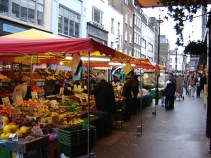
But we runners were also required to make a selection of sandwiches for clients who just couldn’t wait, created from the fresh produce of the fruit and veg markets on Berwick Street, with slabs of fresh bread and the finest cold meats from local delis. Luckily I’d had some sandwich-hand training while studying at NIDA, so I knew my way around a slice of focaccia.
There were some pretty speccy people making their way through these doors, but also plenty of clients who just believed they were on the A-List, and the only way they could gauge their level on the ladder was by shouting at the runners.
I never got shouted-at, but when a music-video maven came through to the kitchen in a tube dress right to her tennis-shoed ankles, calling for a “toasted ciabatta with marmite”, I made the mistake of answering that we were fresh out of ciabatta, but we had plenty of focaccia.
Her perplexed look quite naturally led me to believe that she simply didn’t know what focaccia was, so I began to explain. Before I got through the basics, she said: “I know exactly what it is!”, before insisting her first choice was fetched.
Now, most people couldn’t pick ciabatta from focaccia in a blind test, and since I was a Soho Runner of some weeks’ experience, I knew at that hour there wouldn’t be a fresh piece of either available anywhere. So I just sliced some bread quite thickly and smothered it with the maven’s favourite spread.
And so the cry of “I know exactly what it is” went on to be summer’s catchphrase at that end of Dean Street.
Each week I religiously wrote my first screenplay (an adaptation of E.M. Forster’s Other Kingdom), and duly typed it up for consideration. The potential to make movies flowed through my veins, even if I was really working in catering under a fancy name.
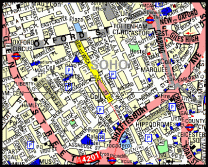
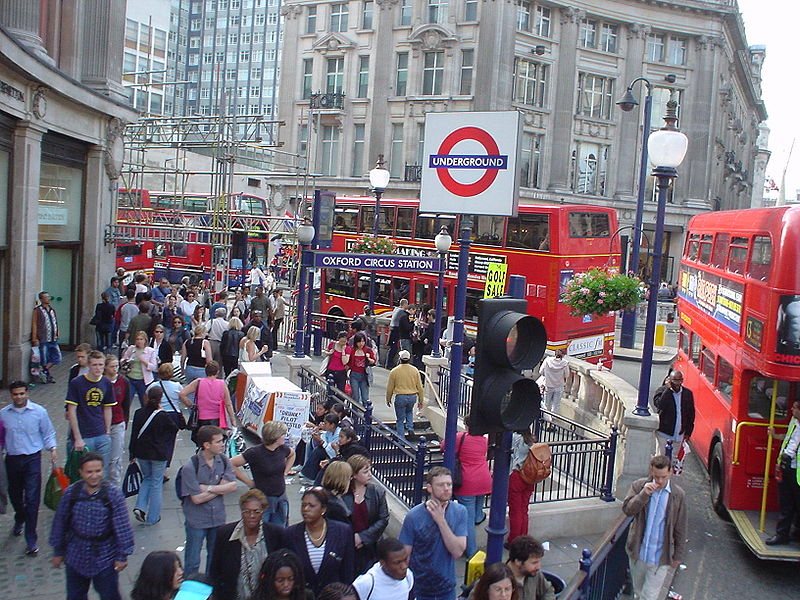
Running video tapes and reels between editing houses meant I soon got a great knowledge of Soho’s street network. Rarely did we have to travel beyond the zone bordered by Oxford Street, Charing Cross Road, Shaftesbury Avenue and Regent Street.
I also discovered the locations of all the production offices listed in the films I aspired to join-in-on – Merchant Ivory, Goldcrest, The Oil Factory – behind glossy doorways with polished buzzers at street level, with people rarely coming and going.
In this maze I realised that if you spend enough time in Soho, you’ll encounter famous people. I saw Sean Connery looking both ways as he turned into Dean Street in his rather boring looking car; Greta Scacchi looking like she’d locked herself out of her flat; and Germaine Greer leaning into the wind of a stormy night as she ambled next to me along Oxford Street.
Soho also brought me face-to-face with entertainment by a different name. One racy shopfront near the markets displayed hilarious posters of new porn films with names that referenced the mainstream movies of the day. There was A League of their Moans (a slightly different take on the all-girl baseball team flick), and Howard’s End (in which Howard’s end was about to be spanked by a rather domineering lady).
The really sad element to Soho was the homelessness. At the end of almost every day I packed-up the leftover sandwiches and took them to St Anne’s Court, where legions of homeless men spent their days in the sunlight. They accepted the fresh, nutritious food with a quiet gratitude … they knew exactly what it was, and they didn’t care if it was ciabatta or focaccia.
After a couple of months the boss found out and told me to stop, since the bags I carried the food in were the very same we used to run tapes and reels around Soho – a handy way of advertising, I guess – and he didn’t want our company associated with any feeding-of-the-poor.
But I didn’t stop. I didn’t even use different bags. I wasn’t going to leave perfectly edible food for the rats.
© Michael Burge, all rights reserved.


 Michael Burge Media