Category Archives: My Story

Writing my way out of London

ROYAL MAIL I sent plenty of dreams into the slots of Royal Mail boxes in England (Photo pixabay.com/en/mailbox-background-architecture-22149/)
DREAM CATCHER I posted plenty of dreams through the slots of Royal Mail boxes.

A Writer gives up on the big city.

I LIVED in the city of London for three years. During the first I was heady with hope, not caring that I hadn’t ‘made it’ yet, sure that I would at any moment. Throughout the second I bargained with my definitions of success, as I compromised in order to survive financially while keeping my dreams alive. In the third, my hopes were dashed and my finances dived as I held-on for that dream job, while life collapsed around my deluded ears… relationships, projects, homes, prospects. All gone with the rent money.

Long before I encountered the hopeful practice of affirmations, I was already making them in my own way. When ridiculous barely media-related jobs were offered to me, since I presented as a non-insane organised person, such as the job filming rich tourists on Caribbean cruises, I would get out of them by saying: “Thanks, but I have been offered another job which I simply cannot refuse… I’m perfect for it, and to turn it down would be impossible.”

The crestfallen human resources folk would express a moment of regret, then drop me, still unemployed, with the phone.

Thankfully I landed just enough unpaid independent film and television work to stave off a real ego bruising.

I assistant-directed a Goldsmiths College student film, after answering an ad the student producer put in the local paper seeking skilled volunteers to support the shoot. We filmed in a famous British Comedian’s daughter’s house, and in between consoling her about the abuse her place was getting from its use as a location, and various auditions she felt she had failed, I was consoling the students through a series of disasters. The main one was the discovery that all the rushes (on expensive celluloid!) were unusable due to focus problems.

I encouraged a soldier-on approach, which was met with wild anger from the director of photography, who stood in my face and screamed at me, barely masking his obvious feelings of guilt about the fuzzy rushes. Quite rightly, I felt I didn’t need that, and at the end of that shot, I walked off set and didn’t go back.

Later that year I assisted on two short films directed by the life-enlarging Jillian Li-Sue, who I still feel has a feature film in her waiting to get out, if only someone would take a punt on her and put up the money.

The first of these was shot on location in Catford, only a few blocks from where I lived in Lewisham.
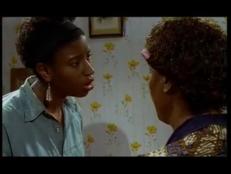
CEDAR ON CELLULOID Production still from Jillian Li-Sue's short film Cedar Wood and Silk.
CEDAR ON CELLULOID Production still from Jillian Li-Sue’s short film Cedar Wood and Silk.

Taking care of odd jobs on a film set, like fetching porn mags to be used as props, and amusing actors between shots, earned me the title of second assistant director on Jill’s beautiful short Cedar Wood and Silk. That was one I was proud to have been a part of.

Amazingly, some Australian friends were able to put me in touch with one of Britain’s film producers of the moment, who was kind enough to meet me at his Soho office, and not laugh at the film script I’d sent him. In fact, he gave it to one of his readers who wrote an exacting report on it. Tough stuff, but a wake-up call.

There I sat, feeling misunderstood, across the desk from this titan of film. He must have been bemused at my silent miscomprehension of exactly how he could help me, kindly pointing out that a certain amount of enthusiasm was essential for getting a project together. I barely knew what I was doing there, really, but he took my number and gave it to someone.

Weeks later, after returning from my regular job-seeking in the West End, I played the answering machine, only to have missed a call for a day’s work on his new movie. I called back, but the super-busy-super-organised production assistant happily informed me that position had been filled. Too late.

Around that time my Soho office (a red telephone booth off Charing Cross Road) was blown-up by the IRA. The kid who did it lived over my back fence in South London, and apparently the  explosives he’d used were stored in the garden shed, only metres from where I’d slept for over a year.

Perhaps I was in the wrong place?

So I answered an advertisement in Broadcast magazine, looking for a production assistant for a small production company in Ipswich, Suffolk.

I had to look on a map to find Suffolk, imaging it to be tucked ‘up north’ somewhere remote. But it was barely an hour away by train. For an Australian, an hour was a mere trifle. Perhaps I should expand my horizons beyond the tarnished fabulousness of London?

Not having even a typewriter to make use of (one of my flatmates stole the phone bill money and disappeared to St Lucia … cue the violins, but I had to sell stuff to get by), I hand wrote a job application and resume onto beautiful thick yellow paper, hoping it would stand out. My handwriting on quality paper was about as honest as I could be in the situation I found myself in.

I posted the letter on the way to my cinema job, and promptly forgot all about it. After all, the Royal Mail hadn’t delivered me a break in three years.

© Michael Burge, all rights reserved.

Always putting on a play

SHEPHERD STAR Playing the misunderstood sheep herder, at left, surrounded by siblings and neighbours.

A Writer ventures back into theatre.

I WAS one of those children for whom the world of theatrics was the most sought-after form of play. Whether it was reciting poems for my assembled grandparents, or recruiting the local kids into an impromptu christmas play, I was the keenest, bossiest, most theatrical of them all.

This had more to do with boredom than any great desire for a career in the theatre. Without plays, there seemed to be nothing to do.

To fill in the endless daylight-saving hours on our farm, the shearing shed became a playhouse; whiling away the tedium of school, the annual plays were islands of creativity; and during access visits to my Dad’s place, where none of the adults present seemed to comprehend the finer points of parenting, I made my own fun creating embryonic theatre pieces.

One of these was my adaptation of Saint George and the Dragonet, an iconic 1950s radio play which I dutifully typed-up from the vinyl 45 into a bona fide script.

Back in the relative stability of my home town, I pitched the production to our headmaster, who willingly gave-over the school hall and an assembly session for my production. It may well remain the easiest production I ever got-up.

Friends took on the roles of the Dragon, Damsel in Distress, and Saint George’s sardonic boss. I, of course, slipped easily into the lead role and those of director, writer and designer. Really, I’ve being filling all of the above in various forms ever since.

At high school the entire community got involved in the annual musicals, but by the time school was over I was left to my own devices – for most people, plays were just pretend. A theatrical career was a complete anathema.

Two drama schools drummed the processes of play production into me, but it was boredom, again, which saw me return to the theatre while working in the creative drought of corporate production.

A small advertisement in The Stage newspaper caught my eye, since it was placed by a new company – GIN Theatre – operating in South London. They wanted a director to adapt a Grimm Brothers’ fairy tale for a children’s Christmas show.

Now this was something right up my alley.

I chose the tale I’d adapt based on its evocative title – The Girl Without Hands – a classic rite of passage which I suggested we transpose into Victorian England to cement the Christmas feel.

To my surprise, amidst the waves of rejection that year, GIN chose my idea. We auditioned for a cast of actors, went into rehearsal and production at The Studio, a small performing arts centre in Beckenham.

RESTORED BY FAITH The Girl Without Hands, from the story by the Brothers Grimm, from an image by Philipp Grot Johann (1841-1892).
RESTORED BY FAITH The Girl Without Hands, from an image by Philipp Grot Johann (1841-1892).

All of us were recent drama school graduates, eager for experience and opportunity. Together, we created a beautifully detailed production, rich in theatricality and full of the wonder that the story requires, following as it does the journey of an innocent drawn into the deepest tragedy, eventually restored by faith.

The core group survived the disappearance of some cast after day one (it always happens), and ultimately the lack of bums on seats (it always happens) despite all the hard work, and a small tour to Bromley’s performing arts centre down the road.

The following year I was recruited as Assistant Director on a production of David Hare’s The Secret Rapture, staged at The Steiner Theatre in Regent’s Park. This was an altogether much ‘cooler’ outfit, although I missed the camaraderie of GIN.

On day one the director roped the entire cast and crew into an exercise centred-on saying “yes” to everything, aimed at removing blocks and helping us get to know one another. I took part – I had to in the terrible role of Assistant Director, an entity which nobody likes or trusts, and who usually does the lion’s share of the work smoothing actor’s egos and overseeing the graft of rehearsals.

The next day the producer called me with the news that the director had resigned (it often happens) and asking would I take over? Having had “yes” drummed into me, I said that very word, and found myself aged 25 in a life I barely understood directing a play I comprehended even less.

But I was a great actor. The deeply closeted can go to great lengths keeping everyone off the scent, preventing all the wrong questions from being asked.

I duly mimicked the best tools I’d been exposed to at drama school and stumbled through with the more experienced, and therefore more jaded (they often are) actors from north of the Thames.

We got the production to the stage, with some heavy symbolism masking the great gaps in my grasp of Hare’s masterful exploration of relationships in this play.

Another year later more familiar territory revealed itself with the opportunity to design a production of Chekhov’s One Act Plays (adapted by Michael Frayn) at the Tristan Bates Theatre right in the heart of London’s West End.

Five years since washing my hands of theatre design, in one of the most design-friendly theatre capitals in the world, and completely on my own terms, I revelled in bringing this production to life. We got plenty of bums on seats too (it sometimes happens).

By that time I’d left London for good, for the frozen plains of Suffolk. A visit to a castle somewhere in East Anglia, on the same day that a troupe of actors took over the inner keep, set up a simple stage and unfurled some coloured banners, drawing a crowd of hundreds with a raucous energy that could not be ignored, taught me that it matters not where you put on a play.

An audience of less souls than those on the stage, in a ‘proper’ theatre in a ‘proper’ city … or engaged, thrilled crowds before a couple of actors on an old barrel in a castle keep? I know which side my theatrical sensibility falls on.

© Michael Burge, all rights reserved.

I work in the movies, actually

DRESSED TO SERVE Cinema ushers enjoy some of the more stylish uniforms ever created.

A Writer’s next day job.

DAY jobs come and go. If they’re good, they’re well paid, they don’t take up too much time, and don’t leave you feeling like you’ve reached the pinnacle of your employability. If they’re not good, they place heavy demands on all your time for little return, leaving no space for creativity, and you end up disappearing into career no-mans’ land until you resign.

After leaving full-time employment in The Corporates behind me, hoping that I’d become a much-sought-after freelancer, I landed back in London after a trip across the Continent without any source of income and a round of rejection letters, with that pesky rent still to pay, so I needed a day job.

I’d moved south of the Thames to Greenwich. Like Stratford-upon-Avon, this famous quarter of the city keeps its best face on for tourists, which made it an enjoyable, up-beat place to live.

Houses were affordable, particularly if you shared one, and the parklands between the river and the heights of Blackheath were a great escape from the rat-race.

I still felt hopeful that somehow writing and freelancing would see me break into the production industry, so while I kept trying that on all fronts, I approached the small cinema where I’d seen The Piano and Jurassic Park the year before.

The pay was pretty dismal, and the promise of shifts was not great, but they wanted someone to start straight away. As soon as I’d been allocated my two hot pink polo shirts, a striped green apron (for manning the pick-and-mix stands) and a cap, I was ready to fill the shoes of fully fledged cinema usher.

First Clue – if you wear a weird, brightly coloured uniform, it’s a day job.

Cue the movies! I can recall them all, since I saw them multiple times, from forgettable flops like The Colour of Night, to the excellent The Madness of King George. Seated on the small flip-down seats at the rear of the auditorium I took-in the films of the next twelve months in greater detail than I ever thought possible.

The flip-side of all that free entertainment was having to make countless sacks of popcorn and up-selling terrible hot dogs, before cleaning the cinema’s ‘kitchen’ after every shift. But in return for all the free new-release movies I could possibly take in (and the free popcorn), it was a pretty fair deal.

Second Clue – if you have to weigh-up the pay against the free food, it’s a day job.

After about a fortnight of all the free popcorn I could eat, I didn’t feel like eating any more. As the new guy I went through all the usual wariness from colleagues. For a few days there was the potential to be branded a racist because I refused to pick up the slack for one woman who decided that I had to keep doing the crap work because I was new. The big guns were pulled-out in the form of the largest, scariest guy on staff, who confronted me in the locker room, sizing me up to see if I was indeed the ‘nazi’ I’d been described as.

ALL YOU CAN EAT Until you can’t eat anymore. Popcorn, the great cinematic profit margin.

I think my smile disarmed him. I’ve been tall since I was fifteen, and that helped, but when he realised I refused to compensate for all lazy people no matter what their colour or creed, we were on the same page, in fact I scored plenty of respect.

Third Clue – if you get confronted by a big guy and management doesn’t care, it’s a day job.

Whatever the day job, I have found that what makes all the difference is having fun colleagues to while-away the long, underpaid hours with.

At this cinema we very often staged the Ushers’ Olympics, which involved staircase time trials. I was well-placed in this having legs long enough to leap whole flights.

There was a long-term challenge which involved getting customers to enter the ground floor cinema by first walking to the top floor, and then catching the lift down to the floor where they started, without realizing they were back where they showed their tickets. As far as I know I was the only usher to win that particular challenge, and it took all the guts I could muster as an actor to pull-off. The weird part was that my winning couple were not phased by seeing another whole street outside when they emerged from the lift, which was ostensibly ‘underground’ given the way they ended up getting there.

The funniest thing I ever saw was a random Sunday afternoon challenge, in which I dared one colleague to wave to a customer from within the popcorn bin, the large ones with the glass front slightly below eye-level, through which customers can salivate over their buttered or sugared popcorn choices.

Except on this occasion, Leo greeted them, lying on his side waving through the glass, in a priceless, puerile moment cooked-up by two bored creatives. I was so amused and in awe of Leo’s bravado that I really don’t remember the customers’ reaction!

Fourth Clue – if you’ve got time to muck around, it’s a day job.

Seeing audiences come and go throughout major movie seasons was an eye-opener about which ones really strike a chord with their audience. This was the dawn of the ‘opening weekend’ era, and countless big budget titles came and went with great expectations, often very fast.

MY WATERLOO Seeing films over and over is a great way to understand how they’re put together (Photo: Robert McFarlane).

Other films became perennial favourites with crowds, who poured-in week after week, and had extended lives in the smaller screen of the three at this cinema. Muriel’s Wedding, The Lion King, Mrs. Parker and the Vicious Circle – these were all titles which had long runs on the big screen in Greenwich.

Watching movies relentlessly is a great way to see how scenes are constructed, and you end-up seeing all the errors that one viewing won’t reveal – continuity mistakes, actors looking for their marks, and microphone booms in shot. All the grave no-no’s of film school fifty feet high on the ‘professional’ screen. It can be a validating experience for an emerging filmmaker.

Fifth Clue – sometimes a day job can teach you something about your profession.

Quite often, while cleaning the kitchen or sweeping popcorn, one of us would say out loud: “Don’t worry guys, at least we can say we work in the movies!”, and we’d all laugh, forgetting for a moment how far we were from the other side of the silver screen.

© Michael Burge, all rights reserved.