Category Archives: Performers

Peter Allen: the jazziest bush poet

WHEN he returned to Australia in 1971 after being based overseas across the late 1960s, performer Peter Allen would have been forgiven for wondering if his career was over. But an unexpected piece of family history became the inspiration this boy from the bush needed to succeed on the world stage.

It had been a very long journey home for the ‘Boy From Oz’. Work offers were getting scarce for Peter Allen by the early 1970s. His mentor Judy Garland, who’d opened doors on both sides of the Atlantic for the young performer, was dead. His wife, Garland’s daughter Liza Minnelli, had asked for a divorce.

Allen had been performing for two decades and was at the age when many former child stars find themselves washed up. Even Australia didn’t appear to have many work prospects looming on the horizon for him that year.

His first self-titled album had bombed and gigs to promote it had been hosted by a Manhattan venue known as The Bitter End, which would have seemed terribly ironic to the man who’d been introduced to enormous audiences in the company of iconic musicians throughout the late 1960s.

BOY’S BIOG The definitive biography of Peter Allen.

According to Allen’s biographer, journalist Stephen MacLean (author of The Boy From Oz) it was an offer to perform in Australia that led Peter to “look his past in the eye”.

Ensconced at his mother Marion’s Bondi unit in that 1971 winter, Allen spent hours writing on the rooftop overlooking the ocean.

“One day, while Marion was out at work,” MacLean wrote, “Peter found himself fossicking about the flat. In the course of this he came upon an aged newspaper clipping from his near-forgotten birthplace of Tenterfield.”

The snippet recorded that Peter’s grandfather George Woolnough, whose High Street saddlery was already renowned, had a library at the University of New England named after him.

Memories came rushing at the 27-year-old performer. Key to his life experience to that point was the shooting suicide of his father and the grief that led to his immediate family’s gradual departure from the Australian bush. The fast-paced city had been Allen’s home since the mid 1960s, but his country roots held the seeds of an idea for this budding songwriter.

Emboldened by his modest start in New York, Peter Allen took this family history up to that Bondi rooftop and penned a new song.

‘Tenterfield Saddler’ was the result, a ballad that has bridged Australian bush poetry and international show-business ever since he recorded it in 1972.

‘Applause rolled on and on’

Mixing lyrical rhymes in a tale about long journeys down a country track replete with kangaroos and cockatoos, ‘Tenterfield Saddler’ is every inch a bush ballad in the tradition of Banjo Paterson.

It brings to the fore a lesser-known character in the cast of bush legends: the saddler, responsible for the safety and comfort of your ride, but also a storyteller.

Like all the best bush yarns, ‘Tenterfield Saddler’ has a dark side. In his grandson’s lyrics, the saddler holds the key to everyday life in a country town, but what George Woolnough couldn’t unlock were the reasons his son had died at his own hand.

It is the suicide at the heart of ‘Tenterfield Saddler’ that gives it a place alongside one of Australia’s most enduring ballads ‘Waltzing Matilda’. In that song’s climax, the hero of the story, a swagman, drowns himself to avoid capture for sheep rustling.

When Allen recorded his song for the 1972 album of the same name, it made a small splash in the American music industry, which labelled the track a folk song. But what this quirky ballad did, according to Stephen MacLean, was get Peter Allen noticed as a songwriter.

After a move to California in the early 1970s, despite having the barest of credentials, Peter Allen kept penning songs. He worked hard at his craft with other emerging writers and allowed the results to be recorded by artists on the brink of bigger singing careers.

In 1974, he eventually landed a hit when Olivia Newton-John released ‘I Honestly Love You’, co-written with Jeff Barry. The track garnered Allen his first of two Grammy Award nominations.

GOLDEN BOY Peter Allen (right) with co-writers Burt Bacharach, Carole Bayer Sager and Christopher Cross at the 1982 Oscar ceremony.

When he trialled the song at a live performance, long before Newton-John’s international number one single, Allen recalled: “Everything stopped. Even the waiters didn’t move. The air was still and when I finished you could have heard a pin drop. Then they all began to applaud and the applause rolled on and on.”

Allen went on to write with a range of collaborators, including Carole Bayer Sager. The two were part of the team that won the 1981 Academy Award for Best Original Song with ‘Arthur’s Theme’ from the soundtrack of the Dudley Moore film Arthur.

Yet Allen’s bush ballad ‘Tenterfield Saddler’ eventually took its place in the annals of songwriting. As fame saw him tour internationally, it became an audience favourite and graced the Australian charts multiple times. Bette Midler reputedly requested the song every time she saw him perform, and sang it at his memorial service.

By the end of his life in 1992, a result of AIDS-related throat cancer, lyrics about travelling had become a Peter Allen hallmark. Even his Oscar-winning track has at its heart the memorable chorus, “When you get caught between the moon and New York City”, a line Allen dreamed up while his flight was in a holding pattern over John F. Kennedy Airport, according to MacLean.

pluck-cover
BUY NOW

But it was his enduring 1980 homecoming ballad ‘I Still Call Australia Home’ that saw the boy from the bush – who’d spent his life wandering – finally embraced by a nation.

This article appears in Michael’s eBook Pluck: Exploits of the single-minded

No country for older women

“The strategy behind the casting of younger women will take some explaining.”

IN February, Foxtel and Fremantle Media Australia announced the casting of an eagerly anticipated television adaptation of Picnic at Hanging Rock, Joan Lindsay’s 1967 Australian novel about a group of schoolgirls and their governess who go missing at a local rock formation on Valentine’s Day, 1900.

This fictional story was hauntingly filmed in 1975 by director Peter Weir, a production often credited with putting Australian movies back onto international screens after a decades-long hiatus.

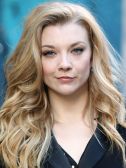
CASTING COUP? Natalie Dormer

I stumbled on the casting announcement late and immediately sought reactions in the media about one quirk in the production that is currently filming: there are no older actresses in the series.

But nobody seems to have commented that the producers are taking considerable licence with Joan Lindsay’s characters.

Cast as the widowed, expatriate English headmistress of the young ladies’ college that is central to the story, Natalie Dormer plays Mrs Appleyard, described by Lindsay as sporting a: “…high-piled greying pompadour”.

AGE APPROPRIATE Rachel Roberts

The character was portrayed by British actor Rachel Roberts in Weir’s film, suitably coiffed and in her late forties at the time, whereas Dormer checks in at just 35.

Slightly more surreal is the casting of Australian actor Anna McGahan as mathematics mistress Greta McGraw, since McGahan is just 28, playing a character penned as having “coarse greying hair”.

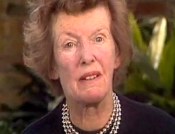
Hair colour and texture would not specifically denote middle age had Lindsay not stated the teacher’s years at the time of the fateful picnic at 45. English-born Australian actor Vivean Gray took on the role for Peter Weir in her 50th year.

Australian actor Sibylla Budd has been cast in a role that was cut from the 1975 production, that of Miss Valange, mistress of art and literature.

Screen shot 2015-10-27 at 3.22.34 PM
WHAT DO YOU KNOW? Helen Morse as Mlle de Poitiers and Vivean Gray as Miss McGraw

At approximately forty years of age, Budd seems to be the matriarch of Appleyard College in Foxtel’s new vision of female hierarchy on Australia’s Colonial frontier.

Does age matter when it comes to schoolteachers in the final gasp of the Victorian era? Well, for this literary diehard, it certainly does, at least in the case of Miss McGraw.

Joan Lindsay put barely a stroke wrong in constructing her mystery, and specifically identifying McGraw’s age, leaving those of the other teachers as euphemistically middle-aged, or slightly older than the senior college students, was without doubt a deliberate plot point.

When editors took apart the original manuscript ahead of publication, lopping off the final chapter that explains the mystery, a crucial scene involving Miss McGraw was kept from readers. By identifying her age, and why she might have been more obsessed by the calculation of time than the other mistresses, Lindsay placed a clue that has rarely been noticed in half a century of analysis.

Even if the younger-than-written casting is designed to accommodate back-stories in the six 60-minute episodes, it is already working against the grain of the novel.

According to Foxtel’s head of drama Penny Win, the new adaptation: “… will take viewers on a new and in-depth journey into this incredibly iconic Australian story”.

LINDSAY
LADY LINDSAY Author Joan Lindsay (1896-1984).

Where the staff of Appleyard College are concerned, it’s apparent that vision is considerably younger than Peter Weir’s, and Joan Lindsay’s.

The original story also offers the opportunity for that rarest of beasts – the screenplay with multiple female roles, including a higher-than-usual number of women over the age of forty. For that reason alone the strategy behind the casting of younger women will take some explaining.

Imagining the impact of Hanging Rock passing across impossibly youthful faces – instead of those whose dignity has been achieved through the attainment of years – already disappoints this viewer.

The television series, due for release later in 2017, has not been without controversy. After an evocative protest, an Australian female director was hired in December 2016 to address a perceived imbalance in the recruitment of local screen talent of both genders.

To date, there’s been no commentary on what might well turn out to be ageism in the casting.

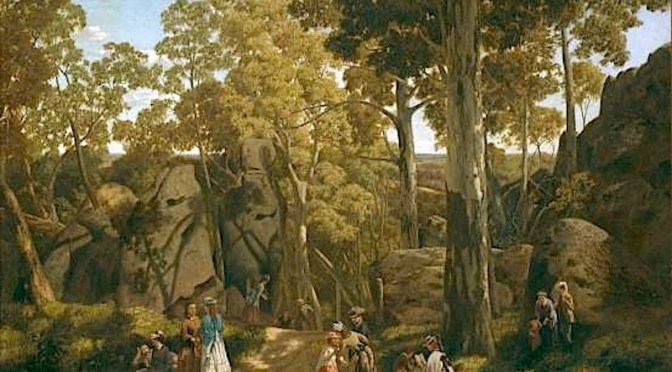
© Michael Burge, all rights reserved. Main image: ‘At the Hanging Rock’ by William Ford (1875), in the collection of the National Gallery of Victoria.

Let Tamar Iveri have her opera straight

IVERI HOMOPHOBIC Georgian soprano Tamar Iveri.

A Writer (sort of) defends a diva.

AMID the flurry over Georgian opera singer Tamar Iveri and the comments she made in the social media about a protest march in Georgia on International Day Against Homophobia (IDAHO) in May, 2013, there was an assumption the soprano was just one homophobic voice in an accepting international opera industry, an aberration who must be silenced.

In an open letter to her country’s president, the singer compared gay people to “fecal masses”, a description picked-up by the social media ahead of Ivari’s scheduled performances for Opera Australia last year.

“Homophobia needs to be exposed, and that’s best done in the limelight where it has maximum impact.”

While I believe it was hypocritical of her to court Western dollars for her performances while condemning Western values which have attained mainstream followings, like LGBTQI equality, I’d like to place Iveri’s conservatism in context, particularly in the Australian performing arts scene.

Australian showbiz has long had an unspoken ‘don’t ask, don’t tell’ policy about its same-sex attracted performing artists. From our televisions screens to our stages, generations of us have grown up with gay, lesbian, bisexual and transgender entertainers and personalities, it’s just that we never knew them that way.

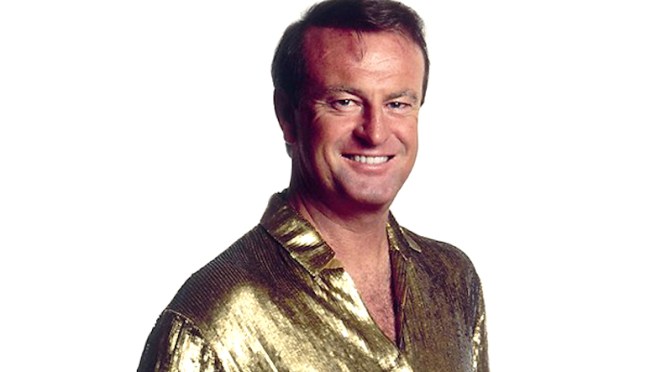
Almost forty years since Australia’s decriminalisation of homosexuality started in South Australia, you’d be forgiven for thinking the only ‘queer’ in prime-time, mainstream Aussie showbiz was Peter Allen, followed swiftly by Carlotta, Todd McKenney and opera singer Deborah Cheetham.

Statistics and common sense tell us that the numbers are much higher than that. Kindness and respect tells me that it would be simply unfair to extrapolate the rumours about which of our stars were (and are) simply ‘not the marrying kind’.

Does it really matter? Well, perhaps it does, when we are baying for blood over the homophobia expressed by a diva from the other side of the world, and the performing arts industry she has been a guest of puts on a very straight front.

NO PROBLEM Iran’s President Ahmadinajad speaking at Columbia University in 2007.

The Tamar Iveri homophobia story reminds me of Iranian President Mahmoud Ahmadinejad’s reception at Columbia University in 2007, when he guilelessly professed that they do not have the gay ‘phenomenon’ in Iran.

A ripple of snorts, which became a wave of laughter, washed across the audience and left Ahmadinejad blinking.

After expressing their deeply held convictions about the level of homosexuality in their countries (Iveri cites a statistic with no evidence: “3 in 50″ are “born gay”, and the rest are “following the trend”), both commentators had their foundations rocked.

I see this as consciousness being raised, and I can only applaud it, because homophobia needs to be exposed, and that’s best done in the limelight where it has maximum impact and ongoing ramifications. So what is going on in 21st century opera for gays?

“Fabio is now the benchmark for the male opera star, not Pavarotti.”

When I typed “out gay opera singer” into a search engine I was met with extremes. The first news stories covered out gay opera singer, American counter-tenor David Daniels, who spoke with pride about his sexuality; and Swedish tenor Rickard Soderberg, who survived a random (possibly homophobic) attack.

At “33 Opera Hunks Who Need To Serenade You Right Now”, the parade of muscle men (one of whom, England’s Ed Lyon, identifies as #teamgay) reminded me of beefcakes gracing the romantic fiction section of bookstores.

Fabio is now the benchmark for the male opera star, not Pavarotti. Gone are the days when divas built like Brunhilde could pull off the role of starving slave girl.

Despite the sexy new out gay veritas in the opera industry, like closeted movie stars, gay opera performers might feel that being out while suspending disbelief as a straight hero or heroine is a bridge too far.

Meanwhile, amongst the ranks of design and directing staff in particular, same-sex attracted opera makers have maintained a public silence about homophobia. The secrets of the most ill-mannered and worst-behaved divas have always been kindly kept behind the scenes, the stuff of myth.

Pauline Pantsdown is one of only a few voices of protest from Australia’s showbiz industry about the Iveri issue. Opera Australia issued a statement announcing Tamar Iveri’s explanation of the circumstances behind her comments. Less than a week later, they released her from her contract.

While I applaud their decision, when I think about all the marriages of convenience and closeting in Opera Australia’s not too distant past, the company’s decision to part ways with her at this late stage, over homophobia expressed more than twelve months ago, contains a level of hypocrisy.

That they fêted her so long, and seemingly so unaware, smacks of blindness.

I would have liked to see Iveri perform in our country, just to see if the fuss caused any kind of protest. Surely at least one of the same-sex attracted opera staff might have sprung something on her, like not turning-up for her quick change, or not combing her wigs. A conductor could have downed a baton for Iveri’s big numbers, or one of the stage crew left her waiting.

Had she stayed, she couldn’t possibly have gotten through her Australian seasons without a hint of doubt about the ranks of same-sex attracted men and women working alongside her in the Australian opera industry, and a large percentage of the paying audience.

It’s laughable to inhabit the opera industry and commentate negatively on homosexuality. Take the gay out of opera and what are we left with? One homophobic diva who thought all those designers, costumiers, wigmakers, make-up artists and hairdressers were just a little light on their feet?

The work of composers Tchaikovsky, Britten and Schubert may one day land on Iveri’s music stand. Will she refuse to place their notes and lyrics in her mouth and have them flowing across her vocal chords because these men, being same-sex attracted, were akin to fecal matter? Or will she swallow that gay shit and project it to the back row?

creating-waves-cover
BUY NOW

Hopefully, the whole incident will have a lasting positive impact on same-sex attracted performing artists in this country. If so, it’s about time.

This article first appeared on No Fibs.

© Michael Burge, all rights reserved. 

This article appears in Michael’s eBook Creating Waves: Critical takes on culture and politics.