Category Archives: Rebels

The false start we gave Ian Thorpe

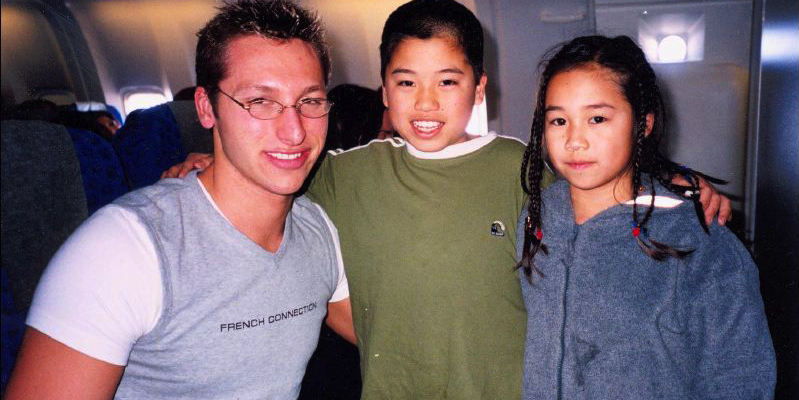
SWIM STAR Ian Thorpe with young fans in 2006.

I WASN’T going to write about Ian Thorpe’s coming out. What more can there be to say about this moment in his life, which has huge ramifications for him but should have none for us?

But then I read one article which got me angry, the kind of piece I’d hoped to avoid but which I knew would surface: the ‘Ian Thorpe Lied To Us’-type article.

I also wanted to watch the interview he gave to Michael Parkinson before forming too many thoughts.

The only unexpected moment was when ‘Thorpie’ recalled being asked about his sexuality at the age of 16. Parkinson picked-up on Thorpe’s affront at this and ran with it, creating the sense that 16 was just too young to be asked such a question.

Thorpe then qualified his view: that to ask anyone about their sexuality is unnecessary, but went on to assert that had he not been asked at that young age, he would not have stayed closeted so long.

If it was a nosey journalist who asked him as a 16-year-old, then I agree, it was an affront, but I don’t believe it’s enough to leave this pivotal moment in Australia’s same-sex attracted history at that.

“Still feel like Thorpie shouldn’t have been tempted to lie, or are you starting to ‘get’ the self preservation which drove his denial?”

Let’s look at the world Ian Thorpe inhabited at ‘Sweet Sixteen’. I don’t mean his swimming career – he was well on the ascendant at that age. I want to illustrate the world for a closeted 16-year-old gay man.

On October 13, 1998, Ian Thorpe’s 16th birthday, the age of consent for gay men was 18. Ever since 1984, when the decriminalisation of homosexual acts between men resulted in an age of consent for straight people and lesbians of 16, the law had remained unequal.

That legislation – The Crimes (Amendment) Act 1984 – would not be repealed until another nasty-sounding law – The Crimes Act 1900 – was amended in 2003.

In October 1998, for two men to live together in a de-facto relationship was still a political act. The Property (Relationships) Legislation Amendment Act was not created until the following year, requiring further amendment in 2002, 2008 and 2009 to remove discrimination against same-sex attracted people financially in almost 100 other pieces of state and federal legislation.

There was no form of legal coupling for same-sex attracted people in 1998, a situation which has not altered in NSW, or anywhere in Australia, to the present day.

In 1998, same-sex adoption and surrogacy were illegal and would remain so until 2010.

In 1998, any person who decided to bash, abuse or kill a gay person in NSW would have had the ‘Gay Panic’ defence at their disposal.

This is the most recent piece of law reform for LGBTI people in NSW, having been abolished in May 2014. In Queensland and South Australia, ‘Gay Panic’ remains a legal form of defence.

We know that Thorpie didn’t limit himself to swim-meets on home soil – he competed in places where widespread marginalisation of same-sex attracted people was and remains common, including Japan and Greece.

But the most dangerous destination Thorpe travelled to in his 16th year was Malaysia, where he won four gold medals at the Kuala Lumpur Commonwealth Games, but risked deportation, prison terms, fines and public whippings if he had acted on his same-sex attraction whilst in that Muslim country.

There was some good news for the millions of HIV-AIDS patients in 1998 – many of them were returning to work, despite the often crippling side effects of antiretroviral drugs. No longer the short-term death sentence it had been, there were enormous question marks over the long-term effects and efficacy of combination therapies on the epidemic. Survival time after contracting HIV was simply unknown.

So, asking the 16-year-old Ian Thorpe if he was gay was tantamount to asking him if he was attracted to the proposition of engaging in illegal sex which could never result in a legally recognised relationship with no hope of creating a family unit, including children.

If Thorpie had said yes to the sex, but found himself the victim of homophobic attack, his attacker would likely have gotten off or received a lesser sentence. There was also the fear of contracting HIV-AIDS in the mix.

Is this an attractive proposition, or one which even you, in Thorpie’s position, might deny?
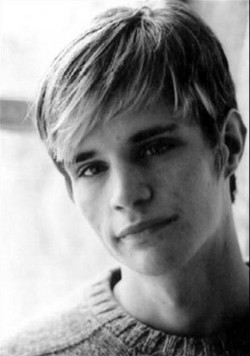
ATTACK VICTIM Matthew Shepard (1976-1998).

Another young man said yes to the sex a week before Thorpie’s 16th birthday. His name was Matthew Shepard.

Taking into account the time difference between the US state of Wyoming (where Shepard was bashed and left to die on a barbed wire fence by a pair of homophobes, later dying of his wounds), and NSW (where the Thorpe family celebrated Ian’s 16th birthday), the two events would have occurred at about the same point in time.

Sexual acts between men had been legal in Wyoming since 1977, and Shepard was over the age of consent at the time of his death. He had it better legally than Thorpie, but Matthew Shepard still ended-up suffering and dying as a result of his sexuality.

Still feel like Thorpie shouldn’t have been tempted to lie, or are you starting to ‘get’ the self preservation which drove his denial?

Laws do not change everyone’s behaviour, of course, but consider the impact of legislation on one of Australia’s highest-profile gay men – Justice Michael Kirby – who did not come out publicly until he was 60 years of age, during the same year as the The Property (Relationships) Legislation Amendment Act NSW (1999).

WHO'S WHO The Hon Justice Michael Kirby.
WHO’S WHO The Hon Justice Michael Kirby.

Kirby had lived with his de-facto spouse Johan van Vloten for thirty years prior, during part of which time they hid their relationship from family, friends and colleagues. Kirby came out by simply listing his partner in Who’s Who once their cohabitation and all its rights and responsibilities were legally protected.

Then there are the ‘unofficial laws’ which encourage same-sex attracted people to remain in the closet – ‘The Laws of Nature’ – as hard for young people to argue against as invisible faith, yet so often cited by homophobes, and so powerful they kept generations of lesbian women closeted in places where there were never laws against homosexual acts between women, and still impact on gay people everywhere.

This issue clearly goes beyond legislation, but could Kirby have risen so far in his profession without being closeted? Could Thorpe? Those of the ‘They Lied To Us’ team could do with answering such questions. Thorpe’s query to Australia in the Parkinson interview challenged us to consider how much we wanted and needed him to lie.

Ever since seeing Ian Thorpe interviewed during the Sydney 2000 Summer Olympics, I have known he was same-sex attracted. It was simply his demeanour, the same way of patting his solar plexus with a bent wrist as I do when using myself to illustrate a point.

It’s a subtle but giveaway gesticulation.

Whenever I witnessed people speculating about Thorpe’s orientation, I challenged their determination to claim him for ‘their team’, because a team is what a male Australian sports legend must declare a position on: he is never his own man, his countrymen feel like they own him.

By the mid-2000s it became painful to watch Thorpe’s slow-motion train wreck, without being able to do, say or write anything to help in the journey every out same-sex attracted person must endure.

Some journalists reached out to him. One open letter by founding editor of DNA magazine Andrew Creagh stood out for me. It was assertive enough to get to the truth, and empathetic enough to express what was needed despite Ian Thorpe’s closeted situation.

A journalist who asks a 16-year-old swimming star of either gender whether they are straight or gay should rightly come away looking like an idiot, not only because it’s a dumb question, but also because these days a 16-year-old (gay, straight or anything else) is considered a self-determining adult as far as sexual orientation is concerned.

Same-sex attracted 16-year-old boys were not considered adults prior to 2003, we were considered a danger to ourselves who needed ‘protection’ from wand-waving homosexuals trying to recruit us onto the ‘wrong’ team.

Such fantasies are laughable now, but in their day they were nails in the closet door.

PLUCK COVER copyCongratulations and best wishes to Ian Thorpe. His coming-out is a far greater achievement than any gold medal. It’s a life-changing validation for teenagers batting for the same team, and their families; and it means that when he manifests the relationship and new career this interview hinted at, at least he won’t have to come out again and again.

© Michael Burge, all rights reserved.

This article appears in Michael’s eBook Pluck: Exploits of the single-minded

The huge heart of horrible Hannay

HANNAY'S WAY David Hannay and Mary Moody.
HANNAY’S WAY David Hannay and Mary Moody.

A Writer remembers a great man.

The Hannay-Moodys first came into my family’s life because of human caring.

Our mum was an old-school nurse who ‘specialed’ Mary Moody and David Hannay’s youngest son Ethan at Katoomba Hospital when he was a very sick baby one night.

Soon after, mum was invited to their rambling home in Victoria Street, Leura, for a party, which she enthused about later as a wild thrill.

Mary was dressed as Dame Edna and there had been a cake in the shape of a funnel-web spider!

We were a family in the wake of divorce, which had left us a bit shamed in a country town, and the multi-generational, blended Hannay-Moody clan was a throng of fun and acceptance. In the late 1970s and early 1980s, the Blue Mountains was replete with such families, and usually one or both parents was a practising artist.

David was often away working, but in the mid-1980s he brought his filmmaking juggernaut to the Blue Mountains, which served as a backdrop for two period films.

I recall one afternoon when word got around about a film crew in an old house down the road in Wentworth Falls, and there was a film star in town.

We all got on our bikes and raced around to see what we could see. The crew was not remote or high-and-mighty. They let a bunch of enthusiastic local kids glimpse a bit of magic on our doorstep.

The film was one of Hannay’s rarely seen classics, Emma’s War, and the star was about as Hollywood as it gets – Lee Remick – who our generation had all seen in the first Omen movie, rented from the brand new video shop in town.

040718050006_lWe didn’t get to see her, but we saw Hannay on the set, and we were sure that if we were standing in the wrong place he’d just start booming at us. Then, he waved. That was Hannay.

I went off to NIDA and trained in production design, and at the end of my third year I needed to find myself an internship. There were two films being shot in Sydney in late 1991. Strictly Ballroom already had a whole costume rack of design department interns, so I wrote to Hannay and asked if I could help on the crew of Shotgun Wedding.

It was no easy gig for me to land. I needed to apply for an interview with the production designer, state my case for inclusion, and wait for the call.

I didn’t see Hannay until we were on location in Warriewood in Sydney’s north, and he came by the production design office on the afternoon I was tasked with bottling and labelling crates of 1970s beer bottles for the shoot.

Seeing me hard at work on solid production detail, Hannay nodded, got on with his job, and left me to mine.

At the end of my first week, I was surprised to receive a pay cheque, which happened at the end of every week I was on the film. Payment wasn’t part of the deal, but I felt very valued by that gesture. That was Hannay.

Barely more than a month later our mum died at home in her own bed, as Hannay did this week. The Hannay-Moodys made good on their promise to her that they would bring a slab of beer to her wake.

I was sitting on the sidelines, in a state of shock, but the ripple of warmth and reality that arrived with that gesture was truly life enlarging.

They didn’t stop at that. I was booked on a flight to England to take up a scholarship at film school, but I had a burning secret: having taken two months to care for mum at home, I didn’t have quite enough money to go.

Mary and David went into action with a bunch of other locals and produced a fundraiser at Katoomba’s Clarendon Theatre, which served two purposes. Firstly, it raised me enough funds to complete the course, but it also provided a focus for a grieving community.

Hannay oversaw the night’s auction, the most memorable moment of which came when he held up a pair of white y-fronts and shook them around like an old-time music hall emcee, announcing they had been worn by Aden Young, “The New Mel Gibson!”.

Many of the guests choked on their dessert. That was Hannay.

By the time I got back to Australia, years later, I got to know Hannay as an adult.

Who can ever forget a conversation with the greatest raconteur who ever walked amongst us? All who survived one of his name-dropping, Hemingway-styled rants came away with new ideas walloped like capsules of truth into our consciousness.

He was a rabid conversationalist, David Hannay, and he knew his stuff.

A few weeks ago I spoke to him for what was to be the last time, and I was amazed at the robustness of his voice after months of chemotherapy, and told him so.

This, of course, led to all manner of topics, from his enduring bitter hatred of Whitlam over the Balibo Five (how on earth did we get onto that… that was Hannay!) to the state of the nation under Abbott. Then came a Hannayesque moment like no other.

He paused, and thanked me, open-heartedly, for speaking with him on the phone for so long. “You have made my day,” he said. I scoffed. “No, you really have. Here I was, feeling like shit, and you’ve come along and helped me forget my troubles.”

In the light of his very public, courage-redefining attempt to beat back death, this floored me, and I told him how glad I was to find a way to repay his emotional presence in my life.

When I was a kid, everyone seemed frightened of dads who boomed and railed, but, having escaped a sullen and remote father of my own, ‘horrible Hannay’ and his thundering presence was an education in how conversations are give and take. Despite all his bravado, he wanted us to answer back.

Injustice got Hannay’s attention, every time. It’s the thread which runs through his work. Years after one of your life’s unfair turns, Hannay would remind you he was still feeling the rage with you.

When I think about how much his heart was put to use on others’ behalf, it’s amazing that it kept him going for so long.

creating-waves-cover
BUY NOW

The silence, now, is going to be profound.

Thanks to Mary, Miriam, Tony, Aaron, Ethan, and all Hannay’s family for sharing him with the rest of us.

He will be impossible to forget. We’re just going to have to keep the conversation going regardless.

© Michael Burge, all rights reserved. 

John Tebbutt – southern stargazer

images
NOTING TEBBUTT John Tebbutt (1834-1916) on Australia’s first one-hundred-dollar note.

A Writer’s encounter with a scientist’s story

I’D already seen the mysterious Tebbutt’s Observatory from a horse-drawn carriage tour of Windsor, in NSW’s Hawkesbury region. The combination of the rhythm of my ride, and the mist rising off local fields on a warm spring morning, gave this encounter a magical feel, as the low-set, Grecian-style string of buildings that comprise Tebbutt’s workplace appeared, dominating the Colonial landscape of this part of the Hawkesbury without needing to try at all.

As soon as I had the opportunity, I went to have a look for myself, and encountered the descendants of astronomer John Tebbutt (1834-1916) in their ongoing custodianship of his life’s work. This article was published in Blue Mountains Life (Aug-Sept 2010).

TEBBUTT'S TELESCOPE John Tebbutt (1834-1916) and the telescope which he used to chart the return of Halley's Comet in 1986.
TEBBUTT’S TELESCOPE John Tebbutt (1834-1916) and the telescope used to chart the return of Halley’s Comet in 1986.

Southern stargazer

Inside the Hawkesbury observatory of John Tebbutt

As a Windsor school boy who showed a flair for astronomy, John Tebbutt also had the good fortune to grow up in a home with excellent views of the southern sky at night – Peninsula House.

Completed c.1845 and set on a low hill overlooking the major bend in the Hawkesbury, to the present day the property (and the three observatories Tebbutt designed and built) have commanding views towards all points of the compass.

For the lad who went on to discover two comets and create a critical mass of astronomy in the southern hemisphere, early stargazing took place on the verandah of Peninsula House, which is still in the Tebbutt family today.

“It’s well known my great-grandfather set up his first marine telescope on the verandah of the main house,” current owner John Tebbutt outlines, “but the only remaining verandah faces due north, whereas the southern sky was his domain. When you come to think of it, he must have set-up on the southern side of the house which has long since changed.”

Peninsula House and the two remaining observatories emerge from the mist of a typical Hawkesbury winter morning, as John Tebbutt and daughter Angela lead the way into the workplace in which their ancestor spent thousands of hours making accurate celestial observations and recordings.

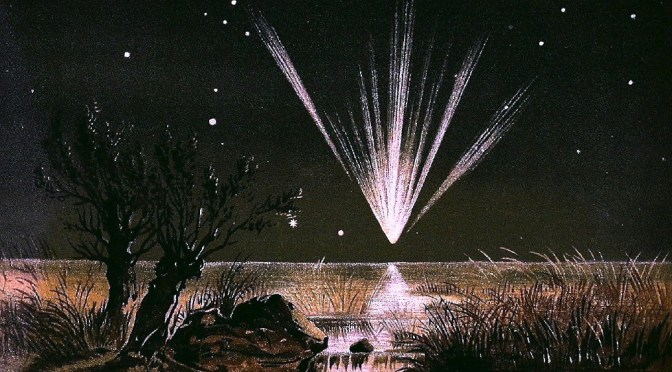
COMET COMING The Great Comet of 1861, on Tebbutt's radar in Windsor.
COMET COMING The ‘Great Comet’ of 1861, on Tebbutt’s radar in Windsor.

Tebbutt’s achievements in astronomy are well-documented.

Just shy of his twenty-seventh birthday, before acquiring complex telescopic equipment or building a designated observatory, Tebbutt discovered the ‘Great Comet’ of 1861 and accurately predicted that the Earth would pass through the visible tail, news which created a wave of mild hysteria in June of the same year.

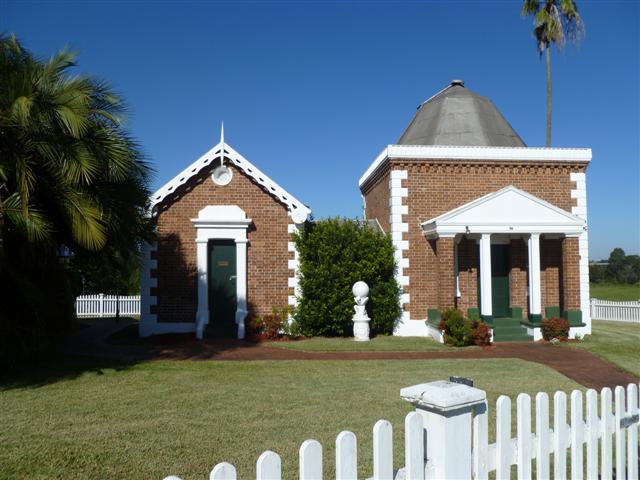
The discovery led to the building of his first weatherboard observatory in 1864 (demolished in the 1930s), and, by 1879, the beautiful brick observatory which still stands.

Although Tebbutt never left Australia, “he would have read about designs from overseas,” the current John Tebbutt outlines as we stand before the two neo-classical porticos of his grandfather’s 1879 observatory.

Reminiscent of the Royal Observatory in London (hotbed of all things astronomical and timekeeper of the western world), Tebbutt’s Observatory served a similar purpose.

“For many years he provided a time service for Windsor,” John says, “and many believe he wanted to create the equivalent of Greenwich for the southern hemisphere.”

That’s easy to believe looking through the beautifully designed brick buildings, appearing like Greek temples in the distance as you approach the property.

“There were many more statues,” Angela Tebbutt explains, “but this one of Atlas is the last one we have.”

Accessed through two heavy iron doors is Tebbutt’s library.

“We found the doors below inches of dirt in a shed,” John explains, “and for a while we weren’t sure what they were, then we realised they fit these door frames exactly. They were for security, because he housed quite a collection of books and instruments here, spending hours making his observations, and would often have to leave the instruments for a period of time. For the accuracy of recordings, things needed some protection.”

“He also had seven children,” Angela laughs, “and we think he liked to keep things safe from them.”

Heavy iron doors seem like overkill when protecting recordings from little fingers, and when I inquire as to whether any significant event might have made Tebbutt wary, both John and Angela immediately talk of the fire which destroyed the property’s granary, thought to have started in an outdoor oven. The full-brick walls and iron doors of Tebbutt’s library speak of someone who knew the consequences of losing irreplaceable work.

GRECIAN-STYLE Tebbutt's Osvervatory (Photo: http://convictstock.wordpress.com/
GRECIAN-STYLE Neo-classical facades of Tebbutt’s Observatory (Photo: convictstock).

Between the two main structures of the 1879 observatory is Tebbutt’s transit room, aligned like everything else on a true north-south axis.

This leads through to a room in which a large pier is the central feature.

“We rebuilt that,” John remembers, “because it had been removed for the tenants. It sits below where the large telescope was on the top floor, but it’s not particularly weight-bearing. It’s more for preventing too much vibration in the building when taking readings through the telescope.”

The current John Tebbutt inherited the property from an uncle in the 1960s, and set about restoring the observatories during the astronomical renaissance prior to the return of Halley’s Comet.

“He came out of retirement for Halley’s in 1910” John explains, “and worked on predicting the path for its return in 1986. By then he’d appeared on Australia’s first one hundred dollar note, and there was interest from the local council in restoring his place in our history before the Bicentenary.”

John regales the story of finding his grandfather’s Irish ‘Grubb’ equatorial telescope, which was sold after Tebbutt’s death in 1916 and ended up at an observatory in New Zealand.

“Councillor Rex Stubbs had a lot to do with getting it back here,” John remembers, “they organised to have it flown back by the RAAF in a training exercise, then trucked from Richmond Air Base out here. Exactly a century since my grandfather set the telescope up here in Windsor, it was returned.”

Tebbutt’s 8-inch equatorial refractor is now housed in his third observatory, a more primitive structure now half hidden by greenery, speaking less of Greenwich-like aspirations and more about the sheer hard work observing and recording Tebbutt completed once he was able to see further into the universe (in all directions) than he had before.

“I think we came pretty close,” John says when I ask if he achieved what he set out to do with restoring the setting of his great grandfather’s life’s work.

“People who used to live here have come back for weddings or other events, and they can’t believe what it now looks like,” Angela adds.

© Michael Burge, all rights reserved.