Category Archives: Reviews

Breaking heartland in August: Osage County

BROKEN HEARTS Julia Roberts and Meryl Streep.

A Writer’s review.

SIX decades ago, great American playwrights like Arthur Miller, Eugene O’Neill and Tennessee Williams only ever alluded to addiction, sexual diversity, mental health and suicide, or portrayed them in the hands of villains who always ‘got it’ at the end.

These days, there’s a growing number of storytellers courageous enough to begin where their antecedents left-off, helped by more relaxed censorship laws and a broader understanding of the human condition.

Tracy Letts’ play, and now screenplay, August: Osage County, is one of those, and has already become a benchmark in 21st century storytelling.

There are no spoilers in revealing that Violet Weston (played by Meryl Streep) opens this film with a frank revelation of her pill popping and her mental maladies in the kind of scene Eugene O’Neill could only have dreamt about including in Long Day’s Journey into Night (published in 1956).

Streep marks out a battlefield within a crumbling, overheated Oklahoma country house, and proceeds to destroy every member of the family who steps inside it in the wake of the disappearance of her husband (played by Sam Sheppard).

With a sister, three daughters, their partners, a Native American housekeeper and a granddaughter, she has plenty of adversaries, and she goads them until they all bite ferociously back.

Just who takes it up to her, and why, is the story of this film, revealing the life changing consequences of staring-down and surviving addiction.

It’s a bitter conflict, with violence, assault, and enabling wrapped into every scene. Letts’ greatest achievement is that not one character, not even Streep’s, could be described as either purely hero or villain.

“This is Roberts’ most controlled, and most out of control performance.”

They are all as bad, and as good, as one another, an unthinkable concept in 20th century drama, where every protagonist had to battle with their equivalent antagonist, so that the audience knew who to barrack for, and who won or lost.

On this score, it’s hard to know if August: Osage County is a comedy or a tragedy.

Streep has never climbed higher in an entirely convincing portrayal, a tribute to her risk taking. It will be hard to topple this performance, which spills off the screen like vomit.

Yet Violet has grace. She has you hating her and sympathising with her in turns, never revealing anything ultimately honest, yet claiming to be the “truth teller” of the family. Nothing about Streep’s Weston is absolute, apart from her total inability to be saved.

Julia Roberts as Violet’s eldest daughter Barbara wears the family angst as a barely concealed boxing glove which she is not afraid to wield. There is little that can be said about the role and the performance which will not reveal the plot, just know this is Robert’s most controlled, and most out of control performance.

In the midst of the family intrigue, it’s easy to forget the isolation and hardship of the American heartland (and remote communities everywhere), but Letts reminds us now and again that we are not in the city, we are in dangerous country, stolen from Native Americans, fought over by settlers, and reminisced in the poetry of Violet’s husband.

This is a universally rural story about the experiences of country souls, those that escaped and those who got left behind. In the final scene, with Julia Roberts caught at an emotional crossroads, this reality becomes a painful reminder of what can go wrong when great, unsustainable dreams are created in farming regions.

CREATING WAVESAugust: Osage County is a heartbreaking elegy to all broken heartlands and the souls they failed to nurture.

This review first appeared on NoFibs.

© Michael Burge, all rights reserved.

This article appears in Michael’s eBook Creating Waves: Critical takes on culture and politics.


The desecration of story

WE'RE WATCHING but we're sick of waiting. Smaug's eye from The Desolation of Smaug.
WE’RE WATCHING but we’re sick of waiting. Smaug’s eye from The Desolation of Smaug.

MASTER storytellers don’t come along very often. You’d think by now we’d have learnt to respect their work.

Mess with the canon of any of these literary icons, and you’ll spark a reaction of such magnitude that it could, in at least one case, cause a war. You see them at the top of the ‘Most Popular Books of All Time’ lists – Charles Dickens, Jane Austen, William Shakespeare, the various authors of The Bible, Homer, Agatha Christie, and, usually scoring two spots for his seminal fantasy titles – John Ronald Reuel Tolkien (1892-1973).

Yet all of these writers’ works have been the subject of translations, adaptations, mash-ups, and spurious references in Doctor Who. It seems there is no end to re-imagining plots that have already proven themselves popular with readers.

The latest on our screens is Peter Jackson’s production of Tolkien’s The Hobbit, the 1937 children’s fantasy which spawned one of the most beloved literary cycles of the 20th century – The Lord of the Rings (1954-55).

Like countless others, I devoured these works in my childhood, so it was strange when I found myself dragging my feet to see The Desolation of Smaug at the cinema.

But that wonderful shot of Smaug, unfurling his great wings, the hapless Lake Town in his sights far below, was every inch the Tolkien moment I was seeking.

Yet before we could ride the crest of the roller coaster, the credits rolled, and, with news that we’d have to wait until Boxing Day a year hence for the third instalment, I heaved a sigh of annoyance.

This was not storytelling. This was commercially delayed gratification.

Peter Jackson’s Hobbit movies will never escape the criticism of taking a simple childrens’ tale and padding it into a three-part prequel to The Lord of the Rings.

We cannot blame Tolkien, of course, but it is worth noting that he created many of his early stories for his children. Imagine what the kids would have thought had Dad told the tale in three episodes, a year between each: they would have lost interest, thought their father a very mean and boring man for withholding, and revolted!

SCRIPT SPOILERS Gandalf and Radgast in search of Sauron.
SCRIPT SPOILERS Gandalf and Radagast in search of Sauron.

About half way through The Desolation of Smaug, with Gandalf off tomb raiding, my sister, not a Tolkien reader, turned to me and asked whether the disembodied shadow of Sauron was actually ‘in’ Smaug the dragon?

It was a good question, considering Gandalf and Radagast were looking for something that Bilbo already seemed to have found.

Tolkien knew how to construct a plot, and he took his time doing it. Not for him the publishing schedule of Harry Potter.

There was a very good reason why Sauron does not appear in The Hobbit: because when Tolkien wrote that childrens’ book, he was unaware how far his mythology would evolve in its sequel.

Tolkien’s collected letters reveal that at the behest of his publishers, the rise of Sauron (known as ‘The Necromancer’ in The Hobbit) was only published in an interesting appendix in The Return of the King.

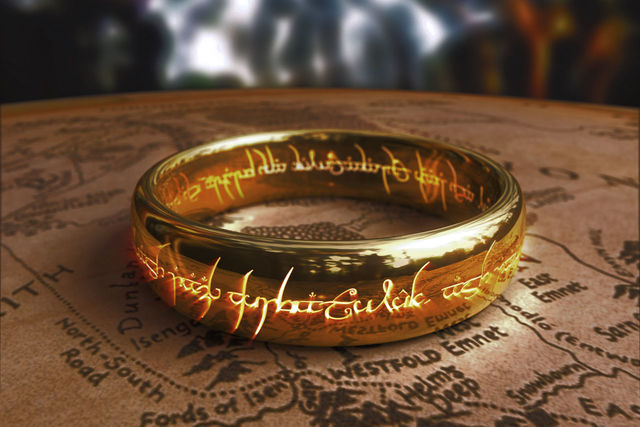
Writing to a reader of The Lord of the Rings in 1964, Tolkien revealed how he connected the two books with the One Ring.

“The magic ring was the one obvious thing in The Hobbit that could be connected with my mythology. To be the burden of a large story it had to be of supreme importance. I then linked it with the (originally) quite casual reference to the Necromancer [in The Hobbit], end of Chapter. vii and Ch. xix, whose function was hardly more than to provide a reason for Gandalf going away and leaving Bilbo and the Dwarves to fend for themselves, which was necessary for the tale.”

Mythology, which runs through the works of all the writers mentioned, is the archetypal source for all tale-telling. Twist mythological rules, and everything from The Odyssey to Pride and Prejudice is at risk of being deemed, well, boring.

When Jackson and his writing team were coerced by the distributors into three Hobbit films, they needed to pad-out Tolkien’s mythology with endless sequences of Legolas slaying orcs; extensions of famous scenes, such as the dwarves’ escape from the Elven King in barrels down a river; and Gandalf the Grey sniffing his way around graves and towers with Elrond and Galadriel in search of Sauron.

DRAGON VISION Tolkien's own depiction of Bilbo's comversation with Smaug.
DRAGON VISION Tolkien’s own depiction of Bilbo’s comversation with Smaug.

I can accept Legolas, a character who never appeared in The Hobbit, and I can even buy his love interest Tauriel, a totally new creation re-addressing Tolkien’s inherent plot-misogyny, because Jackson and his writers are doing what Shakespeare did with great stories: shaking them around to find stronger, fresher ideas to engage new audiences.

But two master villains – Sauron and Smaug – in the same story is akin to having Moses and Jesus in the same telling of Exodus, or Romeo and Juliet and Mercutio. It’s too crowded to pack a real punch.

ONE RING TWO STORIES Tolkien's One Ring as it appeared in Peter Jackson's films.
ONE RING, TWO STORIES Tolkien’s One Ring as it appeared in Peter Jackson’s films.

Audiences who watch the six-movie Lord of the Rings cycle consecutively will be denied the great tension which Tolkien builds up in The Fellowship of the Ring.

They’ll miss a storyteller’s masterstroke, the linkage of Bilbo’s journey with Frodo’s through the secretion of Middle Earth’s most powerful implement, that plot device of “supreme importance” – in a place no one, not even Gandalf, ever thought to look.

To know the power and significance of the ring above being a handy trick for a hobbit engaged as a burglar, and to know the extent of Bilbo’s real enemy long before he does, is a terrible case of spoilers.

Money people don’t trust writers. They never have, and they probably never will, which is one reason why none of the Lord of the Rings movies ranks anywhere near the top of the Favourite Movies of All Time list, whereas Tolkien’s books rank second only to the stories we rely on to explain our own world’s creation.

creating-waves-cover
BUY NOW

Messing with Middle Earth might not spark a war, but it’s testament to the power of Tolkien’s writing that audiences will pay to see the butchering of his work at the hands of New Line Cinema and Metro Goldwyn Mayer.

© Michael Burge, all rights reserved.

This article appears in Michael’s eBook Creating Waves: Critical takes on culture and politics.