Category Archives: Write regardless!

The publish button killed the media

THE cancellation of the funding behind Australia’s flagship online news source The Global Mail sent shock waves through the local media, because many journalists were watching to see if the rise of the independent online media hub was a viable career lifeboat.

The demeanour of journalist Mike Seccombe said it all, when he fronted-up for an interview on Friday’s ABC Breakfast News.

Virginia Trioli asked him whether there were other ways of funding The Global Mail. He exhaled, shrugged and replied that he is a journalist, not a money man.

I felt for him, because if 20,000 subscribers, a stable of top-notch journos, and private backing are not good enough to make The Global Mail work, what the hell is?

Before things got too depressing, technical problems meant the interview had to be wrapped-up fast, and the inexpressible did not get articulated.

The inexpressible being, of course, that the media as we know it is in its death throes. It’s on the mat. The death rattle has begun. Wake up peeps, it’s happening, it’s really happening.

WHERE IT'S AT The Publish Button, we've all got one now!
WHERE IT’S AT The Publish Button, we’ve all got one now!

I could rail at the media moguls who have sold us out, but I’m calling The Publish Button the main culprit, that powerful little hyperlink which emerged on online blogging platforms a decade ago.

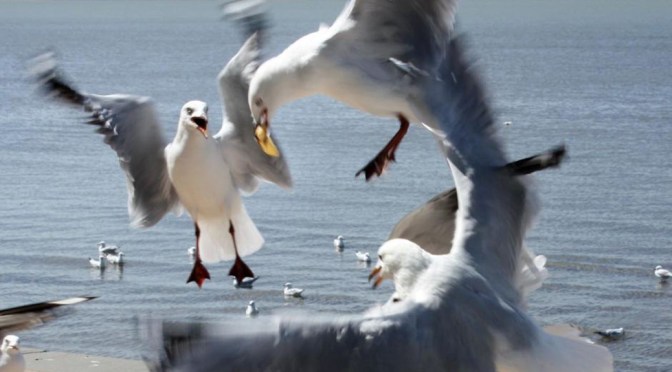
We flocked to it like gulls at a rubbish bin, and since digital technology was able to count the uptake, advertisers followed in an equally frenzied manner, until there were simply more pecks on The Publish Button than there were on all the print floors combined.

Twitter, Facebook and various forms of blogging now fulfill the very strong desire to be ‘published’ and ‘posted’, ‘liked’ and have our status ‘updated’ and ‘shared’.

Now, I’m not saying what we blog/post/tweet about is necessarily rubbish, but the bin is where it’s at peeps, the gulls are just not flocking to the mainstream media, which has been stripped, flogged and hung out to dry, journalistic job security with it.

The companies who made The Publish Button have become the new media moguls. They have no need to invest in ink, paper, print floors, newsagents, transport, and the tens of thousands of people who once staffed the media.

And without us even noticing, they have managed extremely well without journalists. A media which has no need to pay for content is every CEO’s dream.

Content flows freely to them, because The Publish Button is such effective bait.

Its lightning fast distribution is a stimulant like no other to wordsmiths. No barrier to participation, no editors to chase us, no pesky sub-editors to keep us nice, no delay in reaching our audience, and the ability to correct errors instantaneously… if we care about any of that, and there’s no requirement to.

If I StumbleUpon it I can Storify it, and I can say I’ve Reddit. I can Press my Words, I can show my Pinterest, I can Inst a Gram, I can meme like a Tumblr.

It’s all so liberating and wonderful… “Content is King!”, they say, to exhort us into creating great content, but it’s also free, and it’s left journalism with virtually no currency.

The social media’s advertising and subscription revenue, which is placing the corporations behind The Publish Button in stockmarket positions that have Rupert Murdoch worried, is not shared with the content creators of this new world media.

To complain any further about the mainstream media is just like a new government blaming the old: after a while, it just doesn’t hold true anymore.

So, where does journalism stand now the media is flatlining?

ARRESTING JOURNO Margo Kingston under arrest at the Leard Blockade. (Photo: Georgina Woods).

In February, 2014, No Fibs citizen journalist Margo Kingston showed by example what journalists can do with The Publish Button, by relocating to north-west NSW and reporting on the #leardblockade, where a group of activists held back the progress of the Maules Creek Mine.

Margo self-funded her Storify reports, put together by Tony ‘The Geek’ Yegles, which were uploaded onto No Fibs with a regularity that a mainstream news site would be envious of.

Twitter was utilised to distribute these short interviews, news items and reports to a growing audience.

What made it relevant was the depth of engagement, participation, and the provision of opportunities for the subject to contribute to the report.

This is possibly the true meaning of ‘social’ in social media, and it’s possibly what makes very tasty bits for the gulls to peck at.

If The Global Mail had attracted a few gulls to the edge of the bin they might not have reached this point. Their low-level social media engagement may well have been their Achilles heel, or was it their propensity to pay their journalists a decent salary?

I’m not in a position to answer that. What’s clear to me now is that the social media is the only media.

There, I’ve said it. As a journalist, all I have to do is find a way to come to terms with it.

An extract from Write, Regardless!

© Michael Burge, all rights reserved.
 

Critiquing basics for armchair critics

SINCE the dawn of blogging, a full spectrum of critics, from armchair experts to celebrities, has flocked to the free platforms allowing free-rein to quite publicly appraise, rate and critique popular culture.

But it’s a singular form of writing, the role of the critic, one in which angels should fear to dabble.

If anyone’s of a mind to heed a few tips on how to critique (and I am really not anticipating there are too many who will pause before hitting the publish button on their thoughts) here are my ideas on what makes good criticism.

If you don’t have anything nice to say…

Mother said it best – be nice. The best way to give something zero stars is to give it no oxygen whatsoever, but so often snippy critics will revel in blasting something which has every right to take its place in cultural history. Unless life (via some bizarre cultural Interpol) forces you to review something you don’t like, just forget it and move on to something you are more keen on.

Artists who can, do, artists who can’t, critique

Whilst an audience is an essential part of any creative process (art doesn’t exist in a vacuum, right?), being a reader or viewer does not necessarily qualify anyone to be a critic. Like cleaners, who routinely get the blame for office thefts, so critics are blasted for being amateurs who never ‘made it’. The smart critics know this and critique accordingly – either as an extension of their own arts practice (think Clive James) or from decades of experience in the field they’re critiquing (think David Stratton).  The first time I was required to review a play, the knowledge of the passion, time and energy required to ‘raise the curtain’ every night made me look for positives. Anything else would be hypocritical (note the appearance of ‘critic’ in that word).

Watch for spoilers

Critics need to adhere to this maxim more than the average punter. You might have loved the third-act turning point in the latest movie, but if you tell everyone the outcome, they ain’t gonna get a surprise when they go, are they now? If you’re a critic and you’re not sure what a third-act turning point is, read my post about the storytelling basics.

It’s not about liking it

So you didn’t like the play, the movie, the book, the whatever, that doesn’t mean others won’t love it. It’s my assertion that if you put your cultural dislikes into print, you’re only going to end up looking snippy and unhappy. To critique something means to put it in context, to observe what came before it, to attempt to see what makes it unique, even if it doesn’t succeed as a piece of art in your estimation.

They’re not hanging on your opinion

It’s tempting to emulate the great critics – those who could ‘close the show’ on Broadway. But that world is long gone, subsumed by the international opening weekend for new movies, the lack of geographic boundaries on the internet, and the end of paid work in the mainstream media for all but the big-name critics. The social media is where word of mouth, the oldest form of criticism, is happening. It’s free, fast and beyond the control of artists. If you get any attention in that mass of distraction, don’t flatter yourself that your opinion means anything. Try to leave the medium better than you found it, even just a little.

Critics also get rated

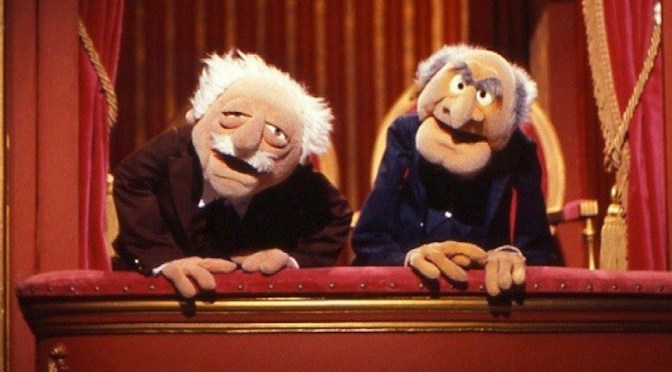
WRITE REGARDLESSBritish actress Diana Rigg compiled a collection of the most famous reviews given to actors, as far back as Ancient Greece, in her book No Turn Unstoned, which she subsequently turned into a one-woman show. Critic beware – you’re not immune from getting slated yourself.

An extract from Write, Regardless!

© Michael Burge, all rights reserved.
Art might just save journalism

WHEN journalist Margo Kingston described the existential crisis of journalism, and that she wouldn’t advise anyone to enter the industry, she expressed what very few media punters were willing to say.

Journalism dropped to the bottom of satisfying career lists during the last decade. In the 2013 ‘Jobs from Best to Worst’ survey, conducted for the past 25 years, CareerCast.com listed Reporter last, at number 200, with Editor not much higher, at 168.

How did we get here?

It’s hard to gauge, but things can hardly get worse. As advertising revenue continues to take a dive, and limitless access to social media fosters the expectation that content should be free, neither the mainstream or social media allocates much money to the creation of content.

On this score alone, Journalists have entered the career bracket previously inhabited by Artists, where remuneration is never guaranteed, product floats below the surface of a constantly uncertain marketplace, and validation is in very short supply.

To put things into perspective, the CareerCast.com survey ranked Artist at 148, Choreographer comes in at 156, even Actor, once considered the most marginal of careers with 99 percent unemployment at any given time, gets a higher ranking than Journalist, at 197.

On this advice, Journalists might be wise to start thinking and operating like Artists in order to change the ranking of our industry.

Depressingly, holidays are the hardest time of the year to do so. If you’re an Artist, the silly season can be anything from an inconvenience to a handy escape from the fact that it’s another year, another blank canvas.

“Journalists might be wise to start thinking and operating like Artists.”

Unless you’re a successful practising Artist of any stripe, it may have been devastatingly easy for you to take time off from your creative work and spend summer days with friends and family, joining in at the edge of groups of ‘real people with real jobs’: Web Developers (ranked at 24), Hair Stylists (83), Architects (61), Statisticians (20), and a host of other very sensible folk who listened to their parents and forged careers with prospects.

It takes plenty of self belief and a plastered smile to get through. Having even a shred of an official day job goes a long way to keeping you off most naysayers’ radars.

And you don’t have to be anything nearly as extreme as an Artist to raise eyebrows over the Christmas pudding.

Try adding something even slightly different or new to your repertoire (Citizen Journalism, for example), and notice how the occasion soon becomes like the dinner table scene in August: Osage County.

“How is that going for you?” cousin Peter (let’s imagine he’s a Financial Planner, snug at ranking number 5) asks, topping up your glass with his wine, and you have no answer, because you’re really not sure, exactly, how it is going for you, you only know you’re drawn to spend your life doing something different than he.

As the summer days lead us from parties and fireworks back to the working week, friends and family in the great good workforce drift back to their routines.

The mainstream media fills this period with an array of self-help articles of the New Year’s Resolution stripe (purchased from syndicated news sources for a pittance), the perfect panacea for people who only ever dream of pursuing their heart’s desire.

But Artists generally have no back-to-work start date. We need to make one for ourselves. Of course there may be an app for that, but is there anything to inspire the independent Artist into resolutions to sustain our dreams?

During the holiday I read some alarmingly depressing ideas about being an Artist: apparently it doesn’t get any better than it already isn’t.

I hasten to add that this comes from a very successful UK-based Author (a profession ranked at 156) of many published books, who may well be having to fill 2014 with checking over the proofs of her latest release as it hits the shelves in another edition, poor thing.

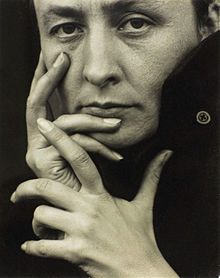
HANDY ADVICE Georgia O'Keeffe, hands 1918 (Photo: Alfred Stieglitz).
HANDY ADVICE Georgia O’Keeffe, hands 1918 (Photo: Alfred Stieglitz).

Lest this all get too negative for words, let me redress the imbalance with some inspiration from working Artists who’ve been there, done that, because Artists learned, long before Journalists came on the scene, that the only solution to negative situations is to just keep creating.

“Be yourself; everyone else is already taken.” Oscar Wilde

“Don’t think about making art, just get it done. Let everyone else decide if it’s good or bad, whether they love it or hate it. While they are deciding, make even more art.” Andy Warhol

“Whether you succeed or not is irrelevant, there is no such thing. Making your unknown known is the important thing.” Georgia O’Keeffe

“Everyone has talent. What is rare is the courage to follow the talent to the dark place where it leads.” Erica Jong

WRITE REGARDLESSAnd one for the Citizen Journalists.

“Writing is a struggle against silence.” Carlos Fuentes

Working in the lowest-placed profession for nothing ranks you as a legend.

An extract from Write, regardless!

© Michael Burge, all rights reserved.