Category Archives: Write regardless!

A dingo took the story

DESERT CHAMELEON Meryl Streep as Lindy Chamberlain in 'A Cry in the Dark' (Photograph by Vivian Zink).
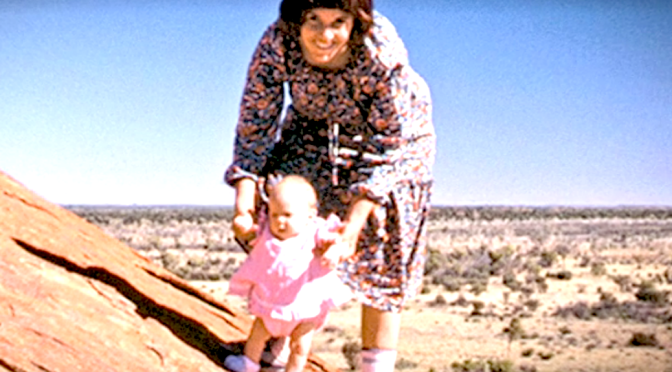
‘DINGO BABY’ Meryl Streep as Lindy Chamberlain in ‘A Cry in the Dark’ (Photos by Vivian Zink).

Can a real-life story be plotted into a dramatic arc?

THE hardest form of plotting is the real-life story. Remember when James Cameron made you forget the Titanic was going to sink? Like or love his movie, Cameron’s masterstroke of ‘real-life’ storytelling created a new benchmark, but his love story also bent the ‘real life rule’ quite a bit by using fictitious characters within a real-life story.

The reason real life is the hardest form of fiction should be obvious – life does not slot easily into a three- or five-act dramatic arc. Producers and publishers don’t like real life – it’s never fast or entertaining enough to put bums on seats, it’s way too random, and it usually needs a bit of tweaking.

Even reality television only feels real – it’s been fictionalised ever since the quiz show hit the small screen.

One of the finest examples of a real-life dramatic arc is Fred Schepisi and Robert Caswell’s adaptation of John Bryson’s long-form work of journalism, Evil Angels, the story of the Chamberlain ‘dingo baby’ case, otherwise known as A Cry in the Dark.

Let’s put the plot through its paces… beware, there are spoilers (yeah I know, you know how the story ends… or do you?).

Exposition – “A dingo’s got the baby”

The exposition must introduce us to the characters and show who is the protagonist (the hero) and the antagonist (the anti-hero, or ‘villain’); and the protagonist must be called to action, posing a question so interesting that we are gripped.

Lindy and Michael Chamberlain (the protagonists) are at their Seventh Day Adventist church in Mount Isa for the christening of their daughter, Azaria, when passing truckers gossip about Adventists over their radios, and the family portrait is showered by their dust, revealing the Australian public’s (the antagonists) wariness of anyone they don’t understand. Michael (Sam Neill) and Lindy (Meryl Streep) leave for a holiday to Uluru (Ayers Rock), and settle in for a barbecue dinner. Lindy puts Azaria to sleep in their tent, and after she returns to the barbecue, another camper, Sally Lowe, hears the baby cry. When Lindy goes to check, she sees a dingo emerge from the tent, finds Azaria missing, and shouts the now infamous line.

Rising Action – “A lie goes around the world while the truth is still putting its boots on”

The rising actions are those the antagonist uses to thwart the protagonist and show us who both of them really are.

The Chamberlains wake to news that Azaria’s body has not been found. The media soon picks-up on the disappearance and stories spread across the Australian public’s TV screens, with an edge of eeriness and mystery. The Chamberlains return home to rebuild their lives, but the media continues its push for information, and Lindy attempts to tell her story, but it backfires as the media disseminates rumours about the family. The Australian public starts its own dialogue about the case, mainly convinced of Lindy’s guilt and the dingo’s innocence. An inquest, which clears the Chamberlains of all guilt in Azaria’s death, seems to resolve the case.

MIKL CURDLER Meryl Streep's portrayal of Lindy Chamberlain saw her on the receiving end of similar hatred.
NUT CRACKER Meryl Streep’s portrayal of Lindy Chamberlain saw her on the receiving end of similar hatred.

Climax – “A face that could crack walnuts”

The climax must be the start of a battle between the protagonist and the antagonist, and a turning point after which there is no going back for either.

Disgruntled Northern Territory police consult forensic experts, who find enough evidence to re-open the case. The Chamberlain’s home is raided and items taken for testing. Witnesses are simultaneously interviewed. The media breaks the story and the Australian public devours the new information with hysteria, focussed on perceptions of Lindy’s demeanour. Lindy is heavily pregnant as the ‘trial of the century’ begins in Darwin. The jury, representatives of the Australian public, ultimately ignores eyewitness accounts in favour of forensic evidence and finds Lindy Chamberlain guilty of murder and her husband Michael an accessory. Lindy is sentenced to life imprisonment. The Australian public celebrates.

Falling Action – “I will not have another dinner party ruined by those people” 

The falling action must play out the battle between the protagonist and the antagonist, allowing one of them to win. The winner defines the piece as a comedy or a tragedy.

Lindy is separated from her family in prison, where she gives birth to a daughter whom she is quickly forced to hand over to Michael, and she disappears from the Australian public’s consciousness while the Chamberlain’s legal team begins the long process of appealing her sentence. Despite the Australian public’s deeply-held conviction that she is guilty, cracks start to appear in the wall of opposition to Lindy. When the unexpected death of a tourist at Uluru leads to the chance discovery of Azaria’s matinee jacket (evidence the prosecutors used to paint Lindy as a liar), Lindy’s is swiftly released from prison after three years. She returns home, a stranger to her new daughter Khalia.

Dénouement – “How important innocence is to innocent people”

The dénouement (‘to untie’) must unravel all the conflict and bring everything to a sense of resolution. In a comedy, the protagonist is better off than when they started. In a tragedy, this is reversed. The big question posed in the exposition must be left answered.

At their church, the Chamberlains are welcomed by a cheering crowd of Adventists, and Lindy speaks about the family’s patience and endurance while the truth about Azaria’s disappearance was eventually revealed. During the applause, Khalia comes to her mother’s side, and the family group which was ripped apart is restored, albeit changed. Outside, a media pack launches itself at the Chamberlains, suggesting that their journey to exoneration is far from over, and Michael underlines the importance of the concept do innocence to innocent people.

WITCH HUNT The Chamberlains pursued into Darwin Court by a media pack.
WITCH HUNT The Chamberlains portrayed by Neill and Streep pursued into Darwin Court by a media pack.

The Verdict

The screenwriters’ decision to portray the entire Australian public as the antagonist was not only genius, it was based on the truth of the Chamberlain’s story, and helped rank the movie amongst the American Film Institute’s best courtroom dramas.

The dramatic arc of A Cry in the Dark hits all the right moments, the most subtle of which is the antagonist’s (the public’s) slow realisation that an error of judgement has been made. In the end, they are defeated by the evidence.

But this win for Lindy Chamberlain cannot be defined as a comedy. This is another reason why producers often avoid real-life stories: they’re hard to define and therefore hard to sell.

In 1988, when this film was released, twenty-four years were yet to pass before the true antagonist of the Chamberlain’s story – the dingo who took Azaria – was acknowledged by the Northern Territory legal system. Before this factual milestone was reached, which acknowledged the reason no body was ever found (Azaria having been consumed by dingoes), the screenwriters of A Cry in the Dark acknowledged that the dingo took not only the baby, but also her story.

WRITE REGARDLESSThat the filmmakers found a way to capture this true tale long before it was over makes A Cry in the Dark one of the best lessons in real-life storytelling.

© Michael Burge, all rights reserved.

An extract from Write, Regardless!

Eating your words

FOOD FOR THOUGHT Meryl Streep as food writer Julia Child in Julie & Julia.

I FELL into food writing when the publisher of a magazine I worked for sacked the food writer and asked me to take over.

I never knew the reason, but I learned overnight that food, and the media that goes with it, is one of the most hotly contested and controversial sectors of the media industry.

Food took the baton from home renovation about a decade ago and became the Next Big Thing.

We might think readers and audiences are interested in politics and current affairs, but I’m here to tell you such subjects attract mere crumbs compared to the millions who devour food media in some form.

It’s no mystery – food is primal, like shelter (the drive behind home renovation’s popularity).

As a result of my two-year stint on the food pages, I learned a few tips about how to keep serving up the flavour in food writing.

Purple Prose will free you to write with flare

If you stop and really digest food writing, even at its best, it’s a form of Purple Prose, because this overblown, flowery language comes into its own when applied to food. A reader cannot taste the food when it’s just words and a photo on the page, so the food writer must use heightened language to impart the flavour. It’s been achieved to great effect in the wine tasting industry for centuries, with all those: “Top notes of autumn leaves”, and: “A nosey bouquet with bursts of citrus” superlatives. Abandon all notions of literary genius and invent new ways to describe the experience of taste.

Many chefs will try to tell you they invented Apple Pie

Chefs are the food industry’s gods, with their own celebrity hierarchy. A chef’s recipes are often closely guarded secrets, but the more ambitious will expect cries of “How Original!” when they reveal their secret ingredient in pumpkin soup, or their special take on fish and chips. Truth is, celebrity chefs rip one another off all the time, because staple recipes are like the fairy tales behind all archetypal stories, in that they belong to us all. Give credit where it’s due, but expect fireworks if you leave a chef’s name off her recipe for baked potatoes.  

Now and again you’ll strike an expert who blows you away

Mine was a sales rep for one of Australia’s largest and most successful wine growers, who welcomed journalists to a wine tasting evening at a top-notch restaurant attended by the region’s literati. I was ready to make notes on the rep’s welcome address, preparing for the usual platitudes, but the guy simply ripped the cork out of the bottle, poured himself a glass, drank it in front of the expectant crowd, exhaled and said in his genuine French accent: “With wine this good, you can say nussing!”. It was a refreshing lack of bullshit.

Recipes are full of mistakes

Even Aunty Eileen’s jam recipe will have errors in it when she wrote it down for your mum’s book of recipe clips. When transposing recipes, particularly the method, imagine making it yourself, because there is every chance there is something missing, or too much of this or that. Be vigilant, and expect plenty of communication from irate readers about faulty recipes. Clever food editors generate enormous readerships from recipe correction feedback. Everyone’s a food expert in their own kitchen, remember? Let ‘em tell you off a little and they’ll spread the word about you.

FOOD FAKE Styling often goes to extremes.
TASTY FAKE Styling often goes to extremes.

Food styling is fakery

It’s true, French fries in fast food commercials are turmeric-rubbed polystyrene. Remember, the reader cannot taste a photograph, it only has to look sumptuous. There are staple stand-ins for everything, from lobster (mashed potato) to rabbit (chicken), especially on the limited styling budgets provided by the majority of lifestyle titles. Food styling is about heightened sense of flavour and freshness, and a quick spritz from a water bottle is often the last nuance before photography begins. 

Stay ahead of the season

In this paddock-to-plate world of food media, it’s essential to pre-empt the seasonal availability of certain ingredients – when mushrooms are on the shelves, it’s really too late to be writing about them, because they’ll be out of season before long. Food media is attached to the marketplace, and the marketplace pre-empts itself all the time. Stay ahead of the game. Work captured this year might be best released a month before the earliest season next year.

Don’t be afraid to keep it simple

WRITE REGARDLESSFood is a little like art, in that people know what they like and like what they know. You can recommend all the activated almonds and moon-harvested saffron you want, but if winter’s coming people might want to be inspired by a few old favourite comfort foods. Never confuse diet and nutritional content with food writing. Food is fantasy. Diet is cold hard fact. People don’t read lifestyle titles for the facts, they want to indulge a little.

© Michael Burge, all rights reserved.

An extract from Write, regardless!

The truth about writing advertorial

AD OR STORY? Actually, look closer, it's both.
AD OR STORY? Look closer, it’s actually both.

LUCKY is the writer who has never had to turn their hand to advertorial, that postmodern (possibly ‘Newspeak’) phenomenon which fills so much of our media.

Apparently around since the late 1940s, advertorial has a few tricky names: ‘commercial writing’ is the latest on the list, which includes ‘infomercial’ (usually on television) and ‘cash-for-comment’ (the bane of commercial radio).

Writers could, of course, make a purist stand and never engage in creating content off the back of advertising revenue, but you’d probably never make much money if you did, because all writing (yes, even literary fiction) needs to be commercial at some stage.

Here are my best tips for editors and writers on surviving this trickiest of writing practices, and interfacing with the sales team!

Advertorial can get you noticed

Right now, commercial writers are making decent money finding what is interesting about everything from water tanks to washing machines, and producing serious editorial articles for PR companies and big media advertisers. To achieve excellent results, and get your by-line into the publication, make your article about plumbing products so darned engaging that the editor will run it whole in that week’s paper, and make it look like serious journalism. Think laterally, find the story, interview people in the industry, shape it as you normally would a feature, take the money and submit your by-line at the top of the piece. They’ll snap it up, simply because they have one staff writer and they’re drowning just getting the news together.

Don’t mention the weather

Writing about destinations for travel companies, or regional events, means you’re going to have to find the way to say all the nice things and none of the nasty. Weather and climate are particularly off-limits, because advertisers don’t want readers to waver about heading to their locale. Keep the weather conditions a secret until the Bureau of Meteorology commits itself to a forecast, and remember how often they get it wrong! You’re a writer, right? Embellish, imagine and invent.

Journalist, edit thyself!

Your well-paid advertorial is unlikely to be completely read, edited or proofed by anyone, so spell and grammar check (the computer can do it for you, remember?), but don’t forget to read your own work a few times before sending it in. There are very, very few sub-editors left in the media who will commit to making your work better than it is, so get any notions out of your head about old-style newsrooms with teams of people with their heads down poring over your work. Journos used to have an old trick of making the last four to five paragraphs of a story work as possible endings, and this is great practice for commercial writers too, because it’s likely your work will be used as filler, and be cut down. If any of the last five pars works as an ending, you won’t look like an idiot, and if there is a sub in the process, they’ll remember your name, which means more work down the track.

AREN'T THEY GREAT? The sales team, everybody's BFF!
AREN’T THEY GREAT? The sales team, everybody’s BFF!

Sales reps invented advertorial

But they’ve forgotten they are one half of the job. Everyone knows people buy newspapers and magazines, and click-thru to online media sources, because they are desperate to read ads, right? Well, actually, they don’t, they want to be distracted and entertained by stories. It was ever thus, and nothing is changing in that regard, so don’t buy into the sales rep lies about how their sales are paying your wages so you’d better write what they want you to. Truth is, sales reps and their clients love it when you make the dross they produce look like a real article. Get it right for them, but don’t become a sales reps’ slave (see below).

A businesses’ opening hours is not news!

This is a mantra I have often used on sales reps who have sealed an advertising deal with a promise of award-winning journalism about the local chainsaw supplier, written by me. It’s ‘advertorial’, an amalgam of two jobs – theirs and yours – so feel sanctioned to send them packing with a mission to find the story for you: an award won by the business, some interesting staff member, a business milestone. Make the rep work for the favour you’re going to do them and flush it out, write it down, and email it to you. If you do this from day one, the sales reps will respect you, or leave in disgust to find other hapless writers they can drive crazy. Sales reps change jobs regularly. When they leave, it’s not going to be because of you, but they’ll try to make like it was.

Don’t give your phone number to advertisers

Unless you want them to call you all weekend. Sales reps love it when you agree to meet their clients, because it leaves you to do their job for them. Be nice, wave and smile, but let the sales rep do all the schmoozing. There is no law that says you must do lunch with an advertiser. Keep an air of unassailable mystery, or they will eat you for lunch, and add to your workload like crazy.

Q&A The friend of all commercial writers. Fast, fab, flattering, and fills a page.

Sales reps vs. account managers

I was once seated next to one of my magazine’s big advertisers at a political fundraiser, and once he’d gotten over the fear of me networking him for revenue, he told me something very interesting about advertising sales people: the good ones call themselves sales reps, and the crap ones call themselves Account Managers (their capitalisation, not mine).

The key words are ‘representative’ and ‘manager’: they must keep their energy on the job of selling from start to finish, but so often an account manager will drop their energy once the client has signed the contract. The only way to deal with this is to NEVER take the baton from them. Let it drop, they’ll soon pick it up to reach their sales target.

Be nice to sales reps

Because the publisher (your boss) won’t judge you by the quality of your writing (they don’t read it), they’ll judge you by how much the sales reps like you. Being ‘nice’ doesn’t mean being a pushover, it means being assertive without getting aggressive. Walk the line, forget being liked, go for respect.

Be nice to PR people

If you want to write commercially, public relations people are your friends. Don’t present with loads of writers’ angst, just deliver in a timely fashion. Knock-off your commercial pieces by 10am so you can get back to your novel. Tell them you’re writing a novel, because they might know someone in publishing …

WRITE REGARDLESSIf you can’t find anything nice to write

Make it up. You’re a writer.

© Michael Burge, all rights reserved.

An extract from Write, regardless!