Category Archives: Write regardless!

The call to action

UNCLE SAM WANTS you to get out of your comfort zone, for the sake of a good story (J.F. Flagg's 1917 poster).
UNCLE SAM WANTS you to get out of your comfort zone (J.F. Flagg’s 1917 poster).

THERE’S a nifty three-act dramatic structure, generally used by screenwriters (but drawn from the older five-act dramatic arc), which gets a plot moving a bit faster than a novel and contains a great plotting tool – the Call to Action.

One of the reasons we go to the movies, or distract ourselves by reading, is because we want to step outside our lives, temporarily, for entertainment.

It might sound incredibly obvious, but this distraction requires writers to create work so deliciously escapist that the reader/viewer is taken beyond the sphere of their own lives for a short time.

Writers don’t have to create an alternate universe (although some do, to great effect), we just need to suspend the reader’s disbelief. Even getting them a centimetre off the ground can be enough.

To achieve this disbelief, writers need to have their main character – the protagonist – step outside their world. The protagonist’s ‘call to action’ is the trigger for this step.

Situated at the heart of a plot’s exposition, the protagonist is going about the business of what seems like an average day, when something happens (an old friend calls with some unusual news; a car crashes into their front room; a stranger turns up at their door … it can be anything).

Those of us who live the average Western life, where most of our needs are taken care of, do not get wake-up calls like this, but we love to imagine what we would do if we did.

It’s this attractive energy that publishers, agents and eventually audiences crave, and it’s even become a marketing tool. It’s why we buy the book, or the movie ticket.

Now, I hear a bunch of literary fiction writers screaming: “Nooo, it’s all about the Art!”. Well, as a fan of literary fiction myself, I say let ’em scream: literary fiction writers need a call to action for their protagonist every bit as much as Agatha Christie did.

Would Nick Guest, the protagonist in Alan Hollinghurst’s The Line of Beauty, have gone on such a compelling emotional journey had he simply moved out of the Fedden family’s house the minute their daughter Cat started cutting herself? (he wanted to).

Would Stevens, the Butler of Darlington Hall in Kazuo Ishiguro’s The Remains of the Day, have decided to take a car trip to visit Miss Kenton, the former Housemaid, had his new boss Mr Farraday not ordered him to take some time off ? (he didn’t want to).

Of course they wouldn’t. Had Nick moved out, and Stevens never gone away, both storylines would simply peter out. Neither piece of ‘Art’ would have garnered the critical and financial successes of their Booker Prize wins.

The protagonist’s call to action is linked to a plotting device covered in my posts on the dramatic structures of two films – Guess Who’s Coming to Dinner, and The Sum of Us. This is the compelling question needed in every plot’s exposition, in fact, they are almost one and the same: if you get the protagonist’s call to action right, a compelling question will naturally be posed.

CROSSING THE LINE Protagonist Nick Guest in the television adaptation of Alan Hollinghurst's The Line of Beauty
CROSSING THE LINE Protagonist Nick Guest in the TV adaptation of The Line of Beauty (Photo: Nick Briggs).

By keeping Nick Guest in the Fedden’s home, exposing him to family secrets, and relying on his character’s already-established empathy, Hollinghurst poses the compelling question of his plot: When will the Feddens and their British upper class friends discover the reason for Nick’s empathy is his homosexuality?

By sending Stevens (who we already know is staid and a little unreliable in his recollections of his employment history) out into the world, Ishiguro poses his: Is Stevens so deluded he actually believes he can revive a stunted love affair that barely even began twenty years before?

Some authors, particularly crime writers, bury their protagonist’s call to action in mystery – a murder in the exposition is a particularly effective trigger for the most common of all plot questions – Whodunnit?

It’s for this reason that Miss Marple and Hercule Poirot are Christie’s great antagonists – they foil her murderers (read: protagonists) at each and every turn, showing how antagonists are also locked into the plot by the protagonist’s call to action.

WRITE REGARDLESSHead spinning? Just remember that plotting isn’t meant to be a formulaic set of rules. Stretching and manipulating these conventions, in interesting ways, is the real ‘Art’ of writing.

© Michael Burge, all rights reserved.

An extract from Write, Regardless!
The point of no return

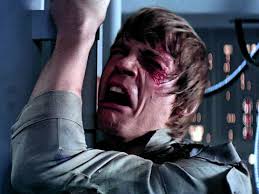
NEW TERRITORY Luke Skywalker takes the news of his parentage badly in The Empire Strikes Back.
NEW WORLD Luke Skywalker takes the news of his parentage badly in the classic turning point of The Empire Strikes Back.

SOME call it the mid-point, some the climax, others the reversal of fortune. Whatever you label it, what every great storyline needs is a point of no return.

As writers, we need to take our protagonists and antagonists, and place them in an environment where nothing is the same as it was at the start of the story.

Seeing how they fare in the aftermath makes for gripping storytelling.

In the film Gone With the Wind (1939) screenwriter Sidney Howard (and an uncredited team of extra writers) used the same mid-point as the original novel’s author, Margaret Mitchell, in the scene where the southern city of Atlanta is burnt to the ground.

Filmed almost two months before principal photography began, and long before famous names were cast as the leads, the scene was shot when the old sets of the 1930s King Kong movie were sent up in flames. Such was the need for a spectacular climax to this epic story of the American Civil War.

BURNING BRIDGES Atlanta goes up in smoke in Victor Fleming's Gone With the Wind (1939).
BURNING BRIDGES Atlanta goes up in smoke in Victor Fleming’s Gone With the Wind (1939).

In the wake of their escape from the city, no character in this story is the same – their world has turned upside down.

The formerly privileged Scarlett O’Hara needs to eke out an existence in the ruins of the war, and it is her climb back to wealth which occupies the central storyline from that point on.

In the original Star Wars (1977), Luke Skywalker is unwilling to leave his home planet Tatooine and travel with Obi-Wan Kenobi to support the rebel forces in their quest to overthrow Darth Vader and the Empire, that is, until he returns home to find that Imperial stormtroopers have killed his remaining family.

In one of this weighty science fiction franchise’s few moments of real pathos, Luke realises there is nothing for him at home anymore. His life will never be the same again, so he has nothing to lose in embarking on an interplanetary journey with powerful strangers.

And in Shakespeare’s Hamlet, self-doubt and hesitation become all too real in Shakespeare’s brilliant climax, when the tortured young prince lashes out at a silent observer behind a curtain, running it through with his sword, only to kill the earnest old courtier Polonius.

This grave error sets a tragic course for the rest of the play, and, after so much angst and inaction, is a devastating action which seals the fate of all the characters.

In a sense, attempting to write anything without a climax is always going to result in unresolved issues in a plot. Without the crucial mid-point, our protagonists remain untested and static.

The term ‘mid-point’ is often used for this moment because a climax should generally occur in the midst of proceedings, after the characters have been established in the audiences’ or readers’ minds, once we’ve formed opinions and loyalties about them, and experienced their pathways ignited by the ‘rising action’ of the plot.

Place a climax too early, and we risk having nowhere to go in a storyline. Place it too late, and we risk losing the interest of the audience or reader.

A point of no return need not be some sudden sequence where our characters survive a nuclear event (although action movies regularly place their protagonists in such external extremes, to great effect), it could be an internal crisis – an upsetting diagnosis, a letter containing bad news, or a guilty verdict in the dock.

WRITE REGARDLESSBurn your character’s bridges, cast them loose in undiscovered country, and record their responses to the shock. It can feel cruel, especially if you’ve travelled with them for some time, but go on, it’s make believe after all, and if the point of no return unsettles you, it’s bound to make your audience feel something too.

© Michael Burge, all rights reserved.

An extract from Write, Regardless!

The ‘sh%t, click’ moment

WRITERS' ENEMY The remote control.
WRITERS’ ENEMY The remote control.

IF I don’t manage to write a brilliant novel, there is no telling what I might do.

Got your attention? Good, that was my aim. Have no fear, despite dwelling in my fair share of writer’s angst, I am not about to throw myself in front of a bus, I am only imparting more of what I am discovering about how to tell good stories, and, if you’re still reading, my first line seems to have snagged you.

Many years ago while at ARTTS International media college, television producer John Sichel sat and imparted some basics about writing, tips he’d picked-up working in the trenches of the BBC.

The one thing I recall vividly was John’s demonstration of what he called the ‘shit, click’ moment.

Leaning back in his chair, he mimed a remote control in one hand, turned on an imaginary television, and made us feel we were in the living room with him, about to sit down in front of the ‘next big thing’ on the box.

Only the opening scene of the program wasn’t that great, and John said “shit” as he “clicked” over to another channel.

His improvisation imagined a writer failing to engage their audience.

In storytelling parlance, the antidote to the ‘shit, click’ moment is called a narrative hook. Good use of the classic five-part dramatic structure is all very well, but whether writing a novel, a short story, a screenplay, a play, or telling a ghost story around a campfire, your story needs to avoid the ‘shit, click’ moment.

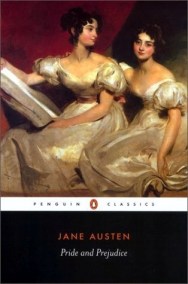
There are endless ways of writing hooks. One of the most often cited is Jane Austen’s opener for Pride and Prejudice – “It is a truth universally acknowledged, that a single man in possession of a good fortune, must be in want of a wife.”

PROUD OPENER Jane Austen's greatest work starts with one of the best narrative hooks.
PROUD OPENER Jane Austen’s greatest work starts with one of the best narrative hooks.

In only 23 words, Austen distills for her reader the energy behind every plot point of her best-known and best-loved novel, which continues to engage readers two centuries after its publication. Love her or hate her, Austen knew how to engage readers.

Austen does this by making an assertion which might be interpreted as both a joke and as deadly serious – she buries opposing forces deep within her hook. You might continue to read because you completely disagree with her, or because you’re nodding your head in assent.

In a screenplay, the narrative hook need not be dialogue, in fact in film and television they work far better as a purely visual moment, and can unfold across the entire opening scene.

Action movies and thrillers make great use of the narrative hook, indeed the example we were shown at college was the 1987 film Robocop (screenplay by Edward Neumeier and Michael Miner), the opening scene of which shows a semi-futuristic board meeting at which a prototype robot designed to police the streets is shown to a group of unwitting execs in suits (warning: the scene contains graphic violence).

GOOD SHIT, CLICK The opening scene of Paul Verhoeven's Robocop.
GOOD SHIT, CLICK The opening scene of Paul Verhoeven’s Robocop.

The unit is revealed as both aggressive and docile when it is ordered to be, but when the confident designer hands one of the execs a gun and asks him to wield it at the robot to demonstrate its police skills, things go horribly wrong and the exec is slain mercilessly by the prototype in moments of sheer terror.

I was instantly hooked, because I needed to know where that story went after such a scene of corporate horror.

Another excellent reason for having a great narrative hook is when submitting work for consideration. So often a publisher will want to see only the first few chapters, or an agent requests the first ten pages of a script for consideration.

If there is no narrative hook in those brief pages, the publisher or agent may not find what they are looking for, which is access to an entertained readership or audience. They need to make sales, not friends. Even if your novel or script has great material in part three of its narrative structure, they’ll probably only see your idea as a dud.

WRITE REGARDLESSSo, while “It was a dark and stormy night” might not cut it, and “once upon a time” has been done to death, writers need to seek great narrative hooks for our work.

© Michael Burge, all rights reserved.

An extract from Write, Regardless!