
Category Archives: Write regardless!

Rewriting rites

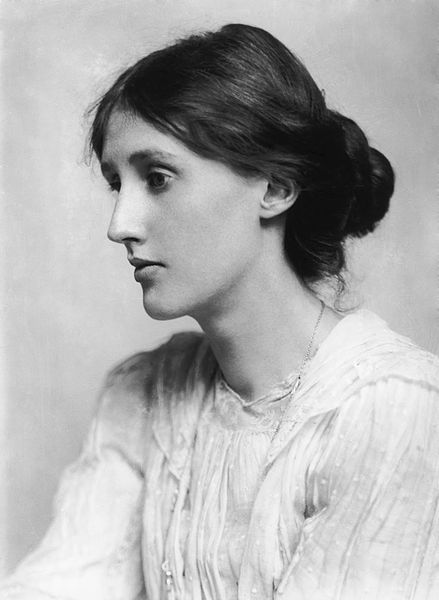
CRITICAL EYE Virginia Woolf (1882-1941) edited and published her novels independently (Photo: George Charels Beresford).
CRITICAL EYE Virginia Woolf (1882-1941) edited and published novels independently (Photo: George Charles Beresford).

ONCE I finish the first draft of a book, and I’ve left it alone for at least a month or two while spending time reminding myself what makes a great plot, there’s no more excuses: it’s time for me to read my own work for the first time.

I take great comfort and inspiration from writers like Virginia Woolf, who edited and published most of her idiosyncratic and enduring novels independently.

Embarking on the first edit of a manuscript could be seen as an insurmountable problem, or it could be seen as an inspiring fact-finding mission.

Read your manuscript like a reader would

I sit and read my work as though it was created by someone else. If I’m bored with the writing, I’ll acknowledge it, and find out why. This is crucial in the first twenty pages or so. If I’m engaged, I’ll analyse what sparked my interest.

Don’t over-read just yet

I’m going to be working on this manuscript for months to come, so I don’t want to get bored with it too soon. I’ll leave some of the alterations until another edit and just enjoy the fruits of my labour. I’ll also seek to understand the structure of my work before I decide anything needs fundamental alteration.

Keep tabs on your characters

Have I been consistent? Did I just use inserted names, like “A Policeman” when I didn’t want to upset my writing flow by looking-up the name I’d given this character earlier in the book? Have my characters evolved across my first draft so that certain things need to be altered? I jot these issues down in another place for addressing later, or adjust them as I read through.

How is the plotting?

This is the big one at this early stage. Usually, I’m afraid to embark on my first edit because I am worried I may have either stuck too closely to ‘the rules’ or lost touch with them altogether. What I am looking for is whether I’ve got a decent exposition that will benefit from some cutting down the track, several serviceable and intriguing rising actions, a great climax, and a battle between my protagonist and antagonist. I also looking to see if I’ve bent the plotting ‘rules’ in ways that stand to make my work different to others.

Rewrite when it’s easy to do so

I resist getting bogged down in major structural changes – I don’t know my work well enough yet to make those kinds of calls. However, when something quick and obvious comes up, such as a small set of paragraphs that can successfully bridge a missing plot point, I just write them in and will polish during another draft.

Check the blows are landing

When things happen to my characters, do they express the impact to other characters, or to me, the reader? This is a big one for scriptwriting especially. The blows must land, be felt, and registered, otherwise it’s like nothing’s really happening.

The final act is the hardest to get right

Just about every piece of writing advice I have come across maintains that most writers can write great set-ups and climaxes, but our plotting often falls over in the third act. I recognise this and will always read my dénouement anyway, right through, before I decide if I’ve got it wrong.

Practice good housekeeping

WRITE REGARDLESSI never delete original work, or rewrite over my original computer files. Sometimes things need only be moved, not cut. Design yourself a filing system for all your subsequent drafts, archive them, and back them up onto a memory stick. I’ve done this ever since I wrote an entire film script and accidentally deleted the only copy!

An extract from Write, Regardless!

© Michael Burge, all rights reserved.

Plotting to win

BATTLE LINES "Who do you think you are kidding ..." if you don't write with a well structured plot?
BATTLE LINES “Who do you think you are kidding …” if you don’t write with a well structured plot?

Plot: 1. A secret plan or scheme to accomplish some purpose, especially a hostile, unlawful, or evil purpose: a plot to overthrow the government. 2. Also called storyline.

This week I am feeling like a legend, because I’ve completed the first draft of a novel.

For three-and-a-half years I have religiously slogged away at this piece of work, and I have barely reread a word of it for fear of giving up and not completing the task.

Along the way I have made a study of the elements of good storytelling, particularly plotting, and how it can be applied for the benefit of entertaining the reader/viewer.

Now, faced with editing and rewriting my own work, I have created the following toolkit for myself, which I hope may be a help to other writers. But, a warning: This toolkit is not for writers who don’t care about entertaining their readers.

Creative rules are meant to be stretched, that’s what I call being original, but remember, even Picasso, one of the 20th century’s greatest abstract artists, could utilise realistic composition as well as any traditional old master. He knew the rules before he broke them.

I have transposed my research into battle parlance because compelling stories are not about people sitting around contemplating their navels in isolation, they are about conflicts, winners and losers. The Catcher in the Rye is as much of a battle as Gone With the Wind, and I guess ‘plot’ has two meanings for a reason!

Plot_Skeleton_photo_FINALIZED

The five-act dramatic structure

The narrative hook – announcing a war!
On page one, grab attention by extrapolating why your war is worth telling. Prevent readers/viewers from putting your book down or finding another movie in the multiplex. See my post on the Sh%t, click moment.

Act One – an exposition describes both armies, and the battle lines
Introduce us to the characters and show who is the protagonist (the hero) and the antagonist (the anti-hero, or ‘villain’). The protagonist must be called to action, posing a question so interesting that we are gripped: Can they possibly win?

Act Two – rising actions show the armies testing one another’s strength
A series of events unfolds in which the antagonist puts obstacles in the pathway of the protagonist, events that show us who both of them really are. These might result in minor skirmishes between the two armies.

Act Three – the climax starts the battle, and the combatants charge!
The climax must show the start of the major battle between the protagonist and the antagonist, including a devastating point of no return, after which there is no going back for either.

Act Four – falling actions show one army losing
The battle between the protagonist and the antagonist continues, allowing one of them to win. The winner defines the piece as a comedy or a tragedy.

write-regardless-cover
BUY NOW

Act Five – The dénouement ends the battle, but not the war
Everything that created this battle unravels (dénouement means ‘to untie’), or dissipates, or is resolved. In a comedy, the protagonist is left better off than when they started. In a tragedy, this is reversed. The big question posed in the exposition must be left answered.

Good luck with your plotting!

© Michael Burge, all rights reserved.

An extract from Write, Regardless!

How to write excellent articles

TypeKeysFilledTHERE has never been a time when writers have more opportunity to put work in front of an audience hungry for information and entertainment. Publishing has become a simple matter of processing words and clicking a button. Nevertheless, I am passionate about keeping writing standards high.

Here’s some of what I have learnt about writing and editing features for the past ten years, some of them even published on paper!

Get to the point

Readers are fast and fickle. Good articles pose a question very quickly and get straight to the job of answering it. Even an essay on a complex subject matter will benefit from getting to the point nice and early. Readers can click away as fast as they found you. Engage from word one.

Add to the public record

One of the hallmarks of good journalism used to be standing on the shoulders of the giants who came before us. While the giants may now be in short supply, there’s no excuse for rehashing existing media. It’s a form of plagiarism, really. Reference what has come before, sure, but adding to the story will impress readers who know more about your subject than you do.

Let the reader connect  

Readers love to feel smarter than writers. While you may be able to construe every well-honed argument on your subject, your reader may feel bludgeoned by your intelligence unless you give them something to use their brains on. TV quiz shows always give viewers more time to answer the questions than the contestants. It makes the audience feel smart, and keeps them tuning in. Leave a few loose threads for your readers to connect.

Watch out for your writing patterns

While they usually serve us well, often our unique writing patterns suppress great subject matter with an overbearing style. Throw yourself off sometimes. Make your third paragraph your first, and see what happens.

Keep it simple

Feature writing is not fiction. Keep the adjectives at bay and don’t set the scene too much. You’ll generally be writing about someone else’s truth, not your own, so keep the language less flowery and more factual.

Stick to the facts

In Australia, the Media Entertainment and Arts Alliance (MEAA) has a handy code of ethics some journos have been following as long as others have been ignoring it. It’s just about establishing the truth, truthfully. If your work ever gets picked up by media outlets, and you haven’t fact-checked it already, it, and you, are likely to get dropped like a hot potato. Commenters will rip you apart.

There’s always an angle you just cannot take

Almost every story I have covered has revealed a really interesting angle, what I’d call the ‘real story’, but, for various reasons (usually linked to advertising) cannot be published for fear of offending someone. People are fascinating, we have endless layers of secrets and lies, but if you’re only there to do a write up on their garden (because the sales reps owe them a favour, and you got the unenviable task), you’re hardly going to reveal the reason the garden is so amazing is because it was built on abundant political kick-backs. Stick to the tulips, take the money, and save your award-winning efforts for another time.

Don’t surprise your interviewees

Send them a transcript of what they said, if not a late edit of the whole piece, before publishing and/or submitting, with an invitation for them to amend anything inaccurate but nothing stylistic by a certain deadline. If they don’t get back to you, no problem, you have a paper trail showing they had their chance. Keep all your notes and recordings long after publication. Even the threat of litigation can be hurtful, worrying and expensive for writers.

FAITHFULL INTERVIEW Marianne Faithful playes second fiddle to journalist Lynn Barber in an interview (Photo: Reuters)
FAITHFULL INTERVIEW Marianne Faithful played second fiddle to journalist Lynn Barber in an interview (Photo: Reuters)

Should I be in the story?

The first piece I read in which the journo was the star was Lynn Barber’s profile on singer Marianne Faithfull. Faithfull behaved so badly in Barber’s eyes that the journalist made the first half of the profile about being kept waiting, and filled the second half with catty observations about failed celebrity. Yes, we now live in a world where so much of the media is ‘all about me’, but I believe it’s wise to walk the fine line between these two extremes, and think of the reader first. Unless we’re integral to the story, it’s probable the reader will be more interested in the subject than us. Barber won a British Press Award for that interview, but she has since received death threats, embargoes by other celebrities, and the publisher of one of her later interviews lost a 65,000-pound libel case for malicious falsehood. Putting yourself in an article has consequences, but Barber has often cited her Faithfull interview as a career highlight, so some outcomes can be career-building for journalists. Perhaps wait until you, and you employer, can afford a lawyer.

Stick to the word length

Even if you’re not writing for an editor, have a look at how many words constitutes a good article: they’re rarely over 800 words, and that’s diminishing each year. If an editor requests 800-1000 words, don’t submit 1250, saying, “I didn’t know where to cut”, because it’s annoying, lazy, and likely to see you overlooked for future work.

Read your own work

WRITE REGARDLESSMaybe you’re publishing on your own site. Maybe you’re writing for an editor. Whatever the case, read, read, and read your work. Chances are you’re the only editor your article will ever have. Make it accurate, grammatically correct, and spell-check. Think of your predecessors who never had the benefits of dynamic spelling!

© Michael Burge, all rights reserved.
An extract from Write, Regardless!