A Murdoch-free household is a galaxy too far

A Writer on Murdoch media.

NEWS sites are getting harder to access for free of late. Paywalls are up and apparently profitable for News Corp and Fairfax. Crikey has had one for years and last year Wendy Harmer’s flagship site The Hoopla shut the gate on free reads with its 34-cent per day subscription.

“Some of our most enduring book titles are in the Murdoch stable.”

Media-hungry online consumers are faced with a choice about where to get value for our money, but despite there being much more on offer than the old Fairfax vs Murdoch choice, the landscape is still dominated by these two big players.

This doesn’t matter if we’re not interested in reading anything published by the mainstream media. After all, progressive digital online media consumers have standards, right?

STICKER IT TO 'EM at News Limited.
STICKER IT TO ‘EM at News Limited.

Since I started participating in the social media I’ve seen plenty of lashes given to News Limited (the former name of News Corp). The bumper stickers: “Is that true, or did you read it in the (insert your state’s Murdoch daily/weekly)?” did the rounds. We all had a laugh and a chuckle, and called them ‘News Corpse’ when they changed names in 2013.

Seems newspaper reading is as much of a team sport as politics. Media hubs tend to pick sides on the major issues, and we follow their leads willingly.

But here in Queensland we’re hard-pressed to secure any kind of Fairfax title at a service station or shopping centre. If there are any copies of The Sydney Morning Herald or The Financial Review left by late morning, they’re down there in the shadow of the enormous stack of The Courier Mail which dominates the newsstands. I asserted as much on Twitter once and got rather angry responses from disbelieving right-wingers in the southern states, even after I posted the photographs which proved my point.

We have The Brisbane Times, a Queensland-focused online Fairfax news site (with no paywall as yet), but online news sites do not ‘hit the stands’ where three-word slogans are concerned.
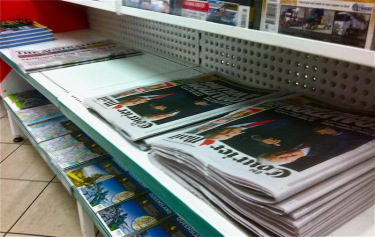
WHERE'S FAIRFAX? 6.45am at the service station near my day job, no copies of SMH or The Financial Review available.
WHERE’S FAIR FACTS? 6.45am at the service station near my day job, no copies of SMH or The Financial Review available.

Clearly, Rupert rules the newsstands in Queensland, where voting habits tend to support his team, but what if I told you the coffee tables, magazine racks, DVD collections and bookshelves of staunch anti-Murdoch slacktivists across the country would reveal reading habits and literary choices replete with Rupert?

News Corp (and News Limited before it) is a lateral-thinking publishing company, not limited to news print or online hubs. Some of their lifestyle choices may shock you, from Gardening Australia magazine to MasterChef.

Movie production and DVD publishing are also a great forums for Murdoch’s 21st Century Fox empire striking back, so check your purchases of the Star Wars franchise if you want to be a Murdoch-free household.

Literature is not off the hook either. Some of our most enduring book titles are in the Murdoch stable. Lemony Snicket was borne of HarperCollins publishing in the years after 1989, when Murdoch acquired the company, along with the publishing rights of J.R.R. Tolkien. Who knew? Gandalf and Gollum turned team Murdoch!

I’m far from innocent, I hasten to add. The first job I managed to secure after a year of postgraduate study in the United Kingdom was a temp position at the enormous HarperCollins office in Hammersmith, west London, as a mail despatch boy pushing his trolley all day for a month in the late English winter of 1993.

Off the despatch room, entire skips of remaindered books sat outside, and we mail boys were allowed to take whatever we wanted before the contents went off to landfill. I retrieved plenty of Murdoch-owned titles by the likes of Janet Frame and C.S. Lewis.

My first freelance journalism income came from The Weekend Australian, when I managed to sell two stories to the Weekend Professional section. I’m acutely aware that for certain social media purists, me getting 75 cents per word from Rupert Murdoch is tantamount to betrayal.

Great English playwright Alan Bennett, the quietly spoken Yorkshireman who gave us The Madness of King George and The History Boys, had much higher standards than me when he made an admirable stand against Rupert Murdoch in 1998.

Offered an honorary degree by Oxford University, Bennett wrote to the institution which had accepted him (to read history) and Rupert Murdoch (to read philosophy, politics and economics) in the 1950s, to explain why he would have to decline due to the university’s creation of the Rupert Murdoch Chair in Communications, funded by the graduate himself.

Being a playwright, Bennett added his own brand of literary flair for the Vice Chancellor: “If the university thinks it’s appropriate to take Rupert Murdoch’s money perhaps they ought to approach Saddam Hussein to found a chair in Peace Studies.”

Bennett had more cause than me for Murdoch disdain, having watched his friend – British television personality Russell Harty – exposed in The News of the World for alleged association with rent boys.

At Harty’s 1988 funeral, Bennett delivered a eulogy which revealed how Murdoch-employed reporters harangued his friend in his hospital room. They were after a ‘Harty Has AIDS’ headline, but they did not find it. ‘Harty Has Hepatitis’ would have had a better (and more factual) ring to it. Bennett is surely gleeful at the demise of The News of the World 15 years on, its criminal invasions of privacy the cause.

So, where does all this leave the average punter who doesn’t want to line Rupert’s pockets with purchases of online subscriptions, books, DVDs, movie tickets and the like?

To avoid new versions of Murdoch’s HarperCollins titles, your local second-hand bookshop would be a great start. Old mags are piling up in op-shops – try them for back issues of Rupert titles like Inside Out and Donna Hay magazine.

For news, perhaps fork out for a subscription to the non-Murdoch source of your choice. Try one of the indies, or make a donation to No Fibs.

3175132-darth_vader2Going to the movies and buying DVDs is going to be fraught with potential hypocrisy – do your research in the broad-ranging licensing network of Murdoch’s media empire.

Or you could just get over it and accept that somewhere, somehow, if you read you’re probably going to be lining Rupert’s pockets, even just a little.

Don’t feel bad, just don’t take it out on Bilbo Baggins – like the cornered Luke Skywalker, he’s possibly in shock at revelations about his new ‘father’, Rupert.

This article first appeared on NoFibs.

© Michael Burge, all rights reserved.

Jodie Van Der Velden – chocolatière extraordinaire

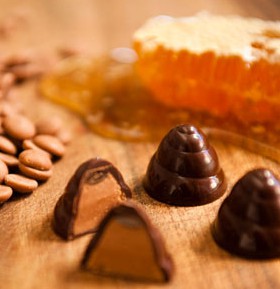
HIVE OF ACTIVITY Josophan's Fine Chocolates.
HIVE OF ACTIVITY Josophan’s Fine Chocolates.

A Writer’s sweet encounter with real chocolate.

ONE of the first pieces of lifestyle media I ever wrote was an interview with Leura’s beloved chocolatière Jodie Van Der Velden, at that time in the process of shifting her Josophan’s Fine Chocolates factory onto the Mall.

I was delighted that Jodie was willing to share the tribulations behind one of her early triumphs.

This article was published in the April-May 2010 edition of Blue Mountains Life magazine.

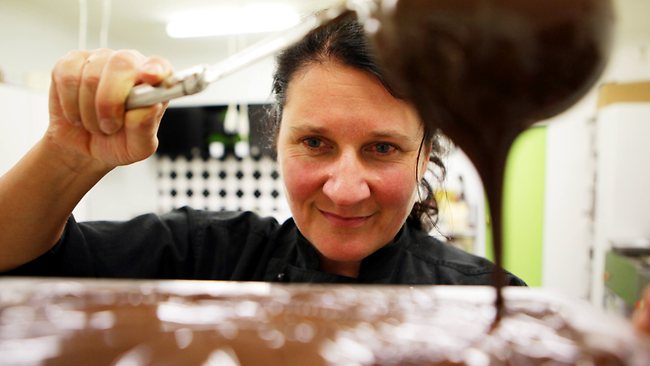
Jodie and her chocolate factory

Jodie Van Der Velden on sweet secrets she learned in Chicago.

JODIE Van Der Velden won her ticket to Chicago by taking a cake in an esky to the Hunter Valley. Not just any cake, but an elaborate six-layered gateau which she planned to “pop in the freezer” on arrival.

This was the day of the Australian Culinary Federation’s Callebaut Chocolate Dessert competition, and Jodie, husband David and daughters Sophie and Hannah arrived at 4.30am.

But the freezer door where they were staying wouldn’t shut with the gateau inside it. Jodie had to fill and seal the sizable gap with tape and hope it would chill. With only a few hours before Jodie was due in front of the judges, there was much to achieve for her ‘palet d’or et noisette’ without the resources of most of her competitors.

The list of ‘extras’ on this exquisite dessert included hazelnuts with chocolate soil and passionfruit cream. “I had to make the ice cream over electricity not gas, and by  9am I’d burnt it, and knew I wouldn’t be getting any sleep before the competition,” Jodie adds, wincing.

“Chocolate is complex, it has top, middle and end ‘notes’, just like wine.”

In the marquee where competitors plated their desserts, Jodie was found a small space next to a microwave. It was frustrating, she confesses: “Not just the lack of space compared to come others, but while I was trying to place 23-carat gold leaf on delicate lace chocolate spheres, the microwave door was being slammed by other competitors”.

“David and the girls were parking the car and had a bowl full of leftover gateau and garnishes with them. We hadn’t had breakfast in all the rush, so out came the spoons. By the time they’d found me plating-up my gateau, they quietly approached me and whispered: “It really is good Mum”.

“It confirmed for me just how good it was… they’re my toughest critics, I trust their judgement!”

Jodie walked-off with two gold medals and the overall first prize – an all-expenses-paid trip overseas for further chocolate training. From a field of twenty-three, including several culinary luminaries, this was a “very sweet victory” Jodie concedes.

She then had to decide which of the worldwide Callebaut Chocolate Academies she would visit.

“I’ve visited France and Belgium every year for the last three years,” she says when asked why she picked the United States over Europe, “but I’d never been to Chicago… it is a brand new academy, with state-of-the-art equipment, and, as it turns out, my trainers were French anyway!”

Jodie took two classes, one in chocolate sculpture and another in plated desserts.

Apart from new territory in the world of chocolate, what Jodie found in the Chicago food culture really inspired her. “There’s a real community feel to cuisine there,” she enthuses, “in some of the new popular restaurants you share larger tables, or sit together at bars, it’s more of a communal dining experience. There’s a very different atmosphere around food. I fell in love with Chicago.”

Jodie was also exposed to Molecular Gastronomy, where science meets cooking. For someone who tackled the best in Australia and came out on top, I imagine Jodie’s not afraid of a few scientific utensils.

SMOOTH SCIENCE Jodie is effusive about the work that goes into creating flavour.

“It’s all very precise,” she reveals of learning how to make caramel pearls. “They are made by adding one per cent alginate to a liquid, then dropping tiny pearls of it into a water bath that has two per cent calcium added to it. The reaction is such that when the droplets go into water, they develop a skin around the liquid sphere. They’re drained, then eaten. The outside skin bursts in your mouth and the liquid drizzles out. Yum!”

Jodie cites chef Ferran Adrià i Acosta of el Bulli restaurant in Barcelona, creator of Apple Caviar, as her inspiration in this pursuit of a sensual food experience.

“Whilst I wouldn’t say molecular gastronomy principles are used in my everyday chocolate work, the concepts surrounding it are very much part of the inspiration that moves me forward, experimenting with flavours, textures and presentation,” Jodie says.

Visitors to Leura are familiar with what Jodie and her husband David have achieved with Café Josophan’s in only five years. Sensing there was a gap in the market for a fine chocolate boutique on the Mall, Jodie embarked on an ambitious plan to make chocolates here in the mountains. Ambitious because Josophan’s is about the indulgent experience of chocolate over just taking something home in a box.

Jodie doesn’t believe that experience has to be the way it’s always been for Australian chocolate appreciators. “Chocolate is complex, it has top, middle and end ‘notes’, just like wine,” Jodie explains. “When this is considered, combinations of flavours can really bring out the best in fine chocolates or desserts.”

Partly because she insists on using fresh ingredients (meaning a limited shelf life for her chocolates), Jodie has created in Josophan’s a true chocolaterie.

“In countries like France and Belgium, high quality chocolate is part of everyday life. There’s a chocolaterie on every corner. Here in Australia we’re only just developing that tradition. We’ve gotten used to what I’d call ‘chocolate-flavoured confectionary’, which has a long shelf life and has been created in a laboratory to taste like chocolate and other flavours.

“Josophan’s chocolate is about using fresh ingredients, in our mint chocolates, for examples, we infuse fresh cream with real fresh mint leaves and add fresh butter.

“We’ve developed a signature style,” Jodie says when I ask about the shape and colour of her chocolates. “Many recognise our chili-flavoured chocolates, for example, with the bright swirls. There’s a lot of brightly-coloured cocoa butter being used out there now, but I’m a bit of a purist, we only use a little. I like my chocolates to look classic.”

Jodie is very keen to share her knowledge and hosts chocolate appreciation classes in the new Leura chocolate boutique. She laughs when I ask if she gets self-confessed chocaholics coming along.

CHOCOLATE WITH CLASS Chocolate appreciation at Josophan's.
CHOCOLATE WITH CLASS Chocolate appreciation at Josophan’s.

“Many people say ‘I don’t need a class to appreciate chocolate!’, but we’ve created a way for participants to learn how to discern quality in chocolate.

“We follow the process from bean to bar, exploring what happens during growing, harvesting and manufacturing that makes the end result so different amongst chocolates, and of course we also get a lot of chocolate tasting in!”

Jodie has many plans for Josophan’s, not least the intention to expand the chocolate factory from Blackheath to Leura. She also plans to introduce Josophan’s hot chocolate to the wholesale market, “something we haven’t been able to do with our fine chocolates,” Jodie elaborates, “due to their fragile composition and the use of no preservatives. We’ve added a real couverture chocolate flake (high cocoa butter content) to our hot chocolate mix, creating a luxurious blend allowing customers to make an indulgent hot chocolate at home.”

There’s a chocolate factory on its way to Leura. Rejoice!

© Michael Burge, all rights reserved.
 

Public opinion pulling the trigger in Bali

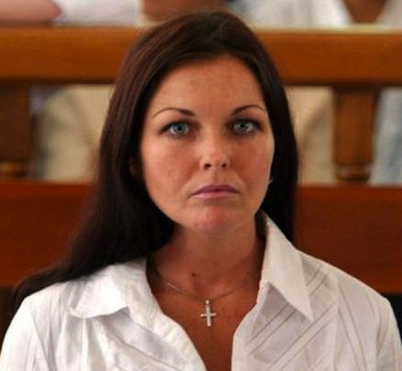
CHEERS MATE Schapelle Corby and her brother the day of her release on parole in February 2014.

A Writer on Aussies in Asia.

SINCE convicted drug smuggler Schapelle Corby’s parole from Bali’s Kerobokan Prison in Indonesia a year ago, speculation about the legal ramifications of her public behaviour has resulted in a long silence from the Corby family.

In contrast, a visibly desperate public relations campaign, underpinned by political and diplomatic representation, is hoping to sell a story of the reformation of the Bali Nine’s Australian ‘ringleaders’ Andrew Chan and Myuran Sukumaran, on death row in Corby’s former place of incarceration for their role in drug trafficking.

The collective public opinion of two sovereign nations are in play, and the outcomes of this legal and culture war are set to be devastating.

On the day of her release, the beers Corby and her brother thrust at the camera were seen as a symbol of Western excess. Not so in Corby’s native Queensland, where a beer in the hand is considered a human right in many quarters.

GANJA QUEEN Schapelle Corby.
‘GANJA QUEEN’ Schapelle Corby.

Victim. Villain. Money-hungry. Misunderstood. Everyone has a slant on the woman the Indonesian media dubbed ‘The Ganja Queen’. But how do Australians really see Bali, the tropical Indonesian island often dubbed ‘Perth’s Northernmost Suburb’?

Like Aussie jokes about the ‘Bangkok Hilton’, this one is only half funny. A large number of Australians would probably let themselves off the hook for thinking Bali is an unofficial Australian state.

It was there the terrorism of the Bali Bombings cut an unwelcome gash through the Australian psyche.

“Public opinion – Indonesia’s, primarily – is the strongest judge.”

We have deep connections to the Asian nations to our north. Some have become symbols of national pride or shame which can be referenced using only one word: Kokoda, Balibo, Changi.

Over time, a sense of ownership and entitlement has crept into our dealings with these sovereign nations, particularly Indonesia.

Nothing seems off-limits in this neighbourly relationship, from live export of Australian livestock to asylum seekers.

But when convicted drug smugglers like Corby, the Bali Nine, and Barlow and Chambers before them get caught up in Asian justice systems, many Australians take the tide of opposing public opinion in Asia personally.

These cases highlight that while foreigners are welcome to party in places like Kuta, and relax in regions such as Ubud, they are also expected to conduct themselves according to the laws and sentiments common within the world’s largest Muslim population.

Corby escaped life imprisonment and the death penalty, but her release into the Bali community is an ongoing test for her, and all Australians.

Chan and Sukumaran have lived with death penalties since 2006, and, if accounts are to be taken at face value, they have made a valiant go of their death row lifestyle, insofar as it’s possible to show their advocates and the authorities that they have been reformed while on the inside.

And it’s that difficult-to-impart message which may or may not save them from the firing squad, or see Corby return to Australia after a further two years’ parole.

Public opinion – Indonesia’s, primarily – is the strongest judge, prison guard and executioner for all of them.

The outcomes of both cases will challenge notions that Australians have about Indonesians, threatening the idea of a tourist-friendly population intent on pleasing us with the reality of a people who have opinions, thought and beliefs of their own, in addition to a thriving tourism industry.

In a sense, Corby is now having the Bali holiday which was so suddenly curbed in 2004, although it’s undoubtedly less of a beer-soaked boogie-board ride and more a mindful retreat from Australian public social mores.

If Indonesia permits her to come home, she might teach Aussies a thing or two about the real Bali.

Whether they survive or not, Chan and Sukumaran will do the same.

But none of them will ever escape public opinion.

© Michael Burge, all rights reserved.