
Tag Archives: Books

Mystery Tour of Market Basing, Agatha Christie’s Mare’s Nest

The first stop in a new series of literary excursions explores how the Queen of Crime created a rural rabbit hole to augment her oeuvre


NOT FAR FROM genteel St Mary Mead where Miss Marple resides, less than two hours by car from Hercule Poirot’s London pad, is an essential crime readers’ destination that even staunch fans of Agatha Christie have probably forgotten about.

As the name suggests, Market Basing is a typical English market town. The wide central square is the main clue about that, although a slow tractor on any road approaching the place will likely be your first encounter with local farmers.

But Market Basing is no backwater: Christie delved into the district regularly throughout her oeuvre.

Poirot and his sidekicks Captain Hastings and Inspector Japp took a short break there in the 1920s; and Poirot and Hastings returned in the 1930s. Superintendent Battle worked a case linked to the town in 1929. Miss Marple probably never went, but she did know of a bus conductor who serviced the St Mary Mead to Market Basing service in the 1950s; and amateur spy duo Tommy and Tuppence Beresford got embroiled in a scandal there a decade later.

SALES SQUARE: Shrewsbury, an English market town

With its growing outer-urban population, the town has a general hospital (which features in Crooked House, 1949). There’s a police command (called upon in The Secret of Chimneys, 1925); a thriving high street (which inspired a shopping trip in The Seven Dials Mystery, 1929), and Hellingforth Film Studios (a key location in The Mirror Crack’d from Side to Side, 1962) is just six miles away.

But the town’s perennial industry is real estate, and the streets are replete with busy agents offering desirable farms, manor houses for rent or purchase, and large tracts of land.

Some reckon Market Basing is Christie’s stand-in for Basingstoke in Hampshire, or an homage to her final home in the Oxfordshire village of Wallingford; but true fans know full well the township is actually in the county of Melfordshire, and if you don’t know where that is you have some reading to do.

Nobody Knows Us

Start with Christie’s 1923 short story The Market Basing Mystery (published in Poirot’s Early Cases, 1974) in which Poirot, Hastings and Japp take a weekend away from the London rat race.

The story opens with a hearty pub breakfast while Japp celebrates the benefits of a gents’ country break in a place where, “Nobody knows us and we know nobody,” he says. Hastings is narrator and he makes deft observations about men, appetites and rabbits before the renowned sleuths are called on to investigate a local locked-room mystery.

Most of the action in Dumb Witness (1937) takes place in Market Basing after local spinster Emily Arundell writes to Poirot, apparently after her death. The Belgian detective recruits Colonel Hastings to drive him out to the town on the scent of a clever poisoner Poirot refers to as a rabbit.
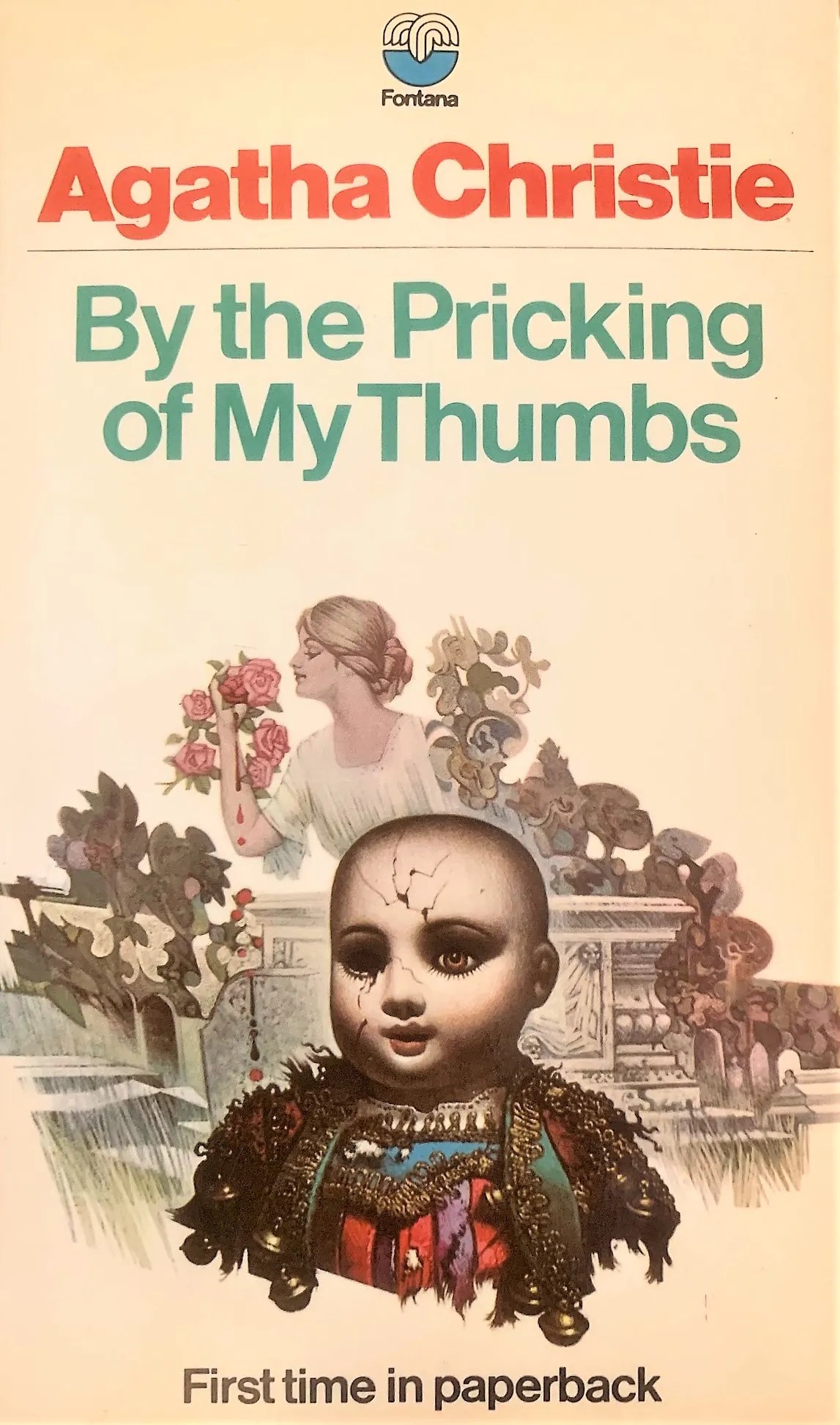
A generation after World War Two, the progress of Market Basing can be observed by joining Tommy and Tuppence Beresford in By the Pricking of My Thumbs (1968), an intriguing chase that begins in a nursing home and leads back to Market Basing, flushing out several hares responsible for missing women, jewel heists and derelict houses.

It’s here, in the last decade of Christie’s life, that she may have left clues about a rather brazen rabbit hole at the core of English country life.

Ending Nowhere

Analysis of Christie’s massive literary output often draws accusations of lacklustre storytelling. Crime author Robert Barnard’s review of By the Pricking of My Thumbs is one example:

“Half-realised plots and a plethora of those conversations, all too familiar in late Christie, which meander on through irrelevancies, repetitions and inconsequentialities to end nowhere (as if she had sat at the feet of Samuel Beckett).”

I suspect Barnard missed the point of a novel that employs meandering, memory loss and ageing as major themes; but love or loath her work, Christie was a shrewd observer of English society and documented what she perceived as its decline in the late 20th century.

She was careful to add a new county name – Melfordshire – for the setting of By the Pricking of My Thumbs, considering the changes she witnessed under the Local Government Commission in the mid-1960s; and the threat of a dormitory town being built on major landholdings in the Market Basing district in that novel.

But the Queen of Crime could be accused of a major plot hole in her collected works when she gives Poirot and Hastings absolutely no recollection of their 1923 weekend in Market Basing when they revisit the place in 1937.

Did Dame Agatha simply forget her earlier work, or are we supposed to take this crime fiction author as she presents herself, alleged ‘errors’ and all?

Rather deliciously, if we do take her at her word, Market Basing becomes even more sinister than it first appears.

Awful Things

Let’s start with a fact: Hercule Poirot rarely, if ever, forgets.

Since neither he nor Hastings refer to their 1923 weekend in Market Basing while revisiting the town twice during 1937 in Dumb Witness, they must be avoiding the memories for a reason.

RABBIT HOLE: Collection of Rabbits and Hares, 1897

Could it be embarrassment, an “I won’t mention it if you don’t” pact? Clues lie in Hastings’s 1923 pub brekky musings from a Belle Époque poem with suggestions of depravity.

“That rabbit has a pleasant face,
His private life is a disgrace.
I really could not tell to you
The awful things that rabbits do.”

At first glance, Hastings, upstanding gentleman that he is, appears to be comparing Market Basing’s residents to randy, big-eared, four-legged herbivores. But the depravities he euphemistically refers could be those of the men around the table.

Read the opening page of The Market Basing Mystery through this lens and the hearty breakfast devoured after a night in a town where “nobody knows us” has the vibe of the morning after a boys’ night out.

None of the men reacts to Hastings’s rabbit reference. Japp actually changes the subject back to the food. The trip was all his idea because he’s “an ardent botanist” able to reel off the botanical names of “minute flowers”.

But what if Japp’s botany is a way for a Scotland Yard gumshoe to describe his weekend predilection for plucking specimens of the two-legged variety?

If so, it’s hardly a surprise that Poirot and Hastings never again mentioned their lost weekend in Market Basing.

Specimens in the Hedgerows

Four decades on from this short story, Christie returns to the botany of Market Basing in By the Pricking of My Thumbs when Tuppence Beresford meets the vicar of Sutton Chancellor (a village in the parish) who is searching for a lost headstone in the churchyard in 1968.

At that stage, the novel is shaping up to be a beguiling, sinister tale with references to clandestine outdoor trysts, pretty young women visiting strangely empty houses and “getting into trouble”, and a serial killer who attacks girls in the woods.

So when Tuppence asks about one particular house, just like Japp in 1923 the vicar changes the subject: “… you can find quite rare specimens. Botanical, I mean,” he says.

Tuppence refuses to be fobbed off by botany, but all the talk of flowers in the hedgerows along the lonely roads around Market Basing in the 1960s might be coded language from a devout man warning Tuppence of local “goings on”.

Masterful Illusion

Rabbits and hares, flowers and hedgerows… if it all sounds like a mare’s nest, that’s because it’s supposed to.

Read Christie’s three major Market Basing stories in sequence and you’ll see the masterful illusion she wove around this district. There are no spoilers to be had (Christie took great care in that regard), but you’ll be one step ahead of Tuppence Beresford in the 1960s throughout By the Pricking of My Thumbs when you’ve had a taste of the town’s depravity from the 1920s in The Market Basing Mystery.

It’s now over half a century since Market Basing last cropped up in crime fiction. Since then it’s no doubt been absorbed into another county, the hedgerows have been bulldozed, and several dormitory towns raised and renovated many times over.

But you can still enjoy the botanical ‘specimens’ and ‘wildlife’, now you know what you’re looking for.

Main image: A Hare in the Forest, Hans Hoffmann, c.1585 (Getty Museum)

New novel coming to light

ONE OF THE best day jobs I ever had was working as a tour guide at Jenolan Caves, the renowned limestone formation in the World Heritage-listed Greater Blue Mountains region of New South Wales, Australia.

Sixteen years since I earned my guiding boots, I’ve landed an international book deal for a novel that emerged from the thousands of steps I took through the tunnels and chambers of the oldest-known open cave system in the world.

Titled The Watchnight, this historical crime novel is inspired by real people and events and cuts through 150 years of tourist tales to recreate a time when the caves sat on the colonial frontier, a place settlers viewed with suspicion, not wonder. 

Extrapolating a story from this intriguing place has been a long-term challenge. When I trained as a guide in late 2008, there was little written material on hand for new recruits. I was left, like many before me, to glean the stories of the caves from my more experienced peers in the guides’ office.

CAVE FRONTIER Devil’s Coach-house, Fish River Caves, by Lucien Henry, 1883 (Art Gallery of NSW)

What drove me were the stories few wanted to talk about, particularly the lives of Jenolan Caves’ traditional owners, the Burra Burra clan group of the Gundungurra people; the cattle farmers who gradually occupied the same countryside; the Wesleyan Methodist community of the nearby region once known as Fish River Creek, now Oberon, and the role of women in early cave exploration.

Crime was never far from the colonial experience of this region. The massacres and random killings of Aboriginal people and reprisals against settlers, now referred to as Australia’s Frontier Wars, included widespread violence against women, both Indigenous and settlers. The occupation of the land was not possible without the importation of convicts to build roads and towns, a mounted police force to impose British law, and Christian missionaries to impose ethical standards.

It’s from within this volatile battleground that The Watchnight emerged.

Cave Girls

I undertook years of research as The Watchnight came together, and wrote a few articles along the way about my explorations into Jenolan’s past. The first saw me capture the many tales about a young cave explorer called Katie Webb (and her gang of ‘Cave Girls’), whose discovery of a chamber in the Chifley Cave in the 1880s has long been a source of speculation.

A never-before-published collection of letters by English crime writer Agatha Christie was a source of great delight when it appeared in 2013, since it detailed her visit to Jenolan in the 1920s. I published an article about the links between her world tour with husband Archie, their slightly fraught jaunt to Jenolan Caves, and her notorious 11-day disappearance in 1926 back in England.

My guiding days ended in 2012 when I moved interstate, but I was lucky enough to return in 2017 for a private tour of the Arch Cave with a former colleague, in search of historical signatures, including one of early female cave explorer Jane Falls.

The Watchnight’s heroine Oona Farry is inspired by Jane’s explorations, and those of other real-life figures in Jenolan’s history.

BUY

This story is unique because it explores crime, punishment and forgiveness in the context of charismatic faith; tackles stories of the Frontier Wars that don’t often get aired in fiction, particularly toxic masculinity, and emphasises female, LGBTIQ+ and Indigenous empowerment at a time when they were not afforded much agency.

Writer, identify yourself!

JOURNALIST and writer Michael Burge spent over six years writing full time, including three years contributing online articles, before embarking on the publication of a range of books across 2015-2016, titles he wrote while developing a social media readership.

The Write, Regardless! series of no-nonsense articles explains how Michael went from a good writer, to an Amazon bestselling author (without getting ripped off along the way).

Is Write, Regardless! for me?

“The reason that manuscript remains unpublished is not the sick, sad, selfish world, but because you have not published it yet.”

Here’s a checklist. I’ll be honest and upfront in these posts. I’ll also keep things light, because I have just finished publishing some very serious books, and I need a lift! I’ll link to Wikipedia quite often, so if you don’t like updated, peer-reviewed, democratised information, Write, Regardless! is definitely not for you.

Wikipedia? Are you serious?

I regularly consult Wikipedia because many online entities don’t really want us to know exactly how they work (so they can charge us money). At Wikipedia, other people have spent time sharing how things work, and I’m assuming you’ve got enough of a bullshit monitor that if someone hacked Wikipedia and posted: “Marilyn Monroe was actually a donkey”, you’d work out they’re trying to trick you, right?

If you don’t identify yourself as a writer, no one will do it for you.

Hopefully you’re coming with me on the crazy ride that the Write, Regardless! series will be, aimed at anyone who can write, or perhaps has a ’embarrassing’ manuscript sitting in a desk draw or on a computer somewhere. The reason that manuscript remains unpublished is not the sick, sad, selfish world, but because you have not published it yet. Time to get real, join the publishing industry, and do it yourself. Many thousands of successful writers have taken this path before you. Many have been ripped off by charlatans, and I am here to help us avoid that.

Don’t start by writing anything

Writing is way down on the list of jobs you need to start doing. I’ll assume you know how, have some work under your belt, and a regular writing schedule. Your first task is to identify yourself so readers can find you. There are a few ways to do this. The ones I know about are Gravatar and Google. Because you are the best spokesperson of your work, in fact probably its only spokesperson, eventually you’ll want readers to find you.

Gravatar is good

A ‘globally recognised avatar’ does a really cool thing – wherever you participate on the internet, a Gravatar lets your identity follow you, and if people like the comment you made on The Huffington Post, they’ll be able to find your website, and therefore maybe get interested in your writing. That’s called being discoverable. If you’d rather hide behind a name like ‘Hawkwind Gamester of the Windy Witches’ and have no identifiable online presence, go for it, but best put that name on all your books, not your real name. If you want people to start identifying and understanding you, and therefore your books, get a free Gravatar account today, with a real headhot of yourself. Gravatar accounts go hand in hand with WordPress websites (more on those in coming articles).

Google is good

A few years ago, Google got even savvier than it already was and started allowing people access to a Google account linked to all kinds of portals, including Blogger (the alternative to WordPress for website hosting). The best part about a Google account is it lets Google know what you’re up to. Don’t be scared! Telling the world’s largest online information aggregator what you’re up to is called publicity, essential for publishing (see what I did there? The root word is the same in publish, publicity, publication… your public, darling). Sign up for a free Google account. Here’s mine.

Set and forget your Google and Gravatar accounts

You’re not going to need to go in and out of these places very often (phew). Eventually I’ll explain how to update them automatically without leaving your website. For now, the only other thing to do is to keep a list of your account names and passwords – you’re going to end up with a few of them during Write, Regardless! Keep them somewhere safe and accessible.

google-monster-1Keeping online platforms in their place

Online platforms will continually promote ‘bells and whistles’ (attractive additional features or trimmings). Very often, they’ll try to trick you into thinking you need ‘premium’ products, or provide extra information like your email address or your mobile phone number, in order to increase your security levels or to maximise your visibility. I have the most basic accounts on Twitter, Facebook, Instagram, LinkedIn, Google, SoundCloud, YouTube, Canva, Ingram Spark, Amazon Author Central (don’t freak out at this list, I will explain them all in future articles) Gravatar and MailChimp, and until recently the free WordPress account, which I upgraded only so I could host video/audio marketing content. Stay on your guard when navigating online platforms. Don’t click ‘yes’ unless you’re sure you have to. ‘Cancel’ or ‘skip’ buttons are best unless you’re sure you want to alter something.

Sharing information

Online platforms will sometimes ask your permission to share your information with your followers, which you’ll want to do, since it’s these networks of friends, family and interested people who are our readership base. Say yes to those prompts, it’s simply a legal requirement of the platform to ask.

Internet fears

The internet can be a big scary place, and rip-off merchants are out there, sure, but I have not come across any real monsters. The only times I have wasted money on my publishing journey was through being ill-informed. The main internet shenanigans I see are the corporate obstacles that big companies place in the way of their competition, and sometimes writers have our pathways impacted by these shifts that are out of our control. Move bravely between giants!

write-regardless-cover
BUY NOW

Recap

Get your free Gravatar and Google accounts sorted, start a safe place for usernames and passwords, then get on with your day job secure in the knowledge that the internet now knows who you are. Don’t be scared, because that means readers! (Whoosh! There go your internet fears!).

An extract from Write, Regardless!

© Michael Burge, all rights reserved.