A Writer’s review of David Dyer’s The Midnight Watch
“This novel grows organically into the rarest of literary adventures: a journey into the very heart of writing and all its private motivations.”
IN the scratchy, indefinite pulses of Marconi transmissions – the standard wireless communication in the era of the great transatlantic ocean liners – first-time Australian author David Dyer rediscovers a story at once indelible and elusive, of human frailty that turned the world order on its head.
This shorthand of ship radio operators, whose brief and highly coded messaging system kept ships in communication and carried telegraphic messages to shore for passengers, crew and commercial interests, was past its infancy when RMS Titanic embarked on its maiden voyage, but it was certainly not a definitive means of delivering clarity under pressure.
Yet the lives of more than 1500 people came to rest upon it.
The Midnight Watch holds human communication at its core.
Protagonist John Steadman is a journalist, a newshound the likes of which has all but disappeared in the twenty-first century. He has a keen sense of injustice, having endured grief and loss as a young man, scars that have made him into the industry’s ‘body man’, reporting on untimely, unjust deaths.
By the time of the sinking of the Titanic, this fictional character is so skilled he’s able to navigate his way into what he sees as the real story: the factual mystery of the ‘other’ ship – the Californian – which sat in sight of the Titanic as the latter foundered, firing eight distress rockets, each of which the crew of the Californian witnessed, and did nothing about.
It’s the supreme postmodern maritime mystery, as replete with conspiracy theories as the Shakespeare authorship question, and Dyer tackles it through recreating the players and the dramatic tension that existed before the world knew about the Californian’s failure, taking readers on a compelling journey.
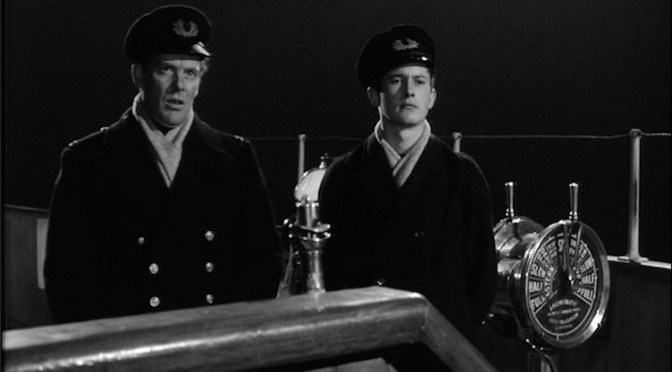
The tale pivots around the inaction of two men: Captain Stanley Lord, who remained in his bed during the two-and-a-half hours the Titanic sank, and his second officer Herbert Stone, who reported what he saw to the captain via a narrow pipe, yet did nothing more when the captain failed to act.
CALIFORNIAN CAPTAIN Stanley Lord.
But in the end, Steadman cannot escape the way the ultimate truths remain fractured and inaccessible, lost in the pulsating radio signals that passed suddenly from workaday passenger telegrams to the desperate calls that were heard only by ships too far away to lend assistance; in the breathy, frustrating exchanges between two starkly different men onboard the Californian, up and down the speaking tubes; and in the explosive, beautiful, but ultimately meaningless sparkles of distress rockets that may as well have been fireworks launched for passengers’ pleasure off the listing deck of an unsinkable ship.
You know exactly what is going to happen, and you know the horrifically short timescale, yet you still want to reach out and lift the hapless victims out of the water you know will be too cold for them to endure.
The fate of the 1500 drowned is universal knowledge by now, but Dyer uses it to place the reader in a vortex of failure, after making the case for the thinnest, most abstract and unexpected of causes for the men who allowed the disaster to happen under their gaze.
The entire Industrial Revolution went down with the shock of it, leaving a century of war and insecurity in its wake that many believe we are yet to recover from.
This novel grows organically into the rarest of literary adventures: a journey into the very heart of writing and all its private motivations. Escapism and fantasy, avoidance, guilt, lust, fear and a pulsating sense of injustice.
I agree with other reviewers who noted the author’s unnecessary use of repetition on occasion – readers never require a retelling of moments we’ve already heard; and at times, during the rising action of the book, I questioned the very set-up of the whole fact-fiction combination.
But where it counts, The Midnight Watch is absolutely gripping and does not fail to deliver.
“It would lower the temperature of the political debate and would provide some back-up support to any politician who takes this thing on in future,” Oakshott said.
Despite voting against marriage for same-sex couples in parliament, Windsor started wavering in favour of relationship equality after attending a same-sex civil union. “If it came down to my vote [in Parliament] I’d have to have a really hard think about it. But that ceremony had an impact on me. I’d probably vote for it,” he said.
Yet he plumped for a public vote instead of just wielding his parliamentary power, a move which has set the tone for the conservative approach to marriage equality in this country ever since: why deal with the pesky issue of allowing gays to marry when it can be handed over to the people?
Even the Greens were up for a referendum in 2013, with Christine Milne wanting to take the debate away from former Prime Minister Julia Gillard and then opposition leader Abbott, labelling them both “on the wrong side of history”.
But what happened to the marriage equality plebiscite in the Senate late on November 7, 2016, is a ‘David and Goliath’ tale of how Australian LGBTI found our voice.
Ask the people
Abbott and the hard right must have rubbed their hands together on the night of August 11, 2015. With this strange-sounding, hard-to-spell latin word – plebiscite – they’d well and truly snookered marriage equality advocates and lobbyists with a matching slogan that would appeal to the lowest common denominator: “Ask the people,” usually thrown with a nifty kicker: “What are you afraid of?”.
Australia hadn’t experienced a plebiscite in more than a generation. The last came in 1974 under Gough Whitlam, and it asked Australian voters about our preferred national anthem. We selected ‘Advance Australia Fair’ over ‘God Save The Queen’, but Malcolm Fraser ignored what the people said and reinstated the old song. It wasn’t until Bob Hawke altered the song sheet for good in 1984 that our voice was respected by parliament.
The cheers within many LGBTI households were loud the night Abbott was dumped, but just as many warned about the chance of betrayal. We’d been duped before by Julia Gillard, who’d presented as progressive but soon adopted an anti-equality mantra, and Turnbull disappointingly followed suit. His mantra was intoned differently, dictated by the National Party from the moment the new PM signed the nation’s most secret power pact – the Liberal Party-Coalition agreement. Clearly, a plebiscite was to be the only way forward under this regime.
What are you afraid of?
The question was so powerful it spread its tendrils throughout the Australian LGBTI community. A public vote sounded good. It sounded fair. Objections were hard to come up with once it had been embedded in the Liberal Party’s suite of election promises.
Only marriage equality lobbyists, it seemed, witnessed the way the rhetoric changed throughout the lengthy election campaign. In the final week, marriage equality barely left the news cycle, the plebiscite positioned as some progressive torch lit by true believers. But many of us asked how on earth a policy championed by Tony Abbott, dreamed up in rural heartlands by conservative thinkers, could be in any way beneficial to LGBTI?
Rodney Croome.
The problem was there was very little detail about how a plebiscite would be managed, and the Coalition was painfully shy about giving it, which generated credible reports that the Coalition might well make the outcome non-binding and require a majority of electorates to pass. The pressure was enough for Turnbull to come clean before the ballot: Coalition MPs could snub their noses at any plebiscite outcomes.
After the election, the diverse Senate and the return of Pauline Hansoncaptured most of the media’s attention. During the fallout, one of the highest-profile marriage equality activists in the county resigned from the organisation he’d created in 2004.
Over its first decade, AME had become the peak marriage equality advocacy group in the country, so there was some explaining to do. Doug Pollard at The Stirrer managed to get AME’s Alex Greenwich (Independent NSW MP), on the record answering serious questions about why the group had not campaigned harder against Turnbull’s plebiscite during the election; but the marriage equality waters were muddied, and there weren’t too many clear answers to be found anywhere.
Plebiscite or nothing
The mantra from within the Coalition quickly evolved. It was now ‘accept the plebiscite or wait indefinitely’. On a sunny Sunday afternoon working the Brisbane Markets with my husband, Richard and I talked through what was at stake and agreed: if it came to a choice, we were prepared to wait for our New Zealand civil union to be recognised in our home country.
We also knew what it was to knock on doors asking for our human rights, having petitioned our region to gauge the mood. Our results showed the electorate of Bowman in South East Queensland was overwhelmingly behind marriage equality, but the process was painful. The question brought out the first homophobia either of us had been exposed to in more than a decade.
As we shared our story, friends in the lobby networks started to come out on the same page: the plebiscite was a great risk to mental health, and there was a sense that had AME campaigned harder against it during the election, Turnbull may not have won. We all reminded ourselves that Doug Pollard had called on AME to change its ways within a week of the election, even as Turnbull’s victory hung in the balance and everyone was speculating about the formation of the new Senate, which would stand as the last line of defence against the plebiscite.
Several Coalition MPs relied on the positive outcome of the Irish marriage equality referendum, using mantras like ‘dancing in the streets’ and ‘bringing the nation together’. This was quickly countered by a study showing a different picture of the negative Irish experience.
The message was clear: the majority of people who would be impacted by marriage equality in Australia – that is, the LGBTI community – were prepared to wait for a parliamentary free vote on our human rights. We demanded the Parliament ditch the plebiscite.
Under any circumstances
AME and its new arm Australians For Equality (A4E) adopted strong anti-plebiscite language in response, and called for the nation’s LGBTI activist and advocacy groups to unite, but the devil was in the detail.
Once again it was Doug Pollard who covered the story: even though the majority of Australian LGBTI activist and advocacy groups were opposed to the plebiscite with AME and A4E, a smaller collective – just.equal, Shelley Argent, Rodney Croome and Rainbow Families (Victoria) – wanted to add three simple words to the anti-plebiscite declaration.
“Our position, and the position the LGBTI community wants us to advocate, is very simple: no plebiscite under any circumstances, just a free vote,” a statement issued by just.equal revealed.
Shove it
Miranda Devine can always be relied on to capture the moment. She went out early and hard and told the LGBTI community to take the “olive branch” offered by conservatives and “shove it where the sun don’t shine”. Classy dame, Miranda, but her vitriol, and where it was specifically aimed, showed savvy pundits knew the plebiscite was in its death throes, attacked not by Bill Shorten and Labor (the preferred chief suspects of the Coalition), but by us, the majority of the nation’s LGBTI community.
Rodney Croome recaptured the moment from Ms Devine: “For the first time at a federal level the voice of the LGBTI community has been the leading voice on an issue that affects us more than anyone else. For the first time our mental health in the face of prejudice and hate has been a primary consideration for many law makers. For the first time we are seen not as an issue but as people.”
The Liberals tried reviving the plebiscite with a compromise deal offered by Warren Entsch – an electronic online poll with a lower price tag. But while he remains a great supporter of marriage equality and has done much to raise awareness about the issue in the Liberal Party, Entsch still struggles with the reality that any vote that is not binding on Parliament is a dodo.
Turnbull and his team bravely flew the rainbow flag all the way from the House of Representatives to the Senate vote, repeating every old myth and mantra on the way; but after a short life, this unnecessary, expensive, divisive shit of a policy has been slain.
The Prime Minister can hardly be disappointed, since he was opposed to a public vote on human rights before he shoved Tony Abbott out of the top job, and today’s Senate vote rids the Upper House of even more residual Abbott stink.
A Writer’s Review of Alan Bennett’s The Uncommon Reader.
“Goes to the very heart of what literature does.”
ALAN Bennett has made a career out of writing about ordinary people, in fact he seems embroiled in a competition with himself to ‘out-ordinary’ his cast of characters who fade into the wallpaper, noticing the dust and fingerprints on the skirting board as they disappear.
From his gripping Talking Heads series to the divine ordinariness of memoirs about his Yorkshire family in Untold Stories, this has been a fascinating journey into the humour and pathos of the seemingly mundane.
ROYAL MALADY Nigel Hawthorne and Helen Mirren in The Madness of King George. (Photo: Keith Hamshere)
At the other end of his oeuvre sits Bennett’s ruminations on those most would class as ‘extra’-ordinary, most notably in Bennett’s stage- and screenplay The Madness of George III, famously altered to The Madness of King George at the cinema so as not to confuse US audiences about having missed I and II in the series, a ‘Bennettian’ twist if ever there was one.
Written a decade later, The Uncommon Reader is a beguiling companion piece to that previous study of royal character and frailty. Like King George, Queen Elizabeth II is quickly overtaken by something those around her consider madness after a fashion, when she exhibits a surprising appetite to read, and read voraciously.
As the novella’s protagonist, Elizabeth proves every bit as plucky, observant and youthful as a Jane Austen heroine. Reading affords her a sense of escapism and leads her to seek connections with those around her.
But a pervading sense of regret waits around every corner for Her Majesty. As literature becomes the great companion that Bennett observes is missing from this privileged life, it comes with a realisation of enormous opportunities missed.
In this regard, the Queen becomes less Lizzie Bennet and more like the central protagonist in one of Bennett’s monologues, which I’ll speculatively title Mrs Mountbatten Turns Over a New Leaf, in honour of how his characters always seem to find the key to reaching out.
Whether they manage to turn that key – and thereby escape their circumstances – is the rich seam of Bennett’s tragicomic style, and there are some stark differences between the journey of Queen Elizabeth and the classic Talking Heads mix of self-delusion of characters who tend to remain in their comfort zones.
The Uncommon Reader is a divine little diversion, but don’t be fooled by its apparent simplicity.





 In this regard, the Queen becomes less Lizzie Bennet and more like the central protagonist in one of Bennett’s monologues, which I’ll speculatively title Mrs Mountbatten Turns Over a New Leaf, in honour of how his characters always seem to find the key to reaching out.
 Michael Burge Media