I NEVER SET out to be a crime writer, it was something that crept up on me like the growing awareness of the killer in a whodunnit, and it all started with my early love of Agatha Christie novels.
The prospect of my debut novel Tank Water being consigned to the crime section of major bookshops was a little unsettling; but considering I was a debutante at the age of 51, I had little time to dissemble and embraced my place in one of the world’s highest-selling genres.
Crime has opened doors, not least the invitation to join the board of BAD Sydney, the writer’s festival that platforms journalists, academics, podcasters, broadcasters, film-makers and a myriad of professionals from the justice system.
I’m often asked whether I struggle with the brutality of murder when reporting or writing fiction in which the body count mounts up. Consideration around this is so common (and empathic) that I thought it wise to put myself through a challenge a few years ago, to check if I was becoming desensitised.
Pain and trauma
I sought the most disturbing real-life crime I could find, and it didn’t take long to land on Helter Skelter, the seminal book on the Sharon Tate and La Bianca family murders in California in 1969, said to be the highest-selling true-crime publication ever.
Written by trial prosecutor Vincent Bugliosi and Curt Gentry, this incredible work lays bare the sad and sordid case in a manner that did spark anxiety in me, mainly because the killers – the so-called Manson family – had been part of the popular hippie counterculture of the era.
But I got through it intact, in some ways relieved that I was still able to be shocked by exploring shocking crimes, yet not stymied in my own work.
What drives my interest in crime writing and interviewing crime authors, is that crimes – murders in particular – rarely exist in a vacuum without other themes of grief and justice.
Dead bodies do more than throw up murder suspects, they cause pain and trauma to loved ones and communities. For me, the best crime writing delves into this territory with sensitivity and courage, because it can lift a crime novel’s significance above mere entertainment.
The exploration of grief in crime novels is rare, and although they say order needs to be restored by the end of a classic whodunnit, life is rarely as neat.
I’m also captivated by those aspects of victim/survivor’s lives that show resilience and endurance, where the hope of justice can sometimes be stronger than justice itself, posing the question: is justice ever really attainable?
It’s a fascinating concept, justice, a word with almost no effective synonym, one that means different things to different people.
It meant something to Doris Tate, Sharon Tate’s mother, who worked tirelessly to ensure the voices of surviving families were heard in the Californian judicial system. Her statements during the parole hearings for the convicted former members of the Manson family stand as a critical enduring addendum to Helter Skelter.
Restoring order
Agatha Christie loved a little order restoration at the conclusion of her books, although she didn’t always wrap things up neatly. In her works, lovers survive death and destruction while impatient philanderers get their just desserts. Family members are reunited even while others are split asunder. Most baddies get it in the neck, but some get off scot-free.
This tension between crime and punishment is one of the hallmarks that drives BAD Sydney, the festival that explores what crime can tell us about ourselves.
For this year’s event I’m delighted to be hosting two sessions: Bush Justice and Queer Crossroads, both explorations of how law and due process have been lacking in some of Australia’s marginalised and remote communities.
See you there!
BAD Sydney takes place at the State Library of NSW from August 11-14, 2024. Book now.
OPINION: They say timing is everything, but there’s a stark irony about World Pride happening throughout Sydney at the same moment as an inquiry into some of the harbour city’s darkest and most shameful years.
It’s been described as a world first, but this inquiry is unlikely to make global news right now. There’s no way to spice up hours of former and current NSW Police and academics being questioned about historical deaths that were possibly driven by gay-hatred, and the multiple internal police reviews around them.
A pragmatic process is called for, yet the monotony pervading the lengthy daily hearings is amplified by the sense that we’ve been here all too many times before. It would be easier to just file away all the evidence (some 220 boxes of paperwork and 77,000 electronic files) and head to the beach to enjoy what’s left of the warm weather.
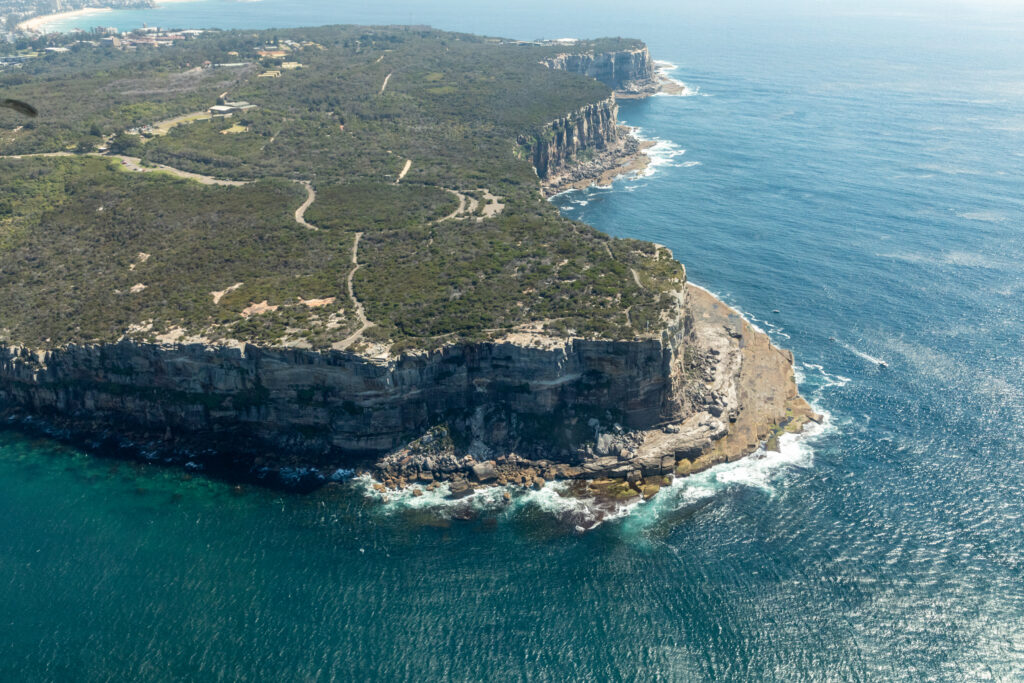
North Head, Sydney Harbour
But we won’t escape it there. Sydney’s seaboard was the location of many of these untimely deaths, where mens’ bodies were either discovered at the foot of the sandstone cliffs standing like ramparts above the mighty Pacific Ocean; or they disappeared without a trace.
Were they pushed, did they fall, or jump? The question gets tumbled around by the white-topped breakers in a constant search for certainty. Adding to the lack of clarity is that many of these deaths happened in places where marginalised people were finding solace on the margins: the gay beats scattered around the quietest corners of Sydney, Newcastle and Wollongong.
It’s partly why crime is often hard to discern from misadventure or something else, since such places are also where some go to end their lives.
Stunning escalation
Most compelling are the life stories starting to emerge from the gloom. Unlike others before it, this inquiry is allowing us to look beyond names on lists of cold cases by sharing details about the partners, families and careers of the long dead. We’re getting to see many of their faces for the first time.
A splash of case reviews earlier this year threw up an unexpected submission that evidence of homophobia had been overlooked by police investigating the brutal 1992 murder of John Gordon Hughes.
It was a stunning escalation in an inquiry that is yet to find a lightning rod of justice.
The commission has also tabled evidence that many men on the list of cases were likely not homosexual and probably didn’t die at the hands of others, yet had their unsolved deaths caught up in the ongoing saga of the gay-hate ‘crime wave’.
To its credit, this inquiry is not underlining the difference. As their cases come up for submission, the dead are being remembered equally regardless of sexual orientation or gender, insofar as these things can be ascertained at such a distance. Families and friends across the state have been waiting for answers regardless, and this inquiry is looking back to times when policing standards – particularly around homicide investigations – was very different to today’s expectations.
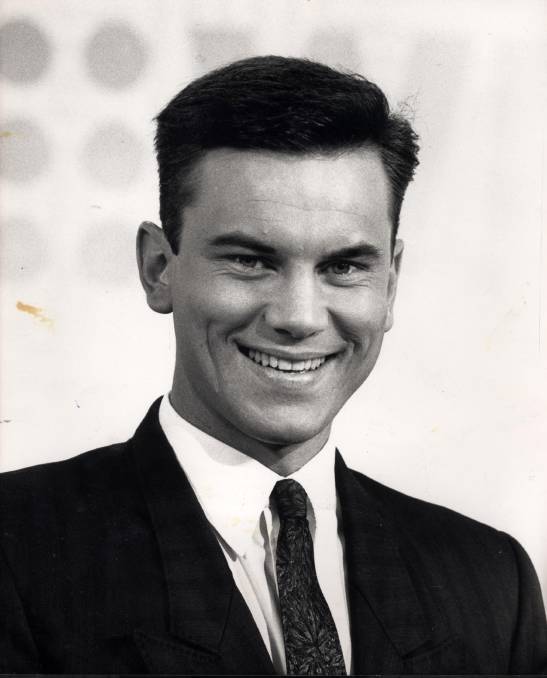
Wollongong newsreader Ross Warren, who went missing at Bondi in 1989
Relatives were not always kept informed about the progress of cases that proved difficult to solve. Some submissions have highlighted the lack of effective police communication with family and friends of victims. These connections might have been a source of leads and useful information, such as the sexual orientation of the deceased and thereby the possible context of the death, if only they’d been asked.
For other cases, sadly, there appear to be no family members watching. With terms of reference stretching back five decades, this inquiry sometimes feels like a litany of separation and rejection in which there’s little hope of snatching much from the jaws of time.
But one persistent parent can arguably be credited with bringing about the whole reckoning. Kay Warren, mother of 25-year-old Wollongong newsreader Ross Warren – who went missing near Bondi in 1989 – just wouldn’t let up about exactly what police were doing to investigate her son’s disappearance.
We should spare a thought for her determination and that of so many other family, friends and allies of the dead and missing, including the police who paid heed.
Once World Pride has left town, this inquiry will turn the spotlight on further unsolved deaths that we’re still waiting to know about; but commissioner Justice John Sackar doesn’t have long.
With a reporting deadline of June 30, time is of the essence.
Michael Burge’s debut novel Tank Water (MidnightSun Publishing) deals with rural gay-hate crime.




 Michael Burge Media