Tag Archives: Homophobia

Dancing around casual homophobia

ONE of the big stories of the week came and went as quickly as a Channel Nine dancer running screaming past the camera.

Breaking late on Tuesday afternoon from the Fairfax stable, what became known as the French Ambassador Incident trended at least twice on Twitter in the following 24 hours, then disappeared.

It’s hard to ascertain exactly what happened. Most media reported that Australia’s Ambassador to France, Stephen Brady, was witnessed shouting at someone on a Paris tarmac before, during or after the arrival of Prime Minister Tony Abbott fresh from Gallipoli late on Anzac Day.

“To many same-sex-attracted people, the stink of casual homophobia is unmistakable.”

The reason – according to eyewitnesses yet to be named – was the directive from the PM’s team for Brady’s partner of more than thirty years, Peter Stephens, to make himself scarce during the PM’s arrival, and wait in the car.

Quickly defined as a ‘hissy fit’ by some media, and a protocol error by others, the story of Brady’s reaction grew so fast that by Wednesday morning, Mr Abbott was forced to face questions about the incident during a doorstop about something else.

Visibly uncomfortable, he clarified that Mr Brady was a good “friend” and defined the conflict as “trivial”.

Neither me or my husband had ever heard of Brady and Stephens, or knew of their groundbreaking position in the international community as an out gay diplomatic couple.

But between us, we vocalised the rush of indignation that resonated on a gut level. To many same-sex attracted people, the stink of casual homophobia is unmistakable.

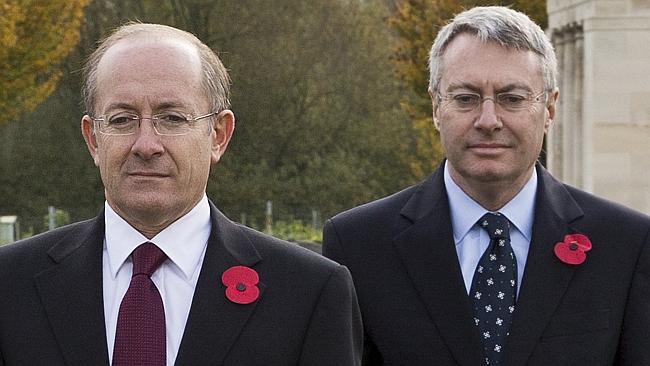
DIPLOMATIC DUO Australia's Ambassador to France Stephen Brady with his partner Peter Stephens. Photo: Ella Pellegrini
DIPLOMATIC DUO Australia’s Ambassador to France Stephen Brady with his partner Peter Stephens. Photo: Ella Pellegrini

LGBTQI people have different homophobia ‘breaking points’, but the trouble with casual homophobia is that it’s usually invisible. A protocol directive is a perfect place to deliver it, because, of course, it’s so diplomatic and neutral it’s all about how the message is taken, not how it’s given.

But as Wendy Harmer said in her tweet as the story grew: “‘Wait in the car’ – everyone understands what that means.”

Casual homophobia can be off-hand, even unintentional, but, by the sounds, it’s exactly what sent a man, who’s made a shining career out of being diplomatic, over the edge.

Speaking as someone who has received his share, the level of alarm and clamour witnessed on the Paris tarmac is the only way to register that casual homophobia has been directed at you. There is almost no use dealing with facts, all that hangs in the air is the intention to disenfranchise you or someone you love.

The PM’s office did not deny the incident took place. Junior staffers were blamed. Nobody offered an apology. The only thing that resulted was a resignation, in the moment, from Stephen Brady.

The last time international audiences were served this kind of open-ended story was the Jeremy Clarkson incident.

For weeks, more than a million Top Gear fans publicly defended Clarkson while an internal BBC investigation got to the truth of his violent physical attack on one of the program’s producers during location shooting. Clarkson spent the time making jokes in the media, but privately tweeting his apologies to his ‘alleged’ victim.

He was eventually sacked from the BBC’s flagship motor program. The voices in his defence have either come to terms with his crime, or silenced themselves.

Whether the French Ambassador Incident goes a similar way, or the facts never come to the surface, the limited, cautious reporting of it shows that, like most discrimination and bad behaviour, the media finds it almost impossible to report accurately on casual homophobia.

That’s possibly because the perpetrators sail so close, in fact beyond, what is legal and socially acceptable, that editors don’t know how to put the story in its correct context. In other words, they’re slow on the uptake when it comes to equality.

The social media is, of course, more of a free-for-all.

On April 24, Daily Telegraph columnist Miranda Devine dropped a casual clanger when she tweeted during the Brumbies vs Highlanders rugby match.

The Brumbies’ David Pocock had just scored his third try, and celebrated in front of the television cameras in a manner which Ms Devine took exception to:

So, Pocock’s vibrant gesticulation was actually the Auslan (Australian Sign Language) sign for applause. ‘Jazz Hands’ is a totally different thing.

Devine had scored a hat trick with her resort to “tosser” – not only was her tweet borderline unsporting, but she’d swiped the deaf, gay and showbiz communities in one try.

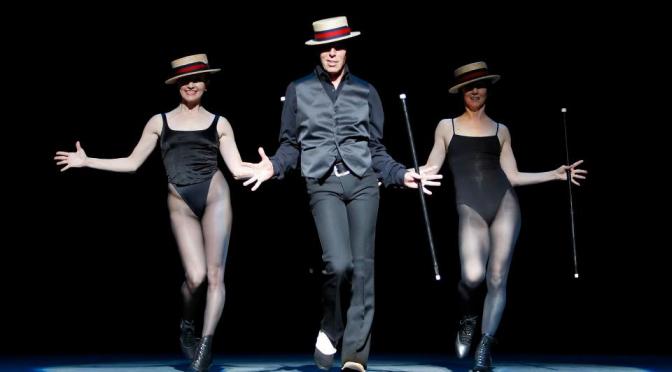
FOSSE'S WAY Classic Bob Fosse 'jazz hands' choreography.
FOSSE’S WAY Classic Bob Fosse ‘jazz hands’ choreography.

Many showbiz folk attribute the dynamic flat-handed open-fingered gesture, often accompanied by hat and cane, to the man who made it his signature move – American choreographer Bob Fosse – although it has deeper roots in centuries-old vaudeville.

Somehow, due to its association with enthusiasm and heightened expression, and probably because it involves articulation of the wrists, Jazz Hands has also come to denote camp behaviour – it’s shorthand for gay.

pluck-cover
BUY NOW

But Pocock wasn’t doing Jazz Hands: “Thanks, Miranda. That’s totally fine,” he replied, “also glad it wasn’t ‘jazz hands’.”

Which sounds like a casual diplomatic dance to me.

© Michael Burge, all rights reserved.
This article appears in Michael’s eBook Creating Waves: Critical takes on culture and politics.

Let Tamar Iveri have her opera straight

IVERI HOMOPHOBIC Georgian soprano Tamar Iveri.

A Writer (sort of) defends a diva.

AMID the flurry over Georgian opera singer Tamar Iveri and the comments she made in the social media about a protest march in Georgia on International Day Against Homophobia (IDAHO) in May, 2013, there was an assumption the soprano was just one homophobic voice in an accepting international opera industry, an aberration who must be silenced.

In an open letter to her country’s president, the singer compared gay people to “fecal masses”, a description picked-up by the social media ahead of Ivari’s scheduled performances for Opera Australia last year.

“Homophobia needs to be exposed, and that’s best done in the limelight where it has maximum impact.”

While I believe it was hypocritical of her to court Western dollars for her performances while condemning Western values which have attained mainstream followings, like LGBTQI equality, I’d like to place Iveri’s conservatism in context, particularly in the Australian performing arts scene.

Australian showbiz has long had an unspoken ‘don’t ask, don’t tell’ policy about its same-sex attracted performing artists. From our televisions screens to our stages, generations of us have grown up with gay, lesbian, bisexual and transgender entertainers and personalities, it’s just that we never knew them that way.

Almost forty years since Australia’s decriminalisation of homosexuality started in South Australia, you’d be forgiven for thinking the only ‘queer’ in prime-time, mainstream Aussie showbiz was Peter Allen, followed swiftly by Carlotta, Todd McKenney and opera singer Deborah Cheetham.

Statistics and common sense tell us that the numbers are much higher than that. Kindness and respect tells me that it would be simply unfair to extrapolate the rumours about which of our stars were (and are) simply ‘not the marrying kind’.

Does it really matter? Well, perhaps it does, when we are baying for blood over the homophobia expressed by a diva from the other side of the world, and the performing arts industry she has been a guest of puts on a very straight front.

NO PROBLEM Iran’s President Ahmadinajad speaking at Columbia University in 2007.

The Tamar Iveri homophobia story reminds me of Iranian President Mahmoud Ahmadinejad’s reception at Columbia University in 2007, when he guilelessly professed that they do not have the gay ‘phenomenon’ in Iran.

A ripple of snorts, which became a wave of laughter, washed across the audience and left Ahmadinejad blinking.

After expressing their deeply held convictions about the level of homosexuality in their countries (Iveri cites a statistic with no evidence: “3 in 50″ are “born gay”, and the rest are “following the trend”), both commentators had their foundations rocked.

I see this as consciousness being raised, and I can only applaud it, because homophobia needs to be exposed, and that’s best done in the limelight where it has maximum impact and ongoing ramifications. So what is going on in 21st century opera for gays?

“Fabio is now the benchmark for the male opera star, not Pavarotti.”

When I typed “out gay opera singer” into a search engine I was met with extremes. The first news stories covered out gay opera singer, American counter-tenor David Daniels, who spoke with pride about his sexuality; and Swedish tenor Rickard Soderberg, who survived a random (possibly homophobic) attack.

At “33 Opera Hunks Who Need To Serenade You Right Now”, the parade of muscle men (one of whom, England’s Ed Lyon, identifies as #teamgay) reminded me of beefcakes gracing the romantic fiction section of bookstores.

Fabio is now the benchmark for the male opera star, not Pavarotti. Gone are the days when divas built like Brunhilde could pull off the role of starving slave girl.

Despite the sexy new out gay veritas in the opera industry, like closeted movie stars, gay opera performers might feel that being out while suspending disbelief as a straight hero or heroine is a bridge too far.

Meanwhile, amongst the ranks of design and directing staff in particular, same-sex attracted opera makers have maintained a public silence about homophobia. The secrets of the most ill-mannered and worst-behaved divas have always been kindly kept behind the scenes, the stuff of myth.

Pauline Pantsdown is one of only a few voices of protest from Australia’s showbiz industry about the Iveri issue. Opera Australia issued a statement announcing Tamar Iveri’s explanation of the circumstances behind her comments. Less than a week later, they released her from her contract.

While I applaud their decision, when I think about all the marriages of convenience and closeting in Opera Australia’s not too distant past, the company’s decision to part ways with her at this late stage, over homophobia expressed more than twelve months ago, contains a level of hypocrisy.

That they fêted her so long, and seemingly so unaware, smacks of blindness.

I would have liked to see Iveri perform in our country, just to see if the fuss caused any kind of protest. Surely at least one of the same-sex attracted opera staff might have sprung something on her, like not turning-up for her quick change, or not combing her wigs. A conductor could have downed a baton for Iveri’s big numbers, or one of the stage crew left her waiting.

Had she stayed, she couldn’t possibly have gotten through her Australian seasons without a hint of doubt about the ranks of same-sex attracted men and women working alongside her in the Australian opera industry, and a large percentage of the paying audience.

It’s laughable to inhabit the opera industry and commentate negatively on homosexuality. Take the gay out of opera and what are we left with? One homophobic diva who thought all those designers, costumiers, wigmakers, make-up artists and hairdressers were just a little light on their feet?

The work of composers Tchaikovsky, Britten and Schubert may one day land on Iveri’s music stand. Will she refuse to place their notes and lyrics in her mouth and have them flowing across her vocal chords because these men, being same-sex attracted, were akin to fecal matter? Or will she swallow that gay shit and project it to the back row?

creating-waves-cover
BUY NOW

Hopefully, the whole incident will have a lasting positive impact on same-sex attracted performing artists in this country. If so, it’s about time.

This article first appeared on No Fibs.

© Michael Burge, all rights reserved. 
This article appears in Michael’s eBook Creating Waves: Critical takes on culture and politics.

Heartbreaking enigma of The Imitation Game

CODEBREAKING ENIGMA Alan Turing (1912-1954).

THE first time I tried to see The Imitation Game with my husband, the session was solidly booked out.

On the surface I was annoyed, but deep down I was incredibly pleased, knowing that a full house of holidaying Australians was being exposed to the story of Alan Turing, code-breaker, computer innovator and gay man now transfigured by time into an unassailable hero.

At our second attempt, we booked but ended up in seats down the front. Craning my neck up at the enormous screen, I realised something in me still could not quite come to terms with how this film’s gay protagonist garners such excellent box office.

I’ve known Turing’s story for many years – I feel his tragedy keenly as one of the first generation that missed out on electro aversion therapy and chemical castration by a fraction of time.

“When you have to wait more than 20 years between screen heroes, you realise how straight audiences take theirs for granted.”

Seeing the way he trounced the entrenched straight male fraternity at Bletchley Park, as his keen mind turned the tide of a terrible war, all the while knowing how betrayed he would be by those he saved… well, it was heartbreaking.

His legacy was all the fuel I would have ever needed to overcome fear and just be myself as a teenager, standing on Turing’s shoulders.

Yet the very nature of his achievement – hidden and classified – took him from my generation until it was too late. So many of us slipped easily and quietly into our own closets and codes, fashioned in the shadows of sodomy laws and HIV/AIDS.

We silently air-punched for our beloved Alan Turing from our ridiculous seats. We lionised him, raised him up without hesitation, even though we knew we weren’t seeing the whole truth in Graham Moore’s excellent debut screenplay.

Plenty has already been written about the inaccuracies of The Imitation Game – you’ve got the usual casting concerns, like Keira Knightley not being a plain enough Joan Clarke; the wrong name for Turing’s Enigma-breaking machine; spurious spies and an exaggerated antagonist in Commander Alastair Denniston.

But to focus on all that is just so much dissembling avoidance.

Not since Tom Hanks’ performance in Philadelphia (1993) have screen audiences been exposed to a three-dimensional gay protagonist in a mainstream drama. I don’t count Brokeback Mountain – those cowboys were not even out to themselves.

Why is this so important? Well, because when you have to wait more than 20 years between screen heroes, you realise how straight audiences take theirs for granted.

It wouldn’t matter how much they altered the margins of Alan Turing’s life story, or shuffled facts to make a workable three-act plot structure, the fundamentals are not up for debate and need little embellishment. The Imitation Game is true to the man’s core experience. His tale follows the very equation of heroism.

Yet the film has its detractors. Films with gay heroes will inspire unsettled, contrary resentment until all the fairytales behind the great archetypal stories and their happy ever afters get rewritten and rediscovered, until they allow for all human experiences.

BROTHERLY LOVE Tom Hanks in Philadelphia.

Also preying on peoples’ enjoyment levels is the fact that The Imitation Game is a tragedy. Like Philadelphia, there is no other possible outcome for the protagonist than one in which Turing is worse off than where his story started.

But this is not Hollywood killing off the queer to make a point: it’s the truth. The untimely death of anyone, even gay geniuses and HIV/AIDS sufferers, hurts like hell, and most of us are only just letting such feelings in.

To fully understand it, this film is best compared with Fred Schepisi’s A Cry in the Dark – the story of Lindy and Michael Chamberlain, accused of killing their baby daughter Azaria at Uluru in 1980. Another relentless real life miscarriage of justice that made audiences finally look at the awful truth via nothing more complex than a recreation of the salient facts.

These stories cannot be assimilated in a two-hour cinema experience. They are in our minds before we buy our tickets and they linger long after our popcorn is finished. They are bigger than whether we like the movie or not.

The cause for hope is that the Chamberlain’s complete exoneration was due, in part, to writers and artists adapting their story and exploring it in multiple forms, just as Alan Turing’s WWII service was rediscovered by writers and artists long before the British establishment posthumously overturned his gross indecency conviction.

creating-waves-cover
BUY NOW

And now the push has begun in Britain for the pardoning of the tens of thousands of similarly convicted gay men.

© Michael Burge, all rights reserved.

This article appears in Michael’s eBook Creating Waves: Critical takes on culture and politics.