Tag Archives: LGBT equality

I have a man here who won’t take off his hat

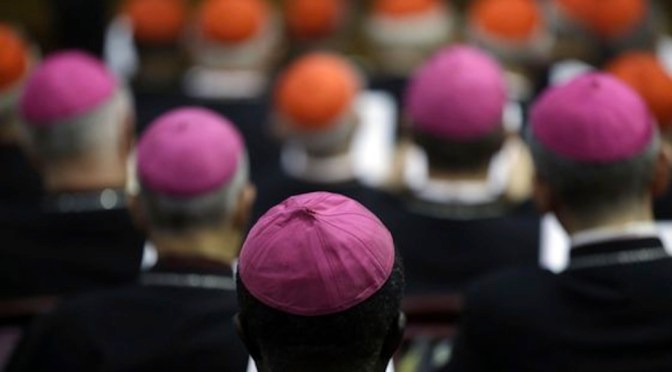
HATS OFF or else, in some parts of the world.

A Writer’s encounter with the Catholic faith.

FROM the shade of Bodhi yum-cha restaurant we could see the steeples of St Mary’s Cathedral rising above the bustling lunchtime streets of Sydney.

It was Richard’s birthday, so it was up to him where we spent our city day trip. He’d expressed an interest in going to the Australian Museum, just along the road, but the thought of the cool air inside the cathedral beckoned us both.

I’d also wanted to show Richard the reproduction marble of Michelangelo’s heartfelt Pietà sculpture of Mary and the dead Jesus in her lap, which I’d last seen on a school excursion.

That idea sealed the deal, so we paid for our meal and ascended the steps in the heat of a late summer Sydney day.

“I slid onto the cool marble floor and put my hands together.”

I spotted the ‘no photography’ sign at the last-minute, and the memory of numerous cathedral visits in Europe made me think of removing my hat. But there was no sign, and a flock of tourists in hats beyond the threshold, so I shrugged and left my cap on.

The darkness and temperature drop was immediate, as was the sense of calm away from the traffic and crowds. Richard disappeared towards a set of stunning brass gates, as we started our respectful, slow search for the sculpture.

We were soon separated by another crowd of tourists, and I waited in the half-dark by the gates until they passed.

By a door on the eastern side of the nave, I saw a sad sight: an old man, slumped pitifully against a pew, wisps of hair lifted by the breeze. A homeless man, perhaps, or someone so down on his luck that only time in this place of worship could restore him?

His demeanour was so compelling that I turned away, because looking seemed an imposition.

But as I went to move, a sudden jabbing drove into my shoulder from behind.

I turned in shock as a security guard said to me, breaking the calm: “Remove your hat!”
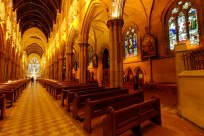
CATHOLIC GROUND Interior of St Mary's Cathedral, Sydney.
CATHOLIC GROUND Interior of St Mary’s Cathedral, Sydney.

In a bit of shock, I paused, looked at the tourists near me, some of whom had heard the guard, and said: “I will, in a moment,” and turned to find my husband.

“You will remove it now,” the guard said, loudly, “hats are not allowed in the cathedral!”

I turned, looked at the be-hatted tourists, and said: “I will remove my hat, when you ask them to remove theirs.”

I moved off quickly and heard him muttering at my heels. Adrenalin rushed through me, the result of the sudden physical attack on my shoulder, and something about the guard’s attitude towards me in particular.

When I caught up with Richard, his hat in his hand, I ascertained that the original request had been made to him. The guard caught up with us and repeated his demand.

I refused, and repeated my request for hat-removal equality in the cathedral, adding that I would be more than happy to remove my head covering when the same demand had been made of all the visitors.

“Women are allowed,” he snapped, thinking he’d snookered me.

I looked at the group again. Women and men, many of both, wearing hats, a point which I assertively made to the guard, before I turned away and determined to find the Michelangelo reproduction.

His unmistakable footsteps came after me, so I did the first thing that came into my head. Inspired by George Emerson in E. M. Forster’s A Room with a View, who, when harassed in Santa Croce, slumped to his knees in a position of prayer, I slid onto the cool marble floor and put my hands together.

Richard chortled.

The guard stopped, tutted, and waited. I could see him out of the corner of my eye. We were in a waiting game I’d need to play to its end if I was going to stay prone, so I took my time, finished my ‘prayer’ and stood, before calmly resuming my search.

“I’d impersonated a devout catholic, so fair cop that he did his best impersonation of what he thought I was.”

My tactic got him off my back, although he kept his distance and tried a new one of his own. He reached for his mobile phone and punched numbers into it as clumsily and implausibly as a comedian would, and said: “Hello? Is that the police? Yes, I have a man here who won’t take off his hat!”

Suppressing laughter, I told him I’d give him a Logie for that performance, and we did a dance of barely controlled energy all the way back to where Richard and I had arrived, my hat firmly in place all the way.

As I left, I turned and saw the guard attempt a dreadful impersonation of a poof. Limp wrist, hand on hip, and a lisped farewell: “Bye-bye, see you laytaaa!”

I laughed. I’d impersonated a devout catholic, so fair cop that he did his best impersonation of what he thought I was, but when I told my husband outside, Richard stormed back in and demanded the guy’s name.

Holding his hand over his badge, he began a tirade that did not end until we were both ejected through the door onto the steps, the place where thousands, perhaps millions of those in need had sought help from the church: at their door.

Adding to the surrealism of the moment, the poor soul I’d taken pity on by the eastern door came over and joined in the very loud rant about respect, hats, and who gets to wear one and who doesn’t on hallowed catholic ground, saying we could do what we liked in the world, but in the cathedral, it’s their rules. All of it avoided the reality that surrounded us: many men with covered heads, going into the church unmolested.

We were spat out, rejected and thoroughly repelled, but none of it was really about my hat.

As we descended the steps, the Museum in our sights, I asked Richard if he still wanted to go there.

“No, I’ve had enough of antiquities for one day.”

Touché.

We went shopping instead, and within minutes I’d worked out why the incident had happened.

Sydney’s Gay and Lesbian Mardi Gras, which has taken place annually on the doorstep of St Mary’s Cathedral in Sydney’s gay heartland – Darlinghurst – was in its final days.

I’d read years before that LGBTIQ catholics from around the world make a point of visiting the cathedral and visibly asking for confession and communion as a form of protest.

Thus the security guards, who, I hasten to add, have very delicate gaydar sensor settings indeed. Richard and I had not held hands or been in remotely close proximity while in the cathedral, but, like most gay men, we have a kind of ‘uniform’ when it comes to clothing.

creating-waves-cover
BUY NOW

We wear hats because we’re both rather bald, but the classic baseball cap (as opposed to the truckers’) is probably a bit of a giveaway for security in a Darlinghurst cathedral.

I’ve never been so quickly labelled as gay without opening my mouth.

And I’ve never so mistakenly labelled a soul in ‘need’.

This article appears in Michael’s eBook Creating Waves: Critical takes on culture and politics

Human rights of reply

FIGHTING DISCRIMINATION Andreas Ohm and Jim Woulfe, Michelle McCormack and Lynne Martin with son Tom, Michael Burge, Maria Vidal and Susan Everingham with daughter Antonia, and Jiro Takamisawa. (Photo: Sahlan Hayes).
FIGHTING DISCRIMINATION Andreas Ohm and Jim Woulfe, Michelle McCormack and Lynne Martin with son Tom, Michael Burge, Maria Vidal and Susan Everingham with daughter Antonia, and Jiro Takamisawa.
(Photo: Sahlan Hayes).

A Writer discovers his voice.

SOMEONE once said: “Don’t get mad, get even”, which must have been on my counsellor’s mind when he suggested something towards the end of my two years of grief counselling after the death of my partner, Jono.

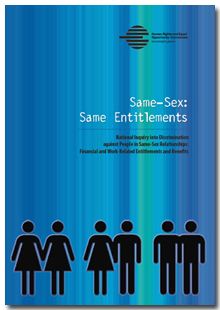
The Australian Human Rights and Equal Opportunity Commission (HREOC), now the Human Rights Commission, were looking for people to make submissions to illustrate various aspects of their Same Sex: Same Entitlements investigation into financial discrimination against same-sex couples in Australia.

“Why not think about writing your experiences?” he put to me.

I said I’d think about it, although my first thought was that my experiences were somehow not relevant. Then I thought deeper.

The death of my partner, with whom I cohabited, ran a business, and had joint financial affairs, had cost me dearly emotionally, but it had also cost me economically.

Unlike straight people in my situation, Centrelink did not recognise the validity of my relationship in any way. I was unable to claim any kind of support linked to my grief or my monetary losses when I had to move house three times in one year, and take time off work.

Centrelink staff had been quite defensive about their organisation’s shortcomings, and told me to apply for Newstart (Newspeak for ‘the dole’) which came with the requirement to be seen to be seeking work and attending mind-numbing ‘how to write a resume’ courses.

I’d taken things into my own hands and gotten a part-time job in aged care, which I happily did for a few months until my car blew a gasket, and needed thousands of dollars for a new engine. I sold it as scrap, had to quit my job (for which I needed a car), and proceeded to hunker down in my cheap accommodation, a granny flat, until I had to move because the property was sold.

I headed back to Sydney and city rent, and tried to speed up my application for Jono’s superannuation, which was slowed by the machinations of his family. They threatened to apply for it in its entirety, then didn’t apply for it at all. None of them were in any way financially dependent on Jono when he died, so none of them were eligible.

I was, but, thanks to all the unwelcome nonsense, it was months before Jono’s super fund could simply do what the law required of them and send me a cheque.

I endured financial discrimination because my country had nothing for me by way of support. What was slightly galling was that certain demographics – straight divorcees over the age of 50, for example – were allowed to access the ‘widow’s pension’ automatically. No job-seeking or resume classes for them.

Me, a genuine widow, could get nothing.

ACTU-Worksite-Australian-Human-Rights-CommissionI didn’t feel like entering into a sob story, but when I contacted HREOC, they encouraged me to submit a written document on these experiences, because they had not received any accounts of people in my particular position, and many of the unequal laws applied to the circumstances of being widowed.

Like my affidavit to the Supreme Court of NSW, my submission to HREOC was easy to put together. They have strict guidelines, I couldn’t just cry: “It wasn’t fair!” and let them sort it out, I had to show where I fell between the cracks because I had lived in a same-sex de-facto relationship.

Part of the deal was the delivery of a live submission to the Commission, and a willingness to submit to media interviews afterwards. I agreed without thinking, because, when the day came, I had a plan to follow the contents of my written submission, but completely overlooked the possibility that emotions would take over.

I watched as other gay and lesbian people expressed their experiences, and, when my turn came, I forced my story out from beneath an aching heart.

Expressing the inexpressible about death is one thing. Defining negative behaviour by other people around that death is another. I struggled my way through my submission, masking hurt with the kind of plosives that hit the microphone with the cut-glass anger that is entirely suitable for such occasions.

As I exited the hearing I forgot about the media, and had more microphones shoved in my face to elaborate further. The interviews went live at midday, and many of my family and friends, and my counsellor, heard me explain the disenfranchisement to a State that finally seemed to be listening.

report_coverAdele Horin, formerly of Fairfax Media, interviewed me at length on the phone after my HREOC submission, for an article which appeared in the Sydney Morning Herald.

It took her a few attempts to fully understand my position, and with hindsight I understood her difficulty was the same obstacle that many people encountered when coming to terms with my experience, because they simply could not understand why Jono’s mother and brother would do what they did, it was such an aberration.

In the end, I suggested she ask them directly for their reasons, to secure the ultimate right of reply, although I suggested she’d need to be tactful – their son and brother had died, after all, and the illegal actions they’d taken made them vulnerable to heavy fines and/or jail terms, had anyone really wanted to “get even”.

Somewhere in her research, Horin came to realise that my experience went way beyond financial discrimination and spoke to one of the final frontiers of same-sex equality in this country: marriage.

The last twelve months of the Howard government needed to pass before anyone in power was willing to read the Same Sex: Same Entitlements report.

So it was with great delight that many in the LGBTI community watched 11 years of conservative government swept away by KevinO7 and the ALP, who’d made the implementation of the Same Sex: Same Entitlements recommendations an election promise, and finally altered almost 100 pieces of discriminatory federal legislation in 2009.

The fight for full equality continues.

Michael’s story is published as Questionable Deeds.

© Michael Burge, all rights reserved.


Janet Mays – forging Independence

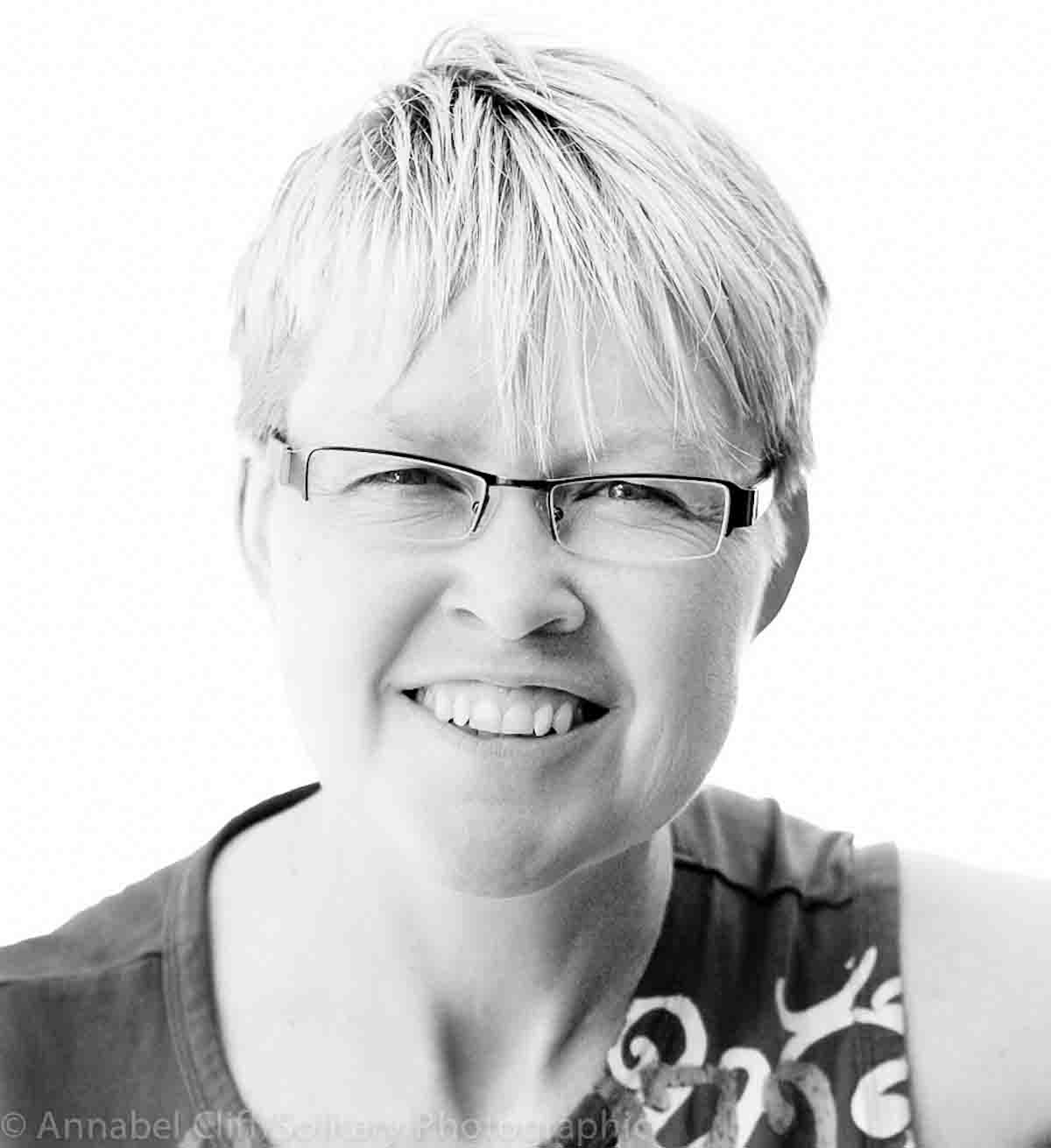
INDEPENDENT THINKER Former Blue Mountains City Councillor, Janet Mays.

A Writer’s encounter with politics.

THE first political piece I ever wrote was also the first scoop I ever got.

I was a resident of the Blue Mountains for thirty years, give or take my years at university and a six-year stint in the United Kingdom.

By the time Blue Mountains City Councillor Janet Mays stood for the NSW State elections in 2011, I was on the bandwagon of change for an area I loved deeply.

It was time for us to cease being a political football, an electorate that churned-out state and federal backbenchers who shored-up the numbers in parliament but stood for very little locally.

Janet burst onto the region’s political scene with a compassionate assertiveness that started to wake people up, the same way voters seem to have become aware of the two-party power shenanigans in the Victorian federal division of Indi, where Independent Cathy McGowan toppled the sitting member for the LNP, Sophie Mirabella, at the federal election in 2013.

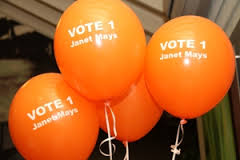
She took a fifth of the primary vote from the major parties, and lost the seat in a State intent on nothing but ridding itself of the ALP, but Janet Mays used orange for her Independent campaign colours when Voice for Indi was just a whisper of frustration. It’s a fitting symbol of her link to the groundswell of Independent thinking rising across Australian electorates.

This feature was published in the October-November 2010 edition of Blue Mountains Life.

ORANGE MOUNTAINS For one Summer, the Blue Mountains toyed with changing colour.

The Long Walk to Independence

From cafés and cars to the footwork of politics, meet Janet Mays.  

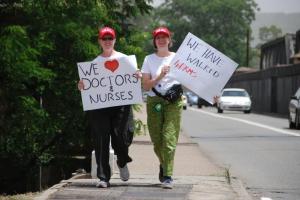
Janet Mays knows her way across the Blue Mountains better than most. In November 2009, she led the Health, Equity & Access Lobby (‘HEAL’) on a walk covering the fifty kilometres between Katoomba and Nepean Hospitals. The ‘It’s a Bl**dy Long Way to Nepean Hospital’ walk was designed to throw light on declining hospital services at Katoomba, and HEAL ignited a movement which is taking more than footsteps in the region.

“We were frustrated at the way nothing was shifting. We’d gathered a lot of support around bringing primary health services back to Katoomba, but there was very little action,” Janet says. “No one is demanding the government provide open heart surgery at Katoomba, but it’s not too much to expect basic surgery at your local hospital, like an appendectomy.”

In 2007, Janet experienced first hand a hospital system which was simply not functioning. “As someone who’d lived in the Mountains for a few years, I just assumed I could have my appendix removed locally,” she says. “At Nepean I had to wait twenty-seven hours for primary care on two occasions before they diagnosed the problem was simply appendicitis. It was so traumatising at some level, having to come home and then go back again, like Groundhog Day”.

“I knew intuitively that the removal of my appendix could have been done locally, if the will was there.”

Janet’s search for that will saw her take out a full-page letter in the local newspaper, gathering support from a number of groups and individuals concerned about similar issues. From this, HEAL was born.

“I also spent two years visiting council meetings. I listened to the debates and gained an understanding of how it all worked. This cemented a desire to eventually get onto the Blue Mountains City Council, in order to understand and represent the views of the community.”

In 2008, Janet was elected as an Independent Blue Mountains City Councillor. When asked about her first time in the chamber, she recalls: “It was like being let off a leash as a resident, but also very daunting. I knew I had it in me. I’d been involved in plenty of drama and music as I grew up. Part of being a politician is articulating a message in the same manner as a performer does”.

“It is hard as an independent to get support. You have to be very eloquent in prosecuting your case to the other councillors. When I am going to debate, I research the facts so that I gain an understanding of both sides of an issue.

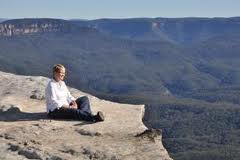
MOUNTAIN VIEWS Janet Mays awoke an Independent movement in the Blue Mountains.

“Ward One might be my patch,” Janet says, “but I am required to vote on issues across our entire region, so I need to get out there and familiarise myself with the issues. As a true independent I don’t believe I have any choice. I don’t have the luxury of party colleagues informing me of anything, so I need to listen to people up and down the Mountains”.

“I sometimes change my mind on issues when I do the research or consult an expert. Being an independent can get lonely sometimes, but it’s also very exciting.”

Born in Melbourne, Janet was raised and schooled in Canberra.

“It does heighten your political interest,” she says, “at least it did then. My Dad was in the public service, and so were friends’ parents. Politics were discussed around the dinner table every night. That was part of the Canberra culture.”

After running her own café for many years, Janet, “stumbled into a career in and around the automotive industry, spanning twenty-four years.”

Like many other Mountain residents, she and partner Jocelyn Street purchased a Mountains weekender which soon became their permanent home in 2003.

“After a very short time we both realised that Sydney is not that far away, so we said ‘bugger the commute’ and settled here. Commuting is tiring,” Janet adds. “We do it for economic reasons, but it can separate you from your community. I work four days a week in the city and I travel up and down every day, which allows me time for my council work.”

The death of her father a short time before the move seems to have been more of a defining moment than Janet is prepared to reveal. “It left me unsettled as a person,” she says of a period when she and Jocelyn also committed to their de-facto relationship. “We have very similar family backgrounds, with many siblings,” Janet outlines. “We’re both from stable homes, with parents who worked hard”.

“I came out in my late thirties,” Janet adds. “I’d been through a marriage, and I suppose the world had shifted since my strong Catholic upbringing. My parents’ reaction to my sexuality was to say ‘as long as you’re happy’.

“With the support of my partner, I have really come into my own as a human being, and I’ve been able to achieve a lot in many different ways.”

As a Blue Mountains City Councillor, Janet has championed Indigenous access by helping set up the First People’s Advisory Committee. “I am particularly proud of that,” she says. “Council now has a way to be advised by Indigenous people on matters directly relating to them.”

Janet’s support of the creation of an Economic Development Working Party aims to broaden the employment base in the Blue Mountains Government Area. “Fifty-eight percent of working adults are forced to commute,” Janet outlines. “This working party aims to create new industries here, and broaden existing ones.”

And the local health system remains high on Janet’s agenda.

LONG WALK Clr Janet Mays and HEAL Vice President Claire Cook cross the Nepean River at Penrith (Photo: Jocelyn Street).

“Day one was a very hot day,” she recalls of the Bl**dy Long Way to Nepean walk. “We were very blessed with a large gathering of people at the start, and more joined us along the way for one or two legs. We ended the day at the Ori in Springwood … it was the best tasting beer,” she smiles.

“On day two the seven core walkers sped up considerably,” Jocelyn (walk support team leader) remembers. “There was an incredible energy on the day, not just from the walkers, but also passing motorists, who seemed to really love the fact that people were getting out there and doing something for the community.”

“Once we crossed the Nepean River our signs really told our story. There was a recognition from Penrith residents that Nepean is their hospital, and they were saying ‘good on you’ because our aim is to take the pressure off Nepean,” Janet says.

“We know HEAL raised an important issue that day,” Janet underlines, “because we brought Phil Koperberg (ALP State Member for Macquarie at the time) and Jillian Skinner (Opposition Health Spokeswoman) together at one moment to demand a shared response on Katoomba Hospital. It’s the first time that has ever happened. The more we do, even though it annoys the Sydney Western Area Health Service, we are representing community views”.

“It’s an ongoing process to bring further change,” Janet says. “Katoomba is blessed with a dedicated hospital staff, operating at their best in a system which does not value them. They are not permitted to deliver services as they are trained to, yet they remain dedicated. Our hospital staff deserve greater support from all levels of government”.

“The Blue Mountains have not been well served in recent years,” Janet adds, before revealing her intention to run as an independent candidate for the Blue Mountains at the March 2011 state election. “The Blue Mountains is a unique area with its own identity and a fragile environment under pressure from all sides,” Janet says. “How do we ensure our voice is heard?” she asks. “It is time for this community to have a member absolutely focussed on local interests, and not party interests”.

pluck-cover
BUY NOW

“It takes courage,” Janet adds. “Independents are not in opposition. Our role is to work collaboratively with the government of the day, to beat the drum and bang the table for our communities. That is the essence of what it is to be independent.”

© Michael Burge, all rights reserved.

This article appears in Michael’s ebook Pluck: Exploits of the single-minded.