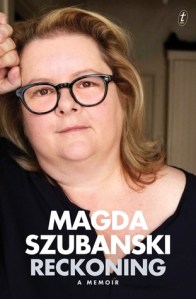
A writer’s review of Magda Szubanksi’s ‘Reckoning’.
WHEN they say that all great comedy emerges from tragedy, they’re talking about books like Magda Szubanski’s Reckoning.
Audiences are often perplexed when commentators explore the comic-tragic paradox, a place where there are no easy absolutes. But it’s something Australian creators do particularly well. Think of the suicide of Muriel’s mother in Muriel’s Wedding, one of Australia’s greatest laugh-out-loud screen experiences, in which a near-silent housewife, whose name nobody can remember, kills herself at the turning point of the tragic B-story in the plot.
It’s this layer of dysfunction that Szubanski courageously mines.
The narrative of Reckoning pivots around her success in show-business and her fascination for the scars etched into her family by European wars.
Szubanski’s exploration is driven by the very energy that fuels performers – seeking responses written on the face. The little girl who couldn’t interpret Holocaust images in a taboo book in her Father’s collection begins a lifetime journey of bearing witness to the facial reactions of those around her.
And no one gets off the hook, not living relatives or the long dead in photographic records of ancestors, or the family legends about personalities that Szubanski brings to vivid life through her powerful imagination. The little Jewish boy given sanctuary in her grandparent’s Warsaw home during Nazi occupation is perhaps the best example of this evocative, pain-filled cauterising of deep emotional wounds.
Recounting her rise to stardom, the author learns to read the faces of her show-business contemporaries and the characters she created. Even the primates she starred alongside in Babe: Pig in the City are scanned for responses to human frailty, for understanding and forgiveness.
“Like the best memoirists, she avoids painting herself as a saint surrounded by sinners.”
Actors require a response in order to re-act, something that is especially critical for screen actors where nothing can be hidden from the camera. It’s this record of Szubanksi’s journey from the inner reactions of a deeply closeted child, to the outer courage it took for a beloved celebrity to come out – regardless of the world’s response – which I found the most telling.
Yet by the time Magda knew what she wanted to read in her Father’s face, after finally construing what she’d always needed to ask him, he was long gone.
Reckoning is, then, as simple and as complex as the glance between performers: Father and daughter, channelling the echoes of war, failure, culture, desperation and survival.
As an LGBTI icon who came out publicly in mid-life, Szubanski has fast-tracked her way from second-wave feminist to courageous marriage equality campaigner, and Reckoning also charts her journey to understanding how championing marriage can sit comfortably within the same vessel as female self-determination.
Like the best memoirists, she avoids painting herself as a saint surrounded by sinners, because not all wars are external, and not all courage is written on the face.
Szubanski’s account of the experience of being same-sex attracted and closeted, and the unravelling of the veneer, are some of the most well-placed for Australian audiences to finally come to terms with what our culture does to LGBTI. They have already created a legacy for Szubanski that stands to become as courageous as that of her father.
“The Coalition will just have to take care of itself, because the political wedge has finally hit its target.”
AFTER the Coalition’s narrow win, the plebiscite on Marriage Equality should be getting ready to kick off, yet the same election promise has been blamed for the major swing against Malcolm Turnbull.
His reason: “My commitment to have it dealt with as soon as practicable is there, but we… have to obtain the support of the Senate,” Mr Turnbull told Leigh Sales on the ABC’s 7.30 program.
This rhetoric is in stark contrast to Mr Turnbull’s pre-election claim that a guaranteed ‘yes’ plebiscite result would “sail through the parliament” under his leadership.
At the dawn of a more diverse Senate than the one Turnbull tried to shift with his double-dissolution election, another narrative swiftly emerged this week that throws even more doubt on the PM’s grasp of the reins.
A Galaxy poll commission by PFLAG (Parents and Friends of Lesbians and Gays) conducted after the election indicates less than half of voters want a marriage equality plebiscite.
So the promise Mr Turnbull campaigned on – majority community support for asking the people by the end of 2016 – has fallen flat.
This is not a surprise. Equality campaigners not only saw it coming, we made it happen.
It proved to be a confronting process – knocking on doors asking for your human rights is not always fun – but we were already angry at how the mainstream media had given the Coalition’s Mr Laming a free kick in 2015.
LAMING’S PROJECT Federal Member for Bowman, Andrew Laming, interviewed by Waleed Aly.
When he appeared on Network Ten’s The Project Mr Laming claimed to be conducting a “scientific survey” of his constituents on Marriage Equality, and committed to vote in Canberra based on the results. Waleed Aly, Carrie Bickmore and the program’s producers let his claims go live to air completely un-analysed.
Mr Laming’s annual information-gathering session in his electorategave voters one say per household on issues like live export and sand mining in addition to “gay marriage”, as though LGBTI want something special, like gay supermarkets, or gay sports fields. It came back – unsurprisingly – with 58 per cent against “gay marriage”.
So we sorely needed data of our own. Working with national lobby group Australian Marriage Equality, a unique petition was devised in which we offered a ‘yes’ or a ‘no’ option to anyone registered to vote in this electorate who had a firm view either way on altering the Marriage Act to allow same-sex couple equal access.
Instead of Mr Laming’s claim that Marriage Equality was a 50-50, “red-hot issue” across our community, what we found after months of cold-calling voters in their homes, at public transport hubs, shopping and at local markets, was more like the national trend in support for marriage equality: that is, overwhelming support.
Our petition proved to be an incredible experience. On several occasions we had people lining up to sign ‘yes’ to Marriage Equality, and locals engaged in many conversations about their LGBTI family members. If there was anything ‘red hot’ it was their anger that it was way past time for reform to be put in place by our elected representatives.
On social media threads we dealt with all the usual naysayers, accusing us of only petitioning at ‘gay discos’, but most people got the message – we were open to anyone with a firm view either way, and our percentage of ‘no’ signatures became strangely validating.
COULDN’T CARE Andrew Laming’s initial response to a marriage equality petition.
Fairfax Media picked up our data and put it to Mr Laming, who said he: “Couldn’t care less”, which ran as a headline for 24 hours until the MP’s office hosed it down and reclaimed his first response as off the record. He subsequently apologised to petitioners and professed to be in support of our work.
But when we delivered the petition results to Mr Laming at a meet-the-candidates event run by the local chamber of commerce, his rhetoric changed again.
For the first time, the federal Member for Bowman indicated he’d vote with the majority of this electorate’s result at a national Marriage Equality plebiscite.
Nowhere in Turnbull’s plebiscite enthusiasm had there ever been a hint that the national result could be impacted by a rogue electorate. There had been talk from Senators and MPs about ignoring the nation and voting against Marriage Equality despite the plebiscite outcome, but that was written off as simply the hard-right rabble. We’d sprung a backbencher toeing the same line.
On social media, other campaigners were reporting similar language at meet-the-candidates events across the country. The dots were connected and the Coalition’s new plan became clear: a marriage equality plebiscite would only pass a yes vote if it was carried by a majority of electorates.
If the PM was not being upfront about the plebiscite, what else was on the nose?
The stink nearly lost Turnbull the election.
Coalition in splitsville
So the timetable has altered and now there’s evidence that voters don’t like the idea, yet Turnbull is sticking to his plebiscite plan.
“Marriage Equality activists are match fit and we’ve built an ongoing connection with Australian voters.”
But the election produced another result. The majority of federal MPs who support changing the Marriage Act to allow equal access to same-sex couples increased to a record majority.
If a parliamentary free vote was held now, it would easily pass.
One of the best headlines of the election campaign described Malcolm Turnbull’s plebiscite deal with the National Party as a ‘Faustian pact’. Now the dust has settled, the Coalition’s betrothal on Marriage Equality will soon start to look more like the kind of stranglehold common in domestic violence.
If Turnbull approaches the Senate with the plebiscite, it’ll likely never pass. If he tries to seek refuge in a parliamentary free vote, he’s likely to be rolled by the man who foisted the plebiscite nonsense on the Coalition with his last captain’s pick: Tony Abbott.
The Coalition’s response is to lead people to think it’s a case of plebiscite or nothing, but despite some commentators suggesting campaigners just submit to the public vote for the Coalition’s sake – in case it breaks apart – we are capable of multi-tasking around any of the Coalition’s plans for our equality.
We’ve had plenty of practice. The Coalition will just have to take care of itself, because the political wedge hit its target regardless of the election result. Other parties and lobby groups have started driving it in.
For Malcolm Turnbull, there’s simply no more hiding from the albatross he voluntarily tied to his own neck; yet he expects to resolve the marital problems the Coalition has always had around LGBTI relationship equality with $160-million dollar pretty lies about ‘asking the people’.
Blaming campaigners is like pointing at your spouse’s best friend over your own divorce. Marriage Equality activists are match fit and we’ve built an ongoing connection with Australian voters by having the important conversations. Trigger a fairly posed, timely, compulsory, binding, public vote and we’ll be there.
“Westerners have lost touch with one of our strongest power bases: we are consumers.”
PROGRESSIVES internationally are being hit with some hard facts, from the reality of the United Kingdom’s vote to end its politico-economic links with the European Union (EU); through the rise of Donald Trump as the Republican United States presidential candidate; to Australia’s problem catching up with both nations on the human rights inherent in Marriage Equality.
It’s become impossible to participate on social media without also being hit with online petitions.
“But is it realistic?” I saw one concerned Remain voter ask her Facebook friends, of yet another public vote attempting to reverse the Brexit result.
It could be, I wanted to reply, if only you’d just sign it.
But I didn’t write that response (I just said “sign them all, in only takes a few minutes”) because we keyboard warriors and slacktivists get very sensitive about doing much more than ‘liking’ stuff.
Liking is good. It’s a show of hands sweeping through our Facebook feed, but let’s be real for a minute: Liking really achieves nothing. No-one has to show up. At best, it’s little more than virtual loyalty over morning coffee.
I was reminded this week (by another Facebook post) of the principles of the civil rights movement, and the way it continues to define change in Western nations where politicians and corporates have stymied communities and left us feeling speechless and disenfranchised.
BACK SEAT BOYCOTT Rosa Parks on a Montgomery bus on December 21, 1956, the day Montgomery’s public transportation system was legally integrated.
I also reminded myself of some fundamental tenets of most democracies, proven long before the social media came along. People generally have the right of assembly, demonstration and petition – that is, we should not fear meeting, protesting with and canvassing other members of the public for common views.
From the Montgomery Bus Boycott triggered when African-America Rosa Parks refused to give her seat up for an Anglo-American passenger in 1955; to the Sudanese Civil War Sex Strike, when Samira Ahmed encouraged wives to abandon sexual relations with their husbands until the second Sudanese Civil War ended, people have been taking relatively peaceful, simple stands to enact lasting change.
It was a pamphlet distributed by community leader Jo Ann Robinson that reminded African-Americans of a mathematical reality – that they were the majority of Montgomery’s bus ticket-buying marketplace – and they reacted with courage. Bus travel was out, replaced by car-pooling and other simple efforts actioned by individuals, and by 1956 the Montgomery racial segregation laws were ruled unconstitutional.
It’s never completely simple, it’s never totally peaceful, yet withholding what a large number of people want has proven to move mountains, particularly when what they want is our money.
“International corporate and individual brands are already making such decisions easier for consumers.”
Perhaps it’s the weight of all our first-world problems, but Westerners have lost touch with one of our strongest power bases: we are consumers with an array of choices when it comes to everything from the weekly groceries, to clothing, entertainment and countless other products and services.
Nationalistic movements like Brexit, populist candidates such as Trump, and human rights outcomes linked to a nation’s economy (Malcolm Turnbull’s commitment to spend $160 million on an unnecessary plebiscite on Marriage Equality) leave themselves wide open to economic boycotts.
The internet makes it relatively easy to find where products originate and which corporates support or political candidates and movements. Some are politically savvy and hedge their bets, but most are not.
In just a few clicks, you can choose between banks, department stores, communications companies, financiers and even restaurants that support causes you’re aligned with.
In just a few well-directed emails, you can ensure other companies know why you’re making the choice to spend your money with their competition.
Although sites are cropping up that make it very easy, there’s no need for blanket bans on buying British or American products – remember, not everyone in the United Kingdom wanted to leave the EU and not everyone in America is voting for Trump.
HARRY’S WAY Harry Potter creator J.K. Rowling went public on Brexit.
But one of the most powerful things you can do is to ask a simple question of the management in these companies. Are you supporting Trump? Do you want to leave the EU?
They’ll be affronted, no doubt. They might not even give you a clear answer, but it’s your money, right? You get to choose where you spend it.
International corporate and individual brands are already making such decisions easier for consumers. Richard Branson came out early as a Remain supporter in the Brexit fallout on behalf of Virgin Group. British celebrity chef Jamie Oliver likewise made his Remain stance crystal clear for his followers.
One of Britain’s most lucrative (and nationalistic) cultural exports of the past two decades is the Harry Potter brand, yet Harry Potter wants to stay in the EU! Author J.K. Rowling is one of the highest-profile Remain advocates in the unfolding Brexit landscape.
Consumer boycotting often gets negative attention, amid suggestions that it’s ineffective, or a form of trade protectionism; whereas in actual fact, it’s already proven itself to have deep impact at the highest corporate level in Australia.
But the consumer backlash was fast and profound, and Telstra was forced to reassert its public support for legal reform of Australia’s Marriage Act.
There’s a whole world of consumer boycotting going on – check out the site that claims to be: “The most comprehensive English language list of progressive boycotts”.
There isn’t a ‘dislike’ button on the majority of social media platforms. Facebook has no plans for one. If there was, social media shareholders might lose their grip on this lucrative new wave of media – and millions in advertising revenue – when participants grow sick of their thoughts and opinions garnering the type of protests that a thumbs-down would attract.
Perhaps that leaves some hope for progressive politics? With no way to give the thumbs-down at the keyboard, the only thing left – if you’re still frustrated – is to do something.

 It’s this layer of dysfunction that Szubanski courageously mines.





 Michael Burge Media