Tag Archives: Marriage Equality

Christianity vs. LGBTI, an unnecessary war

“This is not a suffering competition for martyrs, it’s a legislative process taking place in a secular nation.”

THE Turnbull government has no firm plans for a public vote on marriage equality. We only know it’ll be ‘after the election’, an Abbott three-word slogan for ‘on the never-never’; and that it will be a non-binding, $160-million-dollar opinion poll that won’t be compulsory for any Australian voter or politician to participate in.

But that doesn’t really matter. While Malcolm Turnbull wasn’t watching, a war cabinet has been plotting against LGBTI dignity from the Coalition backbench, spilling from the party room into the media this week when the Safe Schools program came under attack.

Now is not the time to be under any illusions: Australians in every community are coming under pressure to take a position on whether Lesbian, Gay, Bisexual, Transgender and Intersex people (LGBTI) have the right to equal marriage and if the parliament should attempt to ensure LGBTI children are no longer alienated and bullied at school.

From many right-wing MPs and senators, and at least one on the left, this program generated hate speech that was about as unparliamentary and dishonourable as it gets, from representatives who bear the word ‘honourable’ in their formal titles.

The Safe Schools program was always going to come under unjustifiable attack. Every LGBTI project I have ever been involved with has become a target if it even hinted at the possibility of going anywhere near a school.

God forbid adults who have lived through the profound lack of in-school protection for LGBTIs seek to ensure young people receive a shred of information, before they start learning myths about diversity from those who would seek to indoctrinate their children against us and the LGBTI students and teachers among them.

Yet the multi-party state- and federally-funded program has revealed deep phobias, from the parliament to my neighbourhood and on social media. The reaction has been so strong it’s become hard to pick the real victims.

Quite rightly, LGBTI groups cited the National School Chaplaincy Program as meeting every one of the accusations levelled at Safe Schools.

12496322_10153958480562813_111425310789912770_oMemes showing the huge disparity between Safe Schools and School Chaplain funding left many people of faith feeling under fire.

I get why – it smarts when you’re made to feel you have to justify your existence.

But this is not a suffering competition for martyrs, it’s a legislative process taking place in a secular nation. While your repression might feel like my oppression, they are certainly far from the same phenomenon, and only one of us is being legislated against.

Whichever citizens can be bothered voting in the never-never plebiscite do not need the distraction of false victims when it comes to exactly who is being oppressed by inequality.

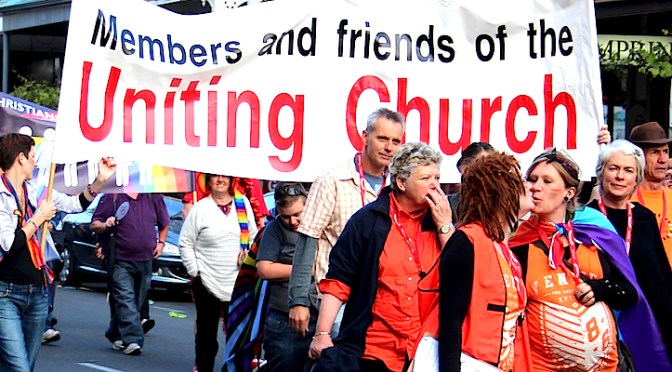
Coming so soon after the Australian Christian Lobby’s call to hit the pause button on anti-discrimination laws so they can hate their way through the marriage equality debate, we’ve woken up in the middle of a war: Christians versus LGBTI.

Bill Shorten called-out Cory Bernardi on his homophobia this week, while Malcolm Turnbull called for measured language, preferring to avoid labelling the hate that dare not speak its name.

I wish it wasn’t happening, I wish our parliament would simply vote on the matter, because in absolving itself of guiding a parliamentary free vote, the Coalition is leading this country to tear itself asunder.

“Bringing homophobia and transphobia into the light will be an ugly process for an ugly energy.”

The marriage equality plebiscite is already causing damage. The debate has become a base numbers game between LGBTI and Christians, so vociferous so early that many voters will simply stay away.

Once we see yes/no campaigns in communities, such as the small island where I live with my husband among a population of around 600, I predict the Coalition’s plan will cause great division.

Homophobia, in my experience, always polarises between two extremes. There are the unacceptable and illegal gay bashings and overt violence, while at the other end of the spectrum are the silent, insidious processes of exclusion that occur right under the nose and invariably go unchallenged.

Gradually, our friends have started to witness attempts to make us invisible in certain conversations, because it’s noticeable when a homophobe addresses someone we’re standing with, but not us.

When we were new to this place, few were aware of this subtle discrimination, but about a year ago, making new friends brought with it the realisation that some of the so-called ‘great people’ living here, who are also incredibly homophobic, would gradually make themselves apparent to anyone paying attention.

As the plebiscite approaches, all this covert behaviour is being forced into the open. Election campaigns in my part of the world take place on the road, where there’ll be no hiding for anyone.

Bringing homophobia and transphobia into the light will be an ugly process for an ugly energy, and where my husband and I might have flown under the radar in certain quarters of our community, we’ll be outed far more than we realise. It’s already started to happen, and we’ve been on the receiving end of verbal homophobia only a few steps from our front door since the Coalition’s plebiscite plan was announced, after not being the target of anything remotely homophobic for more than a decade.

I have never felt the wish to avoid witnessing my own times, but if I could safely opt out of this era, I probably would. I can’t afford a world cruise until marriage equality is delivered, so it’s time to stand visibly, primarily on the home front.

For a generation of LGBTI on the brink of coming out, this period in Australia’s history has the potential to create a similar level of confusion and despair as the AIDS crisis did for my generation, putting nails in closet doors, not removing them.

For that reason I will participate in a long and relentless yes campaign in my community, unapologetic and vocal. They’ll need to face plenty of questions and cut through some uncomfortable moments, but there is room on the yes team for moderate and progressive Christians and people of other faiths.

The reality of picketing the island’s only polling booth, handing out yes material with a bunch of naysayers across the driveway doesn’t fill me with pride, not yet, but at least the homophobes will be as out as the homosexuals in this community, and when we finally have marriage equality, years from today, we’ll know who to hold hands in front of as a reminder of exactly who the oppressed ones were.

Michael’s book Questionable Deeds: Making a stand for equal love is out now. This article was first published on NoFibs.

© Michael Burge, all rights reserved.
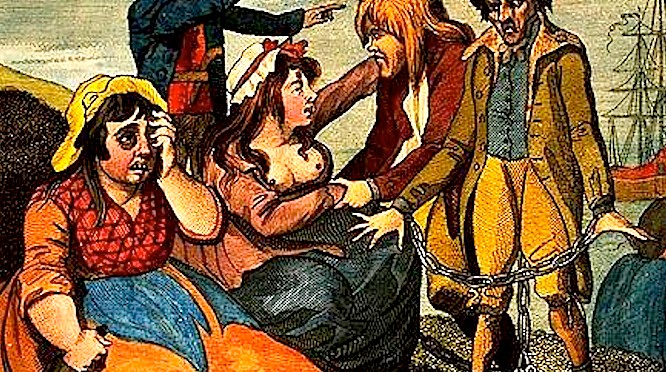
Australia’s marriage equality in chains

After many years trying to interest the Australian media in my story, particularly the LGBTI media, it was only in the wake of another tragedy that a European mainstream media source published this op-ed on Australia Day. 

AUSTRALIA has long traded on its relaxed ‘fair go’ approach when spinning friendly, down-to-earth slogans to sell our easy-going holiday locations to the world.

But for one pair of British newlyweds who recently honeymooned in South Australia, a crucial danger lay completely hidden.

Why would the same-sex legislation of South Australia be of any concern to David and Marco Bulmer-Rizzi when they planned their romantic getaway?

“Between all the wine tasting and surfing, it’s easy to miss the inequality of this sun-soaked nation.”

We’re an enlightened, first-world society, aren’t we? Neighbours and Home and Away have their share of same-sex attracted characters; South Australia even has a proud record of LGBTI equality, being the first state in Australia to decriminalise homosexuality in 1975. It’s all good, right?

Wrong. Between all the wine tasting and surfing, it’s easy to miss the inequality of this sun-soaked nation.

Hearing about the South Australian legal system’s treatment of Marco Bulmer-Rizzi, who was subjected to the indignity of seeing his husband’s relationship status recorded as ‘never married’ in the wake of David’s accidental death in that state last week, I felt a familiar and frustrating pang of grief.

The international outrage was loud and justified. South Australia’s Premier Jay Weatherill quickly apologised, offering a guarantee that South Australian law would be changed to amend David’s death certificate. In an acute state of grief, Marco gave an interview, expressing his ardent hope that this kind of thing never happens again in Australia.

At that point I got very angry, because I have wanted exactly that ever since my partner Jono died in New South Wales more than a decade ago.

MIKEY:JONO
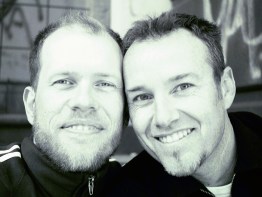
LIFE PARTNERS Michael Burge and Jonathan Rosten in 2002.

In 2004, despite NSW’s same-sex de-facto laws having been in place for five years, my deceased partner’s death certificate was issued to his blood relatives without my name on it or any reference to our relationship.

You read that right: Sydney’s Registry of Births, Deaths and Marriages broke the state law to disenfranchise me.

The complicity of the funeral company I’d contracted meant the illegally issued document took me two years to fix. Despite lobbying the NSW Attorney-General, no apology was issued by the state government, and no assurances were given that training would be put in place to prevent anything similar happening to others.

For 12 years, I’ve been communicating the dangers for LGBTI couples and death certification to anyone who would listen. In 2015, I wrote a book about my experience – Questionable Deeds: Making a stand for equal love. My motivation was to increase our awareness about how vulnerable LGBTIs are in Australia, with inconsistent state and federal laws that allow surviving same-sex spouses to fall between the cracks.

But death is a hard sell. Same-sex death is even harder. Too many Australians are unwilling to believe such unfairness and homophobia in our organisations and government departments.

Even more difficult to communicate is the homophobia that leads some families to deny the existence of same-sex spouses. At least Marco Bulmer-Rizzi was spared discrimination at the hands of homophobic in-laws, who were the driving force behind my disenfranchisement.

Whatever the reason behind the silence about my story, right now, there are generations of LGBTI in Australia who remain completely invisible on their deceased partner’s death certificates and were thereby blocked from their spouses’ estates.

Who is to blame for this legal lottery that has been erasing LGBTI stories in Australia for decades?

Politicians, sure, but it has long been painful and depressing to me how slow Australia’s media and publishing industries have been to recognize and disseminate the message about this disconnect. It’s impossible to argue they’re reflecting audience sentiment, when all polling on marriage equality places community support at over 70 per cent.

The solution is staring Australians in the face: a free vote of federal ministers on the floor of the nation’s parliament could enact marriage equality here in less than a week.

Yet national legislation that would sweep aside state anomalies is considered so controversial it put us in a holding pattern on marriage equality years ago.

“There has just never been enough outrage about marriage equality in this country.”

We have a sitting prime minister – Malcolm Turnbull – who supports marriage equality, but the political deal-making when he ousted Tony Abbott saw him sign away the parliamentary vote he once publicly backed. Instead, he has a plan for a divisive referendum at a time and in a manner he’s reluctant to reveal.

In the fallout of the Bulmer-Rizzi case, South Australia’s highest-profile conservative politician, Christopher Pyne, was quick to call for overseas same-sex marriages to be recognized in Australian states and territories.

But his approach illustrates the problem in a nutshell. Although he is a supporter of marriage equality, Pyne would rather advocate for a piecemeal solution that would protect visiting international LGBTI couples long before Australians.

When our leaders start to campaign for the human rights of guests instead of residents, they have lost touch with exactly who they represent in parliament.

Pyne’s words also imply he thinks marriage equality in Australia is so far away we’d best jet off to countries that support our relationships and benefit from a legal loophole.

MARCO BULMER-RIZZI
DISENFRANCHISED SPOUSE British citizen Marco Bulmer-Rizzi.

This behavior is far from isolated in Australia. Our tendency to overlook our creatives in favour of international artists – our ‘cultural cringe’ – is cast into the shade by this even stronger legislative blind spot for all domestic human rights. It’s only ‘bad’ if it makes world news. It only warrants a state premier’s apology when it happens to a foreign national. Fix it by sorting out the laws that the world is watching.

We were caught out treating Marco Bulmer-Rizzi with the heartlessness of our penal-colony roots, and, putting his confidence aside, Jay Weatherill will come up against plenty of homophobic politicians and public servants in his journey to amend David Bulmer-Rizzi’s death certificate. I’m anticipating the British media will track this Australian story closest.

creating-waves-cover
BUY NOW

Despite all our ‘fair go’ slogans – or perhaps because of them – there has just never been enough outrage about marriage equality in this country to drive the issue from a statistic into a legal reality. That we got a kick along only as the result of the untimely death of a young gay tourist is shameful.

This op-ed was first published by Gay Star News.  

It also appears in Michael’s eBook Creating Waves: Critical takes on culture and politics.

Keeping Marriage Equality off the record

WHEN the South Australian government was caught out by the world’s media for its lax approach to recognising overseas same-sex marriages on death certificates, the justifiable outrage about Marco Bulmer-Rizzi being documented as “never married” to husband David resonated with many readers.

One small voice of disagreement came from Marriage Alliance, a grassroots anti-marriage equality movement with a presence in Australia, in the form of a tweet defining the Bulmer-Rizzi disenfranchisement as “unusual” and criticising Australian Marriage Equality for politicising the issue.

This was news to me. From where I sit, the negative treatment of same-sex spouses at the crucial and highly-sensitive time of death certification is so commonplace it’s time Australia admitted this kind of homophobia is the norm.

I should know, because it happened to me.

When my name was removed from my partner Jono’s death certificate in NSW in 2004, it was the result of illegal and underhand action by his blood relatives.

Long after his funeral, I was left to work out for myself what had taken place when Jono’s death certificate was not issued to me but to his mother. My name and any reference to our relationship was missing, and the offensive phrase “never married” inserted.

It hurt deeply to be coldly cut off from my own life. Legally it made wrapping up Jono’s affairs impossible. Meanwhile, his mother was busy collecting assets in her son’s name that were legally mine.

“It felt like a cold label for what was a beautiful love affair.”

Since my name was not on the document, I couldn’t apply for one independently. I sought help from a lawyer and she too was unable to extract the certificate from the NSW Registry of Births, Deaths and Marriages.  The funeral company sided with Jono’s mother’s version of our relationship and challenged me to “do my worst” in fixing the miscarriage of justice.

But I was in shock and grief, the kind it takes years to recover from, the kind I still feel when I see the same thing happen to others.

I heard anecdotal evidence about incorrectly-created death certificates in NSW, from the pre-1999 era, before the state’s de-facto laws were amended to recognise same-sex spousal rights. The majority of these stories were about community warriors of the HIV-AIDS crisis, when deceased long-term spouses were routinely listed as “never married” on death certificates.

MIKEY:JONO
DISENFRANCHISED IN DEATH Michael Burge and Jonathan Rosten.

Almost two years after his death, I managed to get Jono’s death certificate re-issued and our relationship acknowledged. In order to ensure the NSW Registry of Births, Deaths and Marriages ceased to operate in contravention of the state de-facto laws, I wrote to the NSW Attorney-General, the ALP’s Bob Debus, but I never received more than a staffer’s reply that the matter was being looked into.

That wall of political denial is what ultimately assisted me in making a submission to the Human Rights Commission in 2006 when it was investigating its Same Sex, Same Entitlements report.

Years later, when what happened to me eventually happened to someone else, I felt a terrible mix of validation and guilt. Having a potential ally was great, but for the worst of reasons.

Australian academic and LGBTI activist Dennis Altman’s partner Anthony died in 2012. The couple lived in Victoria at the time of death, and Altman wrote:“There was no provision on the death certificate to list Anthony as my de-facto partner.”

In his heartfelt account of life after his partner’s death, Altman outlined several of the challenges all surviving spouses face, although I didn’t realise at the time what an opponent of marriage equality Dennis Altman was, whereas since my disenfranchisement, access to our strongest, most legally-binding, irrefutable symbol of relationship became one of my driving forces.

By 2013, although five successive governments had enacted a range of laws since Jono’s death, recognising same-sex attracted relationships after the death of a spouse in everything from equal superannuation access to social security benefits, only Kevin Rudd had publicly acknowledged the need for marriage equality. His reason: to end “such unnecessary angst in the gay and lesbian community, it just shouldn’t be the case”.

I recognised that word, ‘angst’. It spoke loudly to the dreadful mix of apprehension and fear that I’d endured. Rudd never publicly named the LGBTI staffer who’d communicated so effectively to him the need for marriage equality, but if anyone else was feeling the angst of disenfranchisement, it wasn’t apparent.

DENNIS ALTMAN
FEELING THE ANGST Dennis Altman on the ABC’s QandA.

That was until Dennis Altman appeared on a special episode of the ABC’s Q&ABetween a frock and a hard place.

When the Reverend Fred Nile made the point that marriage equality was not necessary, he said: “All the laws were changed a couple of years ago to give de-facto, homosexual couples exactly the same rights as married couples in Australia.”

“But you are wrong,” Altman said. “You are wrong and I will tell you why you are wrong and it happens in a very important area. When my partner died, the death certificate could not record that he’d been in a relationship.”

“And I’m happy to change a death certificate arrangement if that’s what happened to you,” Nile casually replied.

Altman said: “Good. Go talk to the Government of Victoria.”

At that point I threw a tea towel at the television. Obviously, Altman knew the angst but had kept it under wraps. A month later, he begrudgingly declared a shift in his thinking and came out in support of marriage equality.

The issue of de-facto laws vs marriage equality came into sharp focus in the wake of another tragedy, the sudden death of Tasmanian Ben Jago’s partner Nathan in January, 2015.

Journalist Tracey Spicer reported on the case for Fairfax Media in November. “There’s a misconception that same-sex couples and married heterosexuals have equal legal rights,” she wrote. “It’s an urban myth.”

Removed from his position as Nathan’s next of kin almost instantly, and replaced by his partner’s mother, Ben’s story had strong resonance with mine, although he was made to endure the added indignity of having to sit at the back of the gathering at his partner’s funeral, with no public mention of the relationship during the service.

BEN JAGO
DEATH DISCRIMINATION Tasmania’s Ben Jago

Jago had trouble with the Tasmanian Registry of Births, Deaths and Marriages, who gave him conflicting information about what he could do about his situation. His case will come before Tasmania’s Anti-Discrimination Tribunal this year.

I read that news with a sense of camaraderie for Ben. Good on him for having the courage to seek some kind of recourse.

Another Fairfax journalist, Monique Farmer, reported in December on the difficulty in creating a correct death certificate for her Aunt Julia, who’d lived for thirty years with her partner Annie, already dead by the time of Julia’s death.

“They were married, or at least they seemed that way to me. Their lives were as inter-mingled as my parents’ were, perhaps even more so,” Farmer wrote.

“Had they been de-factos for those 30 years? Well, legally yes – they lived together in a sexual relationship, their finances were combined, they owned property together. But it felt like a cold label for what was a beautiful love affair.”

Faced with what Farmer later described in a tweet to me as “a daze of grief”, she ultimately selected the descriptor ‘never married’.

And she felt the angst, also: “With a heavy heart I ticked that box. This meant that the next section of the death registration, asking for her partner’s name and other details, was left sadly blank. As if she’d never loved or been loved.”

I tweeted Farmer to let her know I’d been able to amend Jono’s death certificate some time after he died. She replied: “Since writing the story I’ve been thinking the same.”

The legal trap that David and Marco Bulmer-Rizzi entered when they chose to honeymoon in Adelaide in January was set long before they arrived. Why would any Australian citizen assume their relationship – particularly a marriage – was not enshrined by every law of the land?

MARCO BULMER-RIZZI
SURVIVING SPOUSE British citizen Marco Bulmer-Rizzi.

In his grief-stricken interview, I got the sense that Marco Bulmer-Rizzi felt duped by a terrible system that compounded his shock with its inability to be real about what love between any two people means. That system has been supported by plenty of mixed messages and slow realisations within the LGBTI community, but it will take well-formulated, national marriage equality legislation to sweep away the mess our unequal state laws are currently creating.

Marco Bulmer-Rizzi left Australia hoping what happened to him would never happen again. What denial and obfuscation has this country indulged in that my case – twelve years prior – was not enough to change any laws or draw an apology from Bob Carr, NSW state premier at the time Jono and I were labelled “never married”?

Marriage Alliance is way off the mark. Australia has been caught out with homophobic anomalies in our relationship legislation at least five times. The Bulmer-Rizzi story is bringing more disenfranchised same-sex spouses out of the woodwork.

9780645270532

The question Australian politicians need to ask themselves is how many more painful miscarriages of justice they require before allowing a marriage equality free vote on the floor of parliament?

Michael Burge’s book ‘Questionable Deeds: Making a stand for equal love’ is out now.

This article was first published on No Fibs.

Keeping #MarriageEquality off the record: @burgewords comments on #NeverMarried

Michael Burge

Michael Burge

Journalist at No Fibs
Michael is a writer, editor and journalist who lives on the beautiful island of Coochiemudlo. He is passionate about LGBTI equality and emergent forms of online publishing, marketing and access for writers and artists.
Michael Burge
Michael Burge
Michael Burge

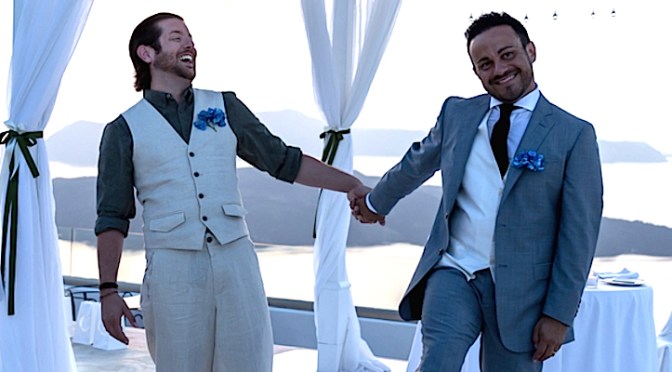
David and Marco Bulmer-Rizzi on their wedding day.

David and Marco Bulmer-Rizzi on their wedding day.

It felt like a cold label for what was a beautiful love affair.

WHEN the South Australian government was caught out by the world’s media for its lax approach to recognising overseas same-sex marriages on death certificates, the justifiable outrage about Marco Bulmer-Rizzi being documented as “never married” to husband David resonated with many readers.

One small voice of disagreement came from Marriage Alliance, a grassroots anti-marriage equality movement with a presence in Australia, in the form of a tweet defining the Bulmer-Rizzi disenfranchisement as “unusual” and criticising Australian Marriage Equality for politicising the issue.

This was news to me. From where I sit, the negative treatment of same-sex spouses at the crucial and highly-sensitive time of death certification is so commonplace it’s time Australia admitted this kind of homophobia is the norm.

I should know, because it happened to me.

When my name was removed from my partner Jono’s death certificate in NSW in 2004, it was the result of illegal and underhand action by his blood relatives.

MIKEY:JONO

Michael Burge and Jonathan Rosten.