Tag Archives: Pluck

Dymphna Cusack & Florence James – literary chicks

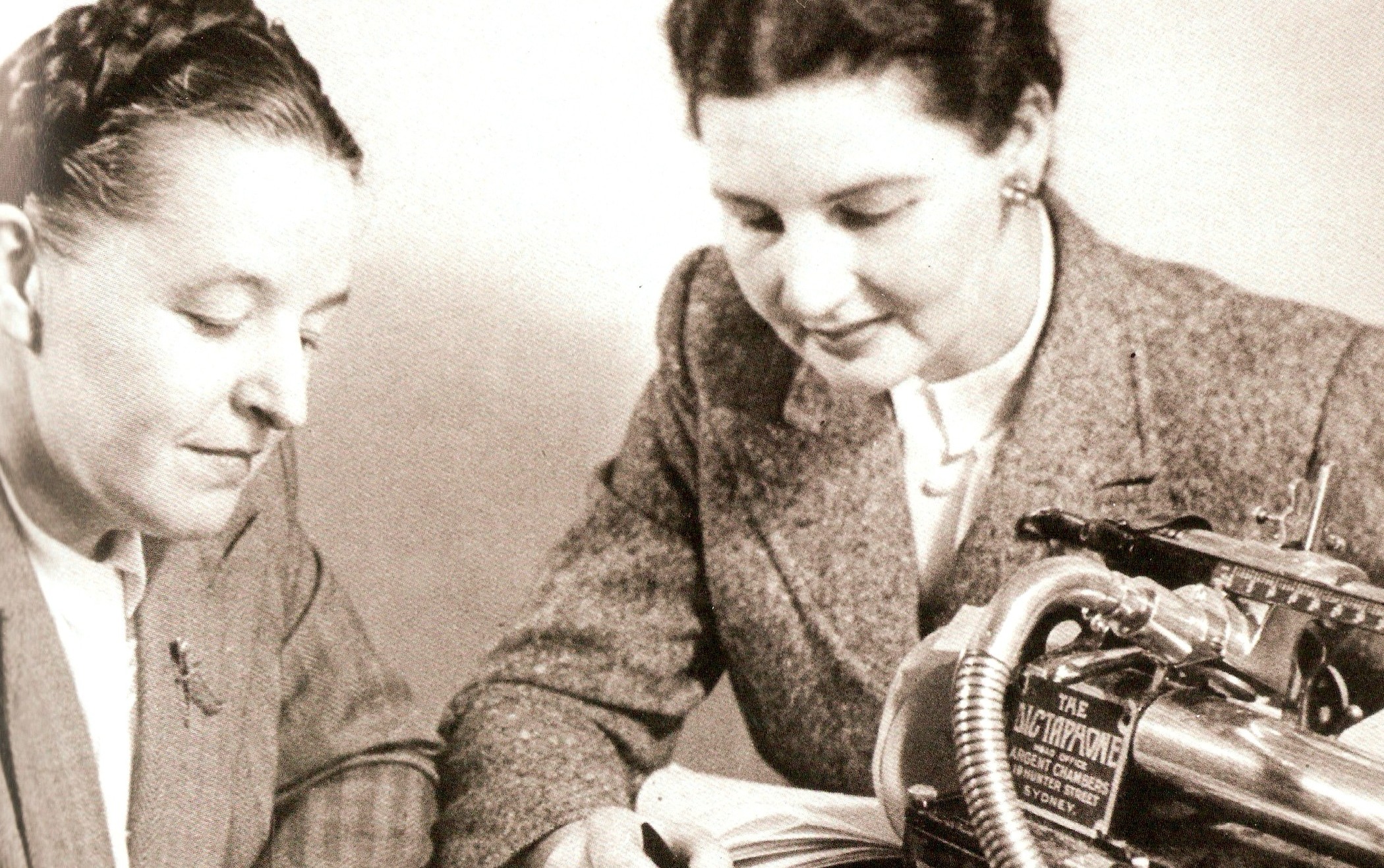
YARN SPINNERS Dymphna Cusack and Florence James (Photo: University of Melbourne Archives).
YARN SPINNERS Dymphna Cusack and Florence James, working at Dymphna’s dictaphone (Photo: University of Melbourne Archives).

A Writer has another look at an Australian classic.

LITERARY analysis of the Blue Mountains in NSW tends to focus, perhaps a little too much, on the works of Eleanor Dark and Norman Lindsay, the enduring foundation for writers which bears her name, and the iconic gallery featuring his.

Other writers’ works also emerged from the cool climate heights of the region, in fact one of Australia’s most popular and enduring novels was written in the tiny town of Hazelbrook, in a home which never became a writers’ retreat.

The story behind its creation is the story of two women, their daughters and niece, who escaped the wartime city in order to live and write, and in doing so, created a literary milestone…

This article was published in the June-July 2011 edition of Blue Mountains Life.

Come Home Spinner

The Hazelbrook tenants who created Australian Chick Lit.

In the aftermath of the Japanese attack on Sydney Harbour in May-June of 1942, Sydneysiders woke-up to the reality of imminent attack, and many headed for the Blue Mountains to ‘see out’ the war.

With two generations of men fighting in Europe, job opportunities for women were on the increase, and the city was flooded with American troops. Right in the thick of this changing world, two writers — Dymphna Cusack (1902-1981) and Florence James (1902-1993) — rekindled the friendship they’d started as undergraduates at Sydney University in the 1920s.

Florence had been ‘caught by the war’ in Sydney with daughters Julie and Frances while on a visit from London, and Dymphna was living with her sister and family at Coogee. In spring, 1944, the women hatched an escape plan of their own: to write full-time in the sleepy Blue Mountains village of Hazelbook.

Dymphna had retired early from teaching, suffering with multiple sclerosis. Florence needed a place to live while her husband Pym served in Europe. Combining Cusack’s small pension and periodic literary grants with Florence’s ‘allotment’ from Pym, in January, 1945, the families moved to ‘Pinegrove’ on the south side of Hazelbrook.

In this unassuming fibro cottage with views to the Sydney basin, James’ and Cusack’s ruminations on literature and social justice gave birth to the first international bestseller to present contemporary Australian women to the world.

They started with a children’s book — Four Winds and a Family — created in autumn, 1945.

An allegorical telling of the adventurous episodes of the Pinegrove residents, complete with writers Tess and Topsy (Florence and Dymphna), and youngsters Fan (Frances), Jay (Julie) and Dee (Dymphna’s neice, also called Dymphna), and various cats, goats and other animals, the book maps their ever-growing world of friendly neighbours and unfriendly school teachers.

NAN KNOWLES
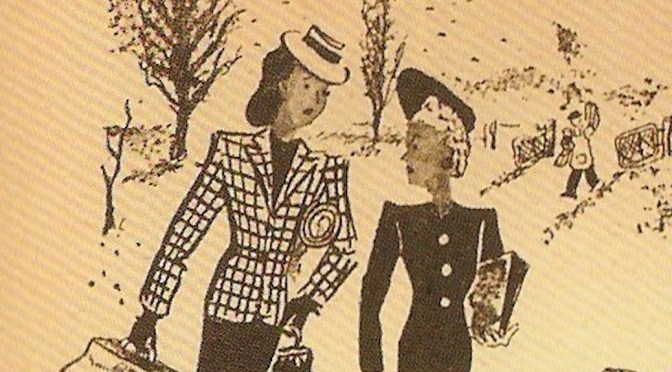
FAMILY PICTURES Nan Knowles’ illustrations show an allegorised Florence and Dymphna.

They commissioned Nan Knowles to illustrate and sent the manuscript to a publisher the same year. Knowles’ work included a naive map (eventually the front endpaper) illustrating the part-real part-fantasy realm of Four Winds. It’s an enduring symbol of the secure world mother and aunt sought for daughters and niece at Pinegrove.

Emboldened by their success in juvenile fiction, Florence and Dymphna soon embarked on their magnum opus, the book they’d been talking into existence ever since leaving the city: Come in Spinner.

“We picked everyone’s brains,” Florence recalled when interviewed by Marilla North (editor of Yarn Spinners – A Story in Letters the letters of Dymphna Cusack, Florence James and Miles Franklin).

“Everyone” included local cleaning help Mrs Catherine Elliot (who regaled the authors about the realities of working as a barmaid in the inner city); and Blue Mountains Mayor Tom Walford (who explained the rules of popular gambling game ‘Two-Up’ in which ‘Come in Spinner’ is the call ending all bets before two pennies are spun).

Through the author’s letters, Marilla North was able to pinpoint the exact day that work on Come in Spinner began at Hazelbrook – Monday July 30, 1945, only a fortnight before the end of the Pacific War.

“Addressing issues like abortion, rape and prostitution, Cusack and James’ second collaboration placed female protagonists in the real world.”

“It took us two-and-a-half years to write,” Florence explained, “we didn’t write by each exclusively developing one character’s story. If one of us had an inspiration about it then she’d do that bit of the writing. Then everything had to be interwoven”.

“We worked five days a week when the kids were at school. At the weekends we had friends up and kept in touch with what was going on in Sydney. We went down there occasionally and very reluctantly…” Florence said.

In order to write without causing pain to her hands, Dymphna made use of a dictaphone she nick-named ‘Delphi’ (probably a reference to the Delphic Oracle in ancient Greece into which prayers were whispered). Tom Walford arranged for local typist Joan Gray to produce manuscripts from Cusack’s reels.

The story of a trio of resident beauticians at the fictitious Marie Antoinette salon of the Hotel South Pacific, Come in Spinner explores their lives and relationships against a cross section of Sydney’s working and elite classes.

Seen objectively, beauticians Deb, Claire and Guinea are the natural evolution of the three girls in Four Winds and a Family, placed in a world much less secure, with no map to guide them save whatever moral compass their upbringing had given them.

Each of the women takes a journey through wartime Sydney, juxtaposed against the innocence that came before shortages and the black market, and a new world of gaining an advantage by any means.

In Four Winds and a Family the breeze is never strong enough to blow the girls into too much trouble, whereas Come in Spinner suggests life’s fortunes can be decided in a gamble. Addressing issues like abortion, rape and prostitution, Cusack’s and James’ second collaboration placed female protagonists in the real world, making it hot property even before publication.

Entered anonymously into The Daily Telegraph’s novel prize of 1946, the families remained at Pinegrove while the authors edited their manuscript. In 1947, the cottage was sold, meaning eviction by June, even as editing continued.

Florence and her daughters sailed for England to be with Pym. A separation of almost a decade (apart from occasional leave visits) saw the marriage unable to survive the reunion. Dymphna moved back to Sydney and continued work on other novels, sailing for Europe herself in 1949.

HOME SPUN First edition cover (1951).

Come in Spinner eventually won The Daily Telegraph award but was never granted the promised publication, considered too controversial for Australian release. The authors were awarded the thousand-pound prize, but had to extricate their work from the newspaper for Florence to offer it to publishers in the United Kingdom.

The William Heinemann company published Come in Spinner in 1951. It proved an instant international bestseller after a series of rave reviews in the United Kingdom and has never been out of print.

With its cast of female protagonists, and its omission from most literary criticism (despite an enduring popularity), the novel ranks amongst the first true examples of Chick Lit in the world.

In deference to regular Pinegrove visitor and the author of My Brilliant Career, Come in Spinner was dedicated to the woman whom Dymphna Cusack described as the godmother of the collaboration – Miles Franklin (1879-1954).

The drawn-out publication and success of Come in Spinner has tended to overshadow the other works which came out of Pinegrove. Two other novels by Dymphna Cusack (Say No to Death, exploring the affliction of tuberculosis, researched in part at Bodington TB sanatorium in Wentworth Falls where one of Dymphna’s friends was a patient; and Southern Steel, set in the industrial city of Newcastle) were substantially written while at Hazelbrook.

Another collaboration of sorts was Caddie – the story of a Barmaid written by the woman who came once a week for laundry and chat – Catherine Elliot. It was Dymphna and Florence who suggested to Elliot that she write her memoir in her own ‘voice’. Dymphna edited the manuscript, assisted Elliot in finding a publisher, and wrote the forward for the novel which became a classic and a popular movie in 1976.

In her capacity as an editor and literary agent, Florence James encouraged two further generations of female Australian authors, including Mary Durack and Nancy Phelan.
Unknown
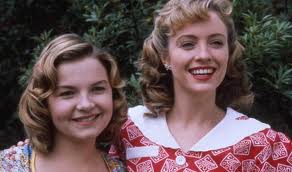
Justine Clarke and Rebecca Gibney in the ABC’s production of Come in Spinner (1989).

Come in Spinner was adapted as a mini series by the ABC in 1989. Times had changed enough for an unabridged version of the novel to be published in Australia by Angus and Robertson.

Dymphna had died in 1981, after spending three decades travelling and writing, mainly abroad, which meant Florence was tasked with editing controversial sections of the collaborative work which were removed before publication in the 1950s.

Pinegrove still stands at Hazelbrook, although its original acre is somewhat diminished by development and many of its pines are gone. It was renamed ‘Four Winds’ after becoming the home of Sheryl and Geoff Smith three decades ago.

There are traces of the literary hotbed the home was in the 1940s – the wall where Florence and Dymphna pinned-up a plan of the plot, characters and eight-day storyline of Come in Spinner is still there, off the sizeable living room which attracted the women to the house for their growing girls. The same room inspired Geoff and Sheryl to buy the house on first inspection.

The autumn weekday afternoon of my visit comes with an almost complete silence which must have been a godsend for a pair of writers, nestled as the place is away from the highway and railway.

Sheryl shares with me a copy of Four Winds and a Family given to her son by Florence James herself, who revisited the home for the making of a documentary not long before her death. On the fly leaf, a dedication reads: “A happy life at ‘Pinegrove’ – where Dee, Jay and Fan used to live – also did Tess – Florence James.”

‘Tess’ had come home, but what about ‘Topsy’?

pluck-cover
BUY NOW

“Why oh why did we leave Pinegrove?” Dymphna wrote to Florence, on the brink of an international career which took off in a cottage in Hazelbrook. It is not known if she ever returned.

Extracts from Yarn Spinners – A Story in Letters edited by Marilla North (published with the permission of University of Queensland Press). Now available in a collector’s edition.

© Michael Burge, all rights reserved.

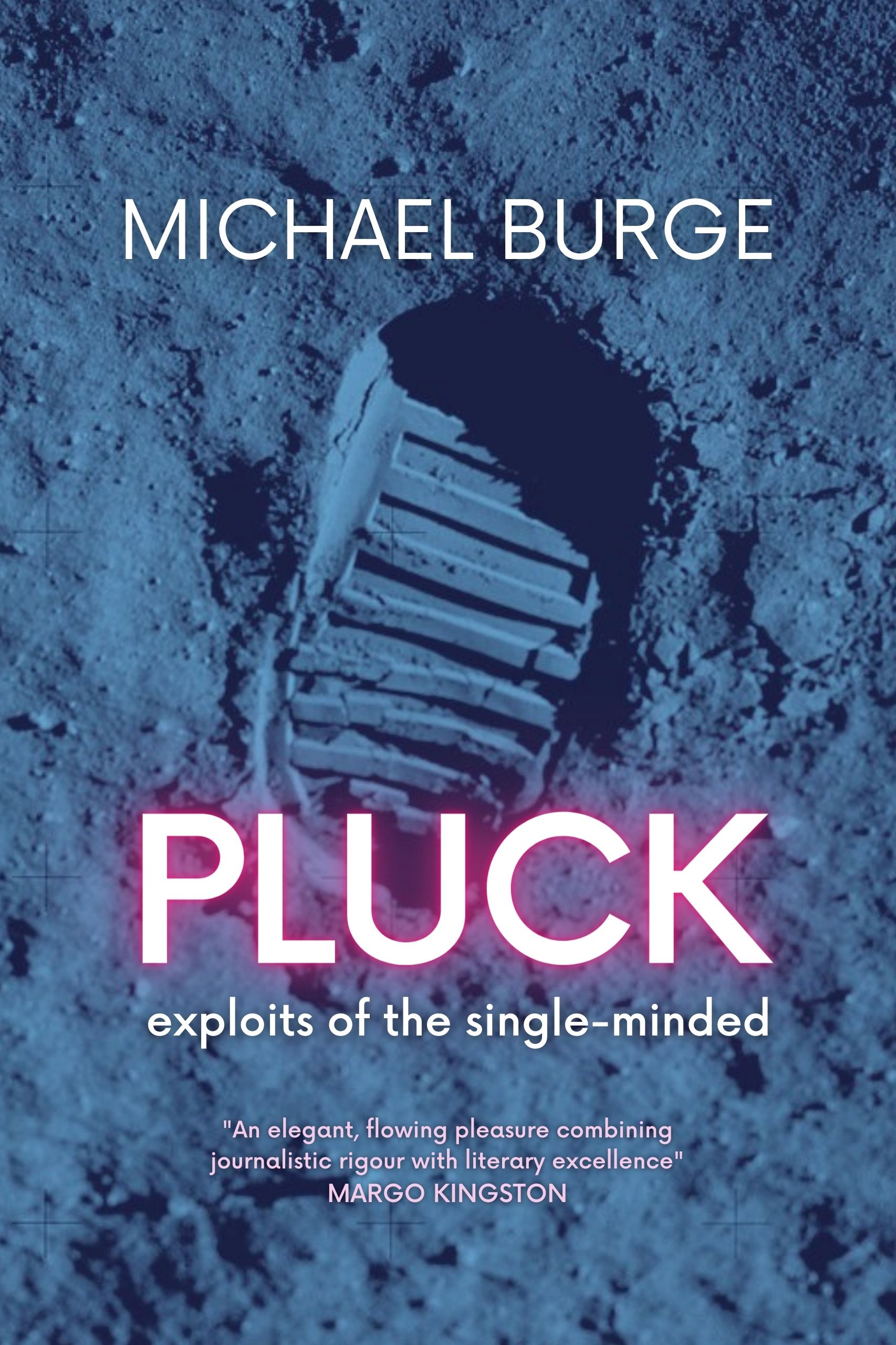
This article appears in Michael’s eBook Pluck: Exploits of the single-minded

Jonathan Rosten – spirited dancer

DANCER Jonathan Rosten rehearsing for Song and Dance (Photo: Branco Gaica).
LANGUAGE OF DANCE Jonathan Rosten rehearsing for Song and Dance (Photo: Branco Gaica).

Jonathan Rosten (1960-2004).

JONATHAN Rosten knew how to dance – it was the language he expressed himself best in. His dance career included some magnificent highlights – solo parts for The Australian Ballet Company, and roles in Andrew Lloyd Webber’s Song and Dance (Cameron Mackintosh) and An Evening (Sydney Dance Company).

Jono also made his mark in commercial dance, from variety television appearances, to iconic dance-based commercials, and his various spots in the opening of the NSW Royal Bicentennial Concert.

After 20 years as a dancer, Jono began a new career path when he found himself writing, directing and choreographing his first show – A Really Off Off Broadway Show. Jono’s program notes for this end-of-year student performance at Jester’s Acting School in 1986 describe himself as, “One who has been thrust into directing and is better equipped to handle toasted cheese sandwiches”.

Just why he made this move seemed to be a combination of things – too many hours spent bitching about the quality of productions on offer at the time; a desire to turn his burgeoning ideas into reality; and seeing a now renowned production of an entire musical in a garage in North Sydney, which inspired Jono with it’s ‘Let’s Just Do It’ approach to entertainment.

Once this door was open, Jono spent the next ten years in a showbiz no-man’s-land, taking dance work where it paid well in order to finance his writing. Moving from mainstream to independent theatre also saw him work with and be inspired by some early mavericks, including choreographer John O’Connell on Mr. Cha Cha Says Dance.

An early unproduced work he created was And Then God Created Showbiz!, beginning a tradition of exclamation marks in his show titles. This was a comic exploration of the history of showbiz in a biblical and new age context. Ideas for numbers included The Ten Commandments in the style of The Ziegfeld Follies; a Fonteyn and Nureyev duet with a wheelchair-bound Fonteyn; and a climactic Xanadu-inspired number with Jesus on roller-skates.

Suffice to say the humour was subversive. The vaudevillian line-up of showgirls, drag-queens, biblical characters and historical showbiz luminaries would have made this show highly expensive and a copyright nightmare.

For Jono, it was a fantastic experiment he worked on for a decade, a place where all that seemed ‘unacceptable’ in his world (homosexuality, cross-dressing and new age spirituality) could be placed centre-stage. These were recurring themes in all his work, taken from his own life journey and stories he’d encountered along the way.

It took another ten years before Jono found someone out there like him. At the end of a trip across America, in which he took-in the heights of Broadway, Jono happened upon a small theatre company in Los Angeles holding a retrospective of the collected works of Justin Tanner, a self-made theatre man who created shows like Zombies Attack and Pot Mom. He went to see a new work every night of his stay in LA, and the impression it left on him lasted for the rest of his life.

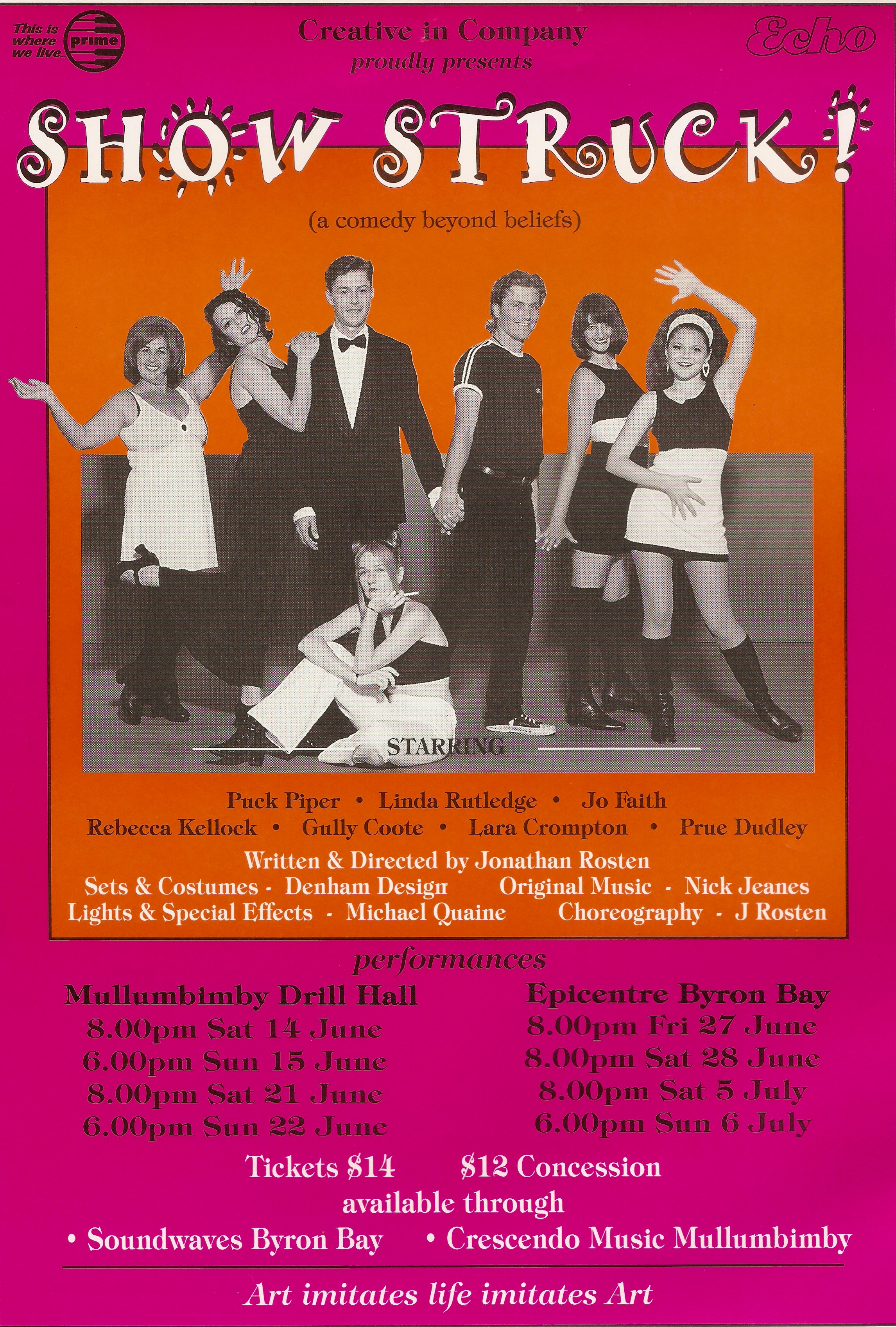
SHOWSTRUCK

He knew he had no time to waste. He knew he could be to Australia what Tanner was for Tinseltown, and shelved a host of stymied and incomplete works, including And Then God Created Showbiz! to embark on an entirely new piece called Show Struck!

Produced in the Northern Rivers area by Jono’s fledging theatre company Creative in Company, this new show was popular with audiences and was well-reviewed.

Jono created a show where the vaudevillian and alternative concepts were well within the context of a strong plot – one man’s journey through contemporary Australian show business, his desire to integrate spiritually in a spiritual vacuum, and to express his sexuality as a gay man. He wrote the show’s lyrics and produced, directed, choreographed and also acted in the show when one of the cast was injured.

Tired of endless touring to regional RSL’s, Daniel, the hero of Show Struck! is in creative limbo with his friend, mentor and bete-noire, Sherri, a showbiz survivor who has nurtured Daniel creatively and spiritually but will not let him flourish in the face of her own failures.

His journey takes him from also feeling like a failure in life, career and love to a state of limitless potential, having exorcised his demons – Sherri, his agent, and creative and sexual guilt within himself. Comically and beautifully, this journey is made in the form of an original show within a show.

One of Jono’s favourite real-life showbiz characters was Ed Wood of Plan 9 From Outer Space and Glen or Glenda fame. In the same spirit of this Hollywood maverick, Jono had big dreams to realise.

LOST SOULS The Lost Brother, Bondi Ballet, 2002.
LOST SOULS The Lost Brother, choreographed by Jonathan Rosten for Bondi Ballet, 2002.

He left Byron Bay for the Blue Mountains in 1999 and found himself in a new creative community where he quickly made his presence felt.

He began working with other maverick producers, like Out of the Blue, a community theatre group who through sheer hard work and self-belief staged the electrifying Australian Premiere of The Who’s Rock Opera Tommy at Parramatta Riverside Theatres in 2003, choreographed by Jono. Bondi Ballet gave Jono the chance to write and choreograph Lost Brother in 2002, a highly personal dance-multimedia work about the drowning death of his older brother Peter.

His dream now was to live close to the city and take original shows into Sydney after out-of-town tryouts in Katoomba. The Clarendon Dinner Theatre was the perfect venue for this plan, having birthed many successful productions over the years, and Jono approached the venue with a new show She Males from Outer Space!

Like all Jono’s shows She Males was purposely derivative. He dubbed it ‘Scooby Doo meets Plan Nine from Outer Space’. A gang of kids lost in the Australian bush encounter two strangely attired women who look like they’re from a science fiction movie, but claim to be collecting minerals at midnight. Before the kids know it they’re trapped in an intergalactic breeding program when one of them – Anne, a devout Brethren girl – is kidnapped. The gang must get her back and face their own shortcomings and lack-of-acceptance in the process.

SHE MALES

This show made it to Sydney in February 2004 as part of the Mardi Gras Cultural Festival, and had a 4-week season at The Edge Theatre in Newtown.

Jono injected this classic story of opposites with some of his best choreography. There were cheerleading sequences, mesmerising alien dance-moves and a continual comic through-line involving movement and lines inspired by old movies and television.

Deep in the plot was another of Jono’s appeals for acceptance when the hermaphrodite alien she-males explain to the younger gang that they are “Perfectly balanced in our male and female parts”, a beautiful piece of writing which challenges the gang (and us) to accept themselves, each other, and ultimately Anne’s alien she-male baby who was born during the curtain call.

Jono had succeeded in a long-held ambition to carry a weighty political message with a light comic touch, and reviewers and audiences responded. He had also discovered where his greatest talent lay – in storytelling using movement, dance and comic juxtaposition.

The Clarendon immediately asked for another show and Jono responded with his last unproduced show Double Identity (strangely there was no exclamation mark in this one). This show was again highly derivative, taking the film noir world and turning it on its head.

Inspired by audience reactions to the comic dance and movement styles in She Males, Jono created a series of dance/movement numbers and then built a plot around these. He also planned to return to the stage in a number of small crazy parts, including Frank the club owner who cross-dresses.

To date this show has had one performance only, two days before Jono died suddenly in rehearsal. Harking back to the garage-show in the 1980s, this performance was in the studio at the back of our home. I was the only member of the audience and the young leads – Nathan Roberts and Ines Vas De Sousa, were obviously going to be fantastic in the run. Jono was in there too – I had rarely seen him perform, and he sparkled with a glint in his eye, even when things went wrong and they had to do numbers from the top.

The man who started out as Buckingham in The Australian Ballet’s Three Musketeers, who danced for the Prince and Princess of Wales at Australia’s Bicentenary, who was The Milka Boy in the Swiss Alps with purple cows, was now integrating again in his newest incarnation as a singer-dancer-actor-writer-choreographer-director-producer.

Little did he or we know that the integration was so complete that only 48 hours later he would make the ultimate transition into death.

POSTER_email

Double Identity did not have its 3-month season at The Clarendon.

I can imagine Jono changing the name of this production to The Show Must Not Go On! (and scoring an exclamation!) because showbiz seems all too superficial without him.

Reality of his absence has kicked-in and Creative in Company has dissipated with the understandable shock.

The irony is that while his company was called ‘Creative in Company’ it really was just Jono instigating the work and driving it forwards, like Daniel in Show Struck!, helped and supported by a lot of talented people, but it was always Jono driving the bus.

“Don’t worry about being famous,” was one of the last things he ever said to me, in a way which told me he had once cared about fame, but had certainly let go of it and become much happier as a result.

I knew then why I loved him so much, and will never forget my years in the presence of this cheeky showbiz original who achieved his life’s ambition to understand himself, well out of the spotlight.

For this I am sure he would be happy to be remembered in the AussieTheatre.com Hall of Fame.

Published by AussieTheatre.com in 2004.

Margaret Betts – tree planter

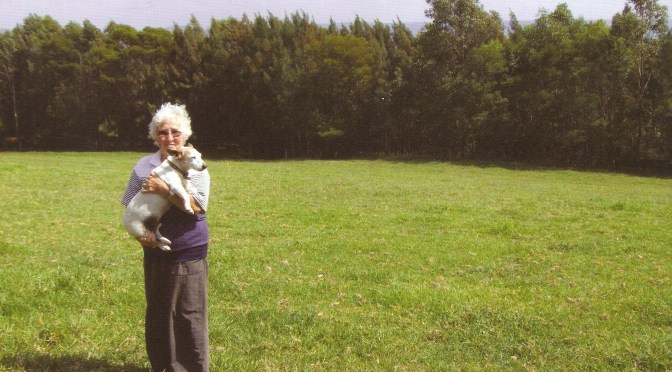
SHE-OAK Hawkesbury cattle farmer Margaret Betts (Photo
SHE-OAK Hawkesbury cattle farmer Margaret Betts (Hawkesbury Gazette).

A Writer’s encounter with a rural rebel

MY two decades of research on the descendants of Mary Pitt eventually led me to the Hawkesbury Valley, where many of Australia’s first settlers were granted land for the purposes of contributing to the survival of the fledgling colony by farming.

With their indelible link to their benefactor Lord Nelson, the two Pitt family farms were named, at different times, ‘Nelson’ and ‘Trafalgar’, in the wake of Nelson’s great 1805 maritime victory at the Battle of Trafalgar.

Finding these original land grants took time.

Nelson Farm had gone by another name for many years, but, as I was to discover, it was still under the stewardship of an indefatigable woman. This feature was published in Blue Mountains Life in June-July 2010.

Out on a Limb

How Margaret Betts reforested an original Hawkesbury farm

On Nelson Farm near Agnes Banks stands a house known as Bronte, with uninterrupted views of the Blue Mountains.

Even before this region became the cradle of modern Australian agriculture, the fertile river flats yielded food for generations of Aboriginal people.

The house is positioned on an 1802 hundred-acre grant of land to Thomas Pitt. Originally called Nelson Farm, the property was amalgamated with adjacent land granted to Thomas’ mother Mary Pitt and renamed Bronte.

This name remembers British naval hero (and Mary’s benefactor) Lord Horatio Nelson, first Duke of Bronte.

022-cropped1
HAWKESBURY HOUSE Bronte on Nelson Farm (Photo: Mary Matcham Pitt family history website).

Mary Pitt’s land grant was eventually sold off, although Bronte remained in the family until 1919.

The impressive mid-Victorian building is not the original, but from Castlereagh Road, the giveaway stands of hoop pine (Araucaria cunninghamii) and bunya trees (Araucaria bidwillii) reveal traces of the original settlers’ use of the land.

Many Hawkesbury heritage properties are open to the public or have become public places, but Bronte on Nelson Farm has always been in private hands, and a working farm since 1802.

The current owner, Margaret Betts, has lived there since 1998, and her parents William and Mary farmed the land since 1955.

“Dad did the hard work and Mum did the reading,” Margaret says, recalling her parents’ years as dairy farmers at Bronte. “They were both from logging country, so they were both what you’d call ‘old school’ farmers,” Margaret relates. “Trees, to them, were just something that sapped-up the goodness out of the soil.”

Mary Betts’ wariness about trees on dairy country became particularly pertinent in 1998, when an enormous oak tree came down in the westerly wind the night after she died, an event which made the local news.

Margaret recalls many such nights taking their toll on the few trees left on the property, and she realised “that if we didn’t do something about it, there’d be nothing left.”

Margaret knew the farm’s history, including the years when her father leased acreage to vegetable farmers with a strict stipulation to leave the stands of Casuarina running down the spine of the property towards the river. “They killed the lot,” Margaret remembers, “and they were original trees on the property.”

For someone who spent her career teaching music and in school administration, continuing her parents’ work at Bronte seems like a totally new angle for Margaret, but I get the feeling she sees farming as something in her genes, and that common sense counts for more than experience.

Margaret had a plan to develop beef production at Bronte, with very different needs to dairy farming, and certainly requiring a lot more shade than vegetable fields provided.

“I could have counted the remaining trees on one hand,” she recalls, “and I needed to do my research,” Margaret stresses.

“This region is part of the Cumberland Plain, in terms of its vegetation. If I was going to plant a large amount of trees I needed to know they were going to be viable.

BUNYA PINE Araucaria bidwillii (Photo: Bidgee)

“We’ve had hoop pine and bunya growing here for well over a hundred years. The settlers planted those, and even though they’re not native to this region, they’ve done well.

“At one stage the bunyas at Bronte were described as the largest stand in the western suburbs, but they’ve very much diminished in recent decades.

“I propagated seedlings from ours and they came up no problem.

“Hoop pines need shelter to get established, but the bunya trees just take off. There were also a few Kurrajong trees (Brachychiton populneus), and quite a few local gum trees which I assumed would do well.”

“But I also remembered the Casuarinas, which are local,” Margaret says. “In my research I found they were one of the only trees which soak up pesticides.”

With high use of pesticides on all sides of her property, Margaret had stumbled on a natural solution to an age-old problem.

The planting of trees did nothing for relations with her neighbours, particularly the vegetable farmers. “They thought I was destroying good farming land,” Margaret says, “so I got a lot of abuse. I still do, only last week one of them was shouting at me over the fence. I just wave back,” she laughs.

“I taught many of them, so they know what I’m like,” she hastens to add, illustrating how her resolve to reforest Bronte has never wavered.

After failed attempts to establish Landcare groups in the area, Margaret realised that if she was going to succeed then she needed to take action on her own. She also discovered that the tree problem was not just apparent above ground – the local water table was severely degraded.

After generations of development, the original reservoirs and lagoons of the Agnes Banks region had become choked with weeds (including water hyacinth and alligator weed), and polluted with litter and sewerage.

Insufficient drainage and water retention from nearby farms meant the water supply for Bronte was contaminated, and that affected Margaret’s cattle with outbreaks of salmonella.

The water problem only seemed to sharpen Margaret’s resolve. “At one stage I was planting around thirty trees a day, I must’ve planted thousands of them over twelve years,” she recalls.

“If you looked out here in 1998,” she says, throwing an arm out to the vista above the nearby Hawkesbury River and distant Yarramundi Lane, which is her western border, “there were only these trees close to the house and little else.”

Now, in a great green belt below Bronte is a reforested barrier of green, mainly Casuarina (river she oak, and swamp she oak), looking more like the glimpses of natural bush at the foot of the Mountains across the river. Twelve years seems like barely enough time for this result.

“The cows love the shade, they’re up here under the trees by seven o’clock on a hot day. The trees have also brought the birds back,” Margaret adds, which surely must annoy the vegetable farmers, I suggest.

“Birds are a natural pesticide,” Margaret replies.

“The water table has been improved so much with those trees,” she indicates, and indeed there are shallow lakes at intervals along the lowest points of the property.

“It’s made me more conscious of water,” Margaret says, “but we need clean water,” she adds, explaining that drainage problems caused by the use of poultry litter as fertiliser on higher-set nearby farms, combined with ineffective Council drainage along the road, contributes to the continual pollution of Bronte’s water table.

The solution was to drill a bore. “Dad was an excellent water diviner,” Margaret recalls. “He found the old wells on the property that way,” illustrating how Bronte’s past has once again become a part of its future.

The Department of Environment and Climate Change Cumberland Plain Recovery Plan draft document of November 2009 suggests private land holders like Margaret are on the right track: “Conservation of the rich biodiversity of the Cumberland Plain in western Sydney is one of the most challenging issues facing natural resources management in New South Wales,” the introduction states.

“Extensive loss and fragmentation of vegetation has occurred, land values are high, and competing land uses are placing extraordinary pressures on the remaining areas of bushland in the region.”

“You’ve really got to take care of your patch, and keep at it,” Margaret says. “I won’t see most of what I’ve planted come to anything, but others will,” she adds, indicating the hoop pine saplings she propagated and planted, trees which will stand long after their parents have fallen.

© Michael Burge, all rights reserved.

This article appears in Michael’s eBook Pluck: Exploits of the single-minded