Tag Archives: Questionable Deeds

Keeping Marriage Equality off the record

WHEN the South Australian government was caught out by the world’s media for its lax approach to recognising overseas same-sex marriages on death certificates, the justifiable outrage about Marco Bulmer-Rizzi being documented as “never married” to husband David resonated with many readers.

One small voice of disagreement came from Marriage Alliance, a grassroots anti-marriage equality movement with a presence in Australia, in the form of a tweet defining the Bulmer-Rizzi disenfranchisement as “unusual” and criticising Australian Marriage Equality for politicising the issue.

This was news to me. From where I sit, the negative treatment of same-sex spouses at the crucial and highly-sensitive time of death certification is so commonplace it’s time Australia admitted this kind of homophobia is the norm.

I should know, because it happened to me.

When my name was removed from my partner Jono’s death certificate in NSW in 2004, it was the result of illegal and underhand action by his blood relatives.

Long after his funeral, I was left to work out for myself what had taken place when Jono’s death certificate was not issued to me but to his mother. My name and any reference to our relationship was missing, and the offensive phrase “never married” inserted.

It hurt deeply to be coldly cut off from my own life. Legally it made wrapping up Jono’s affairs impossible. Meanwhile, his mother was busy collecting assets in her son’s name that were legally mine.

“It felt like a cold label for what was a beautiful love affair.”

Since my name was not on the document, I couldn’t apply for one independently. I sought help from a lawyer and she too was unable to extract the certificate from the NSW Registry of Births, Deaths and Marriages.  The funeral company sided with Jono’s mother’s version of our relationship and challenged me to “do my worst” in fixing the miscarriage of justice.

But I was in shock and grief, the kind it takes years to recover from, the kind I still feel when I see the same thing happen to others.

I heard anecdotal evidence about incorrectly-created death certificates in NSW, from the pre-1999 era, before the state’s de-facto laws were amended to recognise same-sex spousal rights. The majority of these stories were about community warriors of the HIV-AIDS crisis, when deceased long-term spouses were routinely listed as “never married” on death certificates.
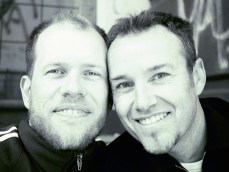
MIKEY:JONO
DISENFRANCHISED IN DEATH Michael Burge and Jonathan Rosten.

Almost two years after his death, I managed to get Jono’s death certificate re-issued and our relationship acknowledged. In order to ensure the NSW Registry of Births, Deaths and Marriages ceased to operate in contravention of the state de-facto laws, I wrote to the NSW Attorney-General, the ALP’s Bob Debus, but I never received more than a staffer’s reply that the matter was being looked into.

That wall of political denial is what ultimately assisted me in making a submission to the Human Rights Commission in 2006 when it was investigating its Same Sex, Same Entitlements report.

Years later, when what happened to me eventually happened to someone else, I felt a terrible mix of validation and guilt. Having a potential ally was great, but for the worst of reasons.

Australian academic and LGBTI activist Dennis Altman’s partner Anthony died in 2012. The couple lived in Victoria at the time of death, and Altman wrote:“There was no provision on the death certificate to list Anthony as my de-facto partner.”

In his heartfelt account of life after his partner’s death, Altman outlined several of the challenges all surviving spouses face, although I didn’t realise at the time what an opponent of marriage equality Dennis Altman was, whereas since my disenfranchisement, access to our strongest, most legally-binding, irrefutable symbol of relationship became one of my driving forces.

By 2013, although five successive governments had enacted a range of laws since Jono’s death, recognising same-sex attracted relationships after the death of a spouse in everything from equal superannuation access to social security benefits, only Kevin Rudd had publicly acknowledged the need for marriage equality. His reason: to end “such unnecessary angst in the gay and lesbian community, it just shouldn’t be the case”.

I recognised that word, ‘angst’. It spoke loudly to the dreadful mix of apprehension and fear that I’d endured. Rudd never publicly named the LGBTI staffer who’d communicated so effectively to him the need for marriage equality, but if anyone else was feeling the angst of disenfranchisement, it wasn’t apparent.

DENNIS ALTMAN
FEELING THE ANGST Dennis Altman on the ABC’s QandA.

That was until Dennis Altman appeared on a special episode of the ABC’s Q&ABetween a frock and a hard place.

When the Reverend Fred Nile made the point that marriage equality was not necessary, he said: “All the laws were changed a couple of years ago to give de-facto, homosexual couples exactly the same rights as married couples in Australia.”

“But you are wrong,” Altman said. “You are wrong and I will tell you why you are wrong and it happens in a very important area. When my partner died, the death certificate could not record that he’d been in a relationship.”

“And I’m happy to change a death certificate arrangement if that’s what happened to you,” Nile casually replied.

Altman said: “Good. Go talk to the Government of Victoria.”

At that point I threw a tea towel at the television. Obviously, Altman knew the angst but had kept it under wraps. A month later, he begrudgingly declared a shift in his thinking and came out in support of marriage equality.

The issue of de-facto laws vs marriage equality came into sharp focus in the wake of another tragedy, the sudden death of Tasmanian Ben Jago’s partner Nathan in January, 2015.

Journalist Tracey Spicer reported on the case for Fairfax Media in November. “There’s a misconception that same-sex couples and married heterosexuals have equal legal rights,” she wrote. “It’s an urban myth.”

Removed from his position as Nathan’s next of kin almost instantly, and replaced by his partner’s mother, Ben’s story had strong resonance with mine, although he was made to endure the added indignity of having to sit at the back of the gathering at his partner’s funeral, with no public mention of the relationship during the service.

BEN JAGO
DEATH DISCRIMINATION Tasmania’s Ben Jago

Jago had trouble with the Tasmanian Registry of Births, Deaths and Marriages, who gave him conflicting information about what he could do about his situation. His case will come before Tasmania’s Anti-Discrimination Tribunal this year.

I read that news with a sense of camaraderie for Ben. Good on him for having the courage to seek some kind of recourse.

Another Fairfax journalist, Monique Farmer, reported in December on the difficulty in creating a correct death certificate for her Aunt Julia, who’d lived for thirty years with her partner Annie, already dead by the time of Julia’s death.

“They were married, or at least they seemed that way to me. Their lives were as inter-mingled as my parents’ were, perhaps even more so,” Farmer wrote.

“Had they been de-factos for those 30 years? Well, legally yes – they lived together in a sexual relationship, their finances were combined, they owned property together. But it felt like a cold label for what was a beautiful love affair.”

Faced with what Farmer later described in a tweet to me as “a daze of grief”, she ultimately selected the descriptor ‘never married’.

And she felt the angst, also: “With a heavy heart I ticked that box. This meant that the next section of the death registration, asking for her partner’s name and other details, was left sadly blank. As if she’d never loved or been loved.”

I tweeted Farmer to let her know I’d been able to amend Jono’s death certificate some time after he died. She replied: “Since writing the story I’ve been thinking the same.”

The legal trap that David and Marco Bulmer-Rizzi entered when they chose to honeymoon in Adelaide in January was set long before they arrived. Why would any Australian citizen assume their relationship – particularly a marriage – was not enshrined by every law of the land?

MARCO BULMER-RIZZI
SURVIVING SPOUSE British citizen Marco Bulmer-Rizzi.

In his grief-stricken interview, I got the sense that Marco Bulmer-Rizzi felt duped by a terrible system that compounded his shock with its inability to be real about what love between any two people means. That system has been supported by plenty of mixed messages and slow realisations within the LGBTI community, but it will take well-formulated, national marriage equality legislation to sweep away the mess our unequal state laws are currently creating.

Marco Bulmer-Rizzi left Australia hoping what happened to him would never happen again. What denial and obfuscation has this country indulged in that my case – twelve years prior – was not enough to change any laws or draw an apology from Bob Carr, NSW state premier at the time Jono and I were labelled “never married”?

Marriage Alliance is way off the mark. Australia has been caught out with homophobic anomalies in our relationship legislation at least five times. The Bulmer-Rizzi story is bringing more disenfranchised same-sex spouses out of the woodwork.

9780645270532

The question Australian politicians need to ask themselves is how many more painful miscarriages of justice they require before allowing a marriage equality free vote on the floor of parliament?

Michael Burge’s book ‘Questionable Deeds: Making a stand for equal love’ is out now.

This article was first published on No Fibs.

Keeping #MarriageEquality off the record: @burgewords comments on #NeverMarried

Michael Burge

Michael Burge

Journalist at No Fibs
Michael is a writer, editor and journalist who lives on the beautiful island of Coochiemudlo. He is passionate about LGBTI equality and emergent forms of online publishing, marketing and access for writers and artists.
Michael Burge
Michael Burge
Michael Burge

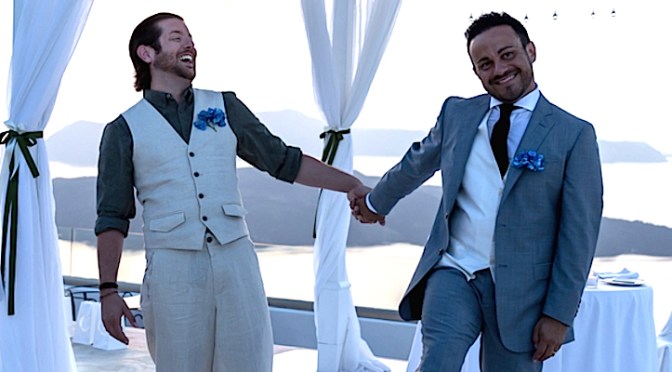
David and Marco Bulmer-Rizzi on their wedding day.

David and Marco Bulmer-Rizzi on their wedding day.

It felt like a cold label for what was a beautiful love affair.

WHEN the South Australian government was caught out by the world’s media for its lax approach to recognising overseas same-sex marriages on death certificates, the justifiable outrage about Marco Bulmer-Rizzi being documented as “never married” to husband David resonated with many readers.

One small voice of disagreement came from Marriage Alliance, a grassroots anti-marriage equality movement with a presence in Australia, in the form of a tweet defining the Bulmer-Rizzi disenfranchisement as “unusual” and criticising Australian Marriage Equality for politicising the issue.

This was news to me. From where I sit, the negative treatment of same-sex spouses at the crucial and highly-sensitive time of death certification is so commonplace it’s time Australia admitted this kind of homophobia is the norm.

I should know, because it happened to me.

When my name was removed from my partner Jono’s death certificate in NSW in 2004, it was the result of illegal and underhand action by his blood relatives.

MIKEY:JONO

Michael Burge and Jonathan Rosten.

On the same page about marriage equality

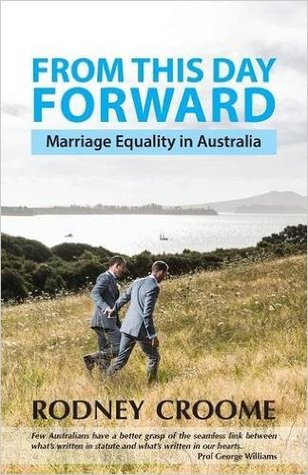
26785881IN every writer’s life there comes a time when a piece written by someone else renders our own contribution unnecessary. After exploring the issue of marriage equality in my country for more than a decade, Rodney Croome’s new book has finally done this for me.

From This Day Forward: Marriage Equality in Australia is an aggregation of Croome’s major writing on the marriage equality debate to date, including updates on his 2010 contribution to Why Vs. Why: Bill Muehlenberg and Rodney Croome debate Gay Marriage (Pantera Press).

But Croome’s collection is much more that; it’s the best document Australia has to move the debate – finally – into legislation.

The only possible rebuttal to From This Day Forward is religious ranting or political belligerence, because, as Croome puts it: “The critics of marriage equality are trapped in an intellectual cul-de-sac.”

I had a particular interest in reading this book: I was keen to fact-check my own publication Questionable Deeds: Making a stand for equal love against a more comprehensive document covering the story of Australia’s legislative failure, but I was unaware of Croome’s book until it was launched in Brisbane last week.

“A well-articulated exploration of the total lack of arguments left for opposing marriage equality. It stands like a boundary, behind which the debate will retreat no longer.”

It’s a great year for books by same-sex attracted writers. With Magda Szubanski’s memoir Reckoning, and the rerelease of Timothy Conigrave’s Holding the Man off the back of the movie release, gay and lesbian writing is getting a great run.

Although like my title, From This Day Forward does not have a huge marketing machine behind it. This makes for a hard sell at a time when readers and audiences are at marriage equality saturation point, there’s an overbearing unwillingness to just get it done, and the mainstream media seems incapable of selling a story of what it sees as a dead horse, slaughtered by both sides of parliament.

Croome’s book is a well-articulated exploration of the total lack of arguments left for opposing marriage equality. It stands like a boundary, behind which the debate will retreat no longer. For someone who has heard and endured all the classic approaches (he was confronted by one at his launch – the old ‘why call it marriage?’ chestnut), in person and in his book, Croome – the national convenor of Australian Marriage Equality – maintains the neutrality of an activist prepared to go on calmly answering loaded questions forever.

Rodney_Croome
EQUALITY CAMPAIGNER Rodney Croome.

I admire such public strength. My own book reveals my inability to be as dispassionate. Driven by grief, fear and pain, I wrote the awful truth about the depth of my disenfranchisement in Questionable Deeds, revealing how prejudice and lax laws robbed me of self determination as a surviving spouse.

Although I was relieved my research stood up without the benefit of reading Croome’s book, what encouraged me more was his call to action from the LGBTI community to share our experiences.

“Whatever lies behind the power of personal stories, they are immensely effective in showing how marriage inequality affects ordinary people day-to-day. They tap into our desire to understand the ideas and feeling of others,” Croome writes.

Our stories are most effective for the cause when we manage to bend the ear of our federal MPs, Croome writes. Mine is Andrew Laming, federal member for the Queensland electorate of Bowman, a regular flip-flopper on marriage equality.

At his launch, Croome paid tribute to Queensland’s major contribution to the legislative push. It’s here that Warren Entsch (Liberal federal member for Leichhardt), and Teresa Gambaro (Liberal federal member for Brisbane, who launched Croome’s book last week), joined forces with Terri Butler (Labor federal member for Griffith) to co-sponsor a cross-party bill on marriage equality.

Since the entire house of representatives owned the bill, this was a unique moment in the journey, and a shining example of politicians getting their heads around the positive impact of equality on the mental health and wellbeing of their constituents. Andrew Laming would do well to watch and learn, and he could start by buying Croome’s book, and mine. He was invited to my book launch, but did not respond.

Croome also gets to the heart of the current plan for a marriage equality referendum or plebiscite.

“Human rights defenders are rightly concerned about putting inalienable rights to equality and personal autonomy to a show of hands,” he writes, underlining how there’s no constitutional requirement to ask the people on marriage when it was parliament that autonomously altered its definition in the first place.

I support Croome’s view that a national vote on marriage equality would pass the law. Even if the regular polls are significantly wrong, the majority of Australians would say yes.

“My concern is with the process, not the outcome,” Croome writes, referring to the high price that would be paid by the LGBTI community in terms of our mental health.

It’s in this zone that Croome’s book and mine intersect. Croome quotes statistics gathered in the wake of the banning of marriage equality in 2004 – the year my partner died – which showed a sudden increase in mental health challenges for LGBTI.

Of the 2004 ban, I wrote: “It would have passed through my consciousness in my deepest grief and registered only as another reason to feel dreadfully unsafe about being same-sex attracted in my own country.”

I recall the sadness that went into writing that sentence, and nearly deleting it from subsequent drafts because I’d kept such deep-seated emotions in check while remembering the daily struggle of grief and depression in that terrible year. Croome’s book has finally put my struggle to process my disenfranchisement in context.

A major new element of From This Day Forward is an essay ‘Flight from the gilded cage: addressing criticism of marriage equality from the left’.

It’s an area of great interest, not just for those of us who are shocked at how the marginalised seek to marginalise others, but also for anyone wanting to advance their knowledge on the last bastions of objection.

9780645270532
BUY NOW

At my own book launch, in conversation with No Fibs’ editor Margo Kingston, she expressed a wish that I’d written more on marriage equality opposition that didn’t stem from homophobia.

I touched on it in my afterword, but Croome’s essay is the most comprehensive and timely argument taken up to several high-profile commentators who have provided great fodder for the religious right over the years.

Croome confronts them all – from former Prime Minister Julia Gillard and her feminist arguments, to author Robert Dessaix and historian Dennis Altman, who have long argued that same-sex attracted people should not need such a heteronormative institution as marriage (although Altman began shifting his stance this year).

This essay validated all the times I’d thrown stuff at the television seeing these commentators failing the entire LGBTI community with their frivolous, often under-researched naysaying.

creating-waves-cover
BUY NOW

If you’ve endured the years of debate, From This Day Forward is worth reading for this boost alone.

From This Day Forward: Marriage Equality in Australia (Walleah Press) and Questionable Deeds: Making stand for equal love are out now.

© Michael Burge, all rights reserved.

This article appears in Michael’s eBook Creating Waves: Critical takes on culture and politics.

Speaking of equality

I RECENTLY published my non-fiction debut, a biting memoir about the ‘David and Goliath’ battle I fought to have my relationship recognised after the death of my partner, Jono. Get the flavour of the book from this abridged audio version of Questionable Deeds, read by me. To buy the book, go to my online bookshop.