Tag Archives: Writing Process

Alan Bennett – the mystery boy

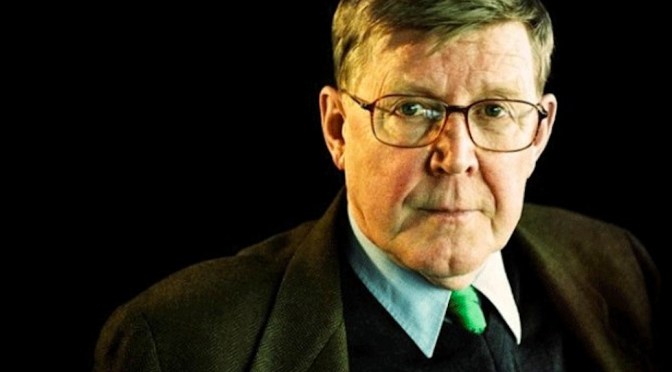
KEEPS THEM GUESSING Writer Alan Bennett.

OVER many late nights during my last year of drama school, overworked head full of theatre productions, closeted young body starved of sex, I came across Alan Bennett on the television screen.

Volume down very low so that my grandmother (with whom I lodged) would not be disturbed, I encountered Patricia Routledge, Maggie Smith and Julie Walters in their now iconic episodes of Bennett’s first Talking Heads series.

Bennett remained the cursory sketch of the opening credits until the episode in which he appeared – A Chip in the Sugar.

The tale of the hapless Graham Whittaker living with his ‘Mam’ in Yorkshire drew me into its closeted fold, where I recognised absolutely everything about the character’s world, right down to the old woman sleeping in the room next to mine.

“Alan Bennett keeps explaining what’s behind his writing style, it’s just that no one’s really been listening.”

A month after I was born, the great writer E. M. Forster died publicly closeted despite reaching the era in which homosexuality was decriminalised in England. His gay-themed writing was entrusted to friends and took time to come to light.

He’s rarely comfortable admitting it, but Alan Bennett is something entirely different. Yes, the first thirty-six years of his life were lived under laws against homosexual acts between men, but these days he’s a right here, right now gay writer and actor, infinitely closer to generations of men easing our way out of the closet than Forster ever was.

Although back in the 1980s, nobody seemed to question Bennett’s ability to create characters on a scale E. M. Forster only dreamt of.

The most infamous query came from Ian McKellen, who asked the playwright publicly whether he was gay or bisexual at an event raising funds to fight Thatcher’s homophobic Section 28 regulations in June 1988.

Fifty-four at the time, Bennett’s answer left him rather begrudgingly out of the closet ever since.

But that news didn’t reach Australia, not in my world anyway. It did not need to – I could tell by the ‘takes one to know one’ method that Bennett was not just acting like a gay man in A Chip in the Sugar.

Although that realisation meant that I was going to have to do some clever acting of my own to put people off the scent of the truth.

Writing this now I feel of a kind of rage that a gay drama school student did not feel validated by Bennett’s achievements.

Instead, it left me afraid, with the sense that there was nowhere to hide; that all gay men were bound to the apron strings by the kind of fear which Graham Whittaker manifested as mental illness. It offered little hope for those men who did not stay silent.

Perhaps that’s why I disconnected from Alan Bennett for a decade, during which I lived in England and did my level best to become a theatre and film-maker. ‘Gay’ was kept at arm’s length, and I got certain very specific signs that I needed to keep it there.

The most direct of these came during my year of drama training in Yorkshire (Alan Bennett ‘country’) when I was taken aside by one of the pivotal staff members and told that I needed to curb myself or the work I would get on graduation would be “limited”.

His admonishing tone about my natural demeanour came, as it always seems to, with the “I’m only saying this to you because I know plenty of gay people” lie.

By the time I’d gathered the courage to go home to Australia and come out, six years later, Alan Bennett made another appearance in my life, in the form of his memoir Writing Home.

The book was given to me with an unusual amount of sadness by one of the many male friends I’d made in England who were soon to come tumbling out of the closet in the wake of my own coming out.

Bennett’s book helped me realise that being openly gay would not necessarily be an issue, but it would probably leave me more prickly than ever.

I have paid much closer attention to Alan Bennett ever since, but it’s taken another decade to understand the writer who constantly tells us that he does not want to be understood.

You see, Alan Bennett keeps explaining what’s behind his writing style, it’s just that no one’s really been listening.
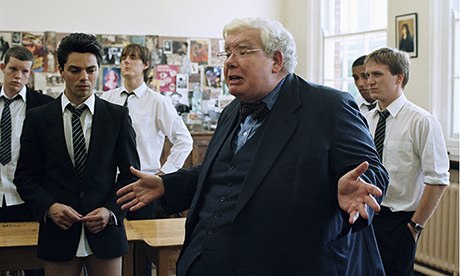
MAKING HISTORY Richard Griffiths headed the cast of Alan Bennett's 'The History Boys'.
MAKING HISTORY Richard Griffiths headed the cast of Alan Bennett’s ‘The History Boys’.

One of his recent plays – The History Boys – is also one of his most popular, regularly featuring at the top of ‘Britain’s Favourite Play’ lists.

The story of a group of school boys preparing for their university entrance examinations, Bennett instilled this play with a major theme in his writing – authenticity versus artifice.

Ever since his own entrance into Oxford in the 1950s, Bennett has employed a writing technique which he used when answering examination questions.

He calls it “taking the wrong end of the stick”, a journalist’s approach to ‘the facts’. In entrance examination answers it can be utilised to impress with a new ‘out there’ angle on a subject that has been ‘done to death’; an attention-grabber, if you like.

This is also the key to the pathos in all Bennett’s work. His characters show pluck in the face of diversity. They laugh when it might be more appropriate to cry. They see obstacles as opportunities.

Good use of pathos is funny, not in the side-splitting sense but in the chuckling one. It’s right up the other end of the stick from turgid, and it totally avoids the branch of melodrama.

It took maturity, and an understanding of pathos,  for me to realise that Gordon Whittaker’s salvation came with his mother’s admission that she had found his hidden gay pornography.

It is the great power shift in A Chip in the Sugar, when Graham’s ‘chip’ is seen as considerably smaller than Mam’s, giving the viewer hope that the result is a more accepting future for Graham.

There is some proof of this in Bennett’s recent writing. In A Life Like Other People’s (published in 2005 as Untold Stories) Bennett let slip that the mental illness he imbued Graham Whittaker with in Talking Heads (1987) was actually that endured by his real-life mother years before.

In the early 1970s, Bennett (‘Graham’) was torn away from a healthy same-sex life in London to care for his mother (‘Mam’) in Yorkshire.

Art stood in for life until Bennett ‘came out’ about the true nature of his family’s struggles with mental illness, thirty years after the fact.

So, ‘Graham Whittaker’ wasn’t in the least bonkers and went on to live a successful life as one of England’s finest playwrights and found love with a man. Phew.
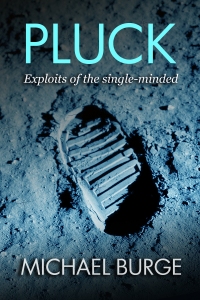
PLUCK COVER copyAlan Bennett has published enough about himself for people to leave him alone about his sexuality, although in recent interviews he’s hinted at posthumous diaries which may come to rival E. M. Forster’s.

He’s also managed to avoid the tag ‘gay playwright’ by taking the wrong end of the stick whenever one is offered.

© Michael Burge, all rights reserved.

This article appears in Michael’s eBook Pluck: Exploits of the single-minded

A thousand ways to say no

gladiator-thumbsdown

ANYONE who has ever done anything out of the ordinary, against the very will of societies and economies (like writing a book, crazy you!), invariably meets with the head-shaking, heartbreaking moment of dashed dreams which occurs in the wake of the average rejection.

In a sense, if you’ve put yourself in rejection’s path, you’ve already done more than most people. Trouble is, rejection rarely feels that way.

I have little time for those writers who try to mollify emerging creatives with cries of: ‘get used to it’ and ‘we’ve all been there’. To leave it at that is to ignore the genuine pain that rejection inflicts, and the possibility of finding ways through the hurt to a place of understanding.

So, for the rejected, here is my best advice, from one who stands with you.

J.K. Rowling had it good

The latest in a long line of success stories that gets trawled-out to give hope to the rejected is that of the author of the Harry Potter series, but don’t be fooled. Yes, Joanne Rowling’s first Harry Potter book was resoundingly rejected by multiple publishers, but she was signed with a literary agent at the time, and the rejection process came to an end after around twelve months. That is not an abject state of rejection. During her short rejection ‘purgatory’, Rowling had a sounding board, a guide, and a mentor in her agent, something most writers never encounter, so don’t feel too sorry for her.

Rejectors like to keep it interesting

These days, publishers and agents rarely engage in reasons why they reject your work. It’s likely you’ll never even receive a reply. If (and it’s a big if) you get feedback, don’t believe it immediately. “An irresponsible holiday story that will never sell,” went the rejection of Kenneth Grahame’s The Wind In The Willows, a book which went on to sell 25 million copies. “Too different from other juveniles on the market to warrant its selling”; “You have no business being a writer and should give up”; “We feel that we don’t know the central character well enough”, and “I recommend that it be buried under a stone for a thousand years” all featured in rejections of some of the bestsellers in publishing history. Check out some more at this great site.

Publishers have rejection shame of their own

I once worked for one of the many publishing houses who rejected Dick King-Smith’s bestselling childrens’ book The Sheep-Pig, the story which was so successfully adapted for the screen as Babe. I can assure you the company still carried a certain amount of shame about its decision a decade later. Think of the hand-wringing and guilt-tripping amongst those publishers who rejected J.K. Rowling!

Be ready for rejection

There are only two ways to endure rejection. The first and perhaps the hardest is to be a megalomanic who has absolutely no shred of self-doubt. The other is to know the true value of your work; to have spent time and energy making your manuscript the best it can be within your skill level at this time of your life. When it gets rejected, you’ll be able to send it to another publisher straight away if you know it’s the best work you can do right now. If you don’t know this for sure, you’re possibly sending your work out too early.

Keep faith with your stories

The greatest damage rejection can wreak is if the writer gives up, leaving the characters they have worked on unread, unloved, and, in a way, unborn. Not every manuscript in history gets published, but every character needs to be loved by at least their creator. Even when all seems useless, revisit your own creation, laugh and cry at your characters’ highs and lows, keep them alive through your own faith. Think about self publishing if you’ve tried every avenue, like Virginia Woolf and Beatrix Potter did. Accept your own work. If you don’t, it’s possible no-one else ever will.

True criticism will fill you with power

If you ever get truly constructive feedback from an agent or a publisher, it will resonate with you on a very deep level and you’ll know immediately how to fix your manuscript. Nothing on earth will be able to hold you back from making the changes. If the feedback doesn’t move you on this level, question everything about it.

Keep some rejections to yourself

Loved ones, who always think what we write is Booker Prize material, believing mirrors that they are, need a break from our rejections sometimes. Don’t register every ‘no’ with blood-letting. Find other writers to share the pain with.

WRITE REGARDLESSSend it out again

I try my best to have a few balls in the air at one time. It provides a sense of potential, so that when a rejection lands, there is still hope on its way from some other source. For many writers, even just a tiny bit of hope is all it takes to keep going.

© Michael Burge, all rights reserved.

An extract from Write, Regardless!

Long live The Yartz

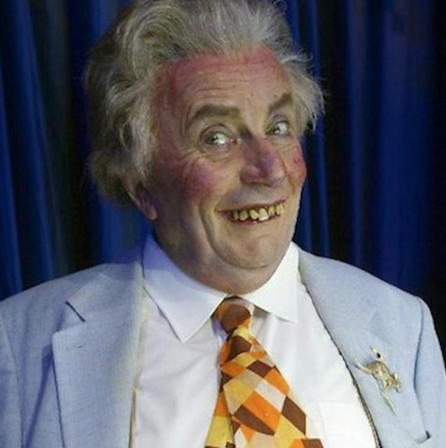
SIR LES Cultural attache and Minister for The Yartz.
SIR LES Cultural Attache and Minister for The Yartz.

A Writer’s first column.

WHEN Margo Kingston asked me to consider writing a regular arts column for No Fibs, I thought she was pulling my leg, simply because art and politics didn’t seem like a natural blend.

Aren’t artists a government’s greatest nightmare, grudgingly budgeted-for, the black sheep’s back on which Australia’s great nation couldn’t possibly be built?

The one time I was part of a policy discussion for a state election campaign, when we got around to considering the arts, someone reminded us of Sir Les Patterson, Cultural Attache and Minister for ‘The Yartz’.

We all had a laugh, and The Yartz got slotted under some other subheading, which is why I have come to the conclusion that the arts belongs on No Fibs somewhere between the black sheep and Sir Les. If you work out where that is, let me know.

Inspired by Margo, I’ve explored a 12-month plan of arty subject matter, and I’ll edit arts writing submitted by citizen journalists, which is what No Fibs is all about.

We’re calling the column ‘Creating Waves’, because we want it to push the envelope a bit, and I’m also looking forward to writing about the arts from an artist’s perspective.

I am an artist. There, I’ve said it. Roll the polemic, cue the manifesto.

Actually, this black sheep is not about to start bleating, he’s going to start dreaming. My only real beef is that artists have gotten into the habit of allowing others to speak for us, and in the social and new media, this stands to leave plenty of artists and their work behind.

“We are creating at a time when old media paradigms are shifting and reinventing themselves, which comes with plenty of economic pain and ego-bruising challenges.”

I have been a practising artist for three decades – an illustrator, designer, director, writer, producer, actor and now a journalist, because I believe there is an art to quality journalism.

Writing is probably my strongest suit, and it comes naturally, but for years I failed to get paid work as a writer. Waiting around led me into very strange country, primarily to shape corporate fantasies for big companies. Not art, not by a long shot.

In 2008, 21 years after I left a very expensive school which taught me little about being an artist, I finally learnt for myself that in order to be a writer, I just needed to start writing.

I figured that as an art form, writing was something nobody could stop me from doing. I just had to create great content. How it would get out there was a question I should no longer waste time answering. I had to trust that a pathway would become apparent as I was writing.

I started on a play and feature articles (some were picked-up by the mainstream print media), then added a novel to the mix, then another play, and landed a job as an editor required to write regular feature articles.

When that 2-year contract was not renewed due to a decline in advertising revenue, I started a blog, and committed to writing on it every week. The publish button has provided a great panacea for my need to be read, but I can’t help feeling there is a lot more to be had from online publishing.

We are creating at a time when old media paradigms are shifting and reinventing themselves, which comes with plenty of economic pain and ego-bruising challenges. Arts communities are making the same transitions, simply because audiences, readers and consumers are accessing art in an increasing number of platforms that traditional marketplaces cannot capitalise on unless they evolve.

When my first play went through the development process with a theatre company for more than three years, and it still didn’t make it onto the stage, I got frustrated enough to see if there was such a thing as YouTube for theatre.

Turns out there is, and it’s growing exponentially, using live streaming, a technique developed for corporate conferencing, but now distributing performing arts to the online community.

The real impact of this movement lies in the realisation that performing arts don’t need to be streamed from a traditional theatre venue.

Suddenly the world seemed a lot smaller; Australia’s theatre companies weren’t such powerful gatekeepers; the script-based content I’d been sweating over had a new platform; and an Australian playwright writing about foreign subject matter didn’t feel so isolated.

EBOOKS ANYONE? One of the greatest publishing revolutions.

Within a few short years, E-books have gone from an industry laughing-stock to a viable means of pursuing a career as a published author. While I edit my novel, the possibility of self-publishing hangs temptingly in my consciousness.

Not long after I started tweeting I stumbled into writing for No Fibs, which has shown what political writing can achieve in the hands of voters, not politicians and their mainstream media mouthpieces.

Now we have an opportunity to see what arts writing can achieve in the hands of artists.

I will be covering topics on all art forms – nothing is off the table. If you want to review plays, movies, exhibitions, or write about your own arts practice, check out the citizen journalism training drop-down menu for No Fibs submission guidelines, and please submit.

You’ll also need to be on Twitter, which is how you’ll contact me if you’ve written something you’d like No Fibs to consider publishing. Find me @burgewords

Arts practice, policy, access, and innovation are the main areas I’ll be covering.

Practice, because artists need to create art, no excuses (no fibs!).

Policy, to discover what the Abbott Government has in store for artists, since we designed the campaigns, but didn’t make it into any three-word slogans.

Access, because all artists want to be where the action is.

And innovation, because it’s already shaping the artists’ new world faster than you imagine.

This article first appeared in No Fibs.

© Michael Burge, all rights reserved.