All posts by Michael Burge

Journalist, author, artist

‘A litany of separation and rejection’: The shameful shadow behind Sydney World Pride

OPINION: They say timing is everything, but there’s a stark irony about World Pride happening throughout Sydney at the same moment as an inquiry into some of the harbour city’s darkest and most shameful years.

Away from the rainbow strip, just off Macquarie Street in a sandstone building raised from the city’s bedrock, the New South Wales special commission of inquiry into LGBTIQ+ hate crimes has been holding public hearings since November. 

It’s been described as a world first, but this inquiry is unlikely to make global news right now. There’s no way to spice up hours of former and current NSW Police and academics being questioned about historical deaths that were possibly driven by gay-hatred, and the multiple internal police reviews around them.

A pragmatic process is called for, yet the monotony pervading the lengthy daily hearings is amplified by the sense that we’ve been here all too many times before. It would be easier to just file away all the evidence (some 220 boxes of paperwork and 77,000 electronic files) and head to the beach to enjoy what’s left of the warm weather.
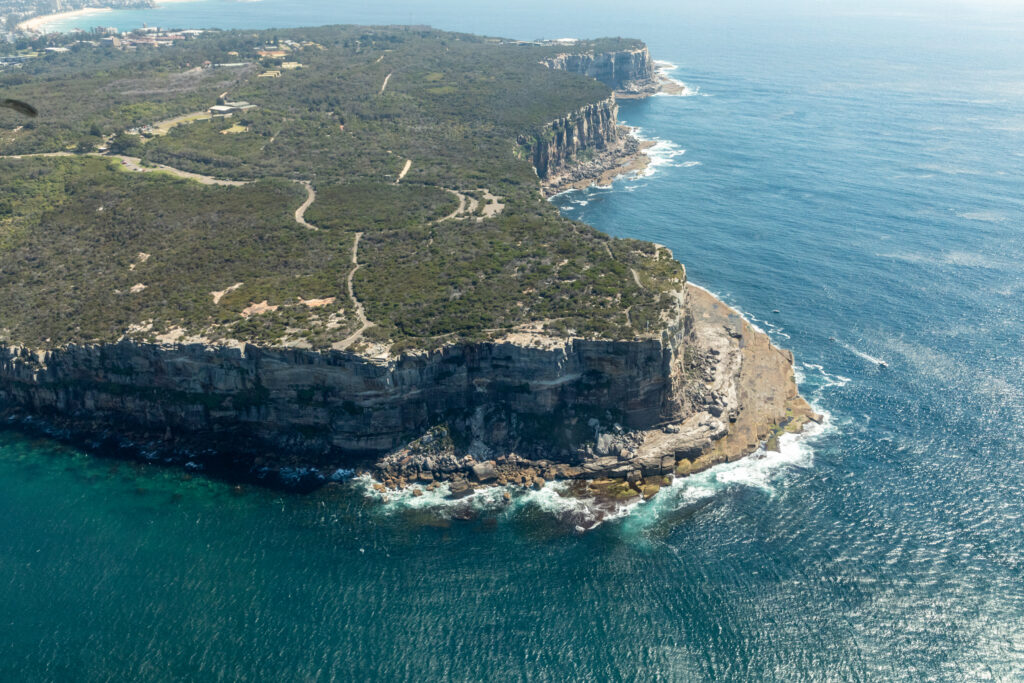
North Head, Sydney Harbour

But we won’t escape it there. Sydney’s seaboard was the location of many of these untimely deaths, where mens’ bodies were either discovered at the foot of the sandstone cliffs standing like ramparts above the mighty Pacific Ocean; or they disappeared without a trace. 

Were they pushed, did they fall, or jump? The question gets tumbled around by the white-topped breakers in a constant search for certainty. Adding to the lack of clarity is that many of these deaths happened in places where marginalised people were finding solace on the margins: the gay beats scattered around the quietest corners of Sydney, Newcastle and Wollongong.

It’s partly why crime is often hard to discern from misadventure or something else, since such places are also where some go to end their lives. 

Stunning escalation

Most compelling are the life stories starting to emerge from the gloom. Unlike others before it, this inquiry is allowing us to look beyond names on lists of cold cases by sharing details about the partners, families and careers of the long dead. We’re getting to see many of their faces for the first time.

A splash of case reviews earlier this year threw up an unexpected submission that evidence of homophobia had been overlooked by police investigating the brutal 1992 murder of John Gordon Hughes. 

It was a stunning escalation in an inquiry that is yet to find a lightning rod of justice.

The commission has also tabled evidence that many men on the list of cases were likely not homosexual and probably didn’t die at the hands of others, yet had their unsolved deaths caught up in the ongoing saga of the gay-hate ‘crime wave’.

To its credit, this inquiry is not underlining the difference. As their cases come up for submission, the dead are being remembered equally regardless of sexual orientation or gender, insofar as these things can be ascertained at such a distance. Families and friends across the state have been waiting for answers regardless, and this inquiry is looking back to times when policing standards – particularly around homicide investigations – was very different to today’s expectations. 
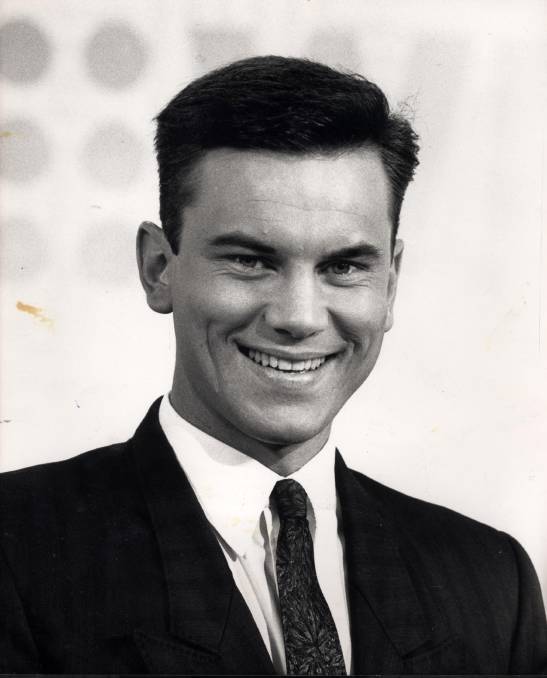
Wollongong newsreader Ross Warren, who went missing at Bondi in 1989

Relatives were not always kept informed about the progress of cases that proved difficult to solve. Some submissions have highlighted the lack of effective police communication with family and friends of victims. These connections might have been a source of leads and useful information, such as the sexual orientation of the deceased and thereby the possible context of the death, if only they’d been asked.

For other cases, sadly, there appear to be no family members watching. With terms of reference stretching back five decades, this inquiry sometimes feels like a litany of separation and rejection in which there’s little hope of snatching much from the jaws of time.

But one persistent parent can arguably be credited with bringing about the whole reckoning. Kay Warren, mother of 25-year-old Wollongong newsreader Ross Warren – who went missing near Bondi in 1989 – just wouldn’t let up about exactly what police were doing to investigate her son’s disappearance. 

We should spare a thought for her determination and that of so many other family, friends and allies of the dead and missing, including the police who paid heed. 

We must also applaud the likes of Les Peterkin, who fronted the inquiry to give his courageous warts-and-all account of life during some of the toughest times in this state’s response to gay men.

Once World Pride has left town, this inquiry will turn the spotlight on further unsolved deaths that we’re still waiting to know about; but commissioner Justice John Sackar doesn’t have long. 

With a reporting deadline of June 30, time is of the essence.

Michael Burge’s debut novel Tank Water (MidnightSun Publishing) deals with rural gay-hate crime.

Lineage and landscape: get back to Deepwater for the art

A SPLASH of creativity is resurfacing in the New England Deepwater district, with a team of locals gearing up to deliver the town’s beloved art show again in autumn 2023.

Last held in 2014, the event is a significant fundraiser for the region. From March 31 to April 4, 2023, it will feature guest artists and work by local creatives and artisans against a backdrop of music, workshops and food at Deepwater’s School of Arts.

Convenor Catie Macansh said she has been delighted by the enthusiastic response to the revival of this community event.

“It’s great to have the generous support of sponsors, led by Highlands Real Estate Glen Innes, which is backing our major art award.

“We encourage artists from across the region to prepare their very best work and enter it for our three-day, curated exhibition, with $4500 of judged prizes in the mix.”

Artist Jane Henry returned to live and work on a cattle and cropping property in the Dumaresq Valley, and will be one of several featured artists at the event.

“It is wonderful to have the opportunity to share some creativity and stimulus with a small rural community like Deepwater, as they are always extremely welcoming and appreciative,” she said.

“The opportunity to socialise, meet new people and enjoy new experiences is embraced wholeheartedly and I love to support this interaction by displaying my creative impressions.”

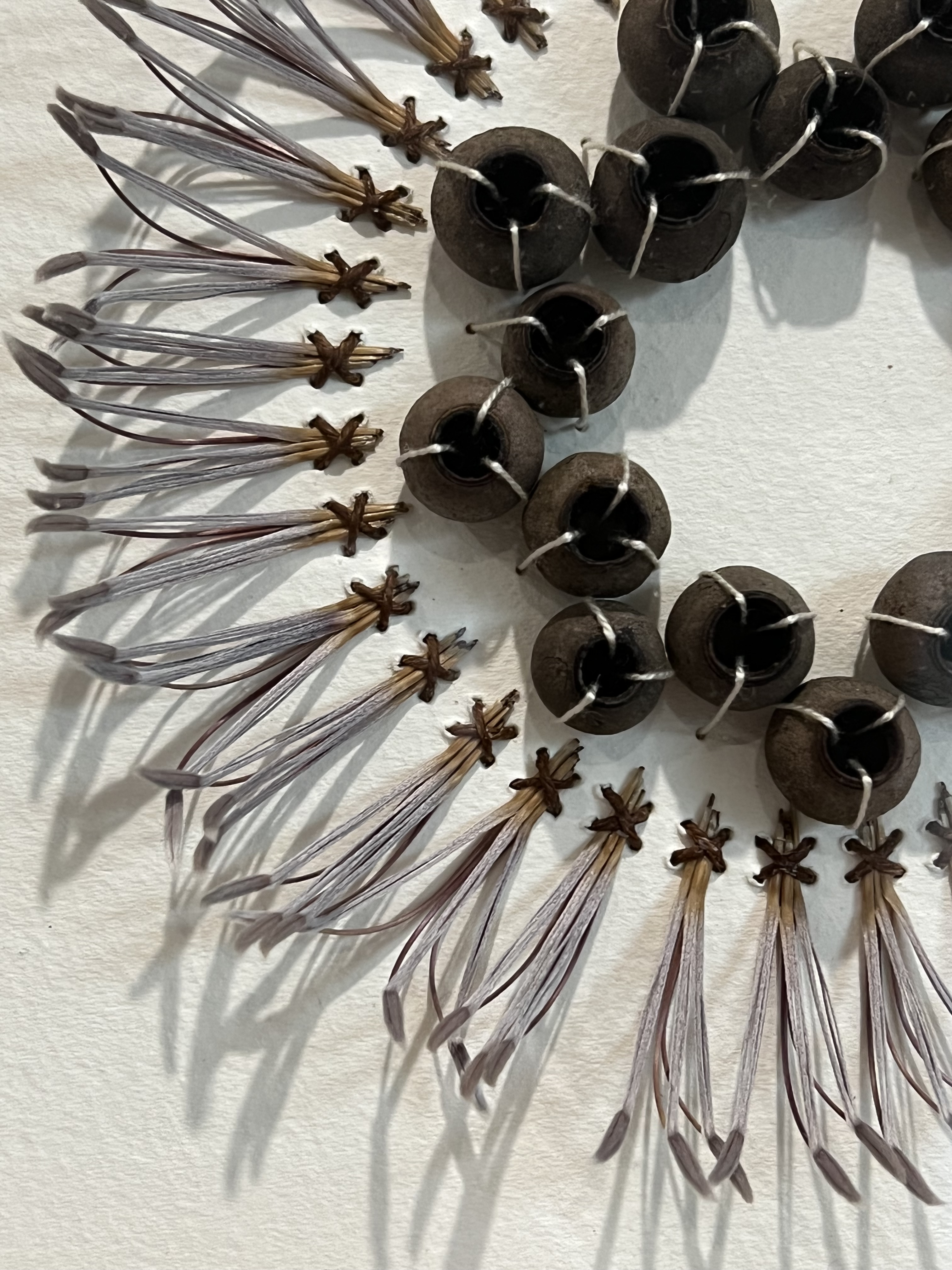
SLOW-STITCHED Botanical artwork by Jane Henry

Henry will be exhibiting a collection of intricate artworks combining her love of Australian flora and paying homage to her mother and grandmothers, who passed down the skill and appreciation of slow needlework.

“I am constantly extending the capabilities of stitching on paper with natural fibres, dyes and natural objects I collect,” she said. 

“These are extremely intricate and time consuming pieces which showcase and preserve various natural forms.”

Stunning homelands

Lauren Rogers is a proud Ngarabal woman whose mob comes from the Deepwater region and has strong ancestral ties there. She is “blessed and humbled” to be invited to exhibit her contemporary Indigenous art at the Deepwater Art Show.

“I am thrilled to return to my traditional homelands to connect with my Country, the land, and my ancestors,” she said.

COMING HOME Ngarabal artist Lauren Rogers

“Sharing my artwork with the Deepwater community and celebrating First Nations’ history and culture will be a memorable experience.”

Rogers will bring pieces from her Coming Home collection, sharing important stories of her Ngarabal Country lineage to honour what she calls the “stunning geographical location” of Deepwater. 

“My preferred medium is acrylic on canvas, using vibrant colours to contrast and expose the deferring dimensions in the painting,” she said.

Ochre Lawson (pictured in main image) grew up on properties near Wollomombi and Glen Innes. 

“This time spent in native bush gave me a great love and appreciation for our wildness areas and how important they are for their beauty and health and wellbeing of the land,” she said.

“All my work is based on trips into wilderness country throughout Australia, where I gather source material through en plein air sketching, hiking deep into remote areas such as the Tasmanian high country, Kosciuszko and Washpool National Park.”  

Lawson says participating in the Deepwater Art Show and being able to support the Arts in regional NSW is very special. 

“As the Deepwater show is a fundraiser for different local charities, I’m very happy to participate knowing how important these organisations are for rural communities.  

“I feel very lucky to have grown up in rural Australia and feel that connection between city and country is more important than ever if we are to band together to battle climate change.”

A selection of Lawson’s semi-abstract paintings from her Kosciuszko, outback New South Wales, and Tasmanian series will be exhibited at the Deepwater School of Arts.

‘Organised mess’

Toowoomba-based artist Monique Correy grew up in Glen Innes and feels lucky to maintain strong connections with rural NSW.

“My parents aren’t farmers but we had all sorts of animals growing up and this has definitely had an impact on the things I paint,” she said.

DUCKS FOR DEEPWATER Artwork by Monique Correy

“I love the Glen Innes and surrounding community – they have been so supportive of me and It means a lot that I can give back in some way by being a part of this show.”

Known for her distinct painterly brushstrokes and stripped-back style, Correy describes her paintings as “an organised mess”.

After her first exhibition sold out on opening night, she is bringing some beloved favourites to Deepwater Art Show.

“Everyone loves ducks, and maybe a cowboy or two!” she said.

The final featured artist of the event, Clare Purser enjoys painting and drawing en plein air around her home on Brisbane’s Bayside.

“I’m interested in creating paintings that are evocative and intuitive and express an emotive reaction to the landscape,” she said.

Working mainly in oils and with mixed media on canvas, board and paper, Purser gathers inspiration for her vibrant land- and seascapes from notes and sketches.

She was recently as a finalist in the Sunshine Coast, Redlands and Moreton Bay region art awards.

EMOTIONAL LANDSCAPE Painter Clare Purser

Unique shindig

A great line of live performers, workshop facilitators, sponsors and special guests are gearing up for the program of events planned by the Deepwater Art Show committee.

Editor of Galah magazine, Annabelle Hickson, will open the show on Friday March 30. Guests will also experience performances by soprano Laura King and other musicians.

This unique opening night shindig will kick off a long weekend of high teas, artisan markets, and a workshop series, all delivered by New England-based creatives, including Carolyn McCosker, Joanne Barr, Adele Chapman-Burgess and Richard Moon.

For more information, tickets and entries, head to the Deepwater Art Show website

A ‘gay dude’ defends his sandcastle

I ALMOST threw my mobile phone into the long grass last week, after a complete stranger dealt me an unexpected 10-minute takedown about a piece of journalism I wrote, while I was weeding the garden.

“I’m not having a go at you,” they kept insisting, before doing exactly that. The crux of their diatribe was that “gay dudes like you” don’t have the right to speak for anyone else in the rainbow community who isn’t a gay, cisgender male.

They asserted there was no thought or process in my article, that it was “throwaway”.

I explained it was one of the most considered pieces I’ve ever written.

They got upset, trying to articulate their pain at me referencing two lesbians included in my article, asserting that to write what I did I couldn’t know any.

Even though that’s very far from the truth, I stepped back a little and tried to guide them to a channel of complaint, or write a rebuttal to my piece.

They countered that there was no point in doing that, because I had an unfair media platform.

That got me upset. Any platform I have is extremely hard-won, since I have always battled the media and publishing world’s reticence to facilitate queer content; yet I have always written our stories and sought publication for them. Where none was offered, I did it myself.

With both of us hurting we were getting nowhere, yet decades of creative rejection means I understand what it feels like to have no voice.

But would I ever have made the effort to seek someone out who managed to get something published about the LGBTIQA+ community, and try tearing strips off them?

Never.

Whenever I have been in that state, I have always just kept writing.

Taking my own advice

I’d taken my time with this recent piece. It relates my direct experience, backed up by years of quiet research.

But being ready for a blindsiding naysayer is something I should have been better prepared for. The subject of enduring critics is one I have written about often.

So I took my own advice, and got through the angst in a few hours. Far better than the years I spent in a state of confusion about former friends who chipped away at my writing confidence.

The real gem in what I wrote then was about going back to source, to be sure that what we write is correct. Not all criticism is unjustified, after all.

So I did just that.

When I realised I wasn’t appropriating or misrepresenting anything, I went back to the weeding.

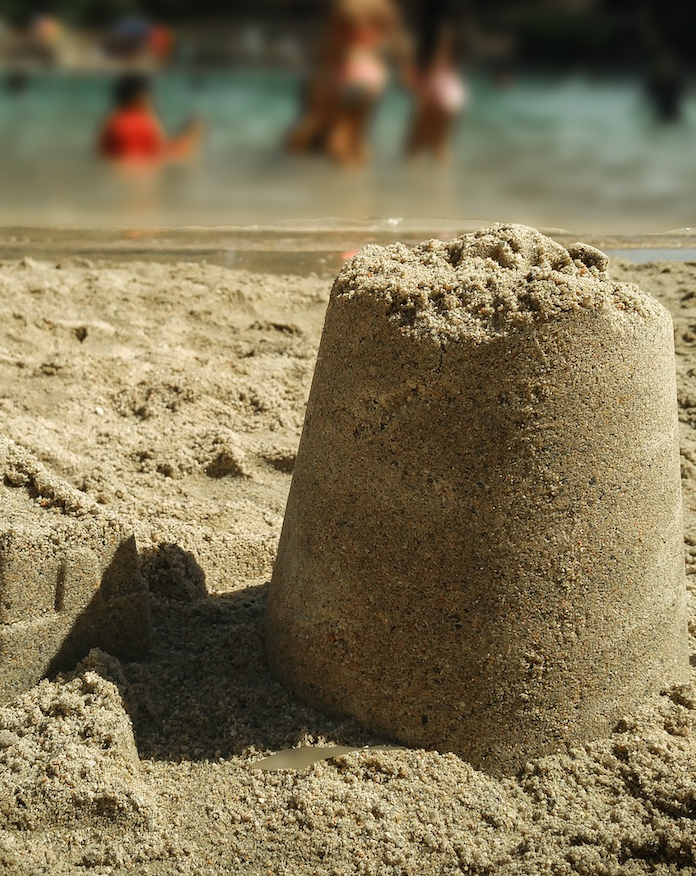
BUILD IT and they might try to knock it down

Small sandcastles

But I wondered why another member of the rainbow community would seek to push me off a platform it has taken me decades to build, particularly when it’s just a little sandcastle on a very crowded beach?

Judging by the the upset tone in this caller’s voice, the answer may be pain and trauma. I’ve been there, I know how it throws everything in our lives into a much sharper perspective.

Such a moment is what ignited my writing career in the first place, when I embarked on putting my perspective into the mainstream because it did not exist widely in books or media. I have been doing so ever since, and if a platform has formed beneath me, good.

Yet after this phone call, I needed perspective too, in this era when writers are increasingly expected to stick to our lane. Accusations of appropriation lie around every corner and they can really hurt.

I see this issue through an equal opportunity lens: until the traditional publishing industry is replete with cisgender gay authors telling our own stories, it’s not a great look for authors who are not us to be doing so.

But I am also not so anti-imagination that I believe authors cannot use empathy to create stories about lives other than our own. When we do, we must play very fair: inclusion without stereotyping, consultation, and an abundance of sensitivity.

So I am glad I asserted the right of this critic to pen their reply, no matter how small they believe their sandcastle to be.

Not just because we are both from the LGBTIQA+ community, but because writing outside our lanes is a sure fire way of making bigger sandcastles for all queer writers.

There’s plenty of sand. Get building.