All posts by Michael Burge

Journalist, author, artist

Rural research unearths plenty of reckonings

“Should I be proud of what my ancestors and their peers achieved, or ashamed? It’s a question facing a lot of Australians.”

LONDON-BASED author Patsy Trench is the first to admit the workings of Australia’s farming history were not a natural subject for her to spend years researching. But her latest book A Country To Be Reckoned With tells the story of how a ‘Ten Pound Pom’ got to grips with our rural past through the experience of her influential ancestor, George Matcham Pitt.

“As a ‘townie’ living in London, the world of Australian 19th century agriculture was about as far outside my familiar sphere as it’s possible to get,” Trench said.
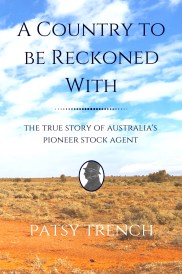
“I got to know my great-great-grandfather G.M. Pitt while I was writing my first book (The Worst Country in the World) about his grandmother, our pioneer migrant Mary Pitt.

“He was obviously a great character – larger than life, with a passion for rhetoric and a fondness for quoting from Shakespeare and Burns, which I understood was rare among farmers.”

Despite much hesitation, Trench said she started from the knowledge that the stock and station agency her ancestor founded — Pitt, Son & Badgery — was well-known in country circles, even though the company was taken over decades ago.

“In the end I decided to turn my ignorance to advantage: like the ‘New Chums’ who arrived in New South Wales in the 19th century expecting to make their fortune on the land knowing not the first thing about farming.

“I came at the topic as an outsider and I make no bones about it.”

Trench made several trips to rural New South Wales with Australian family members during her research, which she describes as “mystery tours” that led to several revelations about her subject and family.

“I knew ‘GM’ had taken up land in the Gwydir district in the 1840s, but there was also evidence he visited the district ten years earlier, along with his de-facto stepfather William Scott,” she said.

“On our first visit to Moree we could find no trace of him in the 1830s, but further research revealed that Scott and he had acquired a licence for a property on the Gwydir River, which was taken from them after several years in complex circumstances.”

Patsy also discovered a possible connection with an Aboriginal Pitt family.

“There was a Tom Pitt born in 1838, the year my great-great-grandfather arrived at the Gwydir in search of land,” she said.

“There are no signs of Aboriginal Pitts before that time, but there are now hundreds living in the area and I’ve been in touch with them and hope to meet up with them one day. It’s believed they got their name from GM, one way or another.”

Bush character re-examined

A Country To Be Reckoned With is Trench’s second major work on her family’s Australian origins, and brings to life a relatively unknown ‘Bush’ archetype: the auctioneer.

“I could quote a poem I reproduce in the book, which appeared in a Pitt, Son & Badgery anniversary leaflet,” she said.

PIONEER PITT George Matcham Pitt (1814-1896).

“They describe the auctioneer as ‘the fellow with his coat off in the pen’: a man of charisma and personality with a remarkable gift of the gab. A master at handling men and getting things going, often asked to MC events such as weddings; with a retentive memory, sharp wit and ‘captivating smile’, manipulative, optimistic and perennially cheerful.

“All that said, having witnessed an actual cattle auction last year in Wagga Wagga, the auctioneer’s job is to get the thing done as quickly and efficiently as possible, so not a lot of time for captivating smiles or clever jokes.”

Trench, a ‘Ten Pound Pom’ who migrated to Australia in the 1960s to further her acting career, eventually returned to the United Kingdom. She believes researching and writing about her adoptive country’s past has evolved her view of it.

“When I lived here in my hedonistic youth I thought Australia was paradise and the people the most friendly and welcoming people in the world,” she said.

“Now I know a bit about Australia’s colonial past I see things, and the people, a bit differently. It’s still a stunningly beautiful country with great people in it, but there’s this undercurrent of a dark past that has only really emerged in the past thirty years or so.”

Since her family was responsible for taking land that belonged to Indigenous people, Trench ruminates on whether she is complicit in this confronting history.

“Should I be proud of what my ancestors and their peers achieved, or ashamed? It’s a question facing a lot of Australians and the attitude to their colonial history seems to change every time I come here.”

In the same way that Trench’s first book The Worst Country in the World led to the journey that became A Country To Be Reckoned With, her new book seems to be demanding more storytelling of this writer.

“It’s the Aboriginal connection I would like to get to the bottom of,” she said. “Who was Tom Pitt, born in what was to become the Moree district in 1838? He seems to have hundreds of descendants but nobody seems to know who his parents were, or how he acquired his name. I am hoping to hook up with some Aboriginal Pitts who I’ve been in contact with online. There are some great stories to be told.”

© Michael Burge, all rights reserved.

Grab your maracas as Tenterfield Goes To Rio!

THE high country of the NSW New England region is renowned for its autumn colour, but one man who was born at Tenterfield is set to be remembered with an even brighter splash at the inaugural Peter Allen Festival this September.

Parkes celebrates Elvis, even though ‘The King’ never played that corner of NSW, and now Peter Allen fans are encouraged to find their way to Tenterfield to dress up in celebration of the town’s internationally famous son.

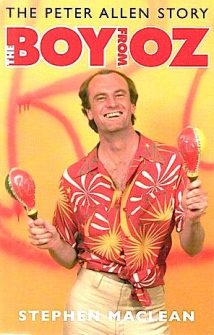
At the peak of Allen’s career his hit song ‘I Go To Rio’ topped the Australian charts for five weeks. This high-energy number was backed up by the flamboyant, maraca-shaking, Brazilian-shirted image that became synonymous with Peter Allen’s live performances.

Headlining Tenterfield’s three-day Peter Allen Festival is multi award-winning entertainer Danny Elliott, in a tribute show designed to get the feet tapping.

Danny has earned his Peter Allen stripes performing Tenterfield to Rio for a decade, and was awarded the Australian Entertainment Mo Award for Variety Entertainer of the Year.

“To be the headline act for the inaugural festival is an amazing honour,” he said. “I am so excited to perform the show in Tenterfield and to be a part of the celebration”.

2871460
BOY’S BIOG The definitive biography of Peter Allen.

“Unlike the stage show The Boy From Oz — which is the story of Peter’s life — this show is me, celebrating the wonderful music of Peter Allen.”

The song list of any tribute act is always of great interest to fans, and a show built around the work of Australia’s Oscar-winning singer-songwriter raises the question of what Danny will be bringing to his cabaret-style performances.

“There’s so many! Where do you start?” he said. “‘I Go To Rio’ has those fun, great Latin rhythms. ‘Once Before I Go’ is a reflective song of life and love. ‘Bi-Coastal’ has a great story behind the story, but I love it for the great bass line.”

A perennial favourite of Peter Allen fans is the song he wrote as a gift to the town of his birth — ‘Tenterfield Saddler’ — regularly requested and performed by Allen’s friends Bette Midler and Olivia Newton-John.

“‘Tenterfield Saddler’ is just one of the best ever songs written,” Danny said.

“As an entertainer, performing Peter’s songs is incredible as every one has a great story.

“It’s my job to tell that story, which is what I love to do.”

Express yourself!

In honour of Tenterfield’s most famous son, the Peter Allen Festival plans to close the town’s main street to traffic and rename it Peter Allen Boulevard for the whole of Saturday September 8.

Throughout the day, the thoroughfare will be a celebration of music, art, culture and colour.

Visitors are encouraged to bring their best Peter Allen-themed looks to town and strut their stuff along the high street, which will host artisan markets, musicians and entertainment.

Danny Elliott will feature in three performances of Tenterfield to Rio at the Tenterfield School of Arts, situated right at the heart of Peter Allen Boulevard. The cabaret-style show has proved very popular with visitors, and due to popular demand there will be an extra show at 10am on Sunday September 9. 

“The energy and flamboyance of the shows are infectious,” Danny said. “But for me, it’s the connection Peter Allen made with people”.

“Whether in a giant stadium or an intimate cabaret, he connected with everyone in the room.

“I think Peter’s strength was to tell a story. What made him so popular was also the way these great stories were performed. With such high energy, even in ballads, he seemed to have an incredible electricity about him.”

Australian performers Todd McKenney and Hugh Jackman have stepped into Peter Allen’s shoes to perform The Boy From Oz in Australia and the United States, so what was it like for Danny to get to grips with the maracas?

“From an early age I played piano and sang, then went on to learn a variety of different musical instruments.” he said. “As a singer/musician, the two things I’ve had to work on to perform Tenterfield to Rio are the dance and movements, and the fitness to keep it up for a whole show!”

And why does he think people love dressing up? “I think it’s all about the escape. To get out of ‘normal life’ and have a bit of fun,” he said.

“To get out there and express yourself, and your likes, whether it’s a footy team or your favourite singer, it’s all fun!

“I’m already excited about it. Although I think it will be emotional when it comes to singing ‘Tenterfield Saddler’. To be right there, performing songs from Australia’s greatest singer/songwriter/entertainer Peter Allen, it already sends shivers up my spine. I can’t wait!”

The Peter Allen Festival September 7-9, 2018.

Peter Allen: the jazziest bush poet

WHEN he returned to Australia in 1971 after being based overseas across the late 1960s, performer Peter Allen would have been forgiven for wondering if his career was over. But an unexpected piece of family history became the inspiration this boy from the bush needed to succeed on the world stage.

It had been a very long journey home for the ‘Boy From Oz’. Work offers were getting scarce for Peter Allen by the early 1970s. His mentor Judy Garland, who’d opened doors on both sides of the Atlantic for the young performer, was dead. His wife, Garland’s daughter Liza Minnelli, had asked for a divorce.

Allen had been performing for two decades and was at the age when many former child stars find themselves washed up. Even Australia didn’t appear to have many work prospects looming on the horizon for him that year.

His first self-titled album had bombed and gigs to promote it had been hosted by a Manhattan venue known as The Bitter End, which would have seemed terribly ironic to the man who’d been introduced to enormous audiences in the company of iconic musicians throughout the late 1960s.

BOY’S BIOG The definitive biography of Peter Allen.

According to Allen’s biographer, journalist Stephen MacLean (author of The Boy From Oz) it was an offer to perform in Australia that led Peter to “look his past in the eye”.

Ensconced at his mother Marion’s Bondi unit in that 1971 winter, Allen spent hours writing on the rooftop overlooking the ocean.

“One day, while Marion was out at work,” MacLean wrote, “Peter found himself fossicking about the flat. In the course of this he came upon an aged newspaper clipping from his near-forgotten birthplace of Tenterfield.”

The snippet recorded that Peter’s grandfather George Woolnough, whose High Street saddlery was already renowned, had a library at the University of New England named after him.

Memories came rushing at the 27-year-old performer. Key to his life experience to that point was the shooting suicide of his father and the grief that led to his immediate family’s gradual departure from the Australian bush. The fast-paced city had been Allen’s home since the mid 1960s, but his country roots held the seeds of an idea for this budding songwriter.

Emboldened by his modest start in New York, Peter Allen took this family history up to that Bondi rooftop and penned a new song.

‘Tenterfield Saddler’ was the result, a ballad that has bridged Australian bush poetry and international show-business ever since he recorded it in 1972.

‘Applause rolled on and on’

Mixing lyrical rhymes in a tale about long journeys down a country track replete with kangaroos and cockatoos, ‘Tenterfield Saddler’ is every inch a bush ballad in the tradition of Banjo Paterson.

It brings to the fore a lesser-known character in the cast of bush legends: the saddler, responsible for the safety and comfort of your ride, but also a storyteller.

Like all the best bush yarns, ‘Tenterfield Saddler’ has a dark side. In his grandson’s lyrics, the saddler holds the key to everyday life in a country town, but what George Woolnough couldn’t unlock were the reasons his son had died at his own hand.

It is the suicide at the heart of ‘Tenterfield Saddler’ that gives it a place alongside one of Australia’s most enduring ballads ‘Waltzing Matilda’. In that song’s climax, the hero of the story, a swagman, drowns himself to avoid capture for sheep rustling.

When Allen recorded his song for the 1972 album of the same name, it made a small splash in the American music industry, which labelled the track a folk song. But what this quirky ballad did, according to Stephen MacLean, was get Peter Allen noticed as a songwriter.

After a move to California in the early 1970s, despite having the barest of credentials, Peter Allen kept penning songs. He worked hard at his craft with other emerging writers and allowed the results to be recorded by artists on the brink of bigger singing careers.

In 1974, he eventually landed a hit when Olivia Newton-John released ‘I Honestly Love You’, co-written with Jeff Barry. The track garnered Allen his first of two Grammy Award nominations.

GOLDEN BOY Peter Allen (right) with co-writers Burt Bacharach, Carole Bayer Sager and Christopher Cross at the 1982 Oscar ceremony.

When he trialled the song at a live performance, long before Newton-John’s international number one single, Allen recalled: “Everything stopped. Even the waiters didn’t move. The air was still and when I finished you could have heard a pin drop. Then they all began to applaud and the applause rolled on and on.”

Allen went on to write with a range of collaborators, including Carole Bayer Sager. The two were part of the team that won the 1981 Academy Award for Best Original Song with ‘Arthur’s Theme’ from the soundtrack of the Dudley Moore film Arthur.

Yet Allen’s bush ballad ‘Tenterfield Saddler’ eventually took its place in the annals of songwriting. As fame saw him tour internationally, it became an audience favourite and graced the Australian charts multiple times. Bette Midler reputedly requested the song every time she saw him perform, and sang it at his memorial service.

By the end of his life in 1992, a result of AIDS-related throat cancer, lyrics about travelling had become a Peter Allen hallmark. Even his Oscar-winning track has at its heart the memorable chorus, “When you get caught between the moon and New York City”, a line Allen dreamed up while his flight was in a holding pattern over John F. Kennedy Airport, according to MacLean.

pluck-cover
BUY NOW

But it was his enduring 1980 homecoming ballad ‘I Still Call Australia Home’ that saw the boy from the bush – who’d spent his life wandering – finally embraced by a nation.

This article appears in Michael’s eBook Pluck: Exploits of the single-minded