
All posts by Michael Burge

Journalist, author, artist

Unlocking the secret life of (most) writers

WRITERS are living through tough times, and times are usually tough enough for wordsmiths.

“Of optimal use to writers who have at least one manuscript completed and the willingness to create another.”

Not since the invention of the printing press has it been easier to publish books using an array of affordable online publishing services, but these same systems and the distribution networks they feed have stripped the traditional currency of many of the same books to almost nothing.

Newspapers struggle to get readers to pay, and we now have multiple generations who do not expect any content should come with a price tag.

Yet it’s not all bad news. Despite the terrible odds stacked up against writing for fame, glory and riches, people still tell stories.

My lack of success in landing a traditional publishing contract for my work led me down this pathway, even as a log-jam of manuscripts was piling up in my head, heart and hard-drive. Write, Regardless! is the result of having many questions fired at me ever since I threw my cap in the ring and became a publisher who made a small splash.

I once worked in publishing and learned a thing or two about gauging what makes a good story, a savvy author and a win-win contract, but I needed to spend years researching online processes and social media in order to lay the foundations for this step into the partially unknown.

And I hasten to add I don’t have the answer to every question. I’m still learning, but after finding myself corresponding at length about my approach, and thereby losing time for my own work, I decided to look at how I achieved my limited success in order to have somewhere to direct queries.

“I was objective enough to make decisions as a publisher as much as I was making them as a writer.”

In my first year as an independent publisher I profited from the publication of four titles, which made money after significant sales to libraries of the paperback version of my strongest non-fiction title Questionable Deeds: Making a stand for equal love. This title had relevance to the news cycle in that it spoke considerably to the critical political journey of marriage equality legislation in Australia.

9780645270525The publication of Closet His, Closet Hers: Collected stories at the same time was no mistake. Fiction is a much harder sell, and I consciously floated my first fictional title on the same wave as Questionable Deeds. To put it plainly, I was objective enough to make decisions as a publisher as much as I was making them as a writer.

That is the key to Write, Regardless! It seeks to unlock publishing industry secrets, but it will also raise your awareness of what it takes to spend your precious time writing regardless of what the publishing industry thinks of all your hard work.

This book is not aimed at teaching you to write, although it has several encouragements to analyse your work to make it more engaging and entertaining to readers. It doesn’t offer short cuts. I started creating an online presence as a journalist twelve months before I started writing my first published book, and I encourage readers to give the process at least the same time as I have, which is now approaching five years.

Writing is about doing the work. Publishing is about even harder work. Marketing and promoting a book is the hardest work most independent publishers will ever do.

Write, Regardless! is the technique I applied to myself, and in doing so earned a third of a traditionally published writer’s average annual salary in my first year, without any support whatsoever from the traditional publishing industry or the mainstream media.

That might sound like very small fry, but weighed up with the high chance of getting ripped off thousands of dollars for the ‘one-stop-shop’ charlatans, or outsourcing the work to others, it’s a resounding success story. I made more than many authors receive from books that have been treated to the full suite of marketing and promotion, festivals and competitions.

As I write this, I am preparing to attend my first writers event as part of a panel discussion at Brisbane Writers Festival. For a self-published author in any country that is almost unheard of.

Write, Regardless! is available free online as a series of articles on my website, but I’m publishing it here with all the same links to other resources I created on the journey.

write-regardless-cover
BUY NOW

It will be of optimal use to writers who have at least one manuscript completed and the willingness to create another with a regular writing schedule of no less than a page of new material a week. It’s also designed for you to begin the work of becoming a publisher at the end of each chapter, before moving onto the next.

One page a week sounds like a small amount, but there is more to being an author than writing these days. Read on and courageously do the work!

An extract from Write, Regardless!

Mrs Mountbatten Turns Over a New Leaf

A Writer’s Review of Alan Bennett’s The Uncommon Reader.

“Goes to the very heart of what literature does.”

ALAN Bennett has made a career out of writing about ordinary people, in fact he seems embroiled in a competition with himself to ‘out-ordinary’ his cast of characters who fade into the wallpaper, noticing the dust and fingerprints on the skirting board as they disappear.

From his gripping Talking Heads series to the divine ordinariness of memoirs about his Yorkshire family in Untold Stories, this has been a fascinating journey into the humour and pathos of the seemingly mundane.

ROYAL MALADY Nigel Hawthorne and Helen Mirren in The Madness of King George. (Photo: Keith Hamshere)

At the other end of his oeuvre sits Bennett’s ruminations on those most would class as ‘extra’-ordinary, most notably in Bennett’s stage- and screenplay The Madness of George III, famously altered to The Madness of King George at the cinema so as not to confuse US audiences about having missed I and II in the series, a ‘Bennettian’ twist if ever there was one.

Written a decade later, The Uncommon Reader is a beguiling companion piece to that previous study of royal character and frailty. Like King George, Queen Elizabeth II is quickly overtaken by something those around her consider madness after a fashion, when she exhibits a surprising appetite to read, and read voraciously.

As the novella’s protagonist, Elizabeth proves every bit as plucky, observant and youthful as a Jane Austen heroine. Reading affords her a sense of escapism and leads her to seek connections with those around her.

But a pervading sense of regret waits around every corner for Her Majesty. As literature becomes the great companion that Bennett observes is missing from this privileged life, it comes with a realisation of enormous opportunities missed.

41qiimkmhpl-_sx308_bo1204203200_In this regard, the Queen becomes less Lizzie Bennet and more like the central protagonist in one of Bennett’s monologues, which I’ll speculatively title Mrs Mountbatten Turns Over a New Leaf, in honour of how his characters always seem to find the key to reaching out.
Whether they manage to turn that key – and thereby escape their circumstances – is the rich seam of Bennett’s tragicomic style, and there are some stark differences between the journey of Queen Elizabeth and the classic Talking Heads mix of self-delusion of characters who tend to remain in their comfort zones.

The Uncommon Reader is a divine little diversion, but don’t be fooled by its apparent simplicity.

creating-waves-cover
BUY NOW

This book goes to the very heart of what literature does, and how it has the potential to change the world through opening hearts and minds.

© Michael Burge, all rights reserved.

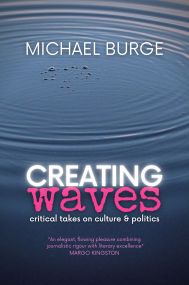
This article also appears in Michael’s eBook Creating Waves: Critical takes on culture and politics.

Weathering relationships with Stephanie Bishop

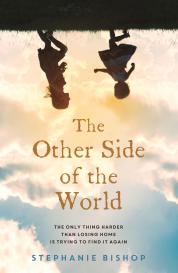
A writer’s review of Stephanie Bishop’s The Other Side of the World.

I CALL them ‘weather stories’, books in which the protagonists are anaesthetised by the attention they pay to the elements in endless cycles of sun and rain and the sensations of water, leaves, dust and wind; and this intriguing novel qualifies.

9780733633782Locked in the inevitability of marriage and parenthood in the 1960s, Charlotte and Henry play out the drama of migration and separation between England and Australia.

One nation is predictably damp, the other is advertised as – and turns out to be – dry. One spouse is capable of seeming sure about the family journey, the other is troubled by being placed in that dilemma, so the author has them take up weather watching instead of communicating.

The dynamic raises plenty of questions: How long have they existed this way? Was it their parenthood, their different homelands and cultures, their careers or their entire generation that brought on the angst?

In exploring what she reveals in the acknowledgements as her grandparents’ story, Stephanie Bishop has either cleverly created a couple whose thought processes are so similar that even their inner voices are the same, or she’s failed readers significantly by making them so.

The result is two characters so frustratingly parallel that if they’d only talk to one another instead of watching the skies and the foliage, there’d be a sense of belonging that they seem to seek… and probably nothing more than a happy tale of life in an English cottage.

“She casts her mind and her voice back into her ancestry and reads the conditions.”

There is a scene in that place – the breakage of a precious object not long before the family departs for Australia – that I found comical and familiar enough to engage me, yet so poignant as to be painful. I felt in solid writerly hands here (there were no passages on the weather, for once, but great insights into the way families fit into houses), yet the solidity quickly vanished and we landed back in more abstract meteorological territory.

Similarly, when Bishop places Henry unexpectedly in his homeland, the descriptions of the places, the walls, the fabric, the people – not the weather – evoke a sense of chosen permanence that is engaging and insightful.

In a less page-turning way as Tim Winton’s The Riders, but every bit as inexplicably, Bishop avoids a story with easy and clear resolutions. Sometimes this is frustrating, but I was left with the sense that Bishop’s family has no explanation for their real-life, enduring mystery.

There are great stories to be told in this space, but they need more solidity and less abstraction to engage readers who want to see connections.

Bishop’s novel is set in the 1960s, but apart from the absence of mobile phones and computer games as a means to placate needy kids, there is almost nothing that places the characters in their time. Henry and Charlotte seem removed from time altogether.

Except Charlotte’s reality, as several members of the book club I read with were swift to point out: a married mother in 1960s Australia had little respite from her children’s demands.

This was perhaps another intention of the writer, but it’s this time disconnect that has led many readers to question Charlotte’s choices – she seems to exist in a more modern period where she has options, whereas Bishop has attempted to portray a woman who is challenged by motherhood at a time when that struggle was deeply misunderstood and seen as a complete aberration.

This book reminded me of my own family mysteries, also wrapped up in motherhood, loss, pain and migration. I kept reading because I felt there might be insights for me, but apart from the sense that children eventually grow up to realise our parents are human, not all-knowing and capable of protecting us from anything, Bishop doesn’t unravel the knot.

creating-waves-cover
BUY NOW

She casts her mind and her voice back into her ancestry and reads the conditions. When she finds little detail, she looks to the skies, and the prevailing weather makes for a cloudier story than it needed to be.

© Michael Burge, all rights reserved. Main photo by Dominic Lorrimer.

This article appears in Michael’s eBook Creating Waves: Critical takes on culture and politics.