All posts by Michael Burge

Journalist, author, artist

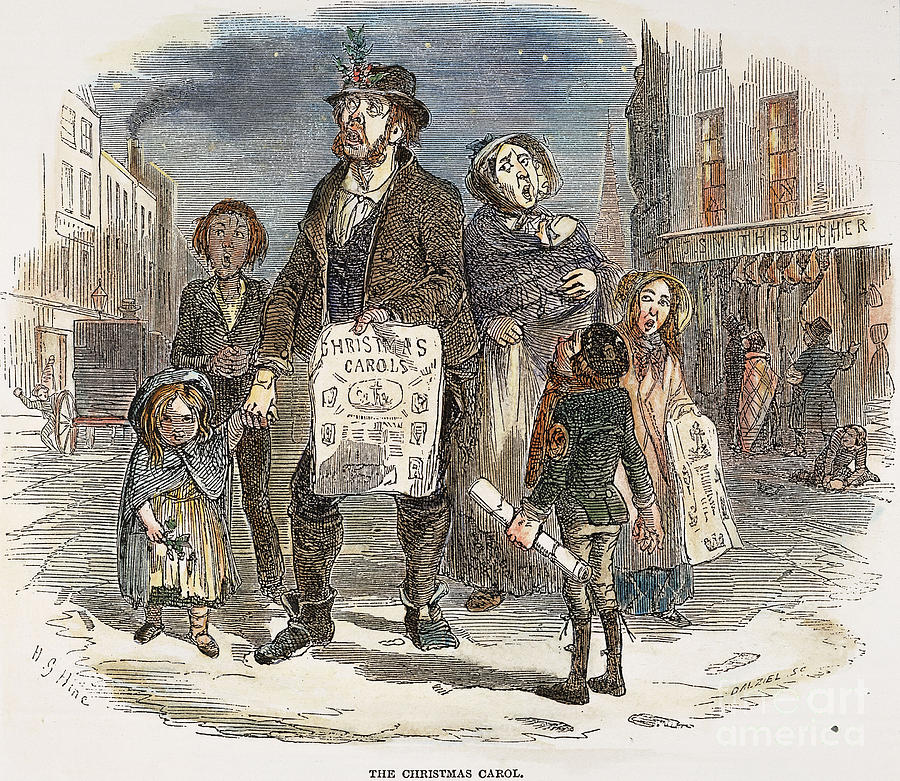
O Come all ye Forceful

GIVE A LITTLE Christmas carols come from a long tradition of protest.

A Writer on protest Christmas carols.

DURING the silly season, when you catch a strain of yuletide song at your local shopping centre, know that what you’re listening to (or doing your best to avoid) probably started its life as a protest song.

Well, perhaps not technically a protest song, but a Protestant song, which once meant the same thing.

When Martin Luther reformed the church establishment in the 16th century, he brought song into the churches and placed it in the mouths of the faithful.

A songwriter in addition to being a reformer, Luther was keen for men and women to sing in their own language, instead of listening to male choirs performing in languages most congregations barely understood.

Crowds of people have been singing back at the pulpit ever since. Heck, I’m going to credit Martin Luther with the creation of popular music!

“Here’s my Christmas present to you: check out the video clip to our generation’s protest Christmas carol.”

The celebration of Carols by Candlelight in the Australian summer, and the tradition of wassailers walking from house to house singing carols in the northern hemisphere winter holiday, grew from this egalitarian sharing of messages of hope and forgiveness.

Good King Wenceslas”, a staple of carolers across the Western world, tells the tale of a privileged man who reached out to a needy one. Sung on the doorstep of the wealthy, it’s a call to share. Sung on the street to the homeless, it calls for us to have no shame in asking for alms.

A carol is free speech, shared by a community, often embedded with messages of hope and reminders of humility, and not necessarily owned by anyone. Admit it or not, you probably could reel-off a few if you were forced to, just like at school, and they’ve been popping up in popular culture for some time.

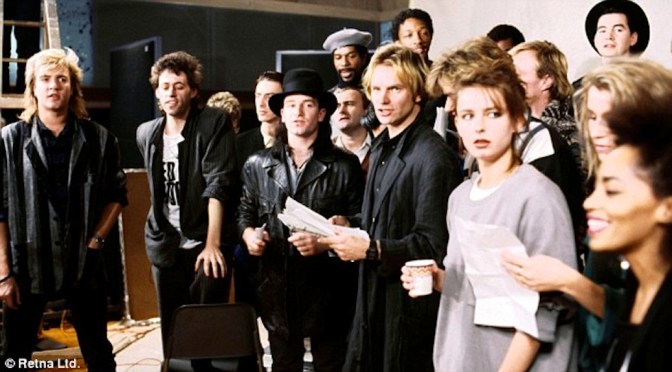
Ironic because its message of giving emerged in the midst of the decade since labelled the ‘greedy’ Eighties, Bob Geldof and Midge Ure’s “Do They Know it’s Christmas?”, recorded by the Band Aid charity ‘supergroup’, utilised star power to raise millions of dollars to aid people suffering in the Ethiopian famine.

The song has had resonance for the three decades since its first recording, but neither the 1989, 2004 or 2014 reboots, or the recent cover by the cast of American teen musical television series Glee, saw the same amount of money or interest raised by the 1984 version, which remains one of the most enduring examples of a disparate group of pop stars overcoming egos and geographic barriers to simply lend a hand.

PROTEST SONG John and Yoko's 1971 effort.
PROTEST SONG John and Yoko’s 1971 effort.

Like John Lennon and Yoko Ono’s “Happy Christmas (War is Over)”, written as an anti-Vietnam War anthem, “Do They Know It’s Christmas?” has begun a cultural transformation into a Christmas carol.

The song and the movement behind it has faced harsh critics since its release.

Lambasted for perceived creative shortcomings, and the subject of ongoing speculation about large portions of the funds being creamed-off by Ethiopian warlords, co-writer Bob Geldof has often been moved to blast the media about its coverage of criticism of the Band Aid movement.

As a 14-year-old I witnessed the release of the video and the single of “Do They Know It’s Christmas?” The song was on everybody’s lips for a summer, and the subsequent international Live Aid in July 1985, also organised by Geldof and Ure, was the concert ticket of the decade.

Watching the video now, the pathos of the moment, and what’s happened in the world since, makes me well-up.

There’s Boy George, voice like a clear bell, before it all went wrong; and Paula Yates and her kids, waving in the throng. There’s George Michael, a paragon of talent, long before he was outed; and a soaring Bono, practising being a global awareness raiser.

There are the stars, and the bands (and their hairdos) who didn’t know they were already on the wane, and those who have survived to become icons: the superstars of my youth in all their self-conscious glory turned-up when they were needed.

I’m proud of my generation for this song, which essentially belongs to the people of Ethiopia.

But, almost thirty years on, the original version of “Do They Know It’s Christmas?” is hard to come by. Only the array of cover versions is available on iTunes.

The lyric in the finale of the song – “Feed the world” – has lost its original context. The Glee cast video makes no reference to starving children in Ethiopia, it’s a call to feed the needy, everywhere.
So, if you’re my age and older, here’s my Christmas present to you: check out the video clip to our generation’s protest Christmas carol and tell me, has anything recorded since had the same impact?

Don’t forget to sing along, you know the words!

This article first appeared on NoFibs.

© Michael Burge, all rights reserved.

This article appears in Michael’s eBook Creating Waves: Critical takes on culture and politics.

Making way for the marriage of true minds

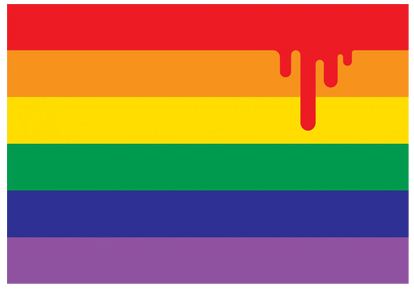
AUSSIE AUSSIE AUSSIE Unequal, unequal, unequal.

A Writer is helped to understand his subject.

I WASN’T going to write anything more on the lack of marriage equality in Australia. Frustrated and saddened by the wait, I decided to stop trying.  But this week I had one of my most profound experiences around the debate, one which needs sharing.

A week ago I received an unprompted apology from someone I went to school with. He sought me out on Facebook and made amends for his homophobic bullying more than twenty-seven years ago.

I was initially cynical – after all, this particular cruelty was usually an invitation into a fake conversation followed by a bullying sting.

So I publicly asked him to take some action – to write to his federal member in support of marriage equality – just to see if his apology was something more than words.

“The self-determined gay couple, if ever aware enough to lobby for the full backing of the law, would force societies to evolve.”

Then I waited. My husband witnessed me waver as the days passed – “I’ll never hear from this guy” I muttered, realising that I’d asked him to come out as a supporter of same-sex marriage.

I already knew from bitter experience how hard coming out can be. Declaring anything unexpected within your community can be a deal-breaker for all our relationships.

While I hoped for a reply and yearned for it to be a positive one, I revisited my own journey to marriage equality.

It began 10 years ago while I was standing in the voting queue at the 2004 federal election.

My life had taken its harshest turn for the worse earlier that year. My long-term partner Jono died suddenly, and in the midst of my grief his family denied the existence of our relationship and caused a legal battle over Jono’s debt-ridden estate.

Homophobia mixed with grief mixed with denial mixed with money … a devastating cocktail I tried my best to assuage, and failed.

I sorely missed a powerful record of our relationship to use against that force, but that year federal Attorney-General Phillip Ruddock and Prime Minister John Howard trounced any chance  same-sex-attracted people had of accessing the federal Marriage Act to create legally recognised relationships.

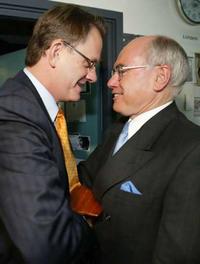
NEVER GONNA HAPPEN Mark Latham roughing-up John Howard in 2004.

By the looks of the colour of the how-to-vote cards in that long voting queue, Labor’s Mark Latham was not going to see-off Liberal Prime Minister John Howard, and, with community support for same-sex marriage languishing at just over 35 per cent, marriage equality seemed forever away.

Jono and I were oblivious to the precarious legal situation our relationship was in. We’d been happy to live very much to the tune of Joni Mitchell’s ‘My Old Man’: “We don’t need a piece of paper from the City Hall, keepin’ us tied and true”.

Not an uncommon stance in our generation but one which can leave either party in legal limbo after the death or incapacitation of the other.

As I waited to vote, I realised there was a tool to keep an indelible legal line in the sand when one in a couple dies – a marriage certificate – that elusive piece of paper.

I suddenly felt duped by the society in which I paid taxes. It had never given me and Jono the chance to feel secure, and all the while we’d fooled ourselves that we had forever, and that nothing could touch our evolving togetherness.

That was the scary part for many people – the self-determined gay couple, if ever aware enough to lobby for the full backing of the law, would force societies to evolve. No wonder our collective relationships were such a political football.

A decade on, the only thing that’s changed is the percentage. Now, 72pc of Australians support marriage equality – surely a free kick for whichever Prime Minister has the guts to kick that ball over the line.

Like many LGBTIQ commentators, I find the lack of parliamentary leadership on this issue deeply unsettling, and in what I thought was my marriage-equality-writing-swan song, I extrapolated all the issues as I saw them.

But in trying to express my pain and angst in words, it turns out I was wrong about all of it.

Here’s why.

Earlier this week I woke for a very early start at work. Bleary-eyed at the computer I noticed I’d been sent a friend request on Facebook – from the man who, as a teenager, bullied me at school.

The sending of that request, the most common, throwaway click of a virtual button, and my equally everyday acceptance of it, revealed a far more powerful acceptance.

“He is not a bully, he is a hero.”

On his Facebook wall I saw he’d graciously acquiesced to my challenge.

Here is his letter in full:-


Dear (name deleted)

I am writing to urge you to support a free vote on marriage equality.

I went through school with a gay student and recently reconnected with him. He was gracious enough to share with me the way that society’s treatment of gay people has impacted his life. As a young student he was bullied at school, and as a gay man he has been subjected to ridicule, discrimination and disenfranchisement for no other reason than because of who he loves. The reason I am giving you this context is because I am ashamed to say that at school, I was one of his bullies.

This person sharing his experience of how my actions at school impacted him, provided me with an opportunity to put myself in his shoes, to empathise with how it must have felt to be a victim of discrimination. Looking back I am appalled at my thoughtless disregard for the rights of another person. Today, all these years later, I am equally appalled that this person is still having  his rights disregarded, only this time it is via Government-sanctioned  draconian legislation, rather than by a high school bully.

As a parent, all I can think of is how I would feel if one of my children was forced to face the same struggles for acceptance, and forced to fight for what you and I, as heterosexual males, take for granted — the right to marry the person you love.

Could I ask you to place yourself in the shoes of someone facing this discrimination? Imagine if it was your own son who was in this position, if your beloved child was unable to marry the person he loved.  Or perhaps think how it would feel if one of your daughters was not legally allowed to marry the person she had fallen in love with. If one of your own children was denied the same rights as the rest of society based purely on their genetic sexual orientation, wouldn’t you do everything in your power to fix this injustice?  Wouldn’t you fight against the ignorance of others to ensure the freedom and chance of happiness for one of your own?

Research has shown that the majority of Australians believe it’s time marriage equality became a reality. I would hope that as a father, a husband, and a citizen of Australia in 2014, you agree that now is the time for this change. Now is the time for you to join 72% of the Australian population who are saying that all Australians are entitled to marriage equality.

I strongly urge you, as my representative with the power your position bestows upon you on my behalf, to take the necessary steps to ensure marriage equality becomes a reality. Please support a free vote on marriage equality. Do this on behalf of every parent, for the sake of every child who deserves the same rights as you and me.


This man and I must always have had more in common than we realised. He is not a bully, he is a hero, and on reading this for the first time, I was released from cynicism into fierce protection.

Same-sex marriages and civil unions have been granted and overturned at state level; the community support in all known polling regardless of age, region, religion and ethnicity is in the seventieth percentile, and plenty of same-sex-attracted couples want one.

Clearly, the culture war has long been won.

All that’s standing in the way are the real bullies – the politicians and community leaders who never really grew up and continue to cajole, avoid, ignore and deny the rights of same-sex attracted people, and our friends.

It took a reformed bully, and a reformed victim, to see it.

© Michael Burge, all rights reserved.

Apology from a school bully

HOMOPHOBIC
HOMOPHOBIC BULLYING has long-lasting impacts on perpetrator and victim.

A Writer’s reply to a childhood persecutor.

THERE must be something in the planets, because this week I was contacted out of the blue on social media by two bullies from my past.

One of them – a family friend in her sixties – is an educated, well-spoken, active-in-the-community, serial bully. She contacted me to get at her daughter, who she’s created devastating conflict with, but all she got was a reminder of her unfinished business with me.

The other is a man I went to school with.

Unlike my family friend, he made an unreserved apology for bullying me at school, some 30 years ago.

“I am a white, middle class, heterosexual male, who, for no other reason than the lottery of my birth, has never had to deal with discrimination,” he wrote.

“I want to be part of the change, part of the solution, rather than part of the problem.”

“All l can do is try to imagine what it would be like to deal with fools like me and their behaviour.

“Growing up, dealing with parents and high school, and puberty, and relationships, while also trying to find out where you fit in amongst it all of it was tough.

“Tough enough without also having to deal with the added layers of ridicule, judgment and misunderstanding.

“I apologise for bullying you, I apologise for ridiculing you, I am sorry for all of the ways I disregarded your feelings and failed to consider your emotional wellbeing.”

Revealing stuff. He asked me for feedback, so here’s what I wrote in reply …

Dear (name deleted),

I am a little cynical about your letter. So often I engaged in conversations with boys in our class, only to find your invitation was really a cruel trap with a bullying sting at the end. Your approach to me now could well be a case of the ‘little boy who cried poof’.

Your particular behaviour was more a sneering from the sidelines of the main bullying action, although I remember one occasion when you openly shamed me about my sexual orientation in front of an entire classroom of people, and I retreated in shock.

That sort of thing definitely contributed to me staying closeted until I was 28, by which time one of my parents had died before I had the courage to come out to her. That’s an irreversible regret I carry.

There is no doubt you remember my mother – she was one of the most active parents at our school, and you benefitted from her contributions.

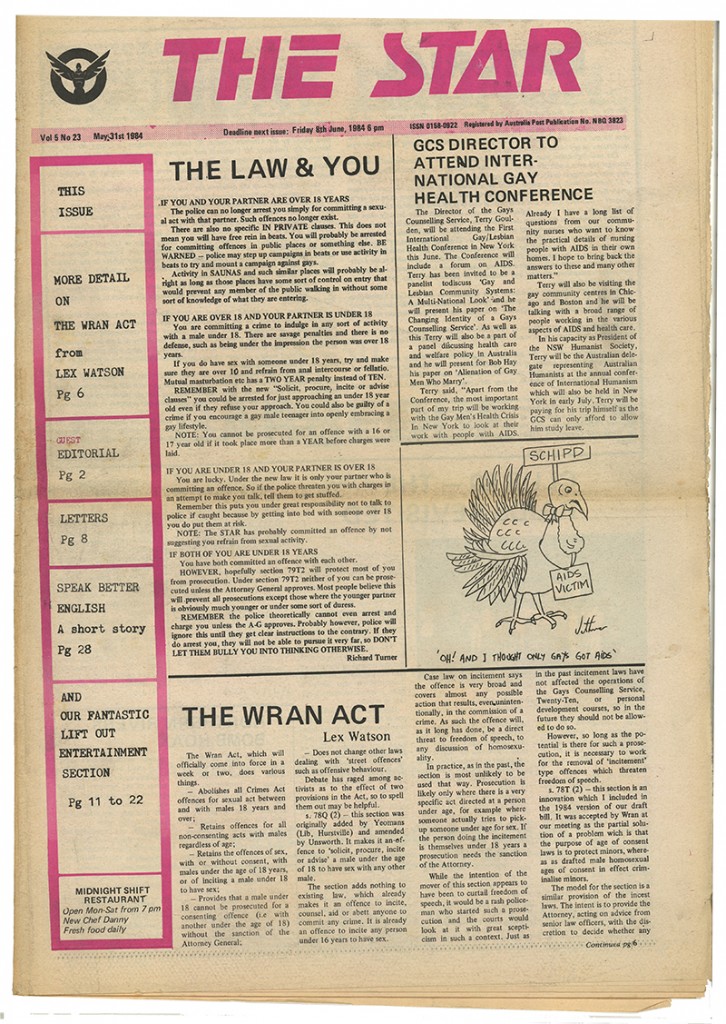
OKAY TO BE GAY Front cover of the Sydney Star Observer when men could no longer be arrested for sex with men.
OKAY TO BE GAY Front cover of the Sydney Star Observer after men could no longer be arrested for sex with men, in 1984.

My family had survived death and divorce by that time, and the community I lived in, primarily made up of school families, led me to believe that my sexuality was only going to deliver more bad news.

What a fool I was to buy into all your fears.

During our high school years, homosexuality in NSW was decriminalised.

Even though your behaviour was wrong, it was sanctioned by the state and the establishment at a private Anglican school. You and your mates were only responding to society’s pressure to shame and ridicule same-sex attracted people, but it’s great to see you’re not still letting yourself off the hook.

Truth is, our school had as many homosexuals as there were homophobes – staff and students in all years, male and female. The gay staff members were particularly vulnerable to sacking without cause, and still are, so when you were throwing around your accusations, alarm bells would have been ringing deep down for many.

Hopefully you agree that to toy with that bell is a power no child should ever have.

“Bullying children should never have power over gay people.”

If I’d been a smaller person you might now be regretting physically abusing me, but because I grew to the size I am now at the age of 15, none of you ever had the guts to approach me with the kind of abuse many other gay boys endure from their classmates. Even an awkward blow from me would have landed unpredictably and heavily.

You didn’t always succeed in shaming me.  I clearly remember with great delight the day on which I turned the tables on you.

We were playing indoor cricket and I was selected to bowl with you at the crease. Your assumptions about a gay bowler saw you step forward expecting to knock the ball to the ceiling. Instead, it snuck straight under your triumphant pose and knocked the stumps over with a clatter.

The PE teacher gave me a validating look, while you had no choice but to walk to the sidelines, where your attitude belonged.

Team sport… it has its uses.

My other strong memory of you was the day you brought a cassette into English class – Cold Chisel’s “Khe Sanh” – and you asked the teacher if you could play it for us all. She agreed, sensing it was important to you, and you unabashedly sat at the front moving your head and drumming your hand on your desk.

What drew my attention was your affinity with the song and its message, and the shame-free way you claimed your right to self-expression.

I accept your apology because unconditionally offered amends are the very rarest, and you seem to ‘get’ that if I had played a song that moved me in front of our class, the outcome would have been very different.

SMALLTOWN BOYS British Synth Pop band Bronksi Beat.

My choice would have been Bronski Beat’s “Smalltown Boy”.

Have a listen to the lyrics one day and you’ll find some insights. The song laid out the options for growing men as starkly as Jimmy Barnes did for you.

In the 27 years since we left school I have tackled more discrimination than you can possibly imagine. Not the predictable gay bashing crimes, or the puerile name calling, but the far more subtle disenfranchisement that underpins the last frontier in same-sex equality.

I would like you to do one thing, if, as you wrote, you really seek to be part of the solution to homophobia.

Find out where your federal member sits on the issue of marriage equality through the Australian Marriage Equality website, and, regardless of what you find, write to them.

Congratulate them if they publicly support same-sex marriage – they’ll need courage from their constituents to enact change in the small window of opportunity we have to achieve this human right during the current parliament.

And if they don’t, please tell them why you now support the equality that will deliver the greatest message to school children about gay people.

That our love is equal to yours in every way.

And that bullying children should never have power over gay people.

If you do this, I’d love to see a copy of it on your Facebook wall. I’ll know when to have a look when you send me a friend request.

© Michael Burge, all rights reserved.