UNCLE SAM WANTS you to get out of your comfort zone (J.F. Flagg’s 1917 poster).
THERE’S a nifty three-act dramatic structure, generally used by screenwriters (but drawn from the older five-act dramatic arc), which gets a plot moving a bit faster than a novel and contains a great plotting tool – the Call to Action.
One of the reasons we go to the movies, or distract ourselves by reading, is because we want to step outside our lives, temporarily, for entertainment.
It might sound incredibly obvious, but this distraction requires writers to create work so deliciously escapist that the reader/viewer is taken beyond the sphere of their own lives for a short time.
Writers don’t have to create an alternate universe (although some do, to great effect), we just need to suspend the reader’s disbelief. Even getting them a centimetre off the ground can be enough.
To achieve this disbelief, writers need to have their main character – the protagonist – step outside their world. The protagonist’s ‘call to action’ is the trigger for this step.
Situated at the heart of a plot’s exposition, the protagonist is going about the business of what seems like an average day, when something happens (an old friend calls with some unusual news; a car crashes into their front room; a stranger turns up at their door … it can be anything).
Those of us who live the average Western life, where most of our needs are taken care of, do not get wake-up calls like this, but we love to imagine what we would do if we did.
It’s this attractive energy that publishers, agents and eventually audiences crave, and it’s even become a marketing tool. It’s why we buy the book, or the movie ticket.
Now, I hear a bunch of literary fiction writers screaming: “Nooo, it’s all about the Art!”. Well, as a fan of literary fiction myself, I say let ’em scream: literary fiction writers need a call to action for their protagonist every bit as much as Agatha Christie did.
Would Nick Guest, the protagonist in Alan Hollinghurst’s The Line of Beauty, have gone on such a compelling emotional journey had he simply moved out of the Fedden family’s house the minute their daughter Cat started cutting herself? (he wanted to).
Would Stevens, the Butler of Darlington Hall in Kazuo Ishiguro’s The Remains of the Day, have decided to take a car trip to visit Miss Kenton, the former Housemaid, had his new boss Mr Farraday not ordered him to take some time off ? (he didn’t want to).
Of course they wouldn’t. Had Nick moved out, and Stevens never gone away, both storylines would simply peter out. Neither piece of ‘Art’ would have garnered the critical and financial successes of their Booker Prize wins.
The protagonist’s call to action is linked to a plotting device covered in my posts on the dramatic structures of two films – Guess Who’s Coming to Dinner, and The Sum of Us. This is the compelling question needed in every plot’s exposition, in fact, they are almost one and the same: if you get the protagonist’s call to action right, a compelling question will naturally be posed.
CROSSING THE LINE Protagonist Nick Guest in the TV adaptation of The Line of Beauty (Photo: Nick Briggs).
By keeping Nick Guest in the Fedden’s home, exposing him to family secrets, and relying on his character’s already-established empathy, Hollinghurst poses the compelling question of his plot: When will the Feddens and their British upper class friends discover the reason for Nick’s empathy is his homosexuality?
By sending Stevens (who we already know is staid and a little unreliable in his recollections of his employment history) out into the world, Ishiguro poses his: Is Stevens so deluded he actually believes he can revive a stunted love affair that barely even began twenty years before?
Some authors, particularly crime writers, bury their protagonist’s call to action in mystery – a murder in the exposition is a particularly effective trigger for the most common of all plot questions – Whodunnit?
It’s for this reason that Miss Marple and Hercule Poirot are Christie’s great antagonists – they foil her murderers (read: protagonists) at each and every turn, showing how antagonists are also locked into the plot by the protagonist’s call to action.
Head spinning? Just remember that plotting isn’t meant to be a formulaic set of rules. Stretching and manipulating these conventions, in interesting ways, is the real ‘Art’ of writing.
LIVING in Australia’s Blue Mountains, it’s hard to ignore one tragic element of the locality’s heritage – the tuberculosis epidemic.
Situated at almost 1000 metres above sea level, the area spawned an industry of public and private sanatoria for countless people who retreated from Sydney in an attempt to recover from this infectious disease in the years before antibiotics provided an effective cure.
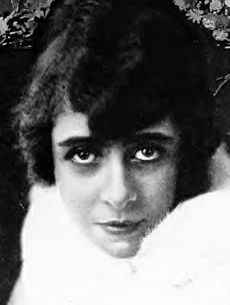
Previously unexplored insights into the tale of one tuberculosis patient who convalesced in the Blue Mountains – Australia’s great silent film actress Lottie Lyell– formed part of this feature about her story, published in Blue Mountains Life in 2011.
The sentimental girl
Unravelling the Blue Mountains Mystery of film maker Lottie Lyell.
Widely regarded as Australia’s first international film actor, Lottie Lyell had been a star for a decade by the time The Picture Show of February 1921 revealed she was recovering from “A serious illness”, but that she would: “… appear on the screen again.”
Convalescing in the Blue Mountains in the same month, Lottie had a very good reason for keeping the true nature of her condition from the press.
Since her 1890 birth in the working class suburb of Balmain, Lottie had been in the path of one of the most serious illnesses of her age – tuberculosis (TB).
The tuberculosis industry of the Blue Mountains is the subject of two new books which shed light on how TB defined family fortunes and caused social stigma.
When considering the case of Lottie’s family, author Dr. Brian Craven says that on the basis of her sister Rita’s death of TB in 1911, they would have been “In serious trouble”. Due to TB’s chronic nature, Brian suggests Rita might have carried infectious TB bacteria for a considerable period of time.
“In a community where TB was rife, you could get it from anywhere,” Brian outlines, explaining how Balmain’s colliery would have added to the risk of contracting the disease. “One group who got TB was coal miners of any sort. Once you got silicosis, your lungs were stuffed up and it was very easy for TB to take over.”
Brian proposes that since Lottie’s father Joseph Cox was a real estate agent, collecting rents in a close-knit community, he would have been in regular proximity to TB sufferers.
Valerie Craven (research assistant to her husband Brian) explains why many sufferers kept their illness a secret – “TB was socially unacceptable in the sense that it was considered something the underprivileged got. If the family was poor, they usually couldn’t afford to do anything about it.”
Charlotte Cox took elocution and acting lessons in her mid teens. By nineteen she was in regular paid acting work onstage using her stage name Lottie Lyell.
Her meeting with Raymond Longford has become the stuff of legend. They were colleagues in the 1909 theatrical tour of An Englishman’s Home in which Lottie played his daughter, despite being only 12 years his junior.
Longford and Lyell probably began their relationship then. He was a married father, but divorce was not an option.
The stage careers of both actors dwindled once they embraced the opportunity and innovation of film production. Longford acted in and directed movies from 1911, creating a spectacular lead role for Lottie with The Romantic Story of Margaret Catchpole in the same year.
“For picture work you must be pretty good at all sorts of athletic sports,” Lottie recounted of the shoot to The Theatre magazine. “I had, in the depth of winter to jump into the water from a cliff thirty feet high, and then swim some distance out of range of the camera … handicapped by old period, masculine attire.”
The movie was praised for its unique Australian qualities, and its home-grown production team.
The deaths of Lottie’s sister and father at the time her screen career took off must have had a tempering effect on a close family who accepted Lottie’s unorthodox lifestyle.
The survivors moved by 1913 to Sydney’s Eastern Suburbs, where Longford moved in with Lottie and her mother. The relocation suggests an attempt to escape the risks of TB in Balmain.
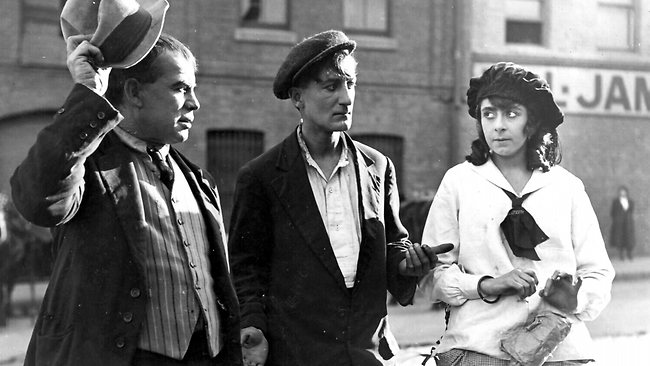
SCREEN CLASSIC Lottie Lyell as Doreen in Raymond Longford’s The Sentimental Bloke (Photo: ScreenSound Australia).
Lyell and Longford worked together on a string of films over the next decade. Their greatest surviving collaboration was The Sentimental Bloke, released in 1919.
Based on C.J Dennis’ best-selling poem, directed by Raymond and filmed on the streets of Sydney’s dockside Woolloomooloo, the film tells the romantic comedy of Bill, a larrikin who falls for Doreen, a working class girl (played by Lottie).
The movie set box office records in Australia and was distributed in Britain, New Zealand and the United States.
Lottie must surely have been Raymond’s choice for a lead role in his next production, an adaptation of Steele Rudd’s Dad & Dave comedy On Our Selection (1920). But she didn’t appear before the camera, she co-wrote the screenplay. The explanation given was her “serious illness”.
Brian Craven’s book reveals that symptoms of TB meant compulsory notification to health authorities in NSW at this time. The persistent cough, and the coughing-up of blood, would have been very hard for Lottie to conceal.
“You were never cured of TB,” Brian outlines. “The disease was only arrested, encapsulated in the lungs. Life was not too hard. Rest and good food, the removal of worry, light duties. These were important factors in your survival.”
“If you were a poor person you had to wait, wait and wait on someone’s death to obtain a place in a TB asylum,” Valerie adds.
There is little doubt Lottie convalesced in a private hospital – an option providing more anonymity to those who could afford it. A telegram from the Melbourne premiere of On Our Selection in February 1920 was sent to Lottie at a private address in Katoomba.
Far from the favourable response to Lottie’s newest movies (including her reprisal as Doreen in Ginger Mick), she seems not to have dwelt on what TB kept her from. Instead, what happened next suggests Lottie saw great possibilities in being holed up in Katoomba.
While convalescing throughout 1920, Lottie probably adapted her next screenplay The Blue Mountains Mystery from a novel (The Mount Marunga Mystery by Harrison Owen). Raymond and Lottie directed it together in 1921.
The Cravens explain that TB sufferers were advised to recover at a high altitude, allowing less atmospheric pressure to work on their lungs. It might have been for this reason that the movie wasn’t shot at a studio in Sydney, but entirely on location one thousand metres above sea level at Katoomba. The Blue Mountains were a stand-in for Harrison’s fictitious rural setting.
Key scenes for the murder mystery were filmed at the Carrington Hotel, including the iconic ballroom. Production stills show the studio-like scale of the rooms, allowing heavy-duty film lighting and a sizeable crew.
Apart from production stills, The Blue Mountains Mystery does not survive, unless, like The Sentimental Bloke (mis-labelled The Sentimental Blonde in the United States until 1973), a surviving reel comes to light.
Lottie’s appearance in these stills show a healthy-looking woman very much at the heart of the action. One journalist (writing in The Picture Show) pondered why she was co-directing and not acting.”I love the acting,” Lottie said, “but I was too interested in the directing work to get in front of the cameras myself.”
Despite her condition, Lottie was not pessimistic about her chances. “Ten years I have been in pictures … and I hope to be always connected to them in some way or another”. An admission of the need to slow down, or the desire to embrace her skills as a writer-director?
SKILLED HORSEWOMAN Did Lottie Lyell’s stunt performances contribute to her untimely death?
Production remained at high altitude in the Megalong Valley for the filming of Rudd’s New Selection. Lottie played Nell Garvin, working stunts for the camera on horseback.
There was a saying about surviving TB – “If you can sit down don’t stand. If you can lie down don’t sit.” Brian Craven agrees – “If you didn’t do anything stressful, then you could recover, otherwise, you’d go down with the symptoms.”
Lottie explained what horseback stunts required for her earlier role as Margaret Catchpole – “It is not simply a matter of sitting a trot or a canter … I have often had to take a three feet hurdle.”
Her return to acting took its toll. Stills from Rudd’s New Selection show her appearance had dramatically worsened.
The Cox family’s 1921 move to Roseville on the bushy outskirts of Sydney suggests another attempt to accommodate Lottie in a place better suited to worsening TB.
Far from avoiding stress, she and Longford embarked on an ambitious business plan with the Longford-Lyell Picture company, for which Lottie wrote more screenplays and acted in The Dinkum Bloke (1923). There were no stunts this time, only the supporting role of Nell Garvin, for which Lottie played a deathbed scene.
Life imitated art two years later. Only months after her younger sister Linda succumbed to TB, Lottie also died in December 1925. Her death certificate revealed she suffered from pulmonary and laryngeal tuberculosis. She was 35.
Tragically, Longford’s divorce was finally granted just weeks later. Lottie had appointed him her executor and primary benefactor. His later career never re-captured the prolific years of collaboration with Lottie, and over three decades later he was buried beside her.
Lottie Lyell defined the roles of women in Australia’s film industry very early – as actors, but also as writers, directors and producers. She was one example amongst thousands of TB sufferers who convalesced in the Blue Mountains, but did not allow chronic illness to define them.
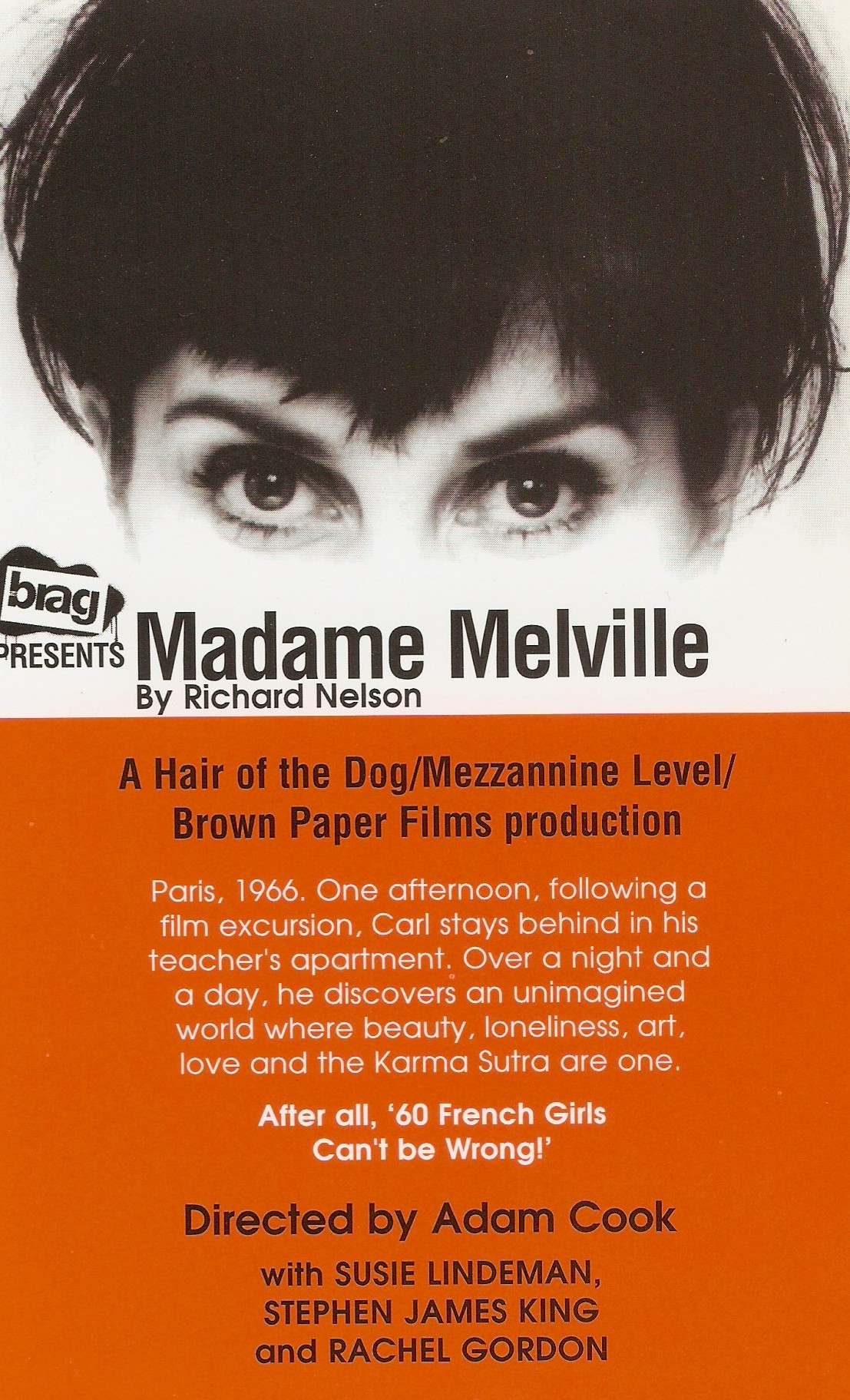
MAGIC MADAME Stephen James King and Susie Lindeman in the Australian premiere of Madame Melville.
A Writer learns the cost of casting.
HAVING started out in the Australian theatre scene as a designer, and reinvented myself in England as just about everything else – director, writer, producer – I eventually re-trained as an actor on Sydney’s fringe, made a splash in a couple of college shows, and then spent a year totally unemployed in that field apart from a stint in a car commercial. Probably an average result, in hindsight.
My big question was always this: how did actors without agents even hear about roles that were going, let alone get cast in one?
When an independent theatre company was producing the Australian premiere of Richard Nelson’s beautiful play Madame Melville at the Belvoir Street Theatre in Sydney, I found some answers.
A friend in the cast loaned me a copy of the script. Nelson’s sentimental study of his sexual awakening at the hands of a Parisian teacher in the 1960s is so evocatively written I could envisage it on the stage after just one read. There was also a part in the play I thought I had half a chance of getting cast in.
It’s impossible to explain this role without providing the worst spoilers for anyone who has not seen a production of Madame Melville. Suffice to say the character is the very rarest of roles in the modern theatre – a short, devastating attack on the protagonist, bringing the play to a swift, bittersweet conclusion.
So I pushed, a little, and put myself forward.
The offer of an audition hung in the air while the production company deliberated over theatre dates. Eventually, my friend called and said the show probably wouldn’t go ahead – there was a hole in the budget, and the highly experienced director would not work for free.
Disappointed, and experienced in putting budgets together, I asked, “How big is the hole?” I was in an excellent position to ask – I’d just sold my house, and was about to buy again in a cheaper market. I could afford to invest in my career a little.
My friend cried on the phone when I said I’d be happy to put up the money, which was nothing, really, just a fair fee for the director.
As a firm believer that everyone should get something from a professional collaboration, I understood his bottom line. I also understood mine – all I wanted in return was to remain an anonymous donor, and an audition for the role.
In due course, I got the call. The slightly scary part was having to front-up at NIDA, which was always imposing for this graduate. I’d left without really saying goodbye, my mind focussed on desperate family matters at home.
I’d been back for the place’s 40th birthday, and stood in a crowd watching a video clip on a huge screen celebrating student work across those four decades, and been part of the admiring-yet-envious silence, when Cate Blanchett’s picture flashed-up on the screen.
Because, like it or not, we who were watching comprised the 99 percent that NIDA’s dream factory told us would be unemployed for 99 percent of the time.
The director greeted me generously – we’d been NIDA students about the same time – and he took me upstairs to one of the familiar rehearsal rooms, explaining he was on a break from the annual NIDA applicant actors’ auditions.
That made me even more nervous – he’d been auditioned-for by even younger, hungrier, more hopeful actors than me all morning!
My first piece was a disaster. The other seemed to take him by surprise, and got a genuine laugh. He said that if he’d seen me do that in the morning, he’d have asked me back for the afternoon.
I took my leave and walked back past the young people posturing around the lunch room waiting for their afternoon call-back. I’d’ve been ‘asked back’ too, I muttered to them in my imagination.
Weeks later, I heard that Madame Melville was going ahead. We’d secured a slightly awkward slot, right off the back of New Years, which was only weeks away, meaning the production would open to little advance publicity.
But I decided to enjoy not having to worry about such matters, and just act.
The professional cast was welcoming and generous, and I embraced the chance to inhabit the half-light of theatre wings once again. Nelson’s script calls for offstage voices throughout, and I had fun with those, whiling-away the hour or so before my entrance.
A one-line role over an extended season was a bit like a marathon of self-amusement. I created my character’s back story, went through serious preparations while listening the others onstage over the tannoy, gossiped with the cast of the upstairs Belvoir show, and duly took my cue.
Entering through the audience, I regularly heard their gasps of surprise and shock as I did battle with the protagonist … it was a joy to be part of such dramatic impact.
My technique of getting an audition got me nowhere beyond this production, the curtain call sometimes seemed longer than my time on the stage, but we got good audiences and well reviewed as a creative team, and a modest profit-share cheque eventually arrived in the post.
Odds aside, it was life-enlarging to be back in the theatre as part of the one per cent for a Summer.



 Head spinning? Just remember that plotting isn’t meant to be a formulaic set of rules. Stretching and manipulating these conventions, in interesting ways, is the real ‘Art’ of writing.




 Michael Burge Media