Category Archives: LGBTIQ Equality

Let Tamar Iveri have her opera straight

IVERI HOMOPHOBIC Georgian soprano Tamar Iveri.

A Writer (sort of) defends a diva.

AMID the flurry over Georgian opera singer Tamar Iveri and the comments she made in the social media about a protest march in Georgia on International Day Against Homophobia (IDAHO) in May, 2013, there was an assumption the soprano was just one homophobic voice in an accepting international opera industry, an aberration who must be silenced.

In an open letter to her country’s president, the singer compared gay people to “fecal masses”, a description picked-up by the social media ahead of Ivari’s scheduled performances for Opera Australia last year.

“Homophobia needs to be exposed, and that’s best done in the limelight where it has maximum impact.”

While I believe it was hypocritical of her to court Western dollars for her performances while condemning Western values which have attained mainstream followings, like LGBTQI equality, I’d like to place Iveri’s conservatism in context, particularly in the Australian performing arts scene.

Australian showbiz has long had an unspoken ‘don’t ask, don’t tell’ policy about its same-sex attracted performing artists. From our televisions screens to our stages, generations of us have grown up with gay, lesbian, bisexual and transgender entertainers and personalities, it’s just that we never knew them that way.

Almost forty years since Australia’s decriminalisation of homosexuality started in South Australia, you’d be forgiven for thinking the only ‘queer’ in prime-time, mainstream Aussie showbiz was Peter Allen, followed swiftly by Carlotta, Todd McKenney and opera singer Deborah Cheetham.

Statistics and common sense tell us that the numbers are much higher than that. Kindness and respect tells me that it would be simply unfair to extrapolate the rumours about which of our stars were (and are) simply ‘not the marrying kind’.

Does it really matter? Well, perhaps it does, when we are baying for blood over the homophobia expressed by a diva from the other side of the world, and the performing arts industry she has been a guest of puts on a very straight front.

NO PROBLEM Iran’s President Ahmadinajad speaking at Columbia University in 2007.

The Tamar Iveri homophobia story reminds me of Iranian President Mahmoud Ahmadinejad’s reception at Columbia University in 2007, when he guilelessly professed that they do not have the gay ‘phenomenon’ in Iran.

A ripple of snorts, which became a wave of laughter, washed across the audience and left Ahmadinejad blinking.

After expressing their deeply held convictions about the level of homosexuality in their countries (Iveri cites a statistic with no evidence: “3 in 50″ are “born gay”, and the rest are “following the trend”), both commentators had their foundations rocked.

I see this as consciousness being raised, and I can only applaud it, because homophobia needs to be exposed, and that’s best done in the limelight where it has maximum impact and ongoing ramifications. So what is going on in 21st century opera for gays?

“Fabio is now the benchmark for the male opera star, not Pavarotti.”

When I typed “out gay opera singer” into a search engine I was met with extremes. The first news stories covered out gay opera singer, American counter-tenor David Daniels, who spoke with pride about his sexuality; and Swedish tenor Rickard Soderberg, who survived a random (possibly homophobic) attack.

At “33 Opera Hunks Who Need To Serenade You Right Now”, the parade of muscle men (one of whom, England’s Ed Lyon, identifies as #teamgay) reminded me of beefcakes gracing the romantic fiction section of bookstores.

Fabio is now the benchmark for the male opera star, not Pavarotti. Gone are the days when divas built like Brunhilde could pull off the role of starving slave girl.

Despite the sexy new out gay veritas in the opera industry, like closeted movie stars, gay opera performers might feel that being out while suspending disbelief as a straight hero or heroine is a bridge too far.

Meanwhile, amongst the ranks of design and directing staff in particular, same-sex attracted opera makers have maintained a public silence about homophobia. The secrets of the most ill-mannered and worst-behaved divas have always been kindly kept behind the scenes, the stuff of myth.

Pauline Pantsdown is one of only a few voices of protest from Australia’s showbiz industry about the Iveri issue. Opera Australia issued a statement announcing Tamar Iveri’s explanation of the circumstances behind her comments. Less than a week later, they released her from her contract.

While I applaud their decision, when I think about all the marriages of convenience and closeting in Opera Australia’s not too distant past, the company’s decision to part ways with her at this late stage, over homophobia expressed more than twelve months ago, contains a level of hypocrisy.

That they fêted her so long, and seemingly so unaware, smacks of blindness.

I would have liked to see Iveri perform in our country, just to see if the fuss caused any kind of protest. Surely at least one of the same-sex attracted opera staff might have sprung something on her, like not turning-up for her quick change, or not combing her wigs. A conductor could have downed a baton for Iveri’s big numbers, or one of the stage crew left her waiting.

Had she stayed, she couldn’t possibly have gotten through her Australian seasons without a hint of doubt about the ranks of same-sex attracted men and women working alongside her in the Australian opera industry, and a large percentage of the paying audience.

It’s laughable to inhabit the opera industry and commentate negatively on homosexuality. Take the gay out of opera and what are we left with? One homophobic diva who thought all those designers, costumiers, wigmakers, make-up artists and hairdressers were just a little light on their feet?

The work of composers Tchaikovsky, Britten and Schubert may one day land on Iveri’s music stand. Will she refuse to place their notes and lyrics in her mouth and have them flowing across her vocal chords because these men, being same-sex attracted, were akin to fecal matter? Or will she swallow that gay shit and project it to the back row?

creating-waves-cover
BUY NOW

Hopefully, the whole incident will have a lasting positive impact on same-sex attracted performing artists in this country. If so, it’s about time.

This article first appeared on No Fibs.

© Michael Burge, all rights reserved. 

This article appears in Michael’s eBook Creating Waves: Critical takes on culture and politics.

Heartbreaking enigma of The Imitation Game

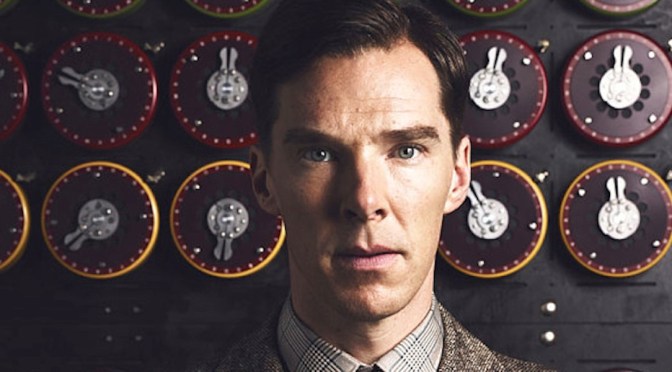
CODEBREAKING ENIGMA Alan Turing (1912-1954).

THE first time I tried to see The Imitation Game with my husband, the session was solidly booked out.

On the surface I was annoyed, but deep down I was incredibly pleased, knowing that a full house of holidaying Australians was being exposed to the story of Alan Turing, code-breaker, computer innovator and gay man now transfigured by time into an unassailable hero.

At our second attempt, we booked but ended up in seats down the front. Craning my neck up at the enormous screen, I realised something in me still could not quite come to terms with how this film’s gay protagonist garners such excellent box office.

I’ve known Turing’s story for many years – I feel his tragedy keenly as one of the first generation that missed out on electro aversion therapy and chemical castration by a fraction of time.

“When you have to wait more than 20 years between screen heroes, you realise how straight audiences take theirs for granted.”

Seeing the way he trounced the entrenched straight male fraternity at Bletchley Park, as his keen mind turned the tide of a terrible war, all the while knowing how betrayed he would be by those he saved… well, it was heartbreaking.

His legacy was all the fuel I would have ever needed to overcome fear and just be myself as a teenager, standing on Turing’s shoulders.

Yet the very nature of his achievement – hidden and classified – took him from my generation until it was too late. So many of us slipped easily and quietly into our own closets and codes, fashioned in the shadows of sodomy laws and HIV/AIDS.

We silently air-punched for our beloved Alan Turing from our ridiculous seats. We lionised him, raised him up without hesitation, even though we knew we weren’t seeing the whole truth in Graham Moore’s excellent debut screenplay.

Plenty has already been written about the inaccuracies of The Imitation Game – you’ve got the usual casting concerns, like Keira Knightley not being a plain enough Joan Clarke; the wrong name for Turing’s Enigma-breaking machine; spurious spies and an exaggerated antagonist in Commander Alastair Denniston.

But to focus on all that is just so much dissembling avoidance.

Not since Tom Hanks’ performance in Philadelphia (1993) have screen audiences been exposed to a three-dimensional gay protagonist in a mainstream drama. I don’t count Brokeback Mountain – those cowboys were not even out to themselves.

Why is this so important? Well, because when you have to wait more than 20 years between screen heroes, you realise how straight audiences take theirs for granted.

It wouldn’t matter how much they altered the margins of Alan Turing’s life story, or shuffled facts to make a workable three-act plot structure, the fundamentals are not up for debate and need little embellishment. The Imitation Game is true to the man’s core experience. His tale follows the very equation of heroism.

Yet the film has its detractors. Films with gay heroes will inspire unsettled, contrary resentment until all the fairytales behind the great archetypal stories and their happy ever afters get rewritten and rediscovered, until they allow for all human experiences.

BROTHERLY LOVE Tom Hanks in Philadelphia.

Also preying on peoples’ enjoyment levels is the fact that The Imitation Game is a tragedy. Like Philadelphia, there is no other possible outcome for the protagonist than one in which Turing is worse off than where his story started.

But this is not Hollywood killing off the queer to make a point: it’s the truth. The untimely death of anyone, even gay geniuses and HIV/AIDS sufferers, hurts like hell, and most of us are only just letting such feelings in.

To fully understand it, this film is best compared with Fred Schepisi’s A Cry in the Dark – the story of Lindy and Michael Chamberlain, accused of killing their baby daughter Azaria at Uluru in 1980. Another relentless real life miscarriage of justice that made audiences finally look at the awful truth via nothing more complex than a recreation of the salient facts.

These stories cannot be assimilated in a two-hour cinema experience. They are in our minds before we buy our tickets and they linger long after our popcorn is finished. They are bigger than whether we like the movie or not.

The cause for hope is that the Chamberlain’s complete exoneration was due, in part, to writers and artists adapting their story and exploring it in multiple forms, just as Alan Turing’s WWII service was rediscovered by writers and artists long before the British establishment posthumously overturned his gross indecency conviction.

creating-waves-cover
BUY NOW

And now the push has begun in Britain for the pardoning of the tens of thousands of similarly convicted gay men.

© Michael Burge, all rights reserved.

This article appears in Michael’s eBook Creating Waves: Critical takes on culture and politics.

Making way for the marriage of true minds

AUSSIE AUSSIE AUSSIE Unequal, unequal, unequal.

A Writer is helped to understand his subject.

I WASN’T going to write anything more on the lack of marriage equality in Australia. Frustrated and saddened by the wait, I decided to stop trying.  But this week I had one of my most profound experiences around the debate, one which needs sharing.

A week ago I received an unprompted apology from someone I went to school with. He sought me out on Facebook and made amends for his homophobic bullying more than twenty-seven years ago.

I was initially cynical – after all, this particular cruelty was usually an invitation into a fake conversation followed by a bullying sting.

So I publicly asked him to take some action – to write to his federal member in support of marriage equality – just to see if his apology was something more than words.

“The self-determined gay couple, if ever aware enough to lobby for the full backing of the law, would force societies to evolve.”

Then I waited. My husband witnessed me waver as the days passed – “I’ll never hear from this guy” I muttered, realising that I’d asked him to come out as a supporter of same-sex marriage.

I already knew from bitter experience how hard coming out can be. Declaring anything unexpected within your community can be a deal-breaker for all our relationships.

While I hoped for a reply and yearned for it to be a positive one, I revisited my own journey to marriage equality.

It began 10 years ago while I was standing in the voting queue at the 2004 federal election.

My life had taken its harshest turn for the worse earlier that year. My long-term partner Jono died suddenly, and in the midst of my grief his family denied the existence of our relationship and caused a legal battle over Jono’s debt-ridden estate.

Homophobia mixed with grief mixed with denial mixed with money … a devastating cocktail I tried my best to assuage, and failed.

I sorely missed a powerful record of our relationship to use against that force, but that year federal Attorney-General Phillip Ruddock and Prime Minister John Howard trounced any chance  same-sex-attracted people had of accessing the federal Marriage Act to create legally recognised relationships.

NEVER GONNA HAPPEN Mark Latham roughing-up John Howard in 2004.

By the looks of the colour of the how-to-vote cards in that long voting queue, Labor’s Mark Latham was not going to see-off Liberal Prime Minister John Howard, and, with community support for same-sex marriage languishing at just over 35 per cent, marriage equality seemed forever away.

Jono and I were oblivious to the precarious legal situation our relationship was in. We’d been happy to live very much to the tune of Joni Mitchell’s ‘My Old Man’: “We don’t need a piece of paper from the City Hall, keepin’ us tied and true”.

Not an uncommon stance in our generation but one which can leave either party in legal limbo after the death or incapacitation of the other.

As I waited to vote, I realised there was a tool to keep an indelible legal line in the sand when one in a couple dies – a marriage certificate – that elusive piece of paper.

I suddenly felt duped by the society in which I paid taxes. It had never given me and Jono the chance to feel secure, and all the while we’d fooled ourselves that we had forever, and that nothing could touch our evolving togetherness.

That was the scary part for many people – the self-determined gay couple, if ever aware enough to lobby for the full backing of the law, would force societies to evolve. No wonder our collective relationships were such a political football.

A decade on, the only thing that’s changed is the percentage. Now, 72pc of Australians support marriage equality – surely a free kick for whichever Prime Minister has the guts to kick that ball over the line.

Like many LGBTIQ commentators, I find the lack of parliamentary leadership on this issue deeply unsettling, and in what I thought was my marriage-equality-writing-swan song, I extrapolated all the issues as I saw them.

But in trying to express my pain and angst in words, it turns out I was wrong about all of it.

Here’s why.

Earlier this week I woke for a very early start at work. Bleary-eyed at the computer I noticed I’d been sent a friend request on Facebook – from the man who, as a teenager, bullied me at school.

The sending of that request, the most common, throwaway click of a virtual button, and my equally everyday acceptance of it, revealed a far more powerful acceptance.

“He is not a bully, he is a hero.”

On his Facebook wall I saw he’d graciously acquiesced to my challenge.

Here is his letter in full:-


Dear (name deleted)

I am writing to urge you to support a free vote on marriage equality.

I went through school with a gay student and recently reconnected with him. He was gracious enough to share with me the way that society’s treatment of gay people has impacted his life. As a young student he was bullied at school, and as a gay man he has been subjected to ridicule, discrimination and disenfranchisement for no other reason than because of who he loves. The reason I am giving you this context is because I am ashamed to say that at school, I was one of his bullies.

This person sharing his experience of how my actions at school impacted him, provided me with an opportunity to put myself in his shoes, to empathise with how it must have felt to be a victim of discrimination. Looking back I am appalled at my thoughtless disregard for the rights of another person. Today, all these years later, I am equally appalled that this person is still having  his rights disregarded, only this time it is via Government-sanctioned  draconian legislation, rather than by a high school bully.

As a parent, all I can think of is how I would feel if one of my children was forced to face the same struggles for acceptance, and forced to fight for what you and I, as heterosexual males, take for granted — the right to marry the person you love.

Could I ask you to place yourself in the shoes of someone facing this discrimination? Imagine if it was your own son who was in this position, if your beloved child was unable to marry the person he loved.  Or perhaps think how it would feel if one of your daughters was not legally allowed to marry the person she had fallen in love with. If one of your own children was denied the same rights as the rest of society based purely on their genetic sexual orientation, wouldn’t you do everything in your power to fix this injustice?  Wouldn’t you fight against the ignorance of others to ensure the freedom and chance of happiness for one of your own?

Research has shown that the majority of Australians believe it’s time marriage equality became a reality. I would hope that as a father, a husband, and a citizen of Australia in 2014, you agree that now is the time for this change. Now is the time for you to join 72% of the Australian population who are saying that all Australians are entitled to marriage equality.

I strongly urge you, as my representative with the power your position bestows upon you on my behalf, to take the necessary steps to ensure marriage equality becomes a reality. Please support a free vote on marriage equality. Do this on behalf of every parent, for the sake of every child who deserves the same rights as you and me.


This man and I must always have had more in common than we realised. He is not a bully, he is a hero, and on reading this for the first time, I was released from cynicism into fierce protection.

Same-sex marriages and civil unions have been granted and overturned at state level; the community support in all known polling regardless of age, region, religion and ethnicity is in the seventieth percentile, and plenty of same-sex-attracted couples want one.

Clearly, the culture war has long been won.

All that’s standing in the way are the real bullies – the politicians and community leaders who never really grew up and continue to cajole, avoid, ignore and deny the rights of same-sex attracted people, and our friends.

It took a reformed bully, and a reformed victim, to see it.

© Michael Burge, all rights reserved.