Category Archives: LGBTIQ Equality

HIV/AIDS and discordant lingo

CRYPTIC CROSSWORD Less acronyms and more plain talking on HIV/AIDS.

A Writer calls for less HIV/AIDS weasel words.

THE world has been watching Melbourne this week as the city hosts the 20th International AIDS Conference.

Despite initial reports from the event focusing understandably on the delegates killed by the missile attack on their flight over eastern Ukraine, the conference agenda hit the airwaves visibly on this week’s episode of QandA.

As a result a range of new and unfamiliar language has been presented to mainstream and social media audiences. From ‘Sero-Discordant Relationship’, ‘PEP’, ‘PrEP’, ‘TasP’, ‘ART’ and ‘PMTCT’ to phrases like ‘heteronormative’ and ‘men who have sex with men’, Australians have been getting a higher-than-average dose of HIV/AIDS-related vocabulary.

Unfortunately the word use is not coming with enough interpretation. ‘Conference-style’ or ‘industry-speak’ acronyms and sound bites occur in every sector, but with its ‘Stepping Up The Pace’ mission statement, this particular conference and its media delegates could have done with more plain talking and less weasel words to get the important messages about HIV/AIDS through to the communities they are seeking to engage.

With new HIV infection levels in Australia at a 20-year high, one of those communities is surely ours. Surprising survey results on Queensland’s high-level ignorance about how HIV is acquired hit the mainstream media just a week after the conference.

The international conference has a focus on tackling new infections and raised questions about the direction new HIV/AIDS awareness campaigns should take, considering the scare-factor of the Grim Reaper ad campaign of the late 1980s, and new data which reveals the 96 per cent protection rate for sero-discordant sexual encounters if one of the partners is being treated with ARV.

If you’re confused it’s no wonder. I thought I knew plenty about HIV/AIDS, but, like writer and HIV activist Nic Holas who was on the QandA panel, I am torn about whether this should be an opinion piece or a community service announcement.

“I believe unlocking the acronyms will help.”

One of the terms the conference has chosen to focus on is ‘Men who have Sex with Men’ (MSM), although the focus is mainly on this HIV/AIDS risk group overseas.

“It is a key objective of the 20th International AIDS Conference to shine a light on those men who have sex with men, sex workers, transgender people and people who use drugs who do not have the same access to treatment, care and prevention as their western colleagues may do,” UNAIDS Executive Director Michel Sidibé said at the start of the conference.

Ever since the phrase was coined in the 1990s as a means of de-stigmatising HIV infections which were the result of heterosexual men who engaged in sex with other men, it has sat rather uninterpreted outside the HIV/AIDS community.

But is it effective when addressing Australians in the media? To answer that it’s important to underline that MSM does not mean ‘gay’ or ‘homosexual’, in fact the term was invented to shield MSMs from any hint of ‘gay’.

Many in the gay community have sexual encounters with MSMs in sex-on-premises businesses (read: ‘saunas’ and/or ‘bathhouses’) or at beats (read: ‘public toilets’, although beats are also located at road-stops, sports fields, and can often crop-up right in the high street at bookshops or other businesses).

SHINING A LIGHT On HIV/AIDS in Melbourne.

It doesn’t take long at a gathering of gay men for the stories about baby seats in the backs of cars at beats, or wives dropping husbands at saunas, to enter the conversation with an awkward mixture of laughter and understanding. MSM do not identify as ‘gay’ and they (and therefore their heterosexual sexual partners) remain at very high risk of HIV infection, in part because they tend not to get tested regularly.

Post Exposure Prophylaxis (PEP) is a mouthful, but it’s also something the Australian community could develop a greater understanding of. Available at most hospital emergency departments, and essential to start before 72 hours have passed since exposure to the HIV virus, PEP is a four-week course of anti-HIV medication with a decent success rate.

Pre-Exposure Prophylaxis (PrEP) is similar, but it’s engaged as a means of preventing HIV infection. Sero-discordant couples (when one partner is HIV positive and the other is HIV negative) are in the demographic which can benefit from PrEP, including couples who are trying conceive a child while protecting the uninfected partner from contracting HIV.

Treatment as Prevention (TasP) is an approach to HIV prevention which acknowledges that a sexual partner taking antiretroviral (ARV) medication has a greatly-reduced viral load (the amount of HIV virus in body fluids). It’s important to acknowledge that ARV’s side-effects means this form of treatment program is not for everyone. TasP has made a significant difference in Prevention of Mother-to-Child Transmission (PMTCT) of HIV during breastfeeding.

Heteronormative’ is a term that has often cropped-up in HIV/AIDS debates, generally at the queer theory end of the spectrum, and it’s used to tackle the assumption that gender and sexual orientation fall into fixed categories of ‘man’ and ‘woman’ according to abstract ‘laws of nature’ that have led to the shaming of same-sex attracted people.

Such stigmatising only increases the conditions in which higher rates of HIV infection occur, no matter which country you live in.

There are many other new elements to HIV/AIDS, from home testing and rapid testing at clinics (which have the potential to ensure a higher rate of MSM testing), to new measures for assisting the ongoing health of long-infected PLWHA (‘People Living With HIV/AIDS’).

It’s a veritable alphabet of acronyms which many LGBTQI (there we go again) remain grateful for because this kind of language aims to avoid assumptions of ‘victims’ and blame.

While it’s tempting for Australians to believe that HIV/AIDS in a third-world issue, that we have tackled the problem, and there is plenty of good news to get our heads around, the issue of how to communicate that message without an increase in new HIV infections is now one of the main HIV/AIDS challenges facing Australia. I believe unlocking the acronyms will help.

© Michael Burge, all rights reserved.

The rainbow football

UnknownA Writer writes No Fibs.

IN July 2013 I started contributing to independent Australian news site No Fibs, a journey which began with the controversial issue of marriage equality.

The 2013 federal election was yet to be called, but former Prime Minister Kevin Rudd had toppled Julia Gillard and done something totally unexpected – he’d come out in support of same-sex marriage.

When I approached former Fairfax journalist and one-time editor of pioneer online news site Webdiary, and editor-in-chief of No Fibs, Margo Kingston, I felt in my gut that marriage equality was going to be pivotal election policy ground, and asked her why there was nothing on it at No Fibs.

In her generous, proactive manner, Margo asked me to step-up and write something for the site.

What’s interesting about this piece, written a year ago, is that not much has changed for marriage equality in the interim: it’s still a political football.

Even though the government has changed and we have a few more federal MPs who support same-sex marriage, the issue is still being booted up and down the field, waiting for a politician of any stripe to take the free kick this majority-supported human right will be.

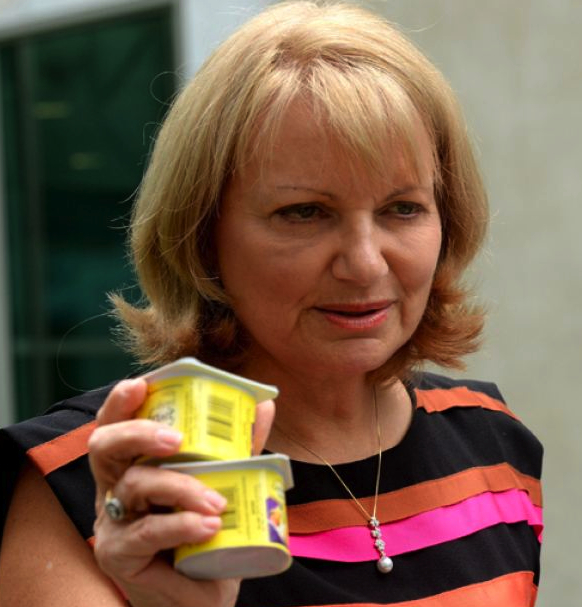
SAVVY SENATOR Senator Sue Boyce shows the Senate what an equality conscience looks like.
SAVVY SENATOR The LNP’s Sue Boyce shows the Senate what an equality conscience looks like.

The chances of marriage equality in Australia.

SUPPORTERS of marriage equality in Australia would have been forgiven for thinking the issue was dead in the water under the 43rd Parliament.

We endured Tony Abbott’s predictable religious opposition. We winced at Julia Gillard’s incomprehensible atheist mantra against relationship freedom. We shed tears as Penny Wong assured us of a more enlightened tomorrow.

Then something happened which nobody predicted. Kevin Rudd, with one cogent blog post, became the highest-profile Australian politician, and Christian, to get behind marriage equality.

Before he was reinstated as Prime Minister, this news remained a hopeful anecdote. Now it’s fast becoming the point of difference which may wedge Rudd into a win at the ballot box.

Galaxy polling from last weekend indicates 11 per cent of polled Coalition voters would back Kevin Rudd and Labor at the election, based on his support for same-sex marriage.

So, what are the chances of marriage equality under the 44th Parliament?

“It does give you anxiety to know that holding hands in public is still considered by some to be a political act.”

In November 2011, at the ALP National conference, two things happened which defined the marriage equality credentials of the ALP. Support for same-sex marriage was adopted, but also a subsequent motion allowing Labor ministers a conscience vote should a bill come before parliament.

This double-edged sword was wielded in 2012, when the Government voted on marriage equality with their consciences, while the Opposition voted with Tony Abbott’s. The bill to amend the Marriage Act was resoundingly, and predictably, lost.

The ALP’s conscience vote on same-sex marriage cannot be changed at party level before their next national conference, which is why Rudd’s new front bench is busy saying Tony Abbott’s grip on his ministers’ views is heavy-handed.

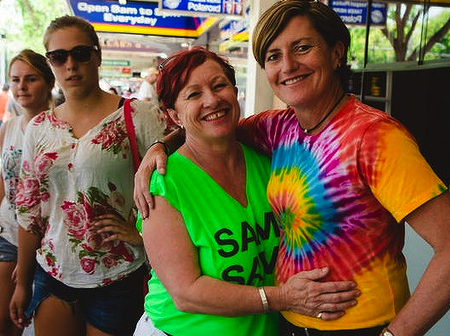
So let’s look at Abbott’s stance. Despite the coming-out of his lesbian sister Christine Forster, Tony Abbott has remained unconvinced by her deeply held desire to see equality in her country, let alone within her own family.

The Abbott daughters talked about Dad’s outmoded opposition to it, and Christopher Pyne subsequently made suggestions that the Coalition party room would have no commitment for or against marriage equality, after the election.

Progressive voters, quite rightly, saw these as so many dangling carrots. When pressed, Abbott dismissed the suggestion there was a need to define marriage equality as an important issue for a potential Coalition government, citing how close his views were to Prime Minister Gillard’s.

Marriage equality never had less of a chance in Australia, until Rudd’s backflip.

Most of the religious themes of his blog post were lost on me.

As someone who gave a live submission to the Human Rights Commission’s 2006 Same Sex: Same Entitlements hearing, which was used by Rudd and his first cabinet to remove almost 100 pieces of legislation discriminating against same-sex couples, I knew he’d long had all he needed to understand that the case for same-sex marriage was already a human rights no-brainer.

TALK ABOUT KEVIN KRudd's backflip on marriage equality was a surprise.
TALK ABOUT KEVIN KRudd’s backflip on marriage equality was a surprise.

But it wasn’t what he wrote which held my attention, it was what he said at press conferences, stating a desire to end the “unnecessary angst” amongst a large proportion of the community.

It’s an interesting word, angst, but it’s a great description of the stasis an increasing number of same-sex couples endure while we wait for our leaders to sort out marriage equality.

We are encouraged into joint financial commitments, and all the customs and commitment inherent in extended family life, yet we are denied access to the fundamental legal and symbolic bedrock of loving relationships, if we find we want or need one.

It does give you angst to know that if something happened to your partner, through death or incapacitation, even a distant relative could make a case for financial gain, while you are left chasing statutory declarations warranting what a simple marriage certificate could.

It does give you anxiety to know that holding hands in public is still considered by some to be a political act, knowing that we should have secured marriage equality long ago in order to start the real work: changing hearts and minds, under the protection of full equality enshrined in law.

Kevin also did something which added to my confidence in him on this issue. He stood up to his sister.

Loree Rudd, of Nambour, Queensland, infamously ditched her ALP membership in 2011 when the party adopted same-sex marriage. She’s since renewed it, for obvious reasons, but her brother told her about his change of heart on the issue the night before he made it public.

If he explained it to her the same way as he explained it to us, I imagine Kevin reminded Loree that Australia is a secular nation in which religious conviction is secondary to social reform. That realisation, matched with his vocal reassurances to Australia’s same-sex community, is what you call leadership by any definition.

Newly minted Prime Minister Rudd and his Deputy Anthony Albanese have since affirmed their commitment to making marriage equality a reality in Australia, even suggesting alternatives if the Coalition remains unchanged in its opposition to conscience voting.

Despite many in its ranks making their support for marriage equality public, including self-proclaimed preferred Opposition Leader Malcolm Turnbull, and Senator Sue Boyce’s decision to cross the floor and vote for it, Tony Abbott and the Coalition remain locked into opposition to same-sex marriage in Australia.

A clear choice has presented itself where there so recently was none.

© Michael Burge, all rights reserved.

The false start we gave Ian Thorpe

SWIM STAR Ian Thorpe with young fans in 2006.

I WASN’T going to write about Ian Thorpe’s coming out. What more can there be to say about this moment in his life, which has huge ramifications for him but should have none for us?

But then I read one article which got me angry, the kind of piece I’d hoped to avoid but which I knew would surface: the ‘Ian Thorpe Lied To Us’-type article.

I also wanted to watch the interview he gave to Michael Parkinson before forming too many thoughts.

The only unexpected moment was when ‘Thorpie’ recalled being asked about his sexuality at the age of 16. Parkinson picked-up on Thorpe’s affront at this and ran with it, creating the sense that 16 was just too young to be asked such a question.

Thorpe then qualified his view: that to ask anyone about their sexuality is unnecessary, but went on to assert that had he not been asked at that young age, he would not have stayed closeted so long.

If it was a nosey journalist who asked him as a 16-year-old, then I agree, it was an affront, but I don’t believe it’s enough to leave this pivotal moment in Australia’s same-sex attracted history at that.

“Still feel like Thorpie shouldn’t have been tempted to lie, or are you starting to ‘get’ the self preservation which drove his denial?”

Let’s look at the world Ian Thorpe inhabited at ‘Sweet Sixteen’. I don’t mean his swimming career – he was well on the ascendant at that age. I want to illustrate the world for a closeted 16-year-old gay man.

On October 13, 1998, Ian Thorpe’s 16th birthday, the age of consent for gay men was 18. Ever since 1984, when the decriminalisation of homosexual acts between men resulted in an age of consent for straight people and lesbians of 16, the law had remained unequal.

That legislation – The Crimes (Amendment) Act 1984 – would not be repealed until another nasty-sounding law – The Crimes Act 1900 – was amended in 2003.

In October 1998, for two men to live together in a de-facto relationship was still a political act. The Property (Relationships) Legislation Amendment Act was not created until the following year, requiring further amendment in 2002, 2008 and 2009 to remove discrimination against same-sex attracted people financially in almost 100 other pieces of state and federal legislation.

There was no form of legal coupling for same-sex attracted people in 1998, a situation which has not altered in NSW, or anywhere in Australia, to the present day.

In 1998, same-sex adoption and surrogacy were illegal and would remain so until 2010.

In 1998, any person who decided to bash, abuse or kill a gay person in NSW would have had the ‘Gay Panic’ defence at their disposal.

This is the most recent piece of law reform for LGBTI people in NSW, having been abolished in May 2014. In Queensland and South Australia, ‘Gay Panic’ remains a legal form of defence.

We know that Thorpie didn’t limit himself to swim-meets on home soil – he competed in places where widespread marginalisation of same-sex attracted people was and remains common, including Japan and Greece.

But the most dangerous destination Thorpe travelled to in his 16th year was Malaysia, where he won four gold medals at the Kuala Lumpur Commonwealth Games, but risked deportation, prison terms, fines and public whippings if he had acted on his same-sex attraction whilst in that Muslim country.

There was some good news for the millions of HIV-AIDS patients in 1998 – many of them were returning to work, despite the often crippling side effects of antiretroviral drugs. No longer the short-term death sentence it had been, there were enormous question marks over the long-term effects and efficacy of combination therapies on the epidemic. Survival time after contracting HIV was simply unknown.

So, asking the 16-year-old Ian Thorpe if he was gay was tantamount to asking him if he was attracted to the proposition of engaging in illegal sex which could never result in a legally recognised relationship with no hope of creating a family unit, including children.

If Thorpie had said yes to the sex, but found himself the victim of homophobic attack, his attacker would likely have gotten off or received a lesser sentence. There was also the fear of contracting HIV-AIDS in the mix.

Is this an attractive proposition, or one which even you, in Thorpie’s position, might deny?

ATTACK VICTIM Matthew Shepard (1976-1998).

Another young man said yes to the sex a week before Thorpie’s 16th birthday. His name was Matthew Shepard.

Taking into account the time difference between the US state of Wyoming (where Shepard was bashed and left to die on a barbed wire fence by a pair of homophobes, later dying of his wounds), and NSW (where the Thorpe family celebrated Ian’s 16th birthday), the two events would have occurred at about the same point in time.

Sexual acts between men had been legal in Wyoming since 1977, and Shepard was over the age of consent at the time of his death. He had it better legally than Thorpie, but Matthew Shepard still ended-up suffering and dying as a result of his sexuality.

Still feel like Thorpie shouldn’t have been tempted to lie, or are you starting to ‘get’ the self preservation which drove his denial?

Laws do not change everyone’s behaviour, of course, but consider the impact of legislation on one of Australia’s highest-profile gay men – Justice Michael Kirby – who did not come out publicly until he was 60 years of age, during the same year as the The Property (Relationships) Legislation Amendment Act NSW (1999).

WHO'S WHO The Hon Justice Michael Kirby.
WHO’S WHO The Hon Justice Michael Kirby.

Kirby had lived with his de-facto spouse Johan van Vloten for thirty years prior, during part of which time they hid their relationship from family, friends and colleagues. Kirby came out by simply listing his partner in Who’s Who once their cohabitation and all its rights and responsibilities were legally protected.

Then there are the ‘unofficial laws’ which encourage same-sex attracted people to remain in the closet – ‘The Laws of Nature’ – as hard for young people to argue against as invisible faith, yet so often cited by homophobes, and so powerful they kept generations of lesbian women closeted in places where there were never laws against homosexual acts between women, and still impact on gay people everywhere.

This issue clearly goes beyond legislation, but could Kirby have risen so far in his profession without being closeted? Could Thorpe? Those of the ‘They Lied To Us’ team could do with answering such questions. Thorpe’s query to Australia in the Parkinson interview challenged us to consider how much we wanted and needed him to lie.

Ever since seeing Ian Thorpe interviewed during the Sydney 2000 Summer Olympics, I have known he was same-sex attracted. It was simply his demeanour, the same way of patting his solar plexus with a bent wrist as I do when using myself to illustrate a point.

It’s a subtle but giveaway gesticulation.

Whenever I witnessed people speculating about Thorpe’s orientation, I challenged their determination to claim him for ‘their team’, because a team is what a male Australian sports legend must declare a position on: he is never his own man, his countrymen feel like they own him.

By the mid-2000s it became painful to watch Thorpe’s slow-motion train wreck, without being able to do, say or write anything to help in the journey every out same-sex attracted person must endure.

Some journalists reached out to him. One open letter by founding editor of DNA magazine Andrew Creagh stood out for me. It was assertive enough to get to the truth, and empathetic enough to express what was needed despite Ian Thorpe’s closeted situation.

A journalist who asks a 16-year-old swimming star of either gender whether they are straight or gay should rightly come away looking like an idiot, not only because it’s a dumb question, but also because these days a 16-year-old (gay, straight or anything else) is considered a self-determining adult as far as sexual orientation is concerned.

Same-sex attracted 16-year-old boys were not considered adults prior to 2003, we were considered a danger to ourselves who needed ‘protection’ from wand-waving homosexuals trying to recruit us onto the ‘wrong’ team.

Such fantasies are laughable now, but in their day they were nails in the closet door.

PLUCK COVER copyCongratulations and best wishes to Ian Thorpe. His coming-out is a far greater achievement than any gold medal. It’s a life-changing validation for teenagers batting for the same team, and their families; and it means that when he manifests the relationship and new career this interview hinted at, at least he won’t have to come out again and again.

© Michael Burge, all rights reserved.

This article appears in Michael’s eBook Pluck: Exploits of the single-minded