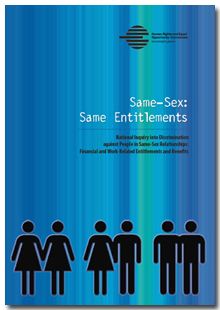
Category Archives: My Story

I fought the law

BOB'S WAY Attorney General of NSW until 2007, the Hon. Bob Debus.
BOB’S WAY Attorney-General of NSW until 2007, the Hon. Bob Debus.

A Writer takes on an Attorney-General.

NINETEEN months after the death of my long-term partner Jonathan Rosten, I received an email out of the blue via the Sydney Star Observer, one of Australia’s gay and lesbian news sources.

Weeks before I’d shared my story in an interview with a journalist from that paper, detailing the precarious legal and financial deadlock I had been subjected to by Jono’s family, their denial of our relationship, and their illegal actions which prevented me from accessing his death certificate.

I’d spoken about my experience to warn other gay couples in Australia, particularly in the city I lived in (‘gay friendly’ Sydney), that it was still a political act for two people of the same gender to live together, because they were not afforded the full protection of the law.

The email was from a man whose name I will not write here – we’ll call him Wayne – because what he told me could have gotten him sacked.

He worked within the Registry of Births, Deaths and Marriages, presided over by State Attorney-General, The Hon. Bob Debus.

Wayne’s email was friendly, letting me know he’d read about my experience in the SSO, and wasn’t it great that the laws had recently been relaxed, meaning I could now get a copy of Jono’s death certificate with my name on it?

This was news to me.

I contacted the SSO and got Wayne’s number. He confirmed for me that, yes, working within the Registry, he’d witnessed directives that same-sex spouses were now to be granted access to their deceased partner’s death certificates. He wanted to remain anonymous because there were homophobes in very high positions within the department he worked in.

I rang the Registry, fobbing off the typical bureaucratic nonsense the telephonists engaged in. I already knew nobody but a top shit-kicker could help me, got put through, stated my case, and booked an appointment the next day.

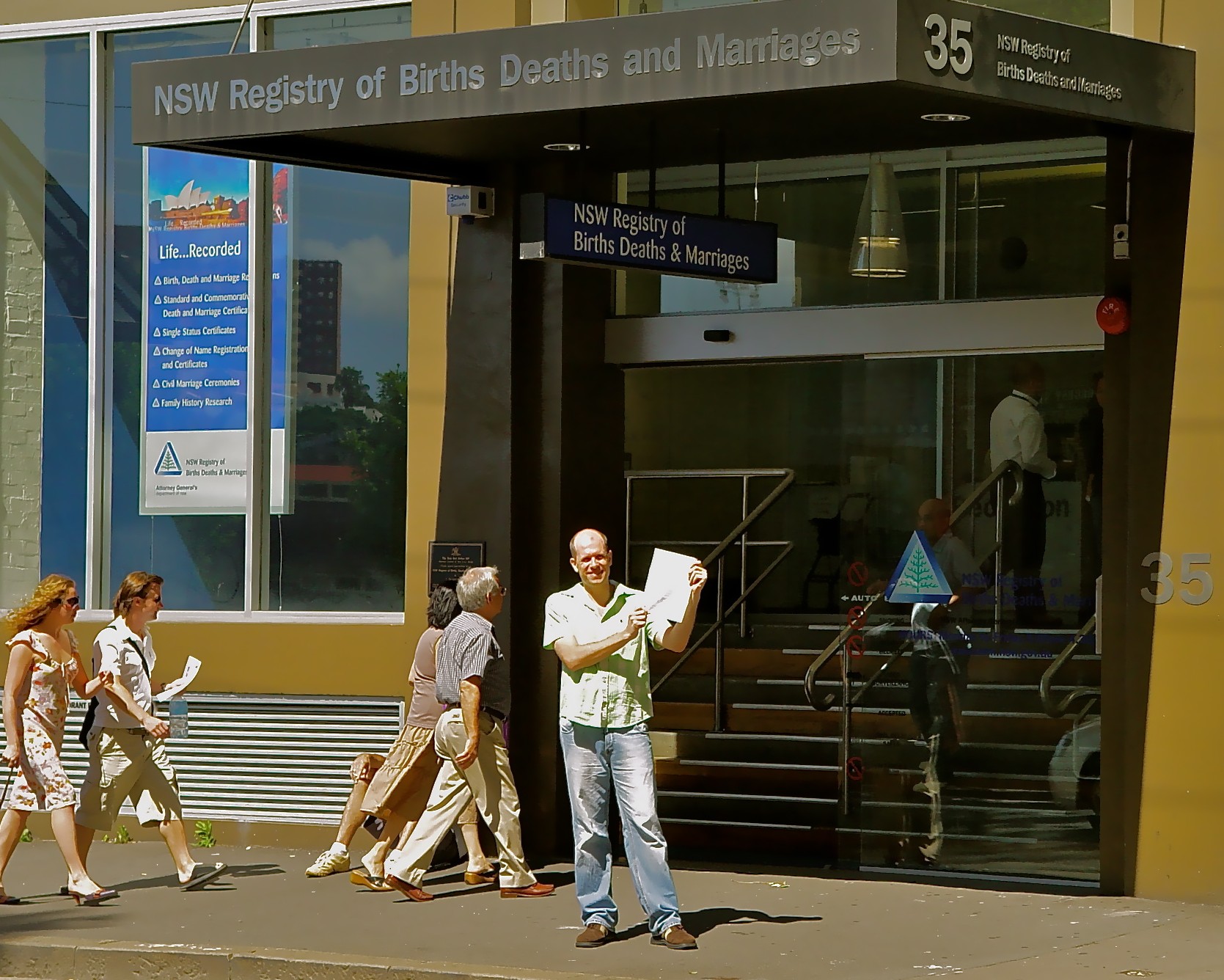
The first thing that shocked me about the NSW Registry of Births, Deaths and Marriages was the level of security. Bouncers, thick glass screens, metal detecting barriers, and an air of protection pervaded the place.

That’s when I realised why I’d had such a tough time with these bastards: they control access to some of the most important life decisions we enter into as citizens, so they expect problems, and they’re in a permanent state of lock-down.

Upstairs, the chief shit-kicker invited me to show him the documentation in my possession: statutory declarations, bank accounts, rental contracts, personal items, Jono’s journal; in all some sixty documents which proved various parts of our relationship.

His eyes widened, and he went to stand, saying he just needed to photocopy the first three. But I didn’t, couldn’t, let him go.

I got extremely angry and emotional at having to wait for this moment much longer than a straight spouse in my position would have had to. In the nineteen months prior I’d been brought to my knees emotionally, financially, and spiritually. I’d survived suicidal thoughts, processed deep shame, lost friends, and had to move far too often because I’d been forced to become a ball of unmanageable humanity by the shortcomings of one family and the internal regulations of this man’s department.

FINDING A PULSE in a homophobe can take some work.

He was not getting away with just copying a few documents, this guy. I already sensed he was trapped between his feelings of homophobia and the new regulations which now required him to treat me equally, a full seven years after the NSW laws had changed.

He managed to squeeze out that he reckoned I had a very good case, and that if a new certificate were to be issued, all the old copies would be recalled for destruction.

Did he need the details of exactly where those fraudulent copies were now?

Yes, he mumbled, shame-faced.

I handed over the names and addresses for him to request the return of the death certificate which had been created for me, long withheld by the funeral director I’d contracted and held in their safe behind a wall of defensiveness and avoidance; and the other at Jono’s family’s disposal, already widely distributed to claim that I, Jono’s surviving spouse, did not exist.

At that, the shit-kicker looked as though he’d shit his pants.

Ironically, it was just a week later, after attending Sydney’s first screening of Brokeback Mountain (the story of two men who could barely come out to one another, let alone live as a couple, the way Jono and I had), that I arrived home to a letter inviting me to collect Jono’s death certificate from the Registry, whenever I was ready.

I could have gotten it from the front desk, but I booked an appointment with the shit-kicker and I made him give it to me, right into my hand.

IN HIS OWN HANDS My friend Prue took this shot of me, Jono's death certificate hot off the press.
IN HIS OWN HANDS My friend Prue took this shot of me, with Jono’s death certificate hot off the press.

There, on the same page, was Jono’s name, and mine, a record of the exact number of years we had been together, and the address we shared on the day he died: the truth which had frightened the homophobes in our lives, finally laid bare in paper form more indelible than any gravestone.

I cried a little, and then I went downstairs to apply for another original of the certificate by filling a form and passing it across the desk with the thick glass screen.

The young woman took the form and immediately shook her head, tapped her finger on my name and Jono’s, and said: “You can’t get this, not when you’re the same gender.”

I was not surprised. I said to her, calmly so as not to set off any security screens or draw the attention of the bouncers, that she was incorrect and needed to ask her manager for some training on this issue. The jaw, that had been munching so enthusiastically on chewing gum, went motionless.

I went upstairs and saw the shit-kicker’s distorted face through the glass as I made the same demand of the managers. Not one of them would come out of their office to meet me.

So I went to the top. I wrote to the NSW Attorney-General, and made a formal request for him to ensure all staff in his department were now made aware, ideally through some kind of training, that same-sex couples were able to apply for their deceased spouses’ death certificates without recourse to anyone.

Perhaps, I suggested, some media releases to the same effect would be an idea?

When his reply was tardy, I went to NSW’s best shit-kicker, Independent MP Clover Moore, who hurried the Honorable Mr. Debus along a little.

We never received more than a staffer’s reply. I guess Attorney-Generals hate to be reminded they need to catch up with the law.

© Michael Burge, all rights reserved.

Michael’s story is published as Questionable Deeds.

Very Good With Words

WRITTEN OFF words become action.
OUT OF THE PAGE words can become actions.

A Writer takes ownership of an insult.

ONE of the most cutting slights ever levelled at me turned out to be the greatest compliment I ever received, and one which really put fuel in my tank as a writer.

I’ve read plenty of self-help books in my time. The one I responded to the most was The Artist’s Way by Julia Cameron. In its pages, and through its practical sessions, I managed to find direction enough to keep going through tough times as an artist.

I also developed a swag of practical tools for dealing with the obstacles in every Artist’s way, not only those within myself, but those that come from other people.

So it was probably not so coincidental, when embarking on my first round of The Artist’s Way, a program based squarely in the 12-step recovery principles of Alcoholics Anonymous, that I manifested a very close friendship with a recovering addict.

By the time I knew she was an alcoholic, Claudia was about to move into my house. I thought about her announcement, remembered my upbringing about not turning away people in need, and helped her move into my spare room, where she lived for almost two years.

I was thankful that I didn’t have to cohabit with someone who would forever be dragging me to the pub at the top of our street. My coming out was made easier by having a house mate with her own baggage, and we had a history because our parents had been good friends when we were at school. It was a case of win-win for two families.

Warning bells rang when I came home a year later with the strong sense that everything in the house had been moved, just a little, like someone had been picking through the antiques I’d inherited from my grandmother.

Claudia had disappeared, her new boyfriend (who was avoiding drug court) at the wheel. On their way to score drugs, they’d stolen her mother’s safe, before the seedy side of the Western Suburbs opened its arms to them.

She had ‘swapped the witch for the bitch’, as they say in Narcotics Anonymous, and added heroin to her other addictions.

I fielded desperate phone calls from her family, managed to find Claudia on the phone, and challenged her to come home from the dire moral and legal reality she’d manifested.

When she did, I opened my door to her, even though she had a key and was ashamed to use it. After she stepped over my threshold, she stayed clean for the rest of the time she was under my roof … as far as I know.

Having grown up in a divorced family, I don’t know why I was blind to the possibility of ‘friend divorce’ around every corner of my friendship with Claudia.

So it came as a shock that she was incapable of helping me as I had helped her.

Claudia was the first person I could reach on the phone when my partner died suddenly. She came to my side, but my needs became larger than hers at that time, and she had no way to cope with that reality. Weeks after Jono died, Claudia was out of my life too.

Nothing if not naive, I went back when she found ways to offer me support, but she called me one day when I was standing on a train platform, on my way to a party.

She muttered something about having sent me an email she wanted to me to read. It sounded serious, so I offered what any true friend would do: I said I’d delete it without reading it, if she wanted me to.

“No, I want you to read it,” she said.

The next morning, I did. In it, she wrote that our friendship was over.

I knew the feeling of having to express something in writing as opposed to just saying it. I’d been that way ever since I announced that I couldn’t wake my baby brother in his cot. The ramifications of those spoken words were dire for my family.

So I didn’t go into, ‘you could have just told me’ territory, which is just a case of shooting the messenger.

I did what comes naturally to me, I wrote a reply. In it, I rose above Claudia’s definition of the status quo. At that time, I was having plenty of new world orders foisted on me in my grief.

Claudia rang. Her voice was distant, what I’d come to call ‘drug-frozen’. She managed to force out some clipped platitudes, which I eloquently rebuffed. She was, after all, only fifty per cent of this friendship, and her truth applied to only her half.

“You’re very good with words,” she said, low and cold.

“As are you,” I said in reply.

We both spoke the truth.

In that moment I came to terms with being a friend to an addict, and how we become like islands onto which they wash up, where they receive our succour, and our help to climb the mountain, all the way down to the far shore, where they dive in and swim away.

But they leave us wiser, emboldened by their definition of us, even as they try to demolish us. We’re able to spot others of their kind on their way to our shore, able to help them onto their legs, point them to the mountain and say, simply: “Start climbing”.

Since then we’ve both become very, very good with words, Claudia and I.

But while I took an overdose of the truth and became addicted to speaking and writing it, Step Nine tells me she’s still got work to do.

© Michael Burge, all rights reserved. 
Writing my way into my relationship

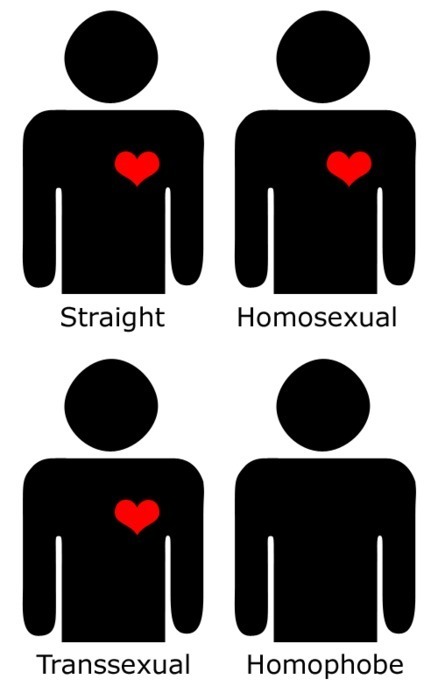
RAINBOW COURT Same-sex attracted people are exponentially earning our human rights, be warned!
RAINBOW JUSTICE Same-sex attracted people are exponentially learning our human rights, be warned!

A Writer’s first affidavit.

ONE of the most challenging and important pieces or writing I ever executed was the affidavit I wrote for the Supreme Court of New South Wales in application for the estate of my late partner, Jono.

Sitting across the desk from my solicitor, she tasked me with this ‘commission’ using some weighty words of her own, because an affidavit, particularly one relating to your deceased spouse, is not something to get wrong.

“You must relate the incidents of your relationship as though people are listening to it, with quote marks, and everything,” she explained, “and you can’t use his name, you must write ‘the deceased said this, and did this …’.”

It sounded like a scene from a script. In the midst of those dark days, compounded not only by my grief after losing Jono, but also by his family’s denial of the existence of our relationship, writing was something I knew how to do.

I’d been writing dialogue for years, and here was a story with a beginning, middle, and, sadly, an end which nobody saw coming.

My motivation was a simple one. Primal, in a way.

I’d been duped. I’d trusted bad people. In the midst of my shock, Jono’s mother and brother had bullied the funeral director into removing my name and any reference to our relationship from his death certificate. They did it in secret. They did it at a time I would least suspect them, and they remained unmoved by my entreaties to undo what they had done.

I won’t go into the reasons they did what they did, that is for another piece of writing at another time. Suffice to say they did everything in their power to prevent the creation of any official document which linked their son/brother to me, and that it was, as is so often the case, for financial reasons. Laced with the pervading stench of homophobia, the treatment became a rare mix reserved for only a few of the widowed left vulnerable by lax laws and outmoded thinking.

Whatever their motivations, it was the shittiest, lowest, most devastating action anyone has taken against me. It hit me in my deepest places, and smarts to this day.

Faced with this denial, I wondered what exactly did they say Jono and I were to one another? The legal documents they’d falsified to deny my relationship with Jono carried weighty fines and/or jail time for false representation. What term could they get away with if pressed on the truth?

SPECIAL FRIENDS Comedy writers have made light of gay couples for decades.
SPECIAL FRIENDS Comedy writers have made light of closeted gay couples for decades.

‘Travelling companions’ is the definition comedy writers have placed into the mouths of homophobes for decades.

Yes, in times past, two men in love would have passed for ‘special friends’, but not me and Jono.

We were everything to one another apart from legally married, and the law did not (and still does not) extend to that. Everyone who loved us knew the strength of our commitment.

So, when I learnt to refer to Jono as my deceased spouse, I took our long-term relationship and all its episodes: fun, challenging, confronting and downright hilarious, and wrote it with as much fervour as I would a piece of drama, only I didn’t need to make anything up.

Using old diaries and our joint bank account, I managed to trace our relationship to its dawn. The words were easier to recall off the cuff than the dates, because it’s rather unforgettable when someone leans their head gently on your arm, looks you in the eye, and says: “I’m besotted with you.”

That night, at the alpine-style sunken lounge of Leura’s Fairmont Resort Bar in the winter of the year 2000, was memorable not just for our first kiss, but also the inebriated woman who was sitting near us, saying: “What a lovely couple you two are, awwww, you’re so well suited”. We laughed, because our relationship was just beginning, but it was a great affirmation for what was to come. This woman made it into my affidavit as an indicator of public knowledge of our relationship: one of the more than ten inescapable benchmarks when defining its existence legally.

TRAVELLING COMPANIONS? Yeah right, if you live on Planet Homophobe!

Over thirteen pages I recalled how we’d expressed our love and care for one another enough to move in together after two years.

I related our journey through running our own business after only a month together, and all its highs and lows, but also the way that our support for one another saw us blossom as creative individuals.

I also revealed our slightly embarrassing pet names for one another.

There was no happily ever after to the journey Jono and I took, only a surprise ending which no-one would have believed if I’d ever written it into a screenplay.

But my written work could not simply end with Jono’s sudden, unexplained collapse in the middle of a dance rehearsal, because it was an affidavit, not a screenplay.

I needed to add the disenfranchisement I was subjected to after his death. I needed to explain to the court that I had been kept from Jono’s death certificate, and it was with no small embarrassment that I had to explain why I was asking them to bend the rules and allow the presentation of a less legally binding death certificate extract: because his relatives were homophobic.

In time, my affidavit did everything I needed it to do legally. It was an indelible, detailed document which shone a glaring light on the omissions purposely rendered on the one piece of paper where the details really mattered when I needed them to the most.

“Why do you need a piece of paper to prove your love for one another?” same-sex attracted people who want the right to marry are pressured to explain, to justify our argument for equality.

Well, because thirteen pages (and almost 60 supporting documents) is a mammoth effort, unless you’re a writer, especially when you’re grieving, and you’re fighting insidious, invisible homophobia. One simple marriage certificate would be my choice, every time.

The Supreme Court has no choice but to uphold that, which is exactly what the homophobes are scared of, because it might be just a piece of paper, but a marriage certificate places a great obstacle in the way of prejudice.

© Michael Burge, all rights reserved.
Michael’s story is published as Questionable Deeds.