ONE of the most cutting slights ever levelled at me turned out to be the greatest compliment I ever received, and one which really put fuel in my tank as a writer.
I’ve read plenty of self-help books in my time. The one I responded to the most was The Artist’s Way by Julia Cameron. In its pages, and through its practical sessions, I managed to find direction enough to keep going through tough times as an artist.
I also developed a swag of practical tools for dealing with the obstacles in every Artist’s way, not only those within myself, but those that come from other people.
So it was probably not so coincidental, when embarking on my first round of The Artist’s Way, a program based squarely in the 12-step recovery principles of Alcoholics Anonymous, that I manifested a very close friendship with a recovering addict.
By the time I knew she was an alcoholic, Claudia was about to move into my house. I thought about her announcement, remembered my upbringing about not turning away people in need, and helped her move into my spare room, where she lived for almost two years.
I was thankful that I didn’t have to cohabit with someone who would forever be dragging me to the pub at the top of our street. My coming out was made easier by having a house mate with her own baggage, and we had a history because our parents had been good friends when we were at school. It was a case of win-win for two families.
Warning bells rang when I came home a year later with the strong sense that everything in the house had been moved, just a little, like someone had been picking through the antiques I’d inherited from my grandmother.
Claudia had disappeared, her new boyfriend (who was avoiding drug court) at the wheel. On their way to score drugs, they’d stolen her mother’s safe, before the seedy side of the Western Suburbs opened its arms to them.
She had ‘swapped the witch for the bitch’, as they say in Narcotics Anonymous, and added heroin to her other addictions.
I fielded desperate phone calls from her family, managed to find Claudia on the phone, and challenged her to come home from the dire moral and legal reality she’d manifested.
When she did, I opened my door to her, even though she had a key and was ashamed to use it. After she stepped over my threshold, she stayed clean for the rest of the time she was under my roof … as far as I know.
Having grown up in a divorced family, I don’t know why I was blind to the possibility of ‘friend divorce’ around every corner of my friendship with Claudia.
So it came as a shock that she was incapable of helping me as I had helped her.
Claudia was the first person I could reach on the phone when my partner died suddenly. She came to my side, but my needs became larger than hers at that time, and she had no way to cope with that reality. Weeks after Jono died, Claudia was out of my life too.
Nothing if not naive, I went back when she found ways to offer me support, but she called me one day when I was standing on a train platform, on my way to a party.
She muttered something about having sent me an email she wanted to me to read. It sounded serious, so I offered what any true friend would do: I said I’d delete it without reading it, if she wanted me to.
“No, I want you to read it,” she said.
The next morning, I did. In it, she wrote that our friendship was over.
I knew the feeling of having to express something in writing as opposed to just saying it. I’d been that way ever since I announced that I couldn’t wake my baby brother in his cot. The ramifications of those spoken words were dire for my family.
So I didn’t go into, ‘you could have just told me’ territory, which is just a case of shooting the messenger.
I did what comes naturally to me, I wrote a reply. In it, I rose above Claudia’s definition of the status quo. At that time, I was having plenty of new world orders foisted on me in my grief.
Claudia rang. Her voice was distant, what I’d come to call ‘drug-frozen’. She managed to force out some clipped platitudes, which I eloquently rebuffed. She was, after all, only fifty per cent of this friendship, and her truth applied to only her half.
“You’re very good with words,” she said, low and cold.
“As are you,” I said in reply.
We both spoke the truth.
In that moment I came to terms with being a friend to an addict, and how we become like islands onto which they wash up, where they receive our succour, and our help to climb the mountain, all the way down to the far shore, where they dive in and swim away.
But they leave us wiser, emboldened by their definition of us, even as they try to demolish us. We’re able to spot others of their kind on their way to our shore, able to help them onto their legs, point them to the mountain and say, simply: “Start climbing”.
Since then we’ve both become very, very good with words, Claudia and I.
But while I took an overdose of the truth and became addicted to speaking and writing it, Step Nine tells me she’s still got work to do.
RAINBOW JUSTICE Same-sex attracted people are exponentially learning our human rights, be warned!
A Writer’s first affidavit.
ONE of the most challenging and important pieces or writing I ever executed was the affidavit I wrote for the Supreme Court of New South Wales in application for the estate of my late partner, Jono.
Sitting across the desk from my solicitor, she tasked me with this ‘commission’ using some weighty words of her own, because an affidavit, particularly one relating to your deceased spouse, is not something to get wrong.
“You must relate the incidents of your relationship as though people are listening to it, with quote marks, and everything,” she explained, “and you can’t use his name, you must write ‘the deceased said this, and did this …’.”
It sounded like a scene from a script. In the midst of those dark days, compounded not only by my grief after losing Jono, but also by his family’s denial of the existence of our relationship, writing was something I knew how to do.
I’d been writing dialogue for years, and here was a story with a beginning, middle, and, sadly, an end which nobody saw coming.
My motivation was a simple one. Primal, in a way.
I’d been duped. I’d trusted bad people. In the midst of my shock, Jono’s mother and brother had bullied the funeral director into removing my name and any reference to our relationship from his death certificate. They did it in secret. They did it at a time I would least suspect them, and they remained unmoved by my entreaties to undo what they had done.
I won’t go into the reasons they did what they did, that is for another piece of writing at another time. Suffice to say they did everything in their power to prevent the creation of any official document which linked their son/brother to me, and that it was, as is so often the case, for financial reasons. Laced with the pervading stench of homophobia, the treatment became a rare mix reserved for only a few of the widowed left vulnerable by lax laws and outmoded thinking.
Whatever their motivations, it was the shittiest, lowest, most devastating action anyone has taken against me. It hit me in my deepest places, and smarts to this day.
Faced with this denial, I wondered what exactly did they say Jono and I were to one another? The legal documents they’d falsified to deny my relationship with Jono carried weighty fines and/or jail time for false representation. What term could they get away with if pressed on the truth?
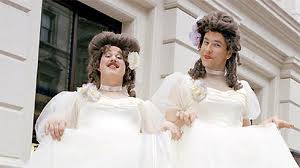
SPECIAL FRIENDS Comedy writers have made light of closeted gay couples for decades.
‘Travelling companions’ is the definition comedy writers have placed into the mouths of homophobes for decades.
Yes, in times past, two men in love would have passed for ‘special friends’, but not me and Jono.
We were everything to one another apart from legally married, and the law did not (and still does not) extend to that. Everyone who loved us knew the strength of our commitment.
So, when I learnt to refer to Jono as my deceased spouse, I took our long-term relationship and all its episodes: fun, challenging, confronting and downright hilarious, and wrote it with as much fervour as I would a piece of drama, only I didn’t need to make anything up.
Using old diaries and our joint bank account, I managed to trace our relationship to its dawn. The words were easier to recall off the cuff than the dates, because it’s rather unforgettable when someone leans their head gently on your arm, looks you in the eye, and says: “I’m besotted with you.”
That night, at the alpine-style sunken lounge of Leura’s Fairmont Resort Bar in the winter of the year 2000, was memorable not just for our first kiss, but also the inebriated woman who was sitting near us, saying: “What a lovely couple you two are, awwww, you’re so well suited”. We laughed, because our relationship was just beginning, but it was a great affirmation for what was to come. This woman made it into my affidavit as an indicator of public knowledge of our relationship: one of the more than ten inescapable benchmarks when defining its existence legally.
TRAVELLING COMPANIONS? Yeah right, if you live on Planet Homophobe!
Over thirteen pages I recalled how we’d expressed our love and care for one another enough to move in together after two years.
I related our journey through running our own business after only a month together, and all its highs and lows, but also the way that our support for one another saw us blossom as creative individuals.
I also revealed our slightly embarrassing pet names for one another.
There was no happily ever after to the journey Jono and I took, only a surprise ending which no-one would have believed if I’d ever written it into a screenplay.
But my written work could not simply end with Jono’s sudden, unexplained collapse in the middle of a dance rehearsal, because it was an affidavit, not a screenplay.
I needed to add the disenfranchisement I was subjected to after his death. I needed to explain to the court that I had been kept from Jono’s death certificate, and it was with no small embarrassment that I had to explain why I was asking them to bend the rules and allow the presentation of a less legally binding death certificate extract: because his relatives were homophobic.
In time, my affidavit did everything I needed it to do legally. It was an indelible, detailed document which shone a glaring light on the omissions purposely rendered on the one piece of paper where the details really mattered when I needed them to the most.
“Why do you need a piece of paper to prove your love for one another?” same-sex attracted people who want the right to marry are pressured to explain, to justify our argument for equality.
Well, because thirteen pages (and almost 60 supporting documents) is a mammoth effort, unless you’re a writer, especially when you’re grieving, and you’re fighting insidious, invisible homophobia. One simple marriage certificate would be my choice, every time.
The Supreme Court has no choice but to uphold that, which is exactly what the homophobes are scared of, because it might be just a piece of paper, but a marriage certificate places a great obstacle in the way of prejudice.
IN LATE 1999 I joined my father at the launch of a new book, The Imaginary Australian, by social historian Dr Miriam Dixson.
The setting was Sydney’s Gleebooks, the turnout disappointing, but one familiar face lurked down the front – Bob Gould, activist and denizen of his own sprawling bookshop in nearby Newtown.
Dr Dixson spoke about her latest exploration of Australian identity, then Gould began to interrogate her and disseminate copies of his response. It was a confrontation between old socialist warlords and I took great delight in witnessing it.
Gould I’d once served as a regular customer of the cafe across the road from his bookshop, where he’d barked his usual order of chocolate cake and ice cream to we student waiters.
Dr Miriam Dixson I knew because she had been married to my father for two decades.
Our first meeting was surrounded by my father’s lies. I was nine, my brother Andrew 11, and my sister Jenny, five. Our parents had been separated for a few months, and we were on a Christmas access visit to Inverell.
Dad promised to take us to the coast, an exciting prospect for country kids who were now living with their mother in the Blue Mountains. But we didn’t head seaward, we headed south, as Dad told us of a new ‘friend’ he wanted us to meet. When we pulled up at a strange house in Armidale, we were introduced to Miriam.
At that time, Miriam Dixson was enjoying a certain notoriety in the wake of her 1976 publication, The Real Matilda, a feminist Australian history that labelled Australian women: “The doormats of the Western world”, a work the author curiously described as nothing more than a “temporary scaffolding”.
In the half light of Miriam’s office, where we lay awake on blow-up beds on that first night in her life, tall filing cabinets loomed on either side, the ends of the drawers labelled “Matilda”.
We were literally and emotionally within Miriam’s polemic.
Our second meeting came after my parents’ divorce was settled, and we went to Armidale for Dad and Miriam’s marriage.
I did what any gay boy would do: I ingratiated myself with Miriam by offering to make her a bouquet of flowers from the garden. She held the spring blooms as she made a short procession from the kitchen to the living room, where Dad waited for her.
We visited the school where Andrew and I had been booked into since birth for our secondary education. When Dad pointed out the dormitory from which he had shimmied down the drain pipes to get up to mischief, I imagined escaping down those same pipes to the railway station if I were ever incarcerated in such a Victorian establishment.
While we played, with his permission, at Dad’s lapidary table, I inadvertently discovered a letter on the top of his desk tray, confirming Andrew’s acceptance at that school. Seeing the inevitable coming, and without thinking, I screwed it up. Andrew panicked, then bravely tried to iron it flat, while Jen and I kept watch.
Dad found us out and clipped me around the ear. That probably should have been it, but Miriam had yet to start.
She leant over me, and took slow pleasure in delivering some devastating news: “Your mother went to court,” she said, “she was a thief.”
My mainstay was bulldozed in seconds, and Dad said nothing in her defence. Mum rang in the middle of the trauma, and I tearfully asked her to tell me the truth. Instead of an angry reaction, she just gave a simple confirmation: yes, three years before, she had been arrested on shoplifting charges. “Daddy and I said we’d tell you about it together, when you were old enough,” she said.
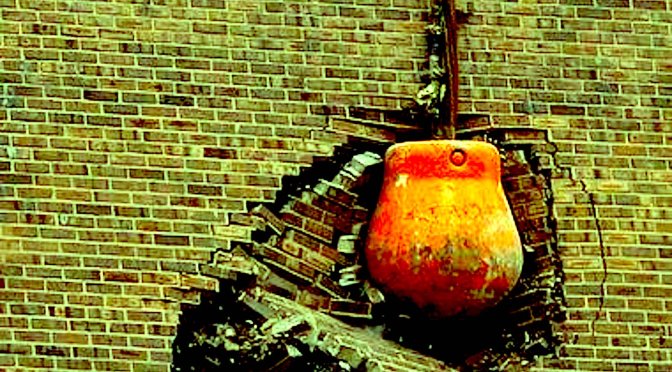
Wrecking Ball
Dr Miriam Dixson’s need to demonise my mother speaks volumes about the woman whom academics and journalists have been trying to define for decades.
Described as a feminist, a misandrist, a social historian, a communist, a progressive, and a conservative, the confusion has caused many leap to label Dixson a hypocrite. She’s been telling us for years that she’s an intellectual, but no commentator who’s met Miriam Dixson seems to think that’s quite apt.
Maxine McKew discovered the truth. “Ever the iconoclast,” she wrote in The Bulletin of her first impression of Dixson before the release of The Imaginary Australian.
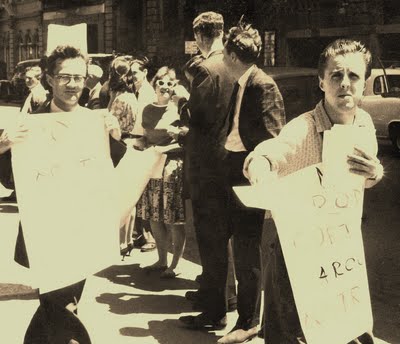
YOUNG COMRADES Bob Gould (far right).
Bob Gould also smelt a rat in his enlightening rebuttal, Interrogating Miriam Dixson, when he questioned why on earth his socialist comrade in 1960s Sydney had reinvented herself as a conservative?
When he observed how Dixson evolved her political ideology as she changed domestic partners, he almost got to the truth. Perhaps Gould assumed that Dixson had eschewed marriage in the wake of publishing The Real Matilda?
If only Bob had bumped into my father at Gleebooks, he would have come across the former grazier who was the significant spousal relationship of Dixson’s life, and discovered the reasons she remained more the academic feminist than the practising one, and had certainly been moving in conservative circles.
Gould described Dixson’s approach in The Imaginary Australian as: “A fast and loose psychological assault”, replete with “softening disclaimers”. He used the word “demolish” when he recalled Miriam’s modus operandi at socialist meetings: “Almost by clockwork, you would get a migraine around 9pm, after criticising the lot of us, and go to bed.”
In the light of others’ experience of Miriam Dixson, her ‘knockdown, rebuild’ vocabulary finally made sense to me. The woman driven to raise the scaffolding she called The Real Matilda was no mere intellectual, she was the wrecking ball who’d rushed to another room to listen in on that crucial trust-restoring phone conversation between me and my mother.
And her iconoclasm continued, aimed not at adult socialists, but children.
The next swing came during an access handover in Sydney, while Mum encouraged Jenny, aged six, to go for lunch with her brothers, father, and an enraged iconoclast.
“Daddy loves you too,” Mum said, as she encouraged Jenny to take her father’s hand.
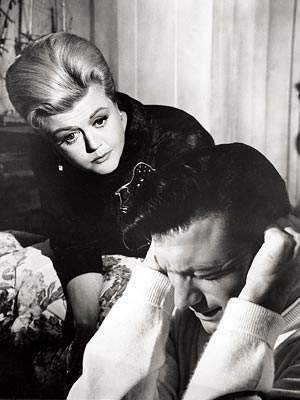
MIND GAMES Mrs Iselin in The Manchurian Candidate.
In an unwelcome shot, Miriam said: “Oh, well programmed, Pat”.
The P-word stood out because it sounded powerful to children, and unsurprisingly the negative energy behind it saw Jen stay put in her mother’s arms.
At lunch, the ball swung again, this time at me.
A new world order was blasted into me by Dr Miriam Dixon and my father, a pair of squabbling control freaks, who contravened legal process by telling me without a court-appointed counsellor present that I was to be singled out for a solo access visit.
Once again, Miriam employed a builder’s vocabulary, asserting that if I was by myself, she and Dad would be able to “rebuild” parent-to-child “frameworks”.
I wasn’t happy, but I went to Armidale by myself and endured their experiment. When it was over, I just craved some peace, but in order to get it, I too needed to become an iconoclast.
I told anyone who would listen – including them – that I did not want to see my father or his wife. The only “programming” I could see going on were their enthusiastic attempts to alter my sense of security and denigrate my mother using the worst experience of her life.
That one swing from my wrecking ball saw their insubstantial “frameworks”, erected without the slightest emotional intelligence, come crashing down. No school in Armidale for me.
Debate
Jump forward two decades, just four years after the Gleebooks event, and my brother invited me and Jen to his son’s christening.
Months before, my partner had died suddenly. Like many academics, Miriam was out of touch with the common marginalisation felt by feminists and LGBTQI, and greeted me by telling me how I was: “You’re alright. Yes, you’re alright,” she decided.
Prone in my grief to exhaustion in mixed company, I sat by myself at the dining table Mum proudly purchased after leaving Inverell. Andrew had inherited the suite after her cancer death a decade before. It was a familiar piece of furniture which evoked the woman we’d all loved.
It had been a long time between battles, so I put up no resistance when Dad quietly sat next to me, followed by Jenny, and I was able to enjoy watching them converse as adults.
Andrew offered drinks and finger food. The godparents joined us. We began to talk about our family’s heritage, and Dad outlined the great conundrum: were the Burges convicts or settlers?
Someone noted how silly it was to send people to the other side of the world for stealing something as insignificant as a loaf of bread. Everyone chuckled.
Everyone except Dr Miriam Dixson, that is. Finding herself on the edge of the scaffolding our family was gently erecting, Miriam said: “Michael, I’d like to sit next to Bruce please.”
Before I could answer, she continued with a diatribe straight from The Imaginary Australian about how none of us should question Georgian sensibilities and notions of criminality in Great Britain in the late 18th century, that none of us should make light of institutional decisions made in the past.
I acquiesced, because she placed herself between me and Dad, but as I did I said: “You like Gilbert and Sullivan, don’t you, Miriam?” remembering she and Dad singing along to their G&S favourites on my solo access visit all those years ago.
“Oh yes,” she replied.
“Well, enjoying satire like that is making light of the past,” I said.
Unexpectedly, Dad laughed, a brief insight into where his marriage had come to by then.
We all knew the wrecking ball was coming, so Jen gave me the let’s go look, and we said our goodbyes.
As I shook Dad’s hand, Miriam sidled up to me and said: “You’re wrong about what you said.”
“Don’t worry about it Miriam,” I replied.
“I don’t worry about it,” she said, “I only debate.”
Oh a debate, of course! Just what every disparate family needs at a christening. The wrecking ball glanced off my cheek and I just walked away.
Five years later, after nearly three decades together, my father left Dr Miriam Dixson and ran off with another woman. Everyone was well out of range by then.