Category Archives: My Story

What to do when I’m dead

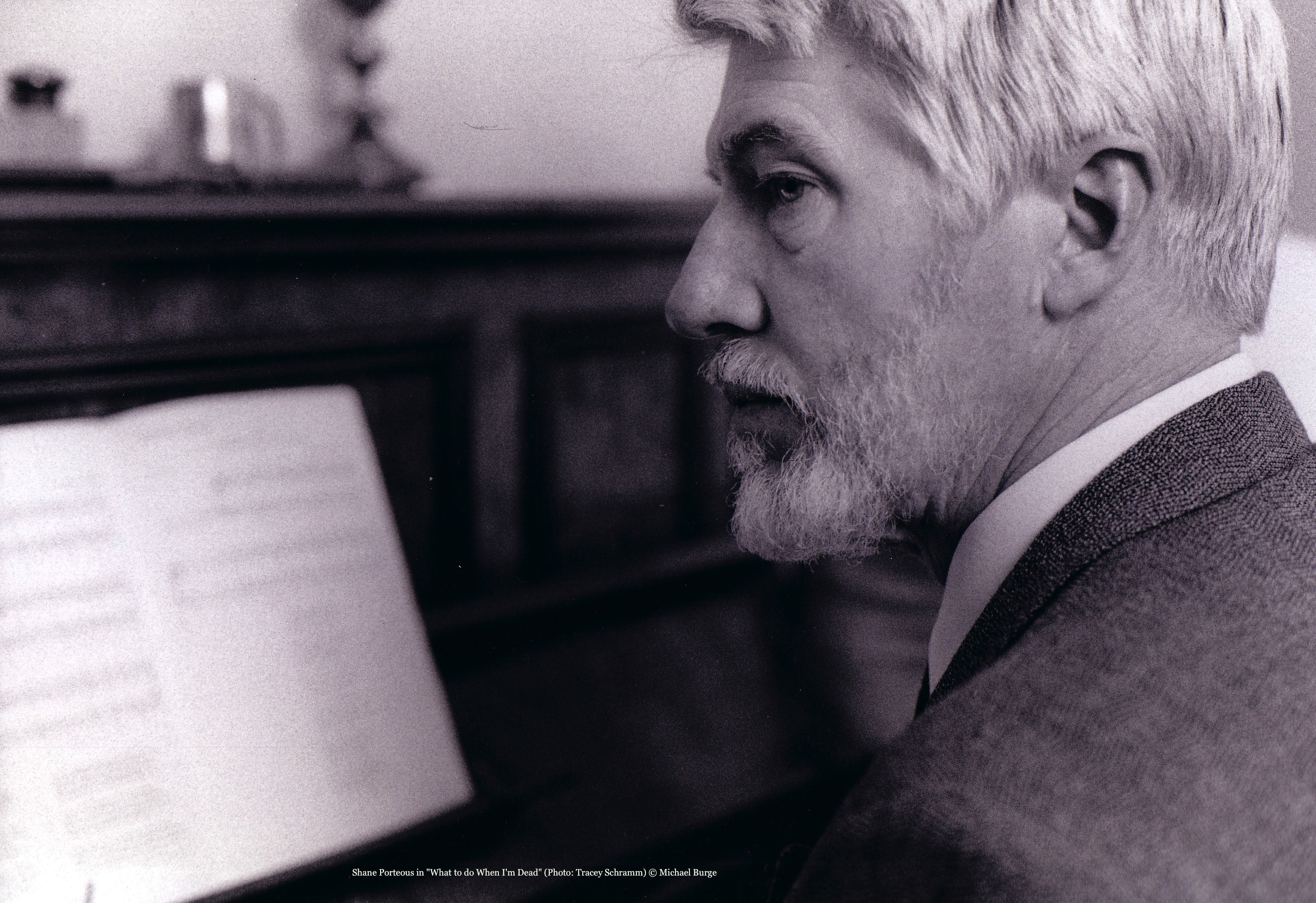
LOCAL SUPPORT Shane Porteous in What to do When I'm Dead (Photo: Tracey Schramm).
LOCAL SUPPORT Shane Porteous in What to do When I’m Dead (Photo: Tracey Schramm).

A Writer gets a screenplay produced, finally.

AFTER a few failed attempts to secure funding in Australia with original screenplays, I decided to wait no more and go into production on a short feature of my own.

Like all aspiring filmmakers, I craved experience, which meant getting something in the can without any financial backing whatsoever, and keeping the costs way down.

I have always looked upon such circumstances as a creative challenge, and came up with a concept which I could produce within the resources I had at my fingertips living in the town of Katoomba in the Blue Mountains.

With the support of skilled friends, family, and a smattering of recruited professionals, What to do When I’m Dead was shot over four very long days in November 1999.

The low budget meant using the relatively new medium of digital video, and we pushed this medium … in hindsight a little too much. But atmosphere was what I was after, and it’s what I got.

Our acting team was nothing short of miraculous. I wrote the central role of ‘Jane’ for friend and established actor Jennifer Kent. Always encouraging local writers, Mountains-based television icon Shane Porteous agreed to play ‘Paul’ after a read of an early draft.

Josh Quong Tart’s agent suggested he get some screen experience by taking on the role of ‘Matthew’, and we were extremely lucky to have Celia Ireland play the small role of ‘Anne-Marie’, a real estate agent who drops-in with comic results.

Most of the crew, myself included, were rather more emergent – our sound recordist Michelle Irwin was the most experienced amongst us, and she respectfully kept things on track, with the guidance of my friend Judy Keogh, an experienced stage manager who came up from Melbourne to line produce for me.

Filming took place in my home, which at the time I shared with a friend, who let us take over her bedroom for four days and have people pretend to be a dead body in her bed. An emerging writer at the time, Eden bravely wrote an article to promote the premiere screening of the finished film. Her first draft was a bit tame, so I encouraged her to write the awful truth. Her second try was so sharply-observed and hilarious that the local newspaper published it word-for-word.

When the finished result was ready, I managed to get access to two venues for charity screenings – the Scenic Cinema at Katoomba’s Scenic World, and the bistro at the Dendy Cinema in Sydney.

Keen to repay the community which had sent me off to England to learn filmmaking, I donated all the proceeds from these events to the Blue Mountains Palliative Support Network, a local group supporting people to die in their own homes.

At thirty minutes long, What to do When I’m Dead was classed as a short feature, not a short film, and therefore difficult to place in most film festivals. Nevertheless, it was selected to screen at the 2000 Watch My Shorts festival in Melbourne.

A further screening was offered at a palliative care conference at Leura’s Fairmont Resort, where the projection facilities gave the film its best ever technical conditions. Picture, sound and everything else came together so beautifully that day, with a non-media-industry crowd of quite a few hundred conference attendees.

SIBLING RIVALRY Jennifer Kent and Josh Quong Tart in What to do When I'm Dead (Photo: Tracey Schramm).
SIBLING RIVALRY Jennifer Kent and Josh Quong Tart in What to do When I’m Dead (Photo: Tracey Schramm).

Subsequently, What to do When I’m Dead was offered distribution on video by Healthcliff Distribution, through which it found an unexpected audience – healthcare staff seeking insights into the issues faced by families who choose to have their loved ones die in the home.

My film was very simple in the storytelling sense, but I am pleased to reflect that I was heading in the right direction with my screenplay, a distillation of my own experiences immediately after the death of my mother seven years prior.

What I tried to articulate was the difficult relationship between two siblings in the wake of tragedy, and the small yet courageous ways they find to reach out to one another, with the help, both intentional and inadvertent, from others. I had a clear protagonist and antagonist, who ‘did battle’, a climax that was a bit weaker than it should have been, and a dénouement which I remain quite proud of.

The errors I made with video capture could have been made into wins had I gone for a ‘video capture look’, as many other filmmakers were doing at the time. We achieved this only in parts of the finished film.

What to do When I’m Dead polarised viewers. Perhaps it’s one measure of success that this small, ambitious film full of flaws had praise heaped on it by some (an agent was so impressed by digital video that she wanted to know more), and also got its share of critical dumpings (my flatmate’s mother said she could have done a better job).

But the sound recordist said she’d work with me again. There can be no greater compliment from someone who really knows what they’re doing.

I kept a realistic head in the wake of What to do When I’m Dead, and, encouraged by the experience I’d been given by my generous collaborators, I just kept on writing despite the critics.

© Michael Burge, all rights reserved.

Writing my way out of the closet

GAY MESSIAH Graham Chapman in Monty Python's The Life of Brian.
GAY MESSIAH Graham Chapman

A Writer finally comes out.

THE late, great Monty Python comedian Graham Chapman was the inspiration for my coming out.

In the year that homosexuality was decriminalised in the UK, he famously hosted a party for all his friends, introduced them to his male partner, then got on with his life.

The news didn’t reach our small town until long after my homophobic brother and his poofter-hating mates had come to revere Chapman and his cohorts as the best thing on their TV screens, but it was a great affirmation for me to discover that the Python’s camp humour had its roots in a living, breathing homosexual.

I wanted to find a similar way to tell everyone myself and thought seriously about hosting a coming out party at my very first house in the town of Katoomba in the Blue Mountains. But it became apparent very quickly that there was no way I’d get everyone I knew and loved in the same place at the same time – they had far too many ‘issues’.

A few very close friends, and my sister Jen, already knew. I’d told them in person after going through much angst.

I have always been much better at expressing myself in writing than any other form of communication anyway, so I embarked on writing to everyone in my life. Not just a few people, but everyone – I drew no line in the sand for my sake, or theirs.

The first step was to find a beautiful book of postcards, and I was attracted to a lovely set by Asian master print-makers. I took my time and wrote that I had come to terms with my sexuality, sharing the good news that this had given me a much-needed dose of personal happiness.

When the writing task was complete, I determined that I’d walk to the local post office, buy enough stamps for well over 100 postcards, and simply post my future out to the world.

It proved to be one of the longest walks in my life.

Katoomba is a very small community, and as luck would have it I met many people I knew along the way, some of them what I’ll call ‘Difficult Cases’ – people for whom my postcard news was going to come as something of a challenge.

I endured their meaningless chit-chat, and just internalised my resolve to keep going to the post box, through which I was convinced freedom from the closet was only days away.

The first phone call came from my cousin, whose instant, unquestioning support spoke volumes of acceptance. Great start.

Two family friends turned up. Over cups of tea this support lessened a little when the inevitable “I already knew” crept into the conversation.

If they already knew, why hadn’t they had enough courage to be inclusive when they’d asked, quite regularly, did I “have a girlfriend?” by adding just three words to that question, “or a boyfriend?”

REACHING OUT Coming to terms with sexuality is an internal journey.
REACHING OUT Coming to terms with sexuality is a journey out of oneself

Stony silence stretched out in many cases to more than a week, followed by stilted phone conversations in which people forced themselves to utter what they thought they should say.

Some Difficult Cases needed a little encouragement, so I went to see them. One crossed the street when he saw me. One broached the subject with a weird question: “Why do all lesbians hate men?” as though I’d know the answer even if such an ignorant assertion were remotely true. One looked startled when I passed her at the supermarket, her face not altering as I smiled, made eye contact, said “hello,” and kept going, since obviously she had a problem.

One assumed my postcard was a suicide letter. Another misread the words “I am gay,” thinking I’d written “I am angry”. What can you do?

“I am gay too,” was an interesting response, from the married father of two. That was out of the blue!

But it wasn’t all bad or weird: “Got your lovely postcard,” said dear Sal, mentor, friend, superwoman and strong out lesbian who’d long inspired me.

And the phone call from my grandmother, who said that she would help me find a cure, because: “They can fix all kinds of things these days, you know”.

“But I’m not sick grandma, I don’t need a cure,” I replied.

“Oh thank goodness,” she said, quick as a flash, her total belief in the way I felt about myself eclipsed generations of people in her wake.

At her 90th birthday a few months later, she raised her arms in delight when I arrived, enfolded me in a hug as the shouted: “You are so special!” so loudly that it echoed off the ranks of Difficult Cases in the family, standing in maudlin, silent rows. Priceless, unconditional acceptance.

With all the consummate skill of a country woman Grandma had hand-made clothes for my dolls when I was a toddler. She never questioned my behavior, or shamed me, she just joined in the fun and made a safe place for a young gay boy to play.

The overwhelming majority of my postcard’s recipients I never heard from again – close family friends, people I grew up with, people who were welcome in our home and accepted by our family in the face of their own ‘scandals’, people who had cried on my shoulder when I shared the intimate details about our mother, their friend, as she died. People who should have known a lot better by the accepting example that she set.

Some Difficult Cases hung in there for a while, but fell away in the wake of me manifesting my first gay relationship. For many people it’s okay if you’re gay and single (and lonely!) but bringing a partner into their home creates a challenge of “What do we tell the neighbours?” proportions, poor things.

For someone who was sent-off from his community with a mass of support, I certainly came home to a resounding rejection.

But growing up in that community had taught me to help others, so it was with a great sense of validation that I later heard about another coming out.

“I’ve done a Mike,” one young gay family friend said to his loved ones as he got real a few years after I did, at a much earlier stage in his life.

That was all I needed to hear that I’d done exactly the right thing, the Difficult Cases be damned.

To anyone who is closeted, my best advice is to love whoever you want. If anyone has the guts to ask you what your sexual orientation is, reward their courage by telling them your truth. Forget coming-out – it’s just society’s outmoded and unnecessarily pressure-filled way of working out who is ‘normal’ and who is (to quote The Life of Brian) a “very naughty boy”.

© Michael Burge, all rights reserved.

The tale of a legend

STONE SISTERS The Three Sisters rock formation abive the Jamison Valley, Echo Point, Katoomba, Blue Mountains, Australia (Photo: JJ Harrison).
STONE SISTERS The Three Sisters rock formation above the Jamison Valley, Echo Point, Katoomba, Blue Mountains (Photo: JJ Harrison).

A short look at a tall story

WHEN I arrived back in Australia after living in the UK for most of the 1990s, I was attracted back to the region where I did most of my growing up – The Blue Mountains, a World Heritage wilderness only 100 kilometres west of Sydney.

I eventually settled there and fell in love with the place all over again, embarking on a research and writing cycle that would continue for the next twelve years.

This all began with the news that the region’s ‘original’ story, the so-called ‘Legend of the Three Sisters‘, which had been taught to generations of Australian children as a genuine Aboriginal myth (and sold to millions of international tourists), had in fact been made up by a non-Aboriginal man.

I was eventually given the opportunity to publish a feature article on this subject in the December-January 2011 edition of Blue Mountains Life Magazine (Vintage Press).

Aboriginal and Torres Strait Islander readers are warned that the following article contains images and references to deceased persons.

Legends, Interrupted

How the Aboriginal legend of the Three Sisters trumped a tall story

Across the Mountains of the late 1970s wonders were common – a witch’s shadowy profile cast across rocks, colourful mountains devil ornaments, and a train ride straight down a cliff. My young imagination also lapped up a legend told on postcards, tea towels, a fountain, and an illustrated book.

The legend told of three Aboriginal sisters who disturbed a bunyip in the valley and were saved by their father who turned them into stone using a magic bone. He transformed himself into a lyrebird to escape, but in doing so lost the bone, leaving him to search the undergrowth (as lyrebirds do) so that one day he might find it and turn them all back into human form.

This story held more intrigue for me than explorer’s achievements, which were taught with a sense of pride at school. But there was a silence on local Aboriginal heritage, and I grew to assume there was little to know about the tribe in the Three Sisters legend.

Fifteen years later I attended a reconciliation meeting and met Gundungurra and Darug people mobilising to work on Native Title claims. Around that time a story hit the local media that the Aboriginal legend of the three sisters was created by a non-Aboriginal man. In the fallout, even that claim turned-out to be untrue – the first fake was actually written by a caucasian schoolgirl with a rather apt surname – Patricia Stone.

SIXTIES SISTERS Lyall Randolph's water sculpture of the Three Sisters graced the entrance of the Scenoc Railway from the 1960s to the 2000s (Photo: Tim Driver).
SIXTIES SISTERS Lyall Randolph’s water sculpture of the Three Sisters (Photo: Tim Driver).

“None of that was a revelation to Gundungurra people around here,” Gundungurra Elder Sharyn Halls says at Echo Point this year. “We always knew what the tourists were told was a made-up story. Many of us thought it was quite funny what visitors were willing to believe.”

The day is just dawning and already flocks of tourists are arriving to take in the panoramic view which is one of the Blue Mountains’ biggest drawcards.

“My father Lenny McNally used to stand me and my siblings here and tell us the stories about the land all around,” Sharyn says, sweeping her arms from east to west. “The story of this place is much, much more than the Three Sisters, from here you can see all the waterways and pathways of our traditional land.”

Sharyn grew up in Bankstown, but spent weekends and holidays in the Blue Mountains. “We’d go camping out to the Megalong Valley with Dad and our immediate and extended families. After a while we realised we were only being taken to places that were important, we were being shown our country. During those trips I learnt how to catch and gather food, and other skills to do with family life, from my Nana Lindsay.

LOCAL KNOWLEDGE Gundungurra Elder Sharryn Halls.
LOCAL KNOWLEDGE Gundungurra Elder Sharyn Halls.

“Dad liked to travel, to the Southern Highlands and out to Jenolan. He was a jockey and he’d round-up the wild brumbies from the valleys. In the Megalong he’d break them in, then muster them into Camden for sale.

“He knew the best way to get there through the mountains – he’d been taken out there with the old men who still spoke traditionally, and they knew the routes between all these places. But Dad wasn’t taught his language, only bits and pieces. Unfortunately he and his generation had to change to survive.”

Survival for Gundungurra people meant making difficult decisions when forced to leave their country.

“People ended up in Katoomba in a place they already knew and used called The Gully,” Sharyn relates. “They made a conscious decision to come, because there were resources here, and they could avoid the mission system. If you ended up in a mission you were only encouraged to settle down. The movement of Aboriginal people was restricted right into the 20th century.”

Gundungurra man Ron Fletcher recalls: “Our family lived for two periods in The Gully in about 1940 and 1949. Everyone got on really well down there because we were all battlers”.

“Our Aunty May and Uncle George Hannah, and Uncle Jack Brooks were still living in The Gully when they built the Catalina Racetrack,” Ron recalls of devastating events in 1957, when Gully residents’ homes and community were demolished to make way for a commercial racing development.

“It wasn’t until 1988, when they put up a memorial at the old Megalong cemetery, that my sister Dawn was reminded that our great grandparents were buried down there. That got her curious about our Aboriginal heritage. Dawn was never a backwards kind of person,” Ron smiles. “She felt very strongly about that side of her, and many people with Aboriginal blood were starting to take notice of how things were changing.”

Dawn Colless (1932-2003) became ‘Aunty Dawn’, elder of the Katoomba Clan of the Gundungurra at a time when local indigenous people began reclaiming their place in the Blue Mountains. One point of focus was The Gully, where the Catalina racetrack had long since fallen into disrepair.

An excellent speaker heard by many giving Welcomes to Country, Aunty Dawn told anyone who would listen about the significance of Gundungurra places and sacred sites. She was also the keeper of a secret she’d been entrusted with as a girl by her mother and grandmother – a legend about the Three Sisters.

“Our Aboriginal family had to be very careful when telling us about the old ways – they were frightened we would be taken away,” Dawn’s brother recalls. “I can remember the inspectors coming to our house twice,” Ron smiles, “I think when they saw we all looked well-fed, that we were being looked after”.

“Not many people realised how ill Dawn was in her last years,” Ron remembers. “She was determined to do what she could in the time she had left. Not long before she died, she agreed to meet some visiting indigenous women. They told her the Three Sisters were linked to the Seven Sisters, and a sacred site as important as Uluru.”

In 2002 Dawn told what she knew of the legend of her mothers to the Gundungurra Native Title hearing. Local authorities began to consult with Gundungurra people about public versions of the legend of the Three Sisters. The Gully, or ‘Garguree’, was proclaimed an Aboriginal place in the same year.

Sharyn Halls is adamant that: “It’s about time the traditional people of The Blue Mountains take a leading role in tourism here, to get out there and understand their country, to be independent, not reliant.”

“So much information about our stories has been lost because we didn’t really have anyone to ask,” Ron says. “We are the last to remember our Aboriginal side. It was always in me, but I was very reluctant at first. Dawn was so passionate about Aboriginal affairs that she inspired me.

GULLY GUIDE Gundungurra Elder Ron Fletcher showing local dignitaries the entrance to Guragaree, 'The Gully', Katoomba.
GULLY GUIDE Gundungurra Elder Ron Fletcher.

“Sometime I go to The Gully to interpret it for visitors as part of the Reconnecting to Country project, with some of the other Gully elders. I’ve been on trips down to the Burragorang, and it makes you feel strong, and you feel they’re walking with you, your family who have been there long before you.”

Today, many tourist destinations in the Blue Mountains assiduously avoid interpreting the Three Sister story at all, but a public version of the Gundungurra legend is available. What’s interesting to note is the inclusion of Patricia Stone’s names for the sister – Gunnedoo, Wimlah and Meenhi – the result of a variety of spellings over the years.

“Because of what happened to Gundungurra people, the continuity of our stories was broken. Our stories were diluted with other stories. The structure is there, but it’s in a different form,” Sharyn Halls outlines. “The important thing is that you don’t interpret someone else’s story on their behalf, you only tell your own. Patricia Stone’s story is one version, many people don’t really care it got told so much”.

“The legend of the Three Sisters is just basic practical education for youngsters not to stray from the safety of their home. It’s a thread that runs through all the versions I know of,” Sharyn explains. “Some of the names are a bit strange,” she laughs, “but nevertheless people have used them. I believe one hundred percent that’s what the legend is.”

© Michael Burge, all rights reserved.

Secret Means Business

TALE FOR SALE Victor Barnes' 1972 Golden Book.
TALE FOR SALE Victor Barnes’ 1972 Golden Book.

Milestones in the commercialisation of the fake Aboriginal Legend of the Three Sisters.

1931 The Sydney Morning Herald publishes ‘The Three Sisters’ by Patricia Stone (who visited Katoomba c.1925). The names ‘Wimalah’, ‘Meeni’ and ‘Gunedoo’ first appear in print. The sisters are giants turned to stone by Yooma (a tribal wizard) to protect them from a neighbouring tribe during a battle.

1949 Outdoors and Fishing Magazine publishes ‘Legends of the Mountains’ by naturalist Charles Melbourne (‘Mel’) Ward (1903-1966), who moved to the Mountains in 1943. Patricia Stone’s version is used uncredited in reworded form, including her names for the sisters.

TALE TELLER Naturalist Charles Melbourne ('Mel') Ward was resposible for disseminating the fake legend of Katoomba's Three Sisters.
TALE TELLER Naturalist Charles Melbourne (‘Mel’) Ward.

1950’s Mel Ward distributes Legends of the Mountains from his museum in the grounds of the Hydro Majestic hotel in Medlow Bath, claiming to have been told the legend by Aboriginal people.

1967 Bondi Mermaid sculptor Lyall Randolph’s Three Sisters fountain is installed at The Scenic Railway, telling a variation of Stone’s legend with coin-operated narration punctuated by water spouts. The money is donated to charity.

1972 Golden Books publishes The Legend of the Three Sisters by Victor Barnes, a new illustrated version of the transformation of the three sisters into stone by their father to save them from a bunyip.

1997 The Blue Mountains Gazette published ‘The Three Sisters story Untrue?’ in which linguist Charles Illert proposes: “The story behind Katoomba’s Three Sisters may be a myth created by white men with large imaginations.”

2000s A new (as yet incomplete) sculpture by Terrance Plowright replaces Lyall Randolph’s at Scenic World (formerly The Scenic Railway) in Katoomba.

2013 Various non-Aboriginal versions of The Three Sisters legend still disseminated in written form to Blue Mountains tourists.

ROYAL INTERPRETATION The Duke and Duchess of Cambridge with Anthea Hammon and Randall Walker at Echo Point.
ROYAL INTERPRETATION The Duke and Duchess of Cambridge at Echo Point.

2014 During the 10-minute visit of the Duke and Duchess of Cambridge to Echo Point, local business identities Randall Walker (interim CEO of Blue Mountains Lithgow and Oberon Tourism) and Anthea Hammon (joint managing director of Scenic World) interpret the Jamison Valley for the royal couple.

Gundungurra and Darug elders and tourism representatives meet the Duke and Duchess but are not visibly seen to interpret their traditional lands for the visitors.

(Source and further reading: ‘Aboriginal Legends of the Blue Mountains’ by Jim Smith, Den Fenella Press, 2003).

This article appears in Michael’s eBook Creating Waves: Critical takes on culture and politics.