Category Archives: My Story

Jonathan Rosten – spirited dancer

DANCER Jonathan Rosten rehearsing for Song and Dance (Photo: Branco Gaica).
LANGUAGE OF DANCE Jonathan Rosten (Photo: Branco Gaica).

Jonathan Rosten (1960-2004).

JONATHAN Rosten knew how to dance – it was the language he expressed himself best in. His dance career included some magnificent highlights – solo parts for The Australian Ballet Company, and roles in Andrew Lloyd Webber’s Song and Dance (Cameron Mackintosh) and An Evening (Sydney Dance Company).

Jono also made his mark in commercial dance, from variety television appearances, to iconic dance-based commercials, and his various spots in the opening of the NSW Royal Bicentennial Concert.

After 20 years as a dancer, Jono began a new career path when he found himself writing, directing and choreographing his first show – A Really Off Off Broadway Show. Jono’s program notes for this end-of-year student performance at Jester’s Acting School in 1986 describe himself as, “One who has been thrust into directing and is better equipped to handle toasted cheese sandwiches.”

Just why he made this move seemed to be a combination of things – too many hours spent bitching about the quality of productions on offer at the time; a desire to turn his burgeoning ideas into reality, and seeing a now renowned production of an entire musical in a garage in North Sydney, which inspired Jono with it’s ‘Let’s Just Do It’ approach to entertainment.

Once this door was open, Jono spent the next ten years in a showbiz no-man’s-land, taking dance work where it paid well in order to finance his writing. Moving from mainstream to independent theatre also saw him work with and be inspired by some early mavericks, including choreographer John O’Connell on Mr Cha Cha Says Dance.

An early unproduced work he created was And Then God Created Showbiz! beginning a tradition of exclamation marks in his show titles. This was a comic exploration of the history of showbiz in a biblical and new age context. Ideas for numbers included The Ten Commandments in the style of The Ziegfeld Follies; a Fonteyn and Nureyev duet with a wheelchair-bound Fonteyn, and a climactic Xanadu-inspired number with Jesus on roller-skates.

Suffice to say the humour was subversive. The vaudevillian line-up of showgirls, drag-queens, biblical characters and historical showbiz luminaries would have made this show highly expensive and a copyright nightmare.

For Jono, it was a fantastic experiment he worked on for a decade, a place where all that seemed ‘unacceptable’ in his world (homosexuality, cross-dressing and new-age spirituality) could be placed centre-stage. These were recurring themes in all his work, taken from his own life journey and stories he’d encountered along the way.

It took another ten years before Jono found someone out there like him. At the end of a trip across America, in which he took-in the heights of Broadway, Jono happened upon a small theatre company in Los Angeles holding a retrospective of the collected works of Justin Tanner, a self-made theatre man who created shows like Zombies Attack and Pot Mom. He went to see a new work every night of his stay in LA, and the impression it left on him lasted for the rest of his life.
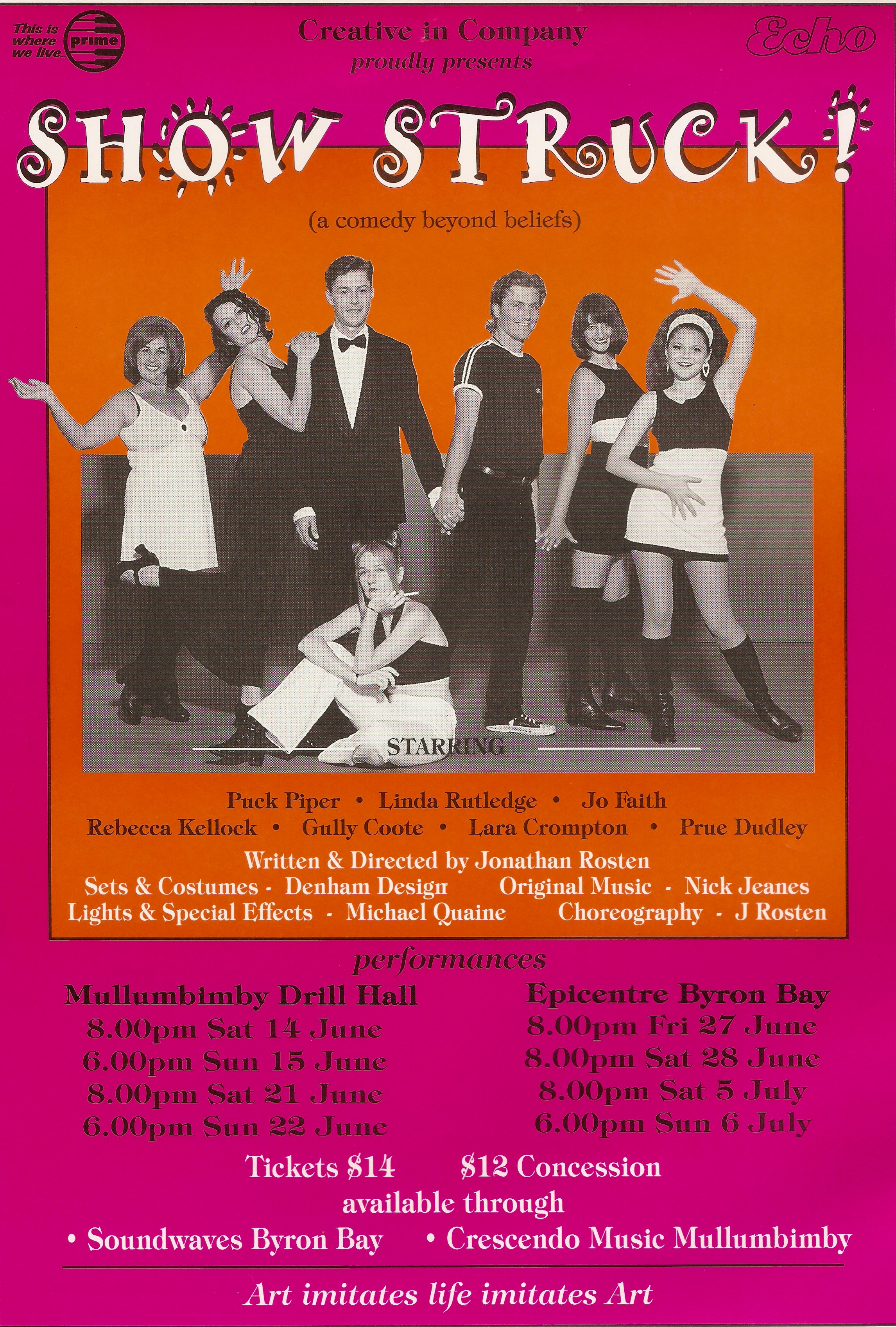
SHOWSTRUCK

He knew he had no time to waste. He knew he could be to Australia what Tanner was for Tinseltown, and shelved a host of stymied and incomplete works, including And Then God Created Showbiz! to embark on an entirely new piece called Show Struck!

Produced in the Northern Rivers area by Jono’s fledging theatre company Creative in Company, this new show was popular with audiences and was well-reviewed.

Jono created a show where the vaudevillian and alternative concepts were well within the context of a strong plot – one man’s journey through contemporary Australian show business, his desire to integrate spiritually in a spiritual vacuum, and to express his sexuality as a gay man. He wrote the show’s lyrics and produced, directed, choreographed and also acted in the show when one of the cast was injured.

Tired of endless touring to regional RSL’s, Daniel, the hero of Show Struck! is in creative limbo with his friend, mentor and bete-noire, Sherri, a showbiz survivor who has nurtured Daniel creatively and spiritually but will not let him flourish in the face of her own failures.

His journey takes him from also feeling like a failure in life, career and love to a state of limitless potential, having exorcised his demons – Sherri, his agent, and creative and sexual guilt within himself. Comically and beautifully, this journey is made in the form of an original show within a show.

One of Jono’s favourite real-life showbiz characters was Ed Wood of Plan 9 From Outer Space and Glen or Glenda fame. In the same spirit of this Hollywood maverick, Jono had big dreams to realise.

LOST SOULS The Lost Brother, Bondi Ballet, 2002.

He left Byron Bay for the Blue Mountains in 1999 and found himself in a new creative community where he quickly made his presence felt.

He began working with other maverick producers, like Out of the Blue, a community theatre group who through sheer hard work and self-belief staged the electrifying Australian Premiere of The Who’s Rock Opera Tommy at Parramatta Riverside Theatres in 2003, choreographed by Jono. Bondi Ballet gave Jono the chance to write and choreograph Lost Brother in 2002, a highly personal dance-multimedia work about the drowning death of his older brother Peter.

His dream now was to live close to the city and take original shows into Sydney after out-of-town tryouts in Katoomba. The Clarendon Dinner Theatre was the perfect venue for this plan, having birthed many successful productions over the years, and Jono approached the venue with a new show She Males from Outer Space!

Like all Jono’s shows, She Males was purposely derivative. He dubbed it ‘Scooby Doo meets Plan Nine from Outer Space’. A gang of kids lost in the Australian bush encounter two strangely attired women who look like they’re from a science fiction movie, but claim to be collecting minerals at midnight. Before the kids know it they’re trapped in an intergalactic breeding program when one of them – Anne, a devout Brethren girl – is kidnapped. The gang must get her back and face their own shortcomings and lack of acceptance in the process.
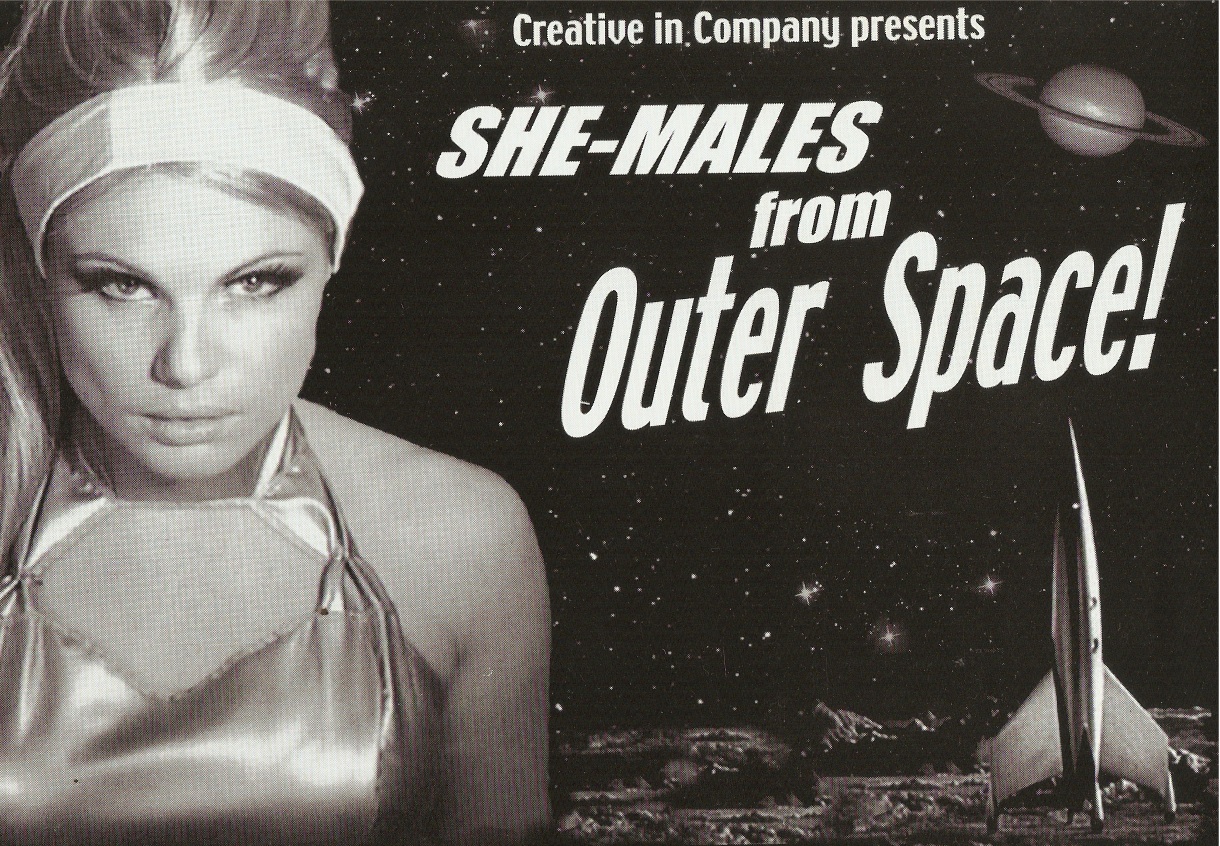
SHE MALES

This show made it to Sydney in February 2004 as part of the Mardi Gras Cultural Festival, and had a four-week season at The Edge Theatre in Newtown.

Jono injected this classic story of opposites with some of his best choreography. There were cheerleading sequences, mesmerising alien dance-moves and a continual comic through-line involving movement and lines inspired by old movies and television.

Deep in the plot was another of Jono’s appeals for acceptance when the hermaphrodite alien she-males explain to the younger gang that they are, “Perfectly balanced in our male and female parts,” a beautiful piece of writing which challenges the gang (and us) to accept themselves, each other, and ultimately Anne’s alien she-male baby who was born during the curtain call.

Jono had succeeded in a long-held ambition to carry a weighty political message with a light comic touch, and reviewers and audiences responded. He had also discovered where his greatest talent lay – in storytelling using movement, dance and comic juxtaposition.

The Clarendon immediately asked for another show and Jono responded with his last unproduced show Double Identity (strangely there was no exclamation mark in this one). This show was again highly derivative, taking the film noir world and turning it on its head.

Inspired by audience reactions to the comic dance and movement styles in She Males, Jono created a series of dance/movement numbers and then built a plot around these. He also planned to return to the stage in a number of small crazy parts, including Frank the club owner who cross-dresses.

To date this show has had one performance only, two days before Jono died suddenly in rehearsal. Harking back to the garage-show in the 1980s, this performance was in the studio at the back of our home. I was the only member of the audience and the young leads – Nathan Roberts and Ines Vas De Sousa, were obviously going to be fantastic in the run. Jono was in there too – I had rarely seen him perform, and he sparkled with a glint in his eye, even when things went wrong and they had to do numbers from the top.

The man who started out as Buckingham in The Australian Ballet’s Three Musketeers, who danced for the Prince and Princess of Wales at Australia’s Bicentenary, who was The Milka Boy in the Swiss Alps with purple cows, was now integrating again in his newest incarnation as a singer-dancer-actor-writer-choreographer-director-producer.

Little did he or we know that the integration was so complete that only 48 hours later he would make the ultimate transition into death.
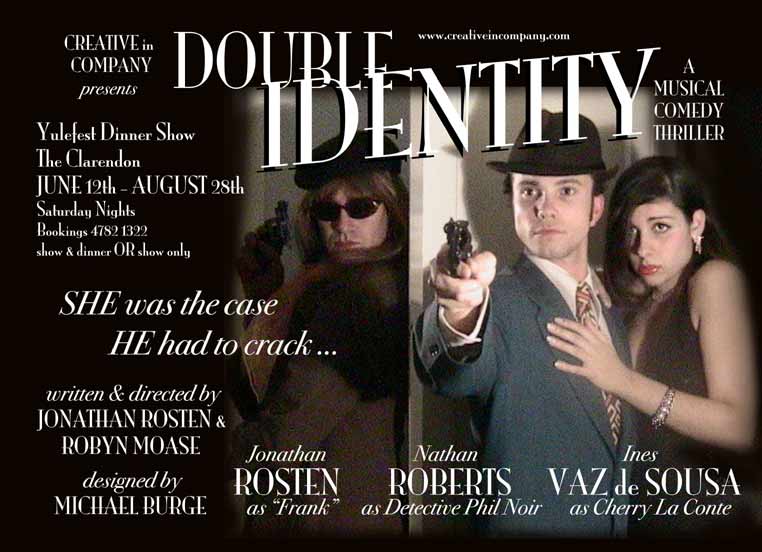
POSTER_email

Double Identity did not have its three-month season at The Clarendon.

I can imagine Jono changing the name of this production to The Show Must Not Go On! (and scoring an exclamation!) because showbiz seems all too superficial without him.

Reality of his absence has kicked-in and Creative in Company has dissipated with the understandable shock.

The irony is that while his company was called ‘Creative in Company’ it really was just Jono instigating the work and driving it forwards, like Daniel in Show Struck!, helped and supported by a lot of talented people, but it was always Jono driving the bus.

“Don’t worry about being famous,” was one of the last things he ever said to me, in a way which told me he had once cared about fame, but had certainly let go of it and become much happier as a result.

I knew then why I loved him so much, and will never forget my years in the presence of this cheeky showbiz original who achieved his life’s ambition to understand himself, well out of the spotlight.

For this I am sure he would be happy to be remembered in the AussieTheatre.com Hall of Fame.

Published by AussieTheatre.com in 2004.

On the Board at Fox Studios

Hi res Fox Colour_0How a Writer’s op-shop jacket got him cast in a commercial.

Towards the end of my acting training my class appeared in The Legend of King O’Malley by Bob Ellis and Michael Boddy. In preparation for the title role, I scoured the local op-shops for weeks in search of my costume.

Having been an inveterate op-shopper for years, I knew the chances of finding anything my size were slim, so when I discovered a light green plaid jacket, the sleeves of which covered my long arms right to my knuckles, I rushed to pay the hefty $5.

But hey, I had an outfit that didn’t pinch me in the shoulders or make me look like Frankenstein, wrists exposed from cuffs halfway up my forearms. I felt able to play the man (“The King”) who had such an impact on the formation of modern Australia.

About a fortnight after the show, I was rehearsing for a production of The Popular Mechanicals by Keith Robinson, Tony Taylor and William Shakespeare, at Penrith’s Q-Theatre, when I got a call from the only agent I’ve ever had (who recruited models and actors through letterbox drops), asking me to attend a casting session for a car commercial at Fox Studios in Sydney. “Dress corporate,” she said.

My only smart jacket was King O’Malley’s. Matched with a business shirt (I had to fork out another $2), I looked about as corporate I was ever going to get, and plonked myself down in the casting office waiting room, surrounded by people in black and grey.

We were seen in groups, seated in a mock boardroom complete with a whiteboard, and launched into a board meeting improvisation. I was asked to stand and play the boss, whiteboard marker in hand.

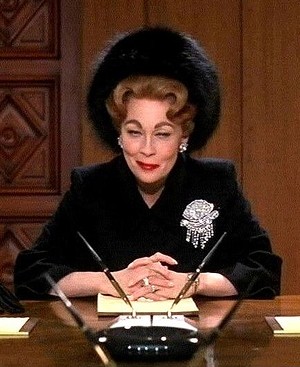
BOARDROOM BITCH Faye Dunaway as Joan Crawford in Mommie Dearest.

Having spent months in theatre training, I was used to playing to the car park, so I was drawn to channel Faye Dunaway playing Joan Crawford in the Pepsi Cola scene in Mommie Dearest, (“Don’t f#%k with me fellas!”), and launched into sacking the whole lot of my motley staffers.

A note from the big wigs in the shadows, behind the camera, asked me to “Do it again, but tone it down.”

So I changed gears, made it quieter, colder, figuring they might be framing my head and shoulders. My fellow actors looked back at me with fear. Before I knew whether they were acting or not, we were shuffled out.

At the callback we had to imagine, on cue, a wonderful new car driving past our meeting, which was so innovative and attractive that it stopped us, and all our corporate musings, in shock. The result was several rounds of dreadful face pulling, and a bit of inappropriate chuckling.

But I got the gig!

Marched before the director at the costume fitting, “The Board” all looked at me when he asked “Where’s your green jacket?”.

“At home,” I muttered, feeling like I’d worn the wrong gear to sports class. “Can you bring it to the shoot? Can he bring it to the shoot?” he asked, not allowing me to say anything to the first part of his question. The costume designer looked at me with daggers in her eyes, nodded, and marched us out.

There was me thinking it was my well-honed acting skills which got me the job!

On the day, “The Board” waited in a bland green room at Fox Studios, where we worked out very quickly that only one of us could be defined as a “proper” actor – the NIDA graduate cast in the role of “The Boss”. The rest of us were ring-ins, really – a film festival producer, an accountant, an ad sales-rep – all earning far more in one day than we’d ever get in our day jobs.

If we made the final cut, that is. Word got around the set that the director was speculating on too many scenes for his Asian-screened commercial, and if we got cut we might get nothing.

No-one said it, but everyone on “The Board” thought “Don’t f#%k this up, people”.

We were fetched by a man with five mobile phones on his belt, seated in front of a blue screen with a small black track across it, given two quick rehearsals to aid in focussing on the fluorescent taped mark as it sped by (indicating where the “car” would be keyed-in by the editors) and then we were on.

I was seated with my back to the “car”. After the first take, they asked us to take our cue from the NIDA graduate, who was to take his from the director. We were all to be amazed by the “car” at different moments.

After a few more takes, a message came through to the NIDA graduate that he needed to do his turn, his “discovery” of the “car”, “less Broadway, please”. Everyone chuckled, because he had, actually, been having far too much fun with it.

A few more takes later, I shoved some papers off the table, on purpose. “Upstager!” I imagined the NIDA graduate say under his breath. But they liked it, “Keep the papers falling, please.”

A few takes later, they asked for me to take my green jacket off and put in behind me on the chair and roll up my shirt sleeves. No problem, it was getting warm anyway.

Then things started to go a little awry. The NIDA graduate was turning early, which put us all off. The message came through to “Stick to the cue, please”.

Bemused, sweat trickling down his temples, the NIDA graduate looked as though he really was earning his extra dollars for being slightly more featured in this commercial than us ring-ins. While they reset the marker, he leant across to me and whispered: “What’s my cue again?”

“When the director says ‘action’,” I whispered, as reassuringly as I could.

A few more takes later and it was all over. “The Board” was marched off the set to loud applause from the clients, clustered around a mock living room at the edge of the sound stage.

THE BORED MEMBERS Corporate grey is good, but green is better.
BORED MEMBERS Corporate grey is good, but green is better.

“When do you think we’ll get paid?” one of “The Board” asked back in the green room. “Don’t be so cynical,” the guy with five mobile phones said, calling-in the two models cast in the scene where the secretary gets ravished on the photocopier by some random office guy, after seeing the “car”, or course.

We cynical non-actors laughed, exchanged business cards, raided the fabulous leftover catering, and departed.

I drove back to Penrith for the technical rehearsal of The Popular Mechanicals, which was to open in only a few days. After all the blood, sweat and tears that goes into putting anything onto the stage, we played to some houses comprising fewer people, showing less enthusiasm, than the ad execs after “The Board’s” gripping performance at Fox Studios.

And we got paid nix. Welcome to Showbusiness, Mike.

I kept the green jacket for a few more years, but ditched in a hurried move, and I have never acted since I gave it up. Maybe it was my Good Luck Jacket?

© Michael Burge, all rights reserved.

Gambling on Madame Melville

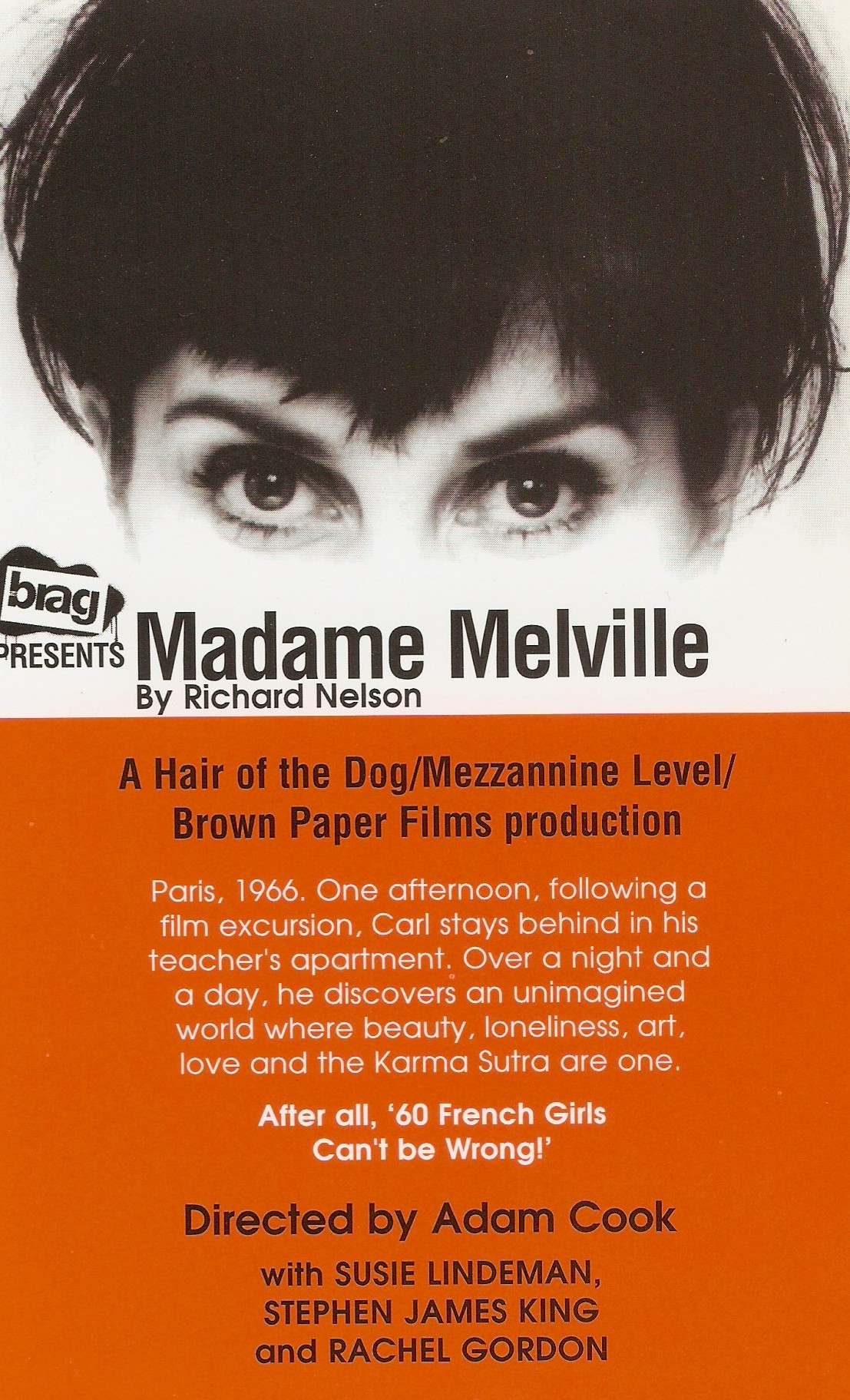
MAGIC MADAME Stephen James King and Susie Lindeman in the Australian premiere of Madame Melville.

A Writer learns the cost of casting.

HAVING started out in the Australian theatre scene as a designer, and reinvented myself in England as just about everything else – director, writer, producer – I eventually re-trained as an actor on Sydney’s fringe, made a splash in a couple of college shows, and then spent a year totally unemployed in that field apart from a stint in a car commercial. Probably an average result, in hindsight.

My big question was always this: how did actors without agents even hear about roles that were going, let alone get cast in one?

When an independent theatre company was producing the Australian premiere of Richard Nelson’s beautiful play Madame Melville at the Belvoir Street Theatre in Sydney, I found some answers.

A friend in the cast loaned me a copy of the script. Nelson’s sentimental study of his sexual awakening at the hands of a Parisian teacher in the 1960s is so evocatively written I could envisage it on the stage after just one read. There was also a part in the play I thought I had half a chance of getting cast in.

It’s impossible to explain this role without providing the worst spoilers for anyone who has not seen a production of Madame Melville. Suffice to say the character is the very rarest of roles in the modern theatre – a short, devastating attack on the protagonist, bringing the play to a swift, bittersweet conclusion.

So I pushed, a little, and put myself forward.

The offer of an audition hung in the air while the production company deliberated over theatre dates. Eventually, my friend called and said the show probably wouldn’t go ahead – there was a hole in the budget, and the highly experienced director would not work for free.

Disappointed, and experienced in putting budgets together, I asked, “How big is the hole?” I was in an excellent position to ask – I’d just sold my house, and was about to buy again in a cheaper market. I could afford to invest in my career a little.

My friend cried on the phone when I said I’d be happy to put up the money, which was nothing, really, just a fair fee for the director.

As a firm believer that everyone should get something from a professional collaboration, I understood his bottom line. I also understood mine – all I wanted in return was to remain an anonymous donor, and an audition for the role.

In due course, I got the call. The slightly scary part was having to front-up at NIDA, which was always imposing for this graduate. I’d left without really saying goodbye, my mind focussed on desperate family matters at home.

I’d been back for the place’s 40th birthday, and stood in a crowd watching a video clip on a huge screen celebrating student work across those four decades, and been part of the admiring-yet-envious silence, when Cate Blanchett’s picture flashed-up on the screen.

Because, like it or not, we who were watching comprised the 99 percent that NIDA’s dream factory told us would be unemployed for 99 percent of the time.

The director greeted me generously – we’d been NIDA students about the same time – and he took me upstairs to one of the familiar rehearsal rooms, explaining he was on a break from the annual NIDA applicant actors’ auditions.

That made me even more nervous – he’d been auditioned-for by even younger, hungrier, more hopeful actors than me all morning!

My first piece was a disaster. The other seemed to take him by surprise, and got a genuine laugh. He said that if he’d seen me do that in the morning, he’d have asked me back for the afternoon.

I took my leave and walked back past the young people posturing around the lunch room waiting for their afternoon call-back. I’d’ve been ‘asked back’ too, I muttered to them in my imagination.

MADAME MELVILLE 2

Weeks later, I heard that Madame Melville was going ahead. We’d secured a slightly awkward slot, right off the back of New Years, which was only weeks away, meaning the production would open to little advance publicity.

But I decided to enjoy not having to worry about such matters, and just act.

The professional cast was welcoming and generous, and I embraced the chance to inhabit the half-light of theatre wings once again. Nelson’s script calls for offstage voices throughout, and I had fun with those, whiling-away the hour or so before my entrance.

A one-line role over an extended season was a bit like a marathon of self-amusement. I created my character’s back story, went through serious preparations while listening the others onstage over the tannoy, gossiped with the cast of the upstairs Belvoir show, and duly took my cue.

Entering through the audience, I regularly heard their gasps of surprise and shock as I did battle with the protagonist … it was a joy to be part of such dramatic impact.

My technique of getting an audition got me nowhere beyond this production, the curtain call sometimes seemed longer than my time on the stage, but we got good audiences and well reviewed as a creative team, and a modest profit-share cheque eventually arrived in the post.

Odds aside, it was life-enlarging to be back in the theatre as part of the one per cent for a Summer.

© Michael Burge, all rights reserved.