Category Archives: Rebels

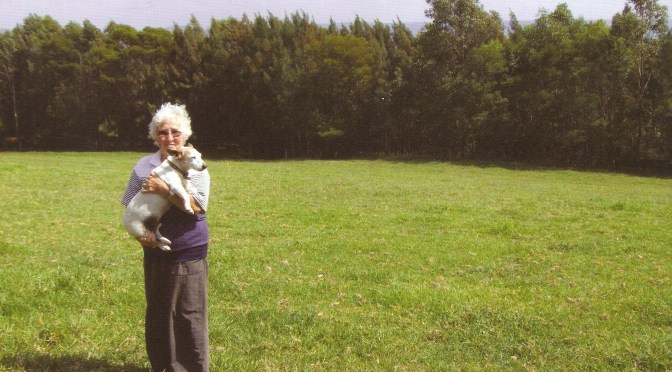
Margaret Betts – tree planter

SHE-OAK Hawkesbury cattle farmer Margaret Betts (Photo
SHE-OAK Hawkesbury cattle farmer Margaret Betts (Hawkesbury Gazette).

A Writer’s encounter with a rural rebel

MY two decades of research on the descendants of Mary Pitt eventually led me to the Hawkesbury Valley, where many of Australia’s first settlers were granted land for the purposes of contributing to the survival of the fledgling colony by farming.

With their indelible link to their benefactor Lord Nelson, the two Pitt family farms were named, at different times, ‘Nelson’ and ‘Trafalgar’, in the wake of Nelson’s great 1805 maritime victory at the Battle of Trafalgar.

Finding these original land grants took time.

Nelson Farm had gone by another name for many years, but, as I was to discover, it was still under the stewardship of an indefatigable woman. This feature was published in Blue Mountains Life in June-July 2010.

Out on a Limb

How Margaret Betts reforested an original Hawkesbury farm

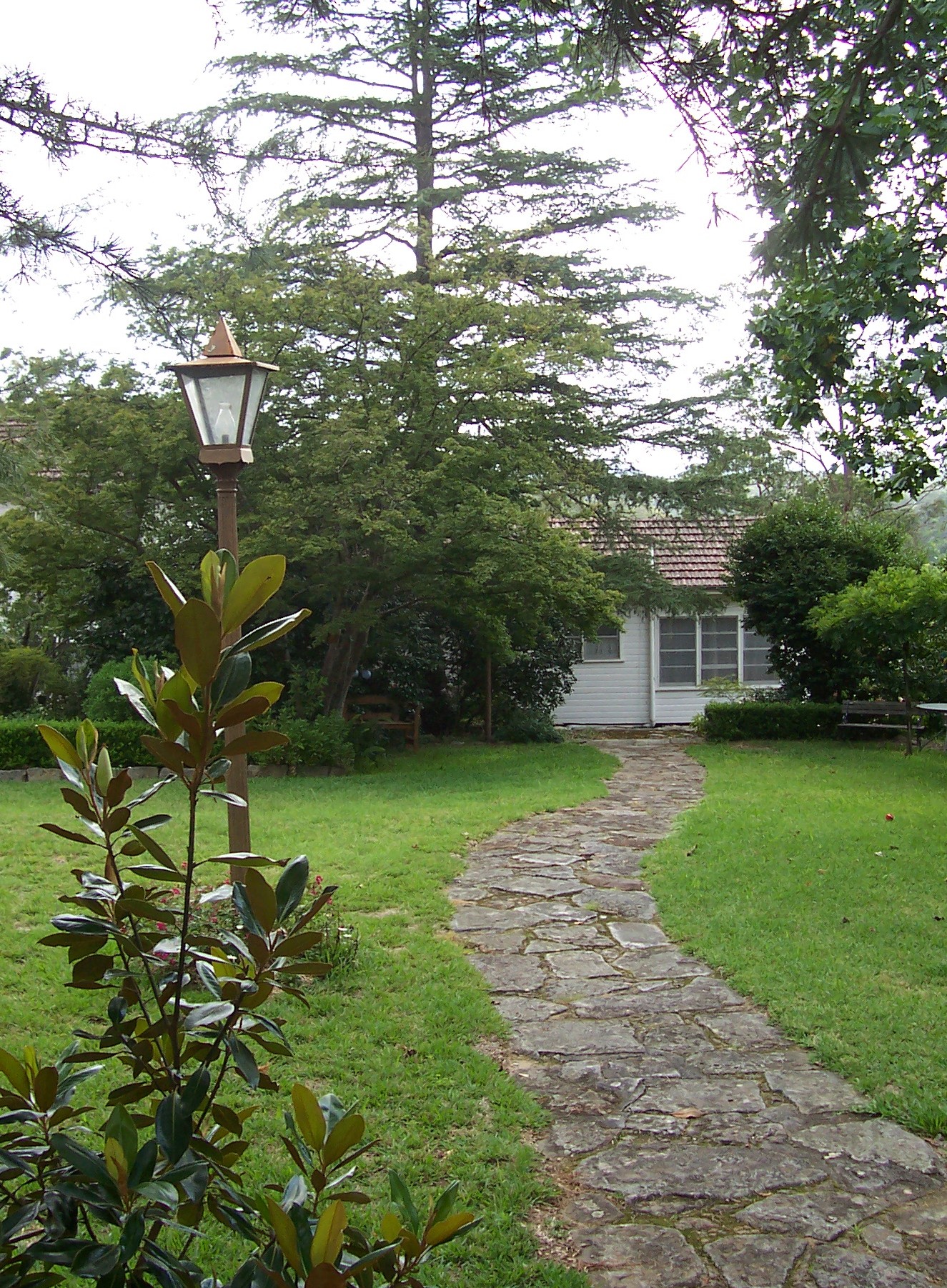
On Nelson Farm near Agnes Banks stands a house known as Bronte, with uninterrupted views of the Blue Mountains.

Even before this region became the cradle of modern Australian agriculture, the fertile river flats yielded food for generations of Aboriginal people.

The house is positioned on an 1802 hundred-acre grant of land to Thomas Pitt. Originally called Nelson Farm, the property was amalgamated with adjacent land granted to Thomas’ mother Mary Pitt and renamed Bronte.

This name remembers British naval hero (and Mary’s benefactor) Lord Horatio Nelson, first Duke of Bronte.

022-cropped1
HAWKESBURY HOUSE Bronte on Nelson Farm (Photo: Mary Matcham Pitt family history website).

Mary Pitt’s land grant was eventually sold off, although Bronte remained in the family until 1919.

The impressive mid-Victorian building is not the original, but from Castlereagh Road, the giveaway stands of hoop pine (Araucaria cunninghamii) and bunya trees (Araucaria bidwillii) reveal traces of the original settlers’ use of the land.

Many Hawkesbury heritage properties are open to the public or have become public places, but Bronte on Nelson Farm has always been in private hands, and a working farm since 1802.

The current owner, Margaret Betts, has lived there since 1998, and her parents William and Mary farmed the land since 1955.

“Dad did the hard work and Mum did the reading,” Margaret says, recalling her parents’ years as dairy farmers at Bronte. “They were both from logging country, so they were both what you’d call ‘old school’ farmers,” Margaret relates. “Trees, to them, were just something that sapped-up the goodness out of the soil.”

Mary Betts’ wariness about trees on dairy country became particularly pertinent in 1998, when an enormous oak tree came down in the westerly wind the night after she died, an event which made the local news.

Margaret recalls many such nights taking their toll on the few trees left on the property, and she realised “that if we didn’t do something about it, there’d be nothing left.”

Margaret knew the farm’s history, including the years when her father leased acreage to vegetable farmers with a strict stipulation to leave the stands of Casuarina running down the spine of the property towards the river. “They killed the lot,” Margaret remembers, “and they were original trees on the property.”

For someone who spent her career teaching music and in school administration, continuing her parents’ work at Bronte seems like a totally new angle for Margaret, but I get the feeling she sees farming as something in her genes, and that common sense counts for more than experience.

Margaret had a plan to develop beef production at Bronte, with very different needs to dairy farming, and certainly requiring a lot more shade than vegetable fields provided.

“I could have counted the remaining trees on one hand,” she recalls, “and I needed to do my research,” Margaret stresses.

“This region is part of the Cumberland Plain, in terms of its vegetation. If I was going to plant a large amount of trees I needed to know they were going to be viable.

BUNYA PINE Araucaria bidwillii (Photo: Bidgee)

“We’ve had hoop pine and bunya growing here for well over a hundred years. The settlers planted those, and even though they’re not native to this region, they’ve done well.

“At one stage the bunyas at Bronte were described as the largest stand in the western suburbs, but they’ve very much diminished in recent decades.

“I propagated seedlings from ours and they came up no problem.

“Hoop pines need shelter to get established, but the bunya trees just take off. There were also a few Kurrajong trees (Brachychiton populneus), and quite a few local gum trees which I assumed would do well.”

“But I also remembered the Casuarinas, which are local,” Margaret says. “In my research I found they were one of the only trees which soak up pesticides.”

With high use of pesticides on all sides of her property, Margaret had stumbled on a natural solution to an age-old problem.

The planting of trees did nothing for relations with her neighbours, particularly the vegetable farmers. “They thought I was destroying good farming land,” Margaret says, “so I got a lot of abuse. I still do, only last week one of them was shouting at me over the fence. I just wave back,” she laughs.

“I taught many of them, so they know what I’m like,” she hastens to add, illustrating how her resolve to reforest Bronte has never wavered.

After failed attempts to establish Landcare groups in the area, Margaret realised that if she was going to succeed then she needed to take action on her own. She also discovered that the tree problem was not just apparent above ground – the local water table was severely degraded.

After generations of development, the original reservoirs and lagoons of the Agnes Banks region had become choked with weeds (including water hyacinth and alligator weed), and polluted with litter and sewerage.

Insufficient drainage and water retention from nearby farms meant the water supply for Bronte was contaminated, and that affected Margaret’s cattle with outbreaks of salmonella.

The water problem only seemed to sharpen Margaret’s resolve. “At one stage I was planting around thirty trees a day, I must’ve planted thousands of them over twelve years,” she recalls.

“If you looked out here in 1998,” she says, throwing an arm out to the vista above the nearby Hawkesbury River and distant Yarramundi Lane, which is her western border, “there were only these trees close to the house and little else.”

Now, in a great green belt below Bronte is a reforested barrier of green, mainly Casuarina (river she oak, and swamp she oak), looking more like the glimpses of natural bush at the foot of the Mountains across the river. Twelve years seems like barely enough time for this result.

“The cows love the shade, they’re up here under the trees by seven o’clock on a hot day. The trees have also brought the birds back,” Margaret adds, which surely must annoy the vegetable farmers, I suggest.

“Birds are a natural pesticide,” Margaret replies.

“The water table has been improved so much with those trees,” she indicates, and indeed there are shallow lakes at intervals along the lowest points of the property.

“It’s made me more conscious of water,” Margaret says, “but we need clean water,” she adds, explaining that drainage problems caused by the use of poultry litter as fertiliser on higher-set nearby farms, combined with ineffective Council drainage along the road, contributes to the continual pollution of Bronte’s water table.

The solution was to drill a bore. “Dad was an excellent water diviner,” Margaret recalls. “He found the old wells on the property that way,” illustrating how Bronte’s past has once again become a part of its future.

The Department of Environment and Climate Change Cumberland Plain Recovery Plan draft document of November 2009 suggests private land holders like Margaret are on the right track: “Conservation of the rich biodiversity of the Cumberland Plain in western Sydney is one of the most challenging issues facing natural resources management in New South Wales,” the introduction states.

“Extensive loss and fragmentation of vegetation has occurred, land values are high, and competing land uses are placing extraordinary pressures on the remaining areas of bushland in the region.”

“You’ve really got to take care of your patch, and keep at it,” Margaret says. “I won’t see most of what I’ve planted come to anything, but others will,” she adds, indicating the hoop pine saplings she propagated and planted, trees which will stand long after their parents have fallen.

© Michael Burge, all rights reserved.

This article appears in Michael’s eBook Pluck: Exploits of the single-minded


Lottie Lyell – the sentimental girl

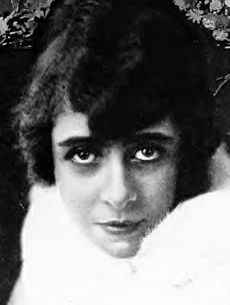
SENTIMENTAL FAVOURITE Silent screen star Lottie Lyall (1890-1925).
SENTIMENTAL FAVOURITE Silent screen star Lottie Lyell (1890-1925). (Photo: ScreenSound Australia).

A Writer explores an untimely death.

LIVING in Australia’s Blue Mountains, it’s hard to ignore one tragic element of the locality’s heritage – the tuberculosis epidemic.

Situated at almost 1000 metres above sea level, the area spawned an industry of public and private sanatoria for countless people who retreated from Sydney in an attempt to recover from this infectious disease in the years before antibiotics provided an effective cure.

Previously unexplored insights into the tale of one tuberculosis patient who convalesced in the Blue Mountains – Australia’s great silent film actress Lottie Lyell – formed part of this feature about her story, published in Blue Mountains Life in 2011.

The sentimental girl

Unravelling the Blue Mountains Mystery of film maker Lottie Lyell.

Widely regarded as Australia’s first international film actor, Lottie Lyell had been a star for a decade by the time The Picture Show of February 1921 revealed she was recovering from “A serious illness”, but that she would: “… appear on the screen again.”

Convalescing in the Blue Mountains in the same month, Lottie had a very good reason for keeping the true nature of her condition from the press.

Since her 1890 birth in the working class suburb of Balmain, Lottie had been in the path of one of the most serious illnesses of her age – tuberculosis (TB).

The tuberculosis industry of the Blue Mountains is the subject of two new books which shed light on how TB defined family fortunes and caused social stigma.

When considering the case of Lottie’s family, author Dr. Brian Craven says that on the basis of her sister Rita’s death of TB in 1911, they would have been “In serious trouble”. Due to TB’s chronic nature, Brian suggests Rita might have carried infectious TB bacteria for a considerable period of time.

“In a community where TB was rife, you could get it from anywhere,” Brian outlines, explaining how Balmain’s colliery would have added to the risk of contracting the disease. “One group who got TB was coal miners of any sort. Once you got silicosis, your lungs were stuffed up and it was very easy for TB to take over.”

385px-TB_poster

Brian proposes that since Lottie’s father Joseph Cox was a real estate agent, collecting rents in a close-knit community, he would have been in regular proximity to TB sufferers.

Valerie Craven (research assistant to her husband Brian) explains why many sufferers kept their illness a secret – “TB was socially unacceptable in the sense that it was considered something the underprivileged got. If the family was poor, they usually couldn’t afford to do anything about it.”

Charlotte Cox took elocution and acting lessons in her mid teens. By nineteen she was in regular paid acting work onstage using her stage name Lottie Lyell.

Her meeting with Raymond Longford has become the stuff of legend. They were colleagues in the 1909 theatrical tour of An Englishman’s Home in which Lottie played his daughter, despite being only 12 years his junior.

Longford and Lyell probably began their relationship then. He was a married father, but divorce was not an option.

The stage careers of both actors dwindled once they embraced the opportunity and innovation of film production. Longford acted in and directed movies from 1911, creating a spectacular lead role for Lottie with The Romantic Story of Margaret Catchpole in the same year.

“For picture work you must be pretty good at all sorts of athletic sports,” Lottie recounted of the shoot to The Theatre magazine. “I had, in the depth of winter to jump into the water from a cliff thirty feet high, and then swim some distance out of range of the camera … handicapped by old period, masculine attire.”

The movie was praised for its unique Australian qualities, and its home-grown production team.

The deaths of Lottie’s sister and father at the time her screen career took off must have had a tempering effect on a close family who accepted Lottie’s unorthodox lifestyle.

The survivors moved by 1913 to Sydney’s Eastern Suburbs, where Longford moved in with Lottie and her mother. The relocation suggests an attempt to escape the risks of TB in Balmain.

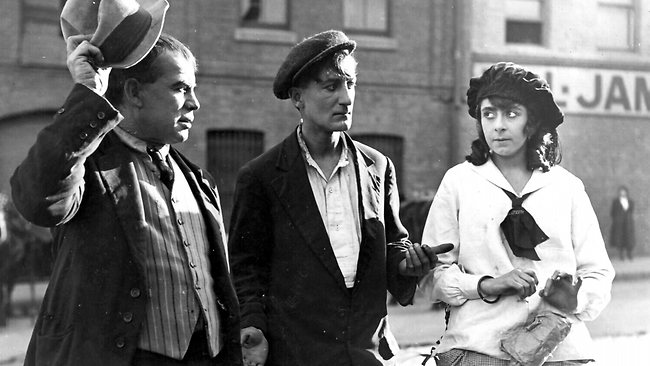
SCREEN CLASSIC Lottie Lyall in Raymond Longford's The Sentimental Bloke (1919).
SCREEN CLASSIC Lottie Lyell as Doreen in Raymond Longford’s The Sentimental Bloke (Photo: ScreenSound Australia).

Lyell and Longford worked together on a string of films over the next decade. Their greatest surviving collaboration was The Sentimental Bloke, released in 1919.

Based on C.J Dennis’ best-selling poem, directed by Raymond and filmed on the streets of Sydney’s dockside Woolloomooloo, the film tells the romantic comedy of Bill, a larrikin who falls for Doreen, a working class girl (played by Lottie).

The movie set box office records in Australia and was distributed in Britain, New Zealand and the United States.

Lottie must surely have been Raymond’s choice for a lead role in his next production, an adaptation of Steele Rudd’s Dad & Dave comedy On Our Selection (1920). But she didn’t appear before the camera, she co-wrote the screenplay. The explanation given was her “serious illness”.

Brian Craven’s book reveals that symptoms of TB meant compulsory notification to health authorities in NSW at this time. The persistent cough, and the coughing-up of blood, would have been very hard for Lottie to conceal.

“You were never cured of TB,” Brian outlines. “The disease was only arrested, encapsulated in the lungs. Life was not too hard. Rest and good food, the removal of worry, light duties. These were important factors in your survival.”

“If you were a poor person you had to wait, wait and wait on someone’s death to obtain a place in a TB asylum,” Valerie adds.

There is little doubt Lottie convalesced in a private hospital – an option providing more anonymity to those who could afford it. A telegram from the Melbourne premiere of On Our Selection in February 1920 was sent to Lottie at a private address in Katoomba.

Far from the favourable response to Lottie’s newest movies (including her reprisal as Doreen in Ginger Mick), she seems not to have dwelt on what TB kept her from. Instead, what happened next suggests Lottie saw great possibilities in being holed up in Katoomba.

While convalescing throughout 1920, Lottie probably adapted her next screenplay The Blue Mountains Mystery from a novel (The Mount Marunga Mystery by Harrison Owen). Raymond and Lottie directed it together in 1921.

The Cravens explain that TB sufferers were advised to recover at a high altitude, allowing less atmospheric pressure to work on their lungs. It might have been for this reason that the movie wasn’t shot at a studio in Sydney, but entirely on location one thousand metres above sea level at Katoomba. The Blue Mountains were a stand-in for Harrison’s fictitious rural setting.

Key scenes for the murder mystery were filmed at the Carrington Hotel, including the iconic ballroom. Production stills show the studio-like scale of the rooms, allowing heavy-duty film lighting and a sizeable crew.

Apart from production stills, The Blue Mountains Mystery does not survive, unless, like The Sentimental Bloke (mis-labelled The Sentimental Blonde in the United States until 1973), a surviving reel comes to light.

Lottie’s appearance in these stills show a healthy-looking woman very much at the heart of the action. One journalist (writing in The Picture Show) pondered why she was co-directing and not acting.”I love the acting,” Lottie said, “but I was too interested in the directing work to get in front of the cameras myself.”

Despite her condition, Lottie was not pessimistic about her chances. “Ten years I have been in pictures … and I hope to be always connected to them in some way or another”. An admission of the need to slow down, or the desire to embrace her skills as a writer-director?

STUNT WOMAN Did Lottie Lyell's stunt performances contribute to her untimely death?
SKILLED HORSEWOMAN Did Lottie Lyell’s stunt performances contribute to her untimely death?

Production remained at high altitude in the Megalong Valley for the filming of Rudd’s New Selection. Lottie played Nell Garvin, working stunts for the camera on horseback.

There was a saying about surviving TB – “If you can sit down don’t stand. If you can lie down don’t sit.” Brian Craven agrees – “If you didn’t do anything stressful, then you could recover, otherwise, you’d go down with the symptoms.”

Lottie explained what horseback stunts required for her earlier role as Margaret Catchpole – “It is not simply a matter of sitting a trot or a canter … I have often had to take a three feet hurdle.”

Her return to acting took its toll. Stills from Rudd’s New Selection show her appearance had dramatically worsened.

The Cox family’s 1921 move to Roseville on the bushy outskirts of Sydney suggests another attempt to accommodate Lottie in a place better suited to worsening TB.

Far from avoiding stress, she and Longford embarked on an ambitious business plan with the Longford-Lyell Picture company, for which Lottie wrote more screenplays and acted in The Dinkum Bloke (1923). There were no stunts this time, only the supporting role of Nell Garvin, for which Lottie played a deathbed scene.

Life imitated art two years later. Only months after her younger sister Linda succumbed to TB, Lottie also died in December 1925. Her death certificate revealed she suffered from pulmonary and laryngeal tuberculosis. She was 35.

Tragically, Longford’s divorce was finally granted just weeks later. Lottie had appointed him her executor and primary benefactor. His later career never re-captured the prolific years of collaboration with Lottie, and over three decades later he was buried beside her.

Lottie Lyell defined the roles of women in Australia’s film industry very early – as actors, but also as writers, directors and producers. She was one example amongst thousands of TB sufferers who convalesced in the Blue Mountains, but did not allow chronic illness to define them.

pluck-cover
BUY NOW

Sources and further reading:

Photo Play Artiste by Marilyn Dooley.
The Shoulders of Giants by Dr. Brian Craven.
The Healing Mountains by Gwen Silvey. 

© Michael Burge, all rights reserved.

This article appears in Michael’s eBook Pluck: Exploits of the single-minded.

Beryl Guertner – décor queen

A Writer examines the home life of an Australian media pioneer.

SINCE the release of the Paper Giants franchise on Australian television screens, audiences have been exploring the stories of groundbreaking women in the print media.

But long before Ita Buttrose, Nene King and Dulcie Boling, a country woman who was good with words and had great visual flair was selected to spearhead a brightly coloured revolution in home decorating for a new magazine: Australian House and Garden.

Her name was Beryl Guertner. Behind her stellar career was the story of community-minded women who wanted to make a home for themselves in the leafy streets of Warrimoo.

As a tribute to a local magazine pioneer, this feature was first published in Blue Mountains Life in June 2010.

SITTING IN STYLE Beryl Guertner in the 1950s.
SITTING PRETTY Guertner at home.

Life with Beryl

The Warrimoo community remembers Beryl Guertner, Australian magazine pioneer and community woman.

Soon after WWII, residents of sleepy Florabella Street in Warrimoo noticed two women camping on a double block.

Ex-local Bruce Patman recalls: “The two ‘girls’ were befriended by our parents. On seeing them struggling with the elements, they were invited to sleep out on our verandah. There was a spare shed on our property which we cleaned-out. Beryl Guertner and Terri Margetts moved into that while they planned their house. Beryl was a journalist and she travelled to the city to work each day, while Terri (who I believe had garden nursery experience) grew gladioli flowers for market”.

BERYL GUERTNER
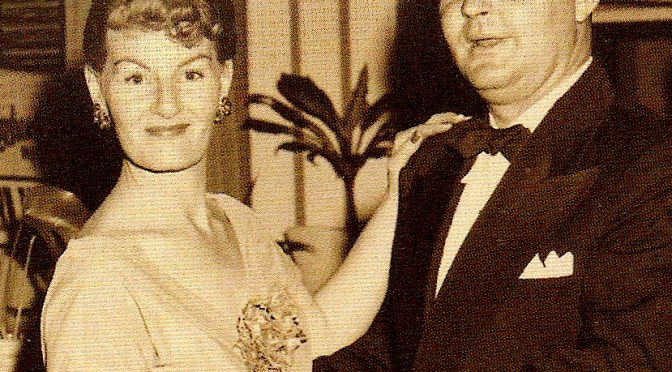
COMMUNITY WOMAN Beryl Guertner dancing with a neighbour at a local 21st birthday party, Warrimoo, 1958.

“No doubt as a result of the war, we had a number of women sharing homes in the village whom we regarded as ‘old maids’, Bruce adds. “Beryl and Terri were largely regarded as two girls pooling their resources for a dream of building a sandstone block house. I remember helping out at weekends with stonework in the gardens, and some of the heavy lifting.”

“Beryl got her first job when she settled here in the shed … with New Idea,” long-term local Elizabeth Leven recalls. “Then this opportunity came up to be editor of Australian House and Garden, and she applied for it.”

“I don’t think she was that confident she would get it,” Bruce’s brother Barry Patman reflects.

The new Australian House and Garden magazine opened its doors on Young Street, Sydney, in late 1947. The brainchild of publisher Ken Murray, the popular publication aimed to deliver low-cost décor to the average household, including monthly architects’ plans for small homes. Murray gave Beryl sixteen weeks to create the first edition from scratch.

“They were very excited when Beryl was accepted as the founding editor,” Bruce remembers. “Beryl was very enthusiastic with exciting ideas, and on occasion, she related them to us. She was very clever in her field.”

“I remember painting bottles with Christmas designs and making a lamp stand out of wine bottles as projects for the magazine,” Barry recalls.

AUSTRALIAN STYLE Early cover of Australian House & Garden magazine.

From such humble roots, Beryl Guertner became widely known in the Australian media for spearheading the home design revolution of the 1950s. The continued popularity of home makeover media owes much to the groundbreaking vision of Beryl and her contemporaries.

Born in Sydney in 1917 to Eugene and Maude, Beryl was raised and schooled at Wagga Wagga. By the outbreak of the war she’d returned to the city and embarked on a series of journalism and public relations jobs for companies like The Daily Telegraph and Paramount Pictures.

Beryl’s German father Eugene was interned at Liverpool for most of the war. Whether it was the whole family, or just Beryl, who adopted ‘Guertner’ from ‘Gürtner’ is not clear. It remained her professional name throughout her lengthy career.

Why Beryl chose Warrimoo remains a bit of a mystery. The semi-rural community was the vision of property developer Arthur Rickard, whose advertisements in the Sydney media for his satellite suburbs on the city’s fringe cannot have escaped Beryl’s attention in the 1930s and 40s.

The pressures of putting a new magazine together while commuting seems to have put an end to Beryl and Terri’s vision for a sandstone house. It may also have ended their relationship. “Terri worked very hard on the start of the sandstone house, but then there came a split between them and Terri moved away. We were very sorry for her after all her hard work,” Bruce recalls.

Other locals remember how Beryl met Catherine (‘Kate’) Warmoll, a fellow commuter who worked as an accountant for Cinzano, on the train. The two eventually moved in together and completed the first stage of their home around 1949-50. In the process, Beryl and Kate became integral members of the Warrimoo community.

Elizabeth Leven still lives in Florabella Street – “We used to laugh about Beryl,” she relates. “She had quite a few men under her as editor, and I remember her telling me one day that she used the filthiest language when she was talking to them … because that was the language the men understood. She and Kate used to walk to the station, but they would walk in old shoes and carry their good shoes.”

Bronwyn Kilner grew up at Warrimoo and remembers: “Beryl was very blond, and very pretty, she always wore gorgeous clothes, floral patterned skirts and looked lovely. Kate wore jeans and shirts, and dungarees, but the two of them made a great couple.”

Elizabeth Leven’s daughter Margaret states, with a fond smile, that Beryl was: “Always overdone for Warrimoo.”

Over time Kate and Beryl expanded their home from a one-room cottage to include a second bedroom, garage, stylish ‘crazy paving’ chimney, patios hewn from local stone, a verandah overlooking the valley, and a stone bridge in the front garden.

Their garden in particular left its mark in local memories. “Beryl always reckoned we were in the tropical belt,” Barry Hickey recalls. “She had a map showing the different climatic regions, and she reckoned Warrimoo was a place you could grow almost anything.”

Neighbours to Beryl and Kate since 1958, Barry and Joan Hickey remember how keen the couple were on the red-flowered ‘Coral Trees’, which many believe they introduced to the region.

Warimoo endured regular bushfires in the 1950s and 60s, and Beryl and Kate were members of the bushfire brigade. “It was Beryl who got me into the brigade,” Barry recalls. “She never rode the fire truck of course, but it was important that the community support the brigade.”

Artist and ex-local Donna Hawkins recalls: “Sometime in the late 1960s I had the good fortune to spend an evening in Beryl Guertner’s beautiful home. I went there with my Brownie pack to learn about cake decorating and how to make marzipan fruits. Compared to my simple home on the other side of the railway track, Beryl’s home was quite exotic – the lush entry graced with tree ferns and garden lights, the elegant lamps in the lounge room created a warm atmosphere. Our little group felt welcome and important”.

ICING QUEEN One of Beryl's many books on cake decorating.
ICING QUEEN One of Beryl’s many books on cake decorating.

“We crowded around the table and followed her lead, shaping marzipan into tiny bananas, oranges and apples, then painting them with food colouring. It was an evening of creativity I will never forget … to discover that food could be a work of art was inspiring.”

Bronwyn Kilner remembers her mother asking Beryl’s design advice for their newly completed home. “I recall that the main living area of the house, and the hallway, had very light oyster grey walls, with chartreuse ceilings!” Bronywn says. “There was green ivy-patterned wallpaper in the dining room and the entry foyer. The spare bedroom had grey walls, almost a gun-metal grey, and the ceiling was painted a tomato soup red!”

Beryl and Kate sold their home in the early 1970s to fellow commuter Jack Maddock. Nita Maddock’s first response, when Jack suggested they look at the house, was to say: “I’m not living in Warrimoo!”

However, once she saw Beryl and Kate’s home, she decided they should buy it immediately. “It was just the happiest house,” Nita remembers.

Beryl and Kate retired to the Central Coast, where Beryl continued to write and edit in her field until her cancer-related death in 1981.

I recently visited Beryl and Kate’s home on Florabella Street, the residence of John and Sue Cottee for the past thirteen years. I asked Sue when she became aware of the designer heritage of her home.

“It was a local who said to me one day: ‘You know you’re living in the party house?’” Sue recalls.

When the Hickey’s stroll in from next door, Joan and Barry both recall what sounds like the biggest party of them all – an event for the magazine – possibly the twentieth anniversary in 1968, with “magazine people up from the city,” Joan remembers. An electrician by trade, Barry tells us: “I floodlit the trees for the night.”

BERYL'S WAY Beryl Guertner's house in Florabella Street, Warrimoo.
BERYL’S WAY Beryl Guertner’s house in Florabella Street, Warrimoo.

The Levens join us in the front garden for coffee, amongst the surviving stonework patios, pathways, bridge and pond designed by Beryl, Kate and Terri.

“There was a time when I was welcome in every home on this street,” Elizabeth Leven recalls, and it’s clear from this gathering of long-term Warrimoo residents that Beryl and Kate were too. “Generous people”, “arty and flamboyant”, “involved in the community” are common terms the locals use when remembering the couple.

John Cottee shares the plan for expanding and renovating the house, which has been altered extensively since Beryl and Kate left.

“We want to preserve the surviving stone work in the garden,” John outlines.

I get the feeling that Beryl would very much approve of the 21st century renovation of a house and garden that has been evolving ever since she came to Warrimoo. After all, it was her life’s work to empower Australians to transform their own homes, and she herself had started life on the same block in nothing but a tent.

pluck-cover
BUY NOW

Thanks to Evelyn Richardson and Kate Matthew of the Warrimoo History Project, and all those who provided memories of Beryl Guertner for this article.

© Michael Burge, all rights reserved.

This article appears in Michael’s eBook Pluck: Exploits of the single-minded