

A Writer’s review of Helen Macdonald’s ‘H is for Hawk’.
“Macdonald courageously takes herself, and us, beyond our traditional blinkering on cruelty, hunting and killing.”
WHEN I closed this book, I felt free. Helen Macdonald can write. She can write the bejesus out of life, but this read left me like I imagine her goshawk Mabel felt: attached by a string while tamed to her mistresses’ arm, listening for her cues.
Much of this taming comes from the way Macdonald argues her case for weaving the bulk of her story into that of author T. H. White, also a falconer who wrote about similar stresses in his pursuit of the sport.
 As soon as she mentioned White, I thought: Oh no, another writer who overlooked his homosexuality, but it’s in there, although Macdonald (like many other writers before her) completely avoids the fact that for his entire life, acting on homosexual desires was a criminal act in the places White called home, and writing about them would have led to the kind of notoriety that ended Oscar Wilde’s career.
White was a genuinely tortured literary closet case like W. Somerset Maugham, Henry James, Joe Ackerley, William Plomer, Christopher Isherwood and E. M. Forster. Let’s not forget they had their closets built for them by proactive buggery legislation that saw thousands blackmailed, attacked, jailed and subjected to electro and chemical aversion therapies.
Their natures cannot be left un-analysed at ‘cruel’. To do so is to join the terrible tradition of casting stereotypically evil, sibilant villains.
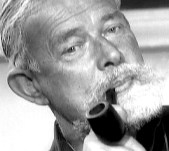
White was always tethered to society’s arm, on a very short string, fed tasty morsels that never satiated the lust for hunting in the woods for his heart’s desire.
Macdonald observes how this caused White pain, but still she made him into her unwitting antagonist, without exploring how legislation and culture contributed to his battle against his nature. This renders her book, and some of her arguments, instantly questionable.
Helen Macdonald did strange things in her grief. We all do, although I feel sure she didn’t write about the bulk of them in this book. We hear snippets about her falling for a man in the wake of her father’s death, failed jobs and difficult house moves, but these potentially interesting storylines are buried under her attention to White.
By the time she puts into words what one of her friends says – that White was just a “silly man” – it’s too late, her book is almost over.
As an observation of Macdonald’s grief after the death of her father, it makes for interesting storytelling. Macdonald grieves for the man who taught her to love wildness and wild places, and the loss of British innocence in the wake of its wars.
Escaping her pain, Macdonald’s childhood attraction to falconry sees her pursue a father figure – White – into the forest, where she loses herself almost entirely.
Her descriptions of place and emotion are incredible, they made me want to laugh with recognition of human frailty and cry for our endless recklessness and our ultimate vulnerability when it comes to our fragile grasp near the top of the food chain.
And her reticence around falconry, its context of killing and its anachronisms, are as strong and replete as her appeals for its place in human evolution.
“She leaves falconry hanging in the air as a paradox, for us and her.”
What H is for Hawk does best, I believe, is call into question our relationship with all creatures, domesticated and wild. It’s not possible to read without analysing the projections and limitations we place on companion and working animals, from dogs and cats through to kept birds. Macdonald courageously takes herself, and us, beyond our traditional blinkering on cruelty, hunting and killing.
The title it reminded me of most was Alice Walker’s The Chicken Chronicles, a memoir that revealed the journey Walker took, via her chooks, to better understanding the need to be loving in her relationship with her daughter.
Macdonald could never succeed in building similar bridges: her father, and T. H. White, are dead. She leaves falconry hanging in the air as a paradox, for us and her. Avoiding the sentimentality of her childhood literary favourites, like Watership Down, not even Mabel’s story is resolved, and the titular hawk’s ultimate fate is left to a footnote.
That is exactly what grief is like. It makes no sense, and follows no patterns. In this regard, Macdonald’s book deserves attention.
© Michael Burge, all rights reserved.
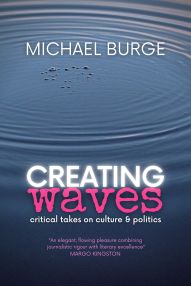
This article also appears in Michael’s eBook Creating Waves: Critical takes on culture and politics.

 It’s this layer of dysfunction that Szubanski courageously mines.

 Young Danny’s wilful ascent to the pinnacle, assisted by the affirmation of a scholarship to a sports-connected Melbourne private school, is told with relentless energy. While he is an outwardly defiant creature who carries important secrets, Danny’s inner voice reveals truths he cannot escape from. Tsiolkas lets us see him within and without, a technique that breaks all the rules yet rounds-out his hero’s lies and hidden pain so effectively.


