
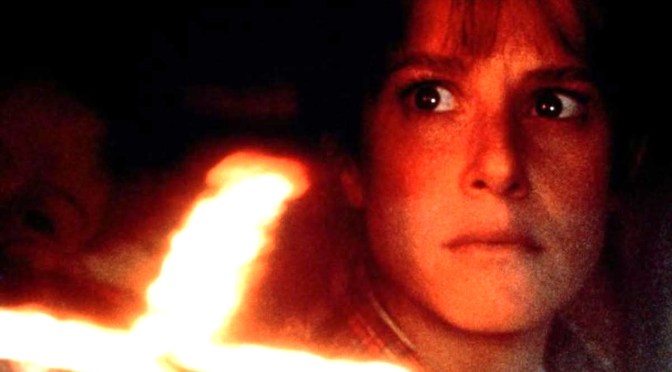
The fifth in a series of retrospective pop culture reviews revisits the 1988 movie that predicted America’s slide into right-wing populism…
AT THE MIDPOINT of Costa-Gavras’s 1988 screen thriller Betrayed there’s a scene in which a young woman tucks her widowed boyfriend’s motherless children into bed in a Midwestern American farmhouse. It’s so ordinary that the horror she hears from the mouths of these youngsters eclipses almost everything in the screenplay by Joe Eszterhas.
We’ve already witnessed nightmarish scenes of racism and murder by this stage of the story, yet innocent kids blithely damning Jews, Blacks and Queers while putting their heads to the pillow are far more chilling than overt violence.
Debra Winger plays the woman settling the children: Katie Philips, the “combine girl” their widowed Vietnam veteran father Gary Simmons (a riveting portrayal Tom Berenger) invited home during harvest season.
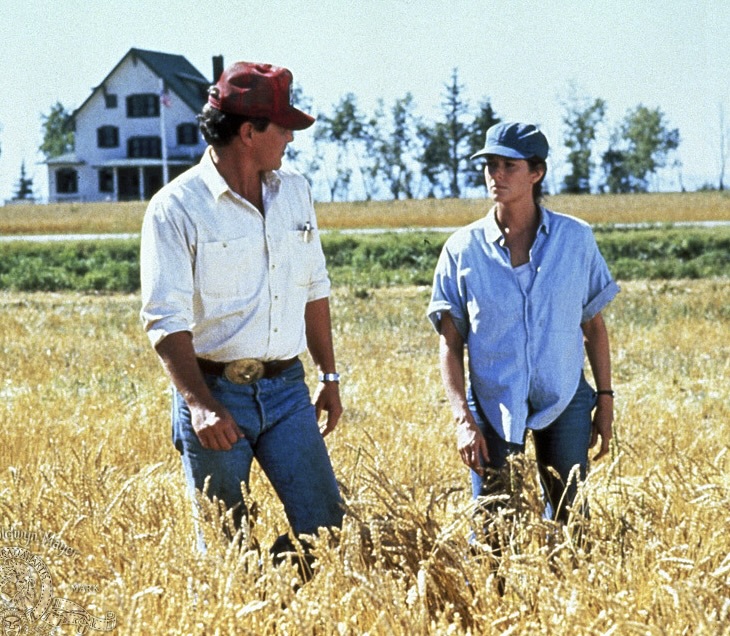
Slight spoiler: Katie is actually FBI agent Catherine Weaver on her first undercover mission after the brutal killing of a Jewish shock jock in Chicago. Gary is in the Bureau’s sights as the brains behind a series of domestic terror threats, but it is Catherine’s creeping awareness of the depth of prejudice in the rural heartland that gives this story its emotional charge, not least because she develops feelings for the handsome and charismatic Gary.
As Katie’s attraction grows, so does Catherine’s fear about what she discovers in his community, and the danger she’s in. Welcome on his hunting and camping trips, Katie is transfixed; but Catherine is appalled at the white-supremacist subculture being stirred into paranoid resistance by nationalist preachers and self-interested politicians.
Sounds familiar, which makes Betrayed essential viewing four decades since its release.
Compost Heap
Despite a highly experienced team and an A-list cast put together by film titan Irwin Winkler, the production made a modest profit and didn’t really live up to its promise.
By the mid-1980s, Costa-Gavras was renowned for thrillers with a strong political edge. Eszterhas had entertainment chops built on a string of hits, including Jagged Edge (1985) which explored the attraction between a lawyer and the client she’s never quite sure is innocent.
For Winger, Betrayed was an opportunity to revisit the type of down-to-Earth American woman that had been so well-received in An Officer and a Gentleman; and Berenger’s career was at its peak after his Oscar-nominated role in Platoon in 1986.
The strong supporting cast included John Heard as FBI agent (and Catherine’s old flame) Mike Carnes; John Mahoney and Ted Levine as Shorty and Wes (Gary’s partners in crime), and Betsy Blair as Gary’s gentle yet deeply prejudiced mother. But critics saw only hints of brilliance in the nightmare.
“Winger is radiantly warm, smart and, against all odds, believable as a woman physically drawn to a man whose ideas are repugnant to her,” wrote Sheila Benson in the Los Angeles Times, “but she is sunk by the growing improbabilities of the story.”
Roger Ebert agreed: “More than anything else, Betrayed is finally just very deeply confused. Costa-Gavras must have considered it a political film, Eszterhas undoubtedly saw it as a thriller, and Winger and Berenger, to give them full credit, interpret it as the complicated human stories of their characters.”
Writing for the Los Angeles Herald-Examiner, Peter Rainer cut to the chase: “As hate letters to the heartland go, Betrayed is right at the top of the compost heap.”
The Real Enemy
America took more than one look at its history of race relations on the big screen in 1988, with the release of Alan Parker’s Mississippi Burning four months after Betrayed. An exploration of the real-life murder of African-American civil rights activists in the 1960s, Parker’s film had its share of vocal critics concerned about historical accuracy, but it fared much better with audiences.
That might have been due to Mississippi Burning’s focus on sins of the past, whereas Betrayed demanded viewers look themselves in the eye during the latter years of the Reagan presidency and the peak of a recession, and identify the real enemy.
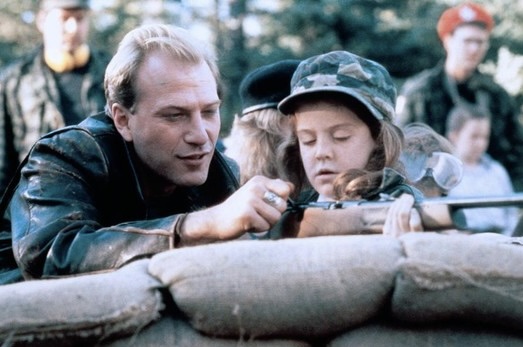
Across the film’s second half, Gary, Katie and the kids visit a remote retreat. At the gate, a sign states: “The White Race is an Endangered Species.” The Klan is there in force, burning crosses. The children have “school lessons” – shooting practice aiming at racist caricatures – and political candidates spruik cheap promises to, “hand America back to real Americans” while collecting campaign donations.
Around the campfire, Shorty (John Mahoney) explains his motivations to Katie: the bank stole his farm, Vietnam killed his son, “I got nothing left to take,” he says.
This extended sequence normalises racism, the illegal arms trade and the radicalising of children. There’s even moments of humour in the horror show, when Katie has to pretend that Catherine isn’t a crack shot with an automatic weapon. But when the Neo Nazis arrive selling vintage weapons and paraphernalia, Gary draws the line at fraternising with the movement his father fought in World War Two.
Yet the point is clear: this is a lifestyle for big chunks of the United States. Furthermore, authorities like the FBI and the political class that underpins the Bureau seem impotent when compared to the self-determination of Gary and his charged-up mass movement.
This becomes particularly clear whenever Catherine asks the Bureau for support during her assignment. Mike Carnes (John Heard) is her colleague and and former lover, but he offers none of Gary’s virility and allure. Every one of Mike’s failings leave Catherine almost entirely to her own devices.
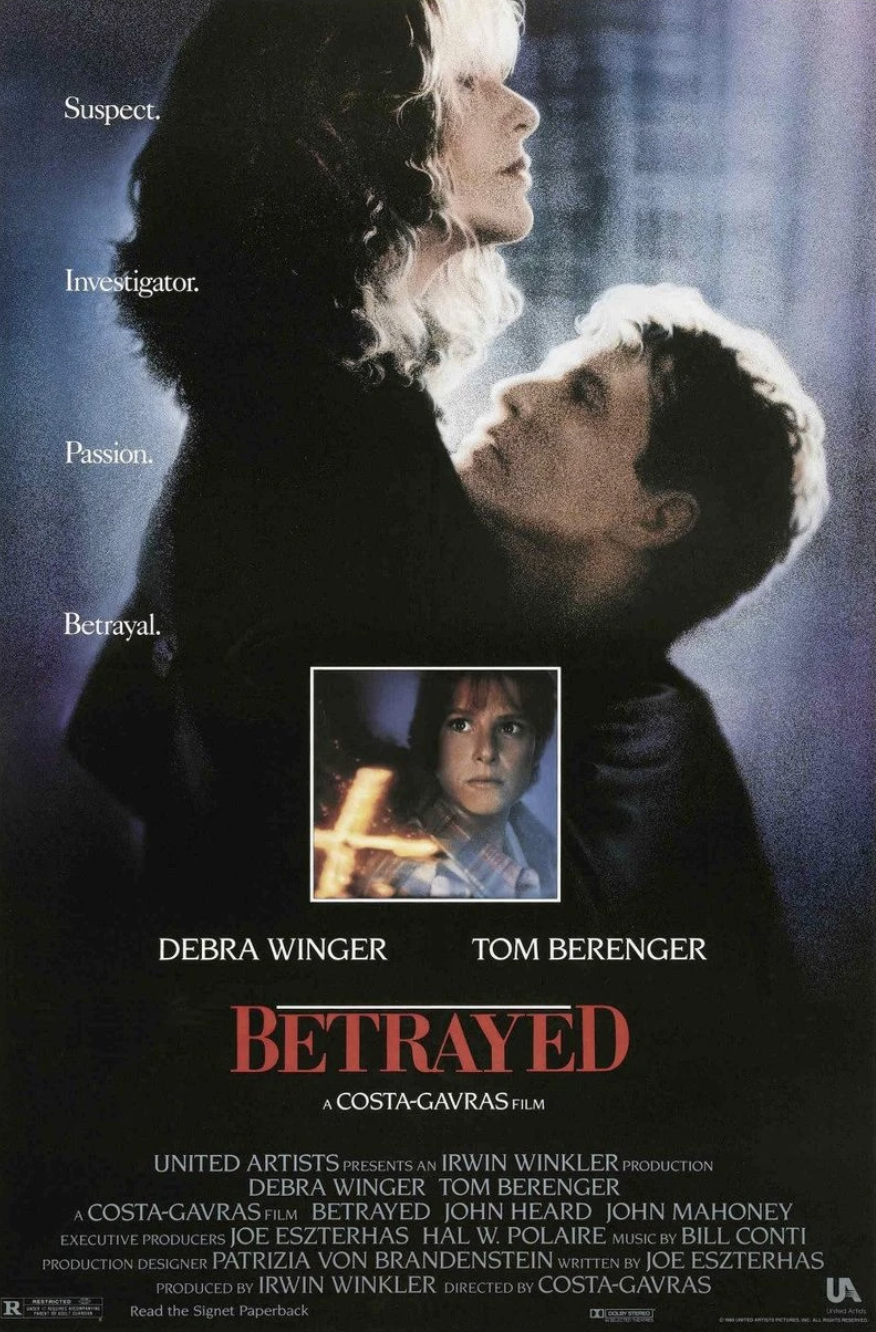
One of her lifelines is Gary’s daughter Rachel (Maria Valdez), and the connection between Catherine and this guileless daughter of the resistance fuels the emotional punch of the whole exercise, right to the unmissable final scene.
For many viewers in 1988, the film’s betrayal of American values was not worth the ticket price. Yet audiences these days, accustomed to daily trashing of standards by right-wing nationalists, should have absolutely no confusion about this riveting movie.
Betrayed is streaming on Apple TV.

