
All posts by Michael Burge

Journalist, author, artist

Cultivating storytellers in the rural heartland

LOCAL FANS OF good writing have every reason to celebrate, with a season of literary initiatives and acclaimed broadcaster Mary Moody — coming to the New England region between October 25th and December 1st for the High Country Writers Festival. As an author and journalist who learned to use the written word at Delungra Public School, I’m thrilled to be bringing wordsmiths together in a region that has always fostered storytellers.

RURAL HEARTLAND: Waterloo Station, Glen Innes.

Writers will have a unique opportunity to prime their skills and draw inspiration at iconic Waterloo Station between Glen Innes and Inverell when the festival kicks off at the High Country Writers Retreat from October 25th to 27th. Inverell resident Virginia Eddy (the force behind Boorama, her business strategy outfit, pictured above) is partnering with The Makers Shed, Glen Innes, to assist writers in adopting a micro-business approach.

Returning to the region after four decades has been huge for Virginia. “When I left my Melbourne world, a friend told me: ‘Don’t ever forget that there is a reason you are returning. Look and listen for it’,” she says. “Even though I’ve been here for six years, every time I drive out the Yetman Road north of Inverell, I’m imbued with the deep sense that I’m going home. Our family left the region when I was ten.”

Virginia believes that being a writer and being in business can be a comfortable coexistence. “Regardless of whether writers are published independently or by traditional means, business knowledge and acumen underpins their capacity for independence,” she says. “Micro-businesses should be built on the same primary foundations and frameworks as major corporations, except scaled accordingly”.

“I urge writers to imagine they are weaving potent little miracles of business around their output. These don’t happen with templates, or overnight. They’re a lifelong practice.”

TOUCH OF LUXURY: Waterloo Station Shearers Lodgings.

Despite one of the worst droughts we’ve seen in the New England, Virginia encourages writers to share Waterloo Station as a home-away-from-home during the retreat. “Whether they’re from the bush, the city, or both, it’s a chance to pause, absorb the landscape, the built environment, the past and evolving social history,” she says. “I believe the Station’s restorations (under the stewardship of Deborah and Don Anderson) will speak for themselves; but as a writer working on one of my own manuscripts, I look forward to hearing others’ perspectives.”

Being a regional-returner myself, I know what it’s like to seek a sense of place in a rural community. Growing up on a property out of Delungra prepared me for the profound tranquility of rural life, but living and working across the world has allowed me to bring home a host of skills.

I began mentoring writers after my independently-published memoir Questionable Deeds was selected for the Brisbane Writers Festival. I was so swamped by queries about how I managed it that I wrote the process into a short, accessible guidebook. Participants at the High Country Writers Retreat will be mentored on adapting these principles to their writing and publishing practices.

But there’ll also be plenty of writing time, one-to-one sessions and inspirational experiences at Waterloo Station. Virginia is well underway with transitioning into a literary writer, and I am always up for fresh insights into business and marketing, so we’ll be attending each other’s sessions at the retreat. Come and join us!

From the heart

The High Country Writers Festival continues on Saturday November 30th and Sunday December 1st at The Makers Shed, Glen Innes, when Mary Moody, one of Australia’s most beloved and bestselling authors, launches her first book in a decade: The Accidental Tour Guide. She spoke with me about what inspired her to return to autobiography.
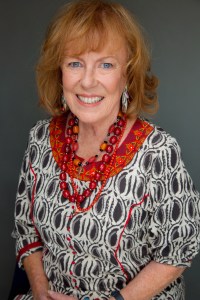
Mary Moody

“Memoir forces people to reflect on the events of their lives and to gain an understanding of how they reacted to those moments,” she says. “I have found that writing down difficult events somehow crystallizes them. The Accidental Tour Guide contrasts the highs of exploration and adventure against the lows of death and loss.”

Since the publication of a string of bestselling memoirs, bridging her life in rural France and regional Australia, Mary has relocated from the farm she shared with her late husband, filmmaker David Hannay.

“I now live with my youngest son and his family in the Blue Mountains. This supportive environment makes it possible for me to continue my adventure travels, knowing I have a safe haven to return to, every time,” she says.

Mary will also hold her popular ‘Writing from the Heart’ workshop at The Makers Shed during the festival. “I never cease to be amazed and delighted at the stories people tell me of their amazing lives. It’s just knowing where to start and how to keep those stories flowing. Often people want to write the stories of their parents or grandparents and these are equally as inspiring. I believe we will never tire of reading about other people’s lives. It helps us to make sense of our own.”

The tussle between nesting and migrating is a constant theme in Mary’s work, giving insights into the fortunes of regional communities in many countries. “It’s always the people that create a community, and it makes me sad to see regions where failing economics makes it impossible for people to live where they were born,” she says. “We need to encourage more young families to live in rural areas – the benefits of this lifestyle are many and varied.”
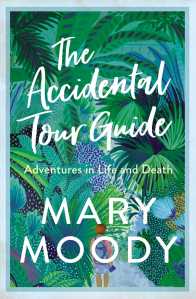
Described as Eat, Pray, Love meets The Year of Magical Thinking, Mary’s new memoir is an inner and outer journey through uncharted territory. “I’m really looking forward to touring with this new book. I particularly love small independent bookshops and places where there are active and enthusiastic book clubs. Australians are great readers – they devour good books and it’s wonderful to know that here we have such a vibrant and viable publishing industry. At the end of the day I just love meeting people and talking.”

The High Country Writers Festival is an initiative of The Makers Shed. This article was first published in New England Living magazine.
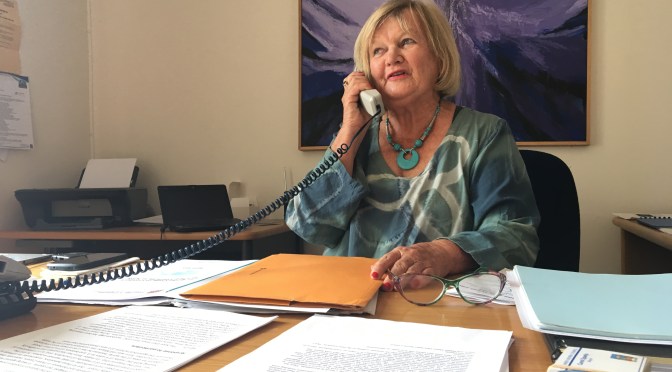
Carol’s commonsense campaign

“There was a majority of men on the council and I really felt that women needed to have a decision-making presence.”

CAROL Sparks describes herself as an unlikely candidate for local government, but a desire for change in her community drove this former nurse into a political career that’s already made history in Glen Innes.

It was while co-ordinating state and federal elections for New England Greens candidate Mercurius Goldstein that Carol got a close-up look at public life.

“I went on the campaign trail and I spoke to lots of people,” she recalls.

“I realised I had a bit of a passion for it, to try and bring climate change to their attention, the problems with our waterways, and the environmental damage that was happening on the Barrier Reef.

“Then the council elections were coming up and I thought well, I could just keep talking to the people.”

Carol’s campaign for the Glen Innes Severn Council (GISC) elections in 2016 was conducted over a fortnight in a very grassroots manner.

“I just stood out on the street and said: ‘Vote me in for council’ and people liked that,” she says.

“There had been campaigning in this region in the past, but it had always been done in the newspaper.

“It was quite exciting and people were enthusiastic towards me. The community was feeling a little bit frustrated, they said we needed a change.”

A major driver for Carol was the under-representation of women in local government.

“There was a majority of men on the council and I really felt that women needed to have a decision-making presence,” she says.

“Dianne Newman was a councillor and she was feeling a bit isolated.

“I campaigned on health, women, water, and potholes. Unfortunately there’s still some potholes around, but we’re working hard on that,” she says.

Raised at Tathra on the far south coast of New South Wales, Carol’s mother’s family were dairy farmers and her painter father a Second World World veteran.

“I left school at fourteen and worked in a grocery store, before starting my nursing training at Bega,” she says.

“I went to the Keppel Islands on holiday and that’s where I met my husband, Badja.

“We sailed around the Whitsundays, got married, and lived in England for eight years where our children were born.”

After moving to the Glen Innes region in 1980, Carol and Badja established a local antiques and collectable business and a second-hand bookshop. The couple’s son Joe now owns The Book Market in central Glen Innes.

When asked about what sparked her political ambitions, Carol admits to having an internal drive that shocks a few people.

“I’m an old woman,’ she says, laughing. “And I wanted to have a change.”

“I was a registered nurse and working in palliative care here in Glen Innes for twenty years.

“There were needs in the community. We’ve got doctors on call, but it’s very different when you have a doctor right there when you present at a hospital.

“Towns in the bush tend to get poor services.”

Trial by fire

Carol served as deputy mayor from 2016 until September, 2018, when a majority of councillors elected her into the mayoral office. Looking back at her first years as a local representative, she describes the experience as a “trial by fire”.

“It still is,” she says.

“We had another lady who was president of Severn Shire Council,” Carol adds, referring to councillor Alice Clifford, who served prior to the amalgamation with Glen Innes Council.

“But we’ve never had a female mayor of the municipal council.

“That’s what women are facing all over the nation, and women are leaving politics in their droves. I suppose that’s writ small here.

“But I’ve tended to be a person who goes against the grain, and it’s been very inspiring to look at Dianne, who is now deputy mayor, and notice the changes that have happened for her whilst I’ve been on council.

“We could do with a couple more women, I reckon, just to balance it up a bit.”

When asked what she imagines her legacy will be, beyond bringing more gender equality, Carol is very clear.

“I think renewable energy, happy kids, more community gardens, and more sustainable businesses,” she says.

“We do have a tendency to be a bit old-fashioned. I’d love to bring the rail trail here, for example, with lots of backpackers coming from overseas,” she adds, referring to a proposal to alter the use of the closed rail corridor that runs from Armidale to Wallangarra.

“Volunteering is also a big thing in Glen Innes. We cannot survive without our volunteers and of course they’re all getting older, so encouraging younger volunteers is something I’ll be looking to do.”

On the issues that divide country towns along political lines, Carol is firm.

“If we care for our waterways and our creeks, we should create biodiversity and plant trees instead of cutting them down,” she says.

“To have healthy waterways is where we find most in common with farmers. They need water too, so we need to look after the environment.

“We come together though common sense.”

This article first appeared in New England Living magazine.

Heresy in the High Country for #NewEnglandVotes

“To turn this region into a true believer, New England voters need to decide if we want fossil fuel extraction in the energy plan.”

WHEN state member for the NSW seat of Northern Tablelands Adam Marshall put pen to paper in favour of renewable electricity generation in mid-2018, the news made barely a ripple in a media landscape apparently hungry for stories about alternatives to burning coal.

In his opinion piece for the local Fairfax Media weeklies, Mr Marshall ramped-up the religious rhetoric, calling renewables a “miracle” and himself an “agnostic” on the issue.

AGNOSTIC ADAM Adam Marshall, NSW Member for Northern Tablelands.

He also made a bold prophecy: that the NSW New England region — an agricultural heartland — could become a net exporter of renewable energy. Jobs, local economic boosts, and low-cost energy would be the outcomes of change the state minister claimed was driven by community sentiment in a Climate Institute survey.

Heady stuff, especially considering Mr Marshall is a National Party MP in a region more clearly associated with its federal counterpart, coal-loving conformist Barnaby Joyce, who calls renewables “a religion”.

Lest Mr Joyce try to claim credit for Adam Marshall’s renewables pilgrimage — he’s not above attending photo opportunities at renewable project sod-turnings in the region — it’s time to consider what this identity crisis for New England Nationals means for the federal election.

True Believers

After working in rural media in the United Kingdom, North America and Australia I moved home to the New England region in 2017. One of the greatest surprises of my return were the regular sightings of wind turbines and solar arrays.

As I soon learned, the locals all know about our Chinese-backed renewables miracle even if the Canberra press bubble doesn’t join the dots and ask Barnaby Joyce about it. If you ever get around to driving to Inverell from Glen Innes along the Gwydir Highway you’ll see some of the most iconic grazing land in the region, with an increasing number of wind turbines and solar panels hiding in plain sight of some very high-profile renewables naysayers.

Perhaps the real miracle is that this stretch of country has given hope to those who believe the links between pollution of the soil, air and water and global warming.

But to turn this region into a true believer, New England voters need to decide if we want fossil fuel extraction in the energy plan, and someone is prepared to ask us: newly-announced independent candidate Adam Blakester wants to know what constituents think, in fact he’s prepared to create his policy platform on our views.

It’s an unexpectedly abstract start to what may prove to be a refreshing campaign.

Sacred Ground

Without ruling out extractive industries, Adam Marshall, who also serves as NSW Parliamentary Secretary for Renewable Energy, stated: “I’m all for a sensible energy mix,” in his 2018 piece.

Agnostic, yes. Renewables purist, no; although his plan for the region to export renewable energy hints at the New England doing its fair share of heavy lifting in national electricity generation in years to come. If we punch above our weight with wind turbines and solar panels, surely that means we won’t have to allow more coal and coal seam gas (CSG)?

INDIE ADAM Independent candidate Adam Blakester.

Mr Blakester has sat at the table with Mr Marshall in this space, whereas Mr Joyce is firmly on the record as pro-fossil fuels. In 2018 he headed an inquiry into the mining sector aimed at increasing community benefits. As recently as the Wentworth by-election he was calling for the Snowy Hydro 2.0 project to be scrapped and the savings used to fund new coal-fired power stations.

Apart from publicly defending prime agricultural land at threat from the Shenhua Watermark project’s plan to mine coal on the Liverpool Plains, Mr Joyce prevaricates on how much extraction should be allowed in New England. A public spat with former independent member for New England Tony Windsor during the 2016 election campaign was fought around accusations about mining affiliations.

So the sacred centre ground on fossil fuels is available for Mr Blakester to occupy, although he’s waiting to see if New England voters will lead him there.

Energy Battleground

The city of Tamworth had strong leadership on energy innovation well over a century ago when it embraced a new form of power. The town was the first in Australia to generate electrical street lighting, in 1888, replacing gaslight with a municipal power supply. Advocated by mayor Elizabeth Piper, that push was bitterly fought through a local media war fuelled by vested interests.

We’re back on similar battle lines, although the benefits of new energy generation are only just starting to show. Community grants have been rolling out of the wind farm projects, and a recent NSW Valuer-General’s report attributed a 3.5 per cent increase in residential land values for the Inverell Shire area to increased demand due to wind farm projects in the region.

However, the more pressing issue for New England right now is the ongoing drought.

Pray For Rain

On what seems to be an unfolding tour of the region to launch his campaign, Mr Blakester will be unable to avoid climate talk. From the ranges above the Northern Rivers in the east, to the Western Slopes and Plains, we’re seeing local mass fish deaths and intense bushfires during such a severe lack of rain that it’s hard to find consensus on whether conditions signify the new normal or just business as usual in a dry spell.

Still, it’s positive to see our electoral options expand since country Labor announced its candidate Yvonne Langenberg in June, 2018 and Barnaby Joyce was preselected unopposed.

Adam Blakester’s public-vote approach to leadership is innovative, although starting with a blank policy canvas is a high-stakes move.

The non-executive Lock The Gate director has a track record in the sustainable governance and worked extensively on the New England Sustainability Strategy (NESS) with the company he serves as executive director of: Starfish Initiatives.

But what happens if this region’s voters tell him we want to extend our faith to, say, CSG?

This week, at Inverell, combined churches are eschewing earthbound leadership by praying for rain. With decisions due on the Shenhua Watermark project in 2020, New England voters are yet to see if we’ll get a federal candidate willing to speak what some would call heresy on the climate change benefits of renewables, while excommunicating fossil fuel extractors once and for all.

At the end of the day, a leadership drought during a big dry might result in business as usual at the ballot.