

Category Archives: Write regardless!

Pitching practice for writers

SERVED UP Making a meal of your hard writing work.

WHEN I was a teenager with a head full of writing dreams and acres of my very own fantasy novels in my wake,  one of my favourite pastimes was designing the covers of my latest books, long before I’d even written a word.

Despite the fun of emulating the great cover designs of the day, this process was a handy short-term distraction from the long-term graft of capturing ideas and writing them into shape.

When I returned to fiction writing five years ago, I was determined to avoid this salacious trap and eschewed all musings on titles, covers, blurbs and similar ego-massaging pastimes.

I just wrote, and wrote, and wrote. Then I read, and read, and read.

When I eventually began making submissions to publishers, who asked me to describe, define and sell my work to them, I reached the point of forming what’s known as a pitch.

Time for a little dreaming, then. Here’s what I learned …

Titles always change

Manuscripts need to have a file name on your computer, so you (and anyone you submit them to) doesn’t lose them, but that’s all they need. Nailing that one great title for our work is a great way to inspire us to create a whole pitch-ready work, but don’t get precious about what it’s called if a publisher or agent has other ideas. Jane Austen’s working title for Pride and Prejudice was, simply, First.

Blurbs are best

The sales tool used by publishers on the back cover of printed books, traditionally known as a blurb, is the benchmark for pitching language. Strike a balance between the raw courage of “it’s Jurassic Park meets Star Wars” and the blandness of “this is the best novel written about dinosaurs in space”. Go back to the storytelling strategy of your plot and work that into your blurb, with all its tensions, turning points and battles.

Give away the ending

Publishers and agents know good storytelling, but don’t expect them to suspend their disbelief about yours. The main difference between your pitch and the eventual blurb of your work is that you must let the publisher/agent into its secret. This takes courage, because when we reveal our work’s one big secret, the thing we feel will make people love it, it feels like giving away all our power. Be brave and let it go, because your plot’s turning point may be the key to keeping your work out of the slush pile.

Keep images to yourself

One heartening and inspiring tool I make use of is imagery. I like to find one strong image which I imagine would work on a book cover. It evolves through the writing process, of course, but sometimes I find images so arresting they end up informing the story and characters. I never submit these images as part of my pitch, but I work with them,  keeping them in mind whenever I am asked what my story is about.

Have an answer ready

Family and friends love to know what we’ve been spending our writing time doing, and they’re  a great test audience for verbal pitches. Most writers squirm when asked about their work, but a little preparation and practice helps to have an answer ready when someone asks: “So, what’s your book about?” As with the blurb, go back to your plot. If you can’t answer this question to a friendly audience, you are probably not ready to pitch it to a publisher.

There are only seven great stories

The great Arthur Quiller-Couch was one of the first modern writers to maintain there are a limited number of story archetypes embedded in human existence. Other thinkers have fleshed-out his approach, but the basic premise has not altered. What you are writing will be found in one of those story brackets. It’s your job to stretch the medium into new territory. That’s possibly what being original means.

What’s it like?

Publishers and agents often ask for a few examples of existing titles our work is similar to. Don’t snap straight to “it’s entirely original”, have a look at the marketplace, both the new titles and the classics. There will be echoes of your work in there. Use them to define what you’re writing. See what major genres the publishing industry has divided the book trade into, and work out where you fit. If you don’t know, publishers probably won’t waste their time working it out for you.

Break the rules, a little

WRITE REGARDLESSCreating and sending multiple pitches can get very boring. Have some fun and break the rules a little. I recently sent a pitch to a publisher who said “no unsolicited material”, and they looked at it! Doing this each and every time is probably not a great way to get a book published, but now and again, mix it up. There is really nothing to lose when you think about the crazy odds of the publishing trade.

An extract from Write, Regardless!

© Michael Burge, all rights reserved.

A thousand ways to say no

gladiator-thumbsdown

ANYONE who has ever done anything out of the ordinary, against the very will of societies and economies (like writing a book, crazy you!), invariably meets with the head-shaking, heartbreaking moment of dashed dreams which occurs in the wake of the average rejection.

In a sense, if you’ve put yourself in rejection’s path, you’ve already done more than most people. Trouble is, rejection rarely feels that way.

I have little time for those writers who try to mollify emerging creatives with cries of: ‘get used to it’ and ‘we’ve all been there’. To leave it at that is to ignore the genuine pain that rejection inflicts, and the possibility of finding ways through the hurt to a place of understanding.

So, for the rejected, here is my best advice, from one who stands with you.

J.K. Rowling had it good

The latest in a long line of success stories that gets trawled-out to give hope to the rejected is that of the author of the Harry Potter series, but don’t be fooled. Yes, Joanne Rowling’s first Harry Potter book was resoundingly rejected by multiple publishers, but she was signed with a literary agent at the time, and the rejection process came to an end after around twelve months. That is not an abject state of rejection. During her short rejection ‘purgatory’, Rowling had a sounding board, a guide, and a mentor in her agent, something most writers never encounter, so don’t feel too sorry for her.

Rejectors like to keep it interesting

These days, publishers and agents rarely engage in reasons why they reject your work. It’s likely you’ll never even receive a reply. If (and it’s a big if) you get feedback, don’t believe it immediately. “An irresponsible holiday story that will never sell,” went the rejection of Kenneth Grahame’s The Wind In The Willows, a book which went on to sell 25 million copies. “Too different from other juveniles on the market to warrant its selling”; “You have no business being a writer and should give up”; “We feel that we don’t know the central character well enough”, and “I recommend that it be buried under a stone for a thousand years” all featured in rejections of some of the bestsellers in publishing history. Check out some more at this great site.

Publishers have rejection shame of their own

I once worked for one of the many publishing houses who rejected Dick King-Smith’s bestselling childrens’ book The Sheep-Pig, the story which was so successfully adapted for the screen as Babe. I can assure you the company still carried a certain amount of shame about its decision a decade later. Think of the hand-wringing and guilt-tripping amongst those publishers who rejected J.K. Rowling!

Be ready for rejection

There are only two ways to endure rejection. The first and perhaps the hardest is to be a megalomanic who has absolutely no shred of self-doubt. The other is to know the true value of your work; to have spent time and energy making your manuscript the best it can be within your skill level at this time of your life. When it gets rejected, you’ll be able to send it to another publisher straight away if you know it’s the best work you can do right now. If you don’t know this for sure, you’re possibly sending your work out too early.

Keep faith with your stories

The greatest damage rejection can wreak is if the writer gives up, leaving the characters they have worked on unread, unloved, and, in a way, unborn. Not every manuscript in history gets published, but every character needs to be loved by at least their creator. Even when all seems useless, revisit your own creation, laugh and cry at your characters’ highs and lows, keep them alive through your own faith. Think about self publishing if you’ve tried every avenue, like Virginia Woolf and Beatrix Potter did. Accept your own work. If you don’t, it’s possible no-one else ever will.

True criticism will fill you with power

If you ever get truly constructive feedback from an agent or a publisher, it will resonate with you on a very deep level and you’ll know immediately how to fix your manuscript. Nothing on earth will be able to hold you back from making the changes. If the feedback doesn’t move you on this level, question everything about it.

Keep some rejections to yourself

Loved ones, who always think what we write is Booker Prize material, believing mirrors that they are, need a break from our rejections sometimes. Don’t register every ‘no’ with blood-letting. Find other writers to share the pain with.

WRITE REGARDLESSSend it out again

I try my best to have a few balls in the air at one time. It provides a sense of potential, so that when a rejection lands, there is still hope on its way from some other source. For many writers, even just a tiny bit of hope is all it takes to keep going.

© Michael Burge, all rights reserved.

An extract from Write, Regardless!

A dingo took the story

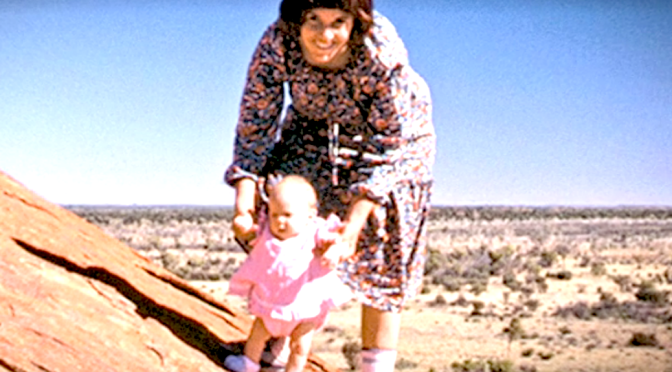
DESERT CHAMELEON Meryl Streep as Lindy Chamberlain in 'A Cry in the Dark' (Photograph by Vivian Zink).
‘DINGO BABY’ Meryl Streep as Lindy Chamberlain in ‘A Cry in the Dark’ (Photos by Vivian Zink).

Can a real-life story be plotted into a dramatic arc?

THE hardest form of plotting is the real-life story. Remember when James Cameron made you forget the Titanic was going to sink? Like or love his movie, Cameron’s masterstroke of ‘real-life’ storytelling created a new benchmark, but his love story also bent the ‘real life rule’ quite a bit by using fictitious characters within a real-life story.

The reason real life is the hardest form of fiction should be obvious – life does not slot easily into a three- or five-act dramatic arc. Producers and publishers don’t like real life – it’s never fast or entertaining enough to put bums on seats, it’s way too random, and it usually needs a bit of tweaking.

Even reality television only feels real – it’s been fictionalised ever since the quiz show hit the small screen.

One of the finest examples of a real-life dramatic arc is Fred Schepisi and Robert Caswell’s adaptation of John Bryson’s long-form work of journalism, Evil Angels, the story of the Chamberlain ‘dingo baby’ case, otherwise known as A Cry in the Dark.

Let’s put the plot through its paces… beware, there are spoilers (yeah I know, you know how the story ends… or do you?).

Exposition – “A dingo’s got the baby”

The exposition must introduce us to the characters and show who is the protagonist (the hero) and the antagonist (the anti-hero, or ‘villain’); and the protagonist must be called to action, posing a question so interesting that we are gripped.

Lindy and Michael Chamberlain (the protagonists) are at their Seventh Day Adventist church in Mount Isa for the christening of their daughter, Azaria, when passing truckers gossip about Adventists over their radios, and the family portrait is showered by their dust, revealing the Australian public’s (the antagonists) wariness of anyone they don’t understand. Michael (Sam Neill) and Lindy (Meryl Streep) leave for a holiday to Uluru (Ayers Rock), and settle in for a barbecue dinner. Lindy puts Azaria to sleep in their tent, and after she returns to the barbecue, another camper, Sally Lowe, hears the baby cry. When Lindy goes to check, she sees a dingo emerge from the tent, finds Azaria missing, and shouts the now infamous line.

Rising Action – “A lie goes around the world while the truth is still putting its boots on”

The rising actions are those the antagonist uses to thwart the protagonist and show us who both of them really are.

The Chamberlains wake to news that Azaria’s body has not been found. The media soon picks-up on the disappearance and stories spread across the Australian public’s TV screens, with an edge of eeriness and mystery. The Chamberlains return home to rebuild their lives, but the media continues its push for information, and Lindy attempts to tell her story, but it backfires as the media disseminates rumours about the family. The Australian public starts its own dialogue about the case, mainly convinced of Lindy’s guilt and the dingo’s innocence. An inquest, which clears the Chamberlains of all guilt in Azaria’s death, seems to resolve the case.

MIKL CURDLER Meryl Streep's portrayal of Lindy Chamberlain saw her on the receiving end of similar hatred.
NUT CRACKER Meryl Streep’s portrayal of Lindy Chamberlain saw her on the receiving end of similar hatred.

Climax – “A face that could crack walnuts”

The climax must be the start of a battle between the protagonist and the antagonist, and a turning point after which there is no going back for either.

Disgruntled Northern Territory police consult forensic experts, who find enough evidence to re-open the case. The Chamberlain’s home is raided and items taken for testing. Witnesses are simultaneously interviewed. The media breaks the story and the Australian public devours the new information with hysteria, focussed on perceptions of Lindy’s demeanour. Lindy is heavily pregnant as the ‘trial of the century’ begins in Darwin. The jury, representatives of the Australian public, ultimately ignores eyewitness accounts in favour of forensic evidence and finds Lindy Chamberlain guilty of murder and her husband Michael an accessory. Lindy is sentenced to life imprisonment. The Australian public celebrates.

Falling Action – “I will not have another dinner party ruined by those people” 

The falling action must play out the battle between the protagonist and the antagonist, allowing one of them to win. The winner defines the piece as a comedy or a tragedy.

Lindy is separated from her family in prison, where she gives birth to a daughter whom she is quickly forced to hand over to Michael, and she disappears from the Australian public’s consciousness while the Chamberlain’s legal team begins the long process of appealing her sentence. Despite the Australian public’s deeply-held conviction that she is guilty, cracks start to appear in the wall of opposition to Lindy. When the unexpected death of a tourist at Uluru leads to the chance discovery of Azaria’s matinee jacket (evidence the prosecutors used to paint Lindy as a liar), Lindy’s is swiftly released from prison after three years. She returns home, a stranger to her new daughter Khalia.

Dénouement – “How important innocence is to innocent people”

The dénouement (‘to untie’) must unravel all the conflict and bring everything to a sense of resolution. In a comedy, the protagonist is better off than when they started. In a tragedy, this is reversed. The big question posed in the exposition must be left answered.

At their church, the Chamberlains are welcomed by a cheering crowd of Adventists, and Lindy speaks about the family’s patience and endurance while the truth about Azaria’s disappearance was eventually revealed. During the applause, Khalia comes to her mother’s side, and the family group which was ripped apart is restored, albeit changed. Outside, a media pack launches itself at the Chamberlains, suggesting that their journey to exoneration is far from over, and Michael underlines the importance of the concept do innocence to innocent people.

WITCH HUNT The Chamberlains pursued into Darwin Court by a media pack.
WITCH HUNT The Chamberlains portrayed by Neill and Streep pursued into Darwin Court by a media pack.

The Verdict

The screenwriters’ decision to portray the entire Australian public as the antagonist was not only genius, it was based on the truth of the Chamberlain’s story, and helped rank the movie amongst the American Film Institute’s best courtroom dramas.

The dramatic arc of A Cry in the Dark hits all the right moments, the most subtle of which is the antagonist’s (the public’s) slow realisation that an error of judgement has been made. In the end, they are defeated by the evidence.

But this win for Lindy Chamberlain cannot be defined as a comedy. This is another reason why producers often avoid real-life stories: they’re hard to define and therefore hard to sell.

In 1988, when this film was released, twenty-four years were yet to pass before the true antagonist of the Chamberlain’s story – the dingo who took Azaria – was acknowledged by the Northern Territory legal system. Before this factual milestone was reached, which acknowledged the reason no body was ever found (Azaria having been consumed by dingoes), the screenwriters of A Cry in the Dark acknowledged that the dingo took not only the baby, but also her story.

WRITE REGARDLESSThat the filmmakers found a way to capture this true tale long before it was over makes A Cry in the Dark one of the best lessons in real-life storytelling.

© Michael Burge, all rights reserved.
An extract from Write, Regardless!