All posts by Michael Burge

Journalist, author, artist

Writer, build your book!

“Get out your favourite books and see how they are formatted.”

ONCE the decision to independently publish has been made, it’s time to enter the more technical phase of publishing. You’re about to transform a manuscript into a book that will endure, a process traditional publishers employ teams of experts to execute. These are the roles you need to manage as you put your book together, and the choices you have.

Will you print or not?

A few years ago, many were predicting the end of the printed book because the stats for eBook sales were rising exponentially; but between 2013 and 2015 they levelled off. Many readers still want to hold a printed book in their hands, but some writers don’t want the extra hassle of formatting and distributing a paperback, and are happy to publish eBooks only. Do your research and know why you’re deciding on one course or the other. I went into profit on the basis of one paperback order from one bibliographic company servicing one major city’s libraries. That cheque paid for all the set up, publishing and launch fees of four titles. Publishing a printed title paid off for me.

Your print is my command!

Not too long ago, independent publishers were faced with a tough choice when having their books printed affordably: Should I print 500, or 1000? Either meant having plenty of spare books around in the garage and giving them away as presents for years, when sales didn’t deplete the printed stock. The good news is those days are over, with print on demand (POD) services. Basically, when a customer orders your book, the system prints one for them. No waste, no storage, no need to give them away. Large tracts of books, both traditionally and independently-published, are now sold POD, especially when ordered online.

Your favourite book

One of the best ways I found to get my head around putting a book together was to analyse my favourite titles, then emulate them. Printed books have a traditional style, with pagination, running headers, and chapter divisions of all kinds based on a standard format with odd numbers on the right-hand page and even numbers on the left. Readers will expect to see your printed book in this format, which applies to fiction and non-fiction, so it’s wise to have very good reasons for deviating from it. Here’s a handy guide to the sections of a book.

How strong is your platform?

Independent publishers need to select an online publishing platform. Some recommend publishing on all of them. I stick with one, which gives me print on demand and international distribution for eBooks and printed books across the full spectrum of sites. I also get access to the largest domestic booksellers in my country. Do your research and find a publishing platform that suits you.

Feeling your fringe benefits

As independent publishing became more accessible, writers’ and publishers’ associations began to form strategic business relationships with online publishing platforms to offer incentives to authors publishing our own work. There are an increasing number of options out there for writers to benefit from significant discounts in exchange for annual membership. The option I chose gives me free uploads on all my eBook and paperback corrections, of which there are always plenty. This has saved me hundreds of dollars, far in excess of the membership fee. The best of these associations also distribute great material about the changing face of independent publishing.

Decoding your ISBN

Used throughout the global book trade, from bibliographic services to high-street bookshops and online book sellers, the International Standard Book Number (ISBN) is a unique identifier for every published book. Generally, they appear in the ‘front matter’ of a book, near the copyright statement, and in the barcode on the back cover. They can be purchased from ISBN services in all major publishing territories; but shop around a little – they are generally more expensive to purchase individually, so think about buying a batch. Remember, no publisher in the world produces just one title, and your eBook and printed editions of the same title will require different ISBNs.

Asserting your copyright 

Many writers worry a lot about copyright, fearing their ideas will be ripped off and plagiarised. Yes, it’s essential to use the copyright symbol in your book’s front matter, but ensure you also assert your moral rights over your work in a separate, one-line statement, then move on.

There are sites that claim to provide free downloads of eBooks. They rarely lead to actual downloads and often spread viruses and malware to the cheapskates who fall for them. If you work out how to prevent the alleged theft of books by AI companies, let us all know; just don’t let any of this stop you publishing!

Scanning your barcodes

Barcodes are nifty shortcut allowing sales people to scan your book and instantly calculate its price, with all information linked to the title’s ISBN. Many publishing platforms supply barcodes for free with your cover template, but they can also be sourced from online suppliers within your country. They’ll ask for your ISBN in order to create a barcode, and like ISBNs they can be purchased more affordably in batches. Some retail sellers, such as supermarkets, require unique in-store barcodes in order to stock your books, which you’ll need to arrange if you want to sell through that channel. You’ll generally pay quite a premium for this service.

Your entitled book

twilight-cover

I have a basic message when it comes to book titles: keep it simple. Titles follow standard patterns, particularly non-fiction, which uses main titles and straplines. For example, Questionable Deeds: Making a stand for equal love has a main title that is lyrical, while the strapline (sometimes called the subheading) is descriptive. Be aware that overly long titles can be prohibitive in catalogues and listings, four to six words maximum is a good standard. There is no copyright on titles. You could, for example, call your book Star Wars, but that name has been Trade Marked for the purposes of creating generations of memorabilia, preventing its use without permission.

Your cover story

The most contentious part of independent publishing is getting the cover right. It’s an incredibly subjective field and unless you’re visually gifted and can operate design software, like Photoshop, it’s best to engage a cover designer. If you’re confident doing it yourself, sites like Canva are very user-friendly and allow you to create a simple eBook cover for free or low cost, following a template. A good rule of thumb is to use one strong image as opposed to multiple, competing images. Check with your publishing platform on what dimensions and resolution they need the cover uploaded at, and work within their thresholds. Very often they’ll ask you to use your title’s ISBN as the file name. When sold online, your book’s cover will appear at thumbnail size, so ensure the title is legible, and the image works in that tiny scale.

Their cover story

MERELY PLAYERS

Covers for printed books are best created using a template that your publishing platform will send you, which will be generated for you based on the number of pages in your book (to gauge the thickness of the spine). Printed covers are achieved using a back-to-front format with the front cover on the right-hand side of the file, ‘wrapping around’ the book right-to-left and printed on one sheet of cardboard stock. Publishing platforms usually require you to provide an ISBN to generate a template, although some platforms will provide you with an ISBN. The same goes for barcodes – don’t buy one until you know if your publishing platform provides them with templates.

Getting your head around word processing

One of the most important considerations when preparing to create a book is to check your word processing software can manage to format and export printed book and eBook files. Generally, two files are needed for every book: (1) An exterior, full-colour cover file; and (2) An interior, black and white file of the pages. For printed books, exterior and interior files are generally both PDFs (‘Portable Document Format’) in which all information is locked into place on each page throughout the document. For eBooks, exterior files are generally PDFs and the interior files are generally ePub files (‘Electronic Publication’) in which all information is fluid depending on what device it’s read on. Printed book files are fixed. EBook files are fluid. Get your head around that difference and you’ll be way ahead.

You’ve been warned about disclaimers!

For decades, published books have borne legal disclaimers protecting the author and publisher from litigation. Generally, fiction and non-fiction need to be identified as such, and this is where writers are wise to ensure privacy is afforded anyone whose story they have written about by changing names, locations etc. For educational books, a disclaimer might be appropriate to protect you from reader expectation about learning outcomes from your work. Disclaimers should not replace a thorough analysis of the legal ramifications of what you publish.

Does your book size matter?

There are several traditional sizes for books offered by publishing platforms – there is no standard and no rules, but making a larger book generally means it will be thin unless your word length can fill it. Some publishers deal with this by using a larger font size to pad the book out. Refer back to your favourite books and use your publishing platform’s printed cover template generator as it will indicate what width the book will be with the font size you have chosen. There’s a bit of guesswork involved initially, but experiment with dimensions and font sizes long before you decide on the final book size. That way, you won’t have to reformat everything from scratch if you change your mind.

Your local bookshop

“You’re the boss, launch when you are ready!”

Is your best friend. Go in and introduce yourself and ask if they stock independently-published titles. They may ask you to manage the ordering and delivery of your titles, or they may be happy to arrange that for themselves, using your book’s ISBN. Work with and support your local bookshop. Think about hosting your book launch there, it can be a win-win for author and bookseller.

Don’t let deadlines kill you

Books take weeks and months to format, proofread, print and distribute. Give yourself plenty of time to achieve this monumental process. Don’t, for example, set your book launch date in stone until you’re 100 per cent sure you can deliver, and so can all the players you’re relying on in the publishing chain. You’re the boss, launch when you are ready!

Back up your files

Start getting into the habit of religiously backing up all your publishing files. Once you’ve done the work on your books, you don’t want to lose it all if your computer fails. I still use a USB memory stick and it works very well.

Recap

write-regardless-cover
BUY NOW

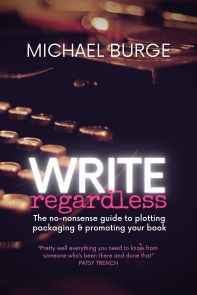
Putting a book together is a major challenge. These basics are just the start of each process, and they’re designed to get you across the major elements to publishing before Write, Regardless! starts on the specifics. Take time to ensure you have the right computer software for creating printed books and eBooks. Research publishing platforms available in your country and if they access the distribution sites you want to sell your books into. Set gentle deadlines for yourself, as this will be a steep learning curve. Get out your favourite books and see how they are formatted. Chances are, you can emulate them.

An extract from Write, Regardless!

© Michael Burge, all rights reserved.

Shake-up on the small screen

THIS week I’ve been back in the cutting room bringing readers the trailer for my new book Merely Players: Acting like Shakespeare really matters.

MERELY PLAYERS COVER PR (2)
BUY NOW 
eBook | Paperback

With his near-universal appeal, William Shakespeare was the start of Merely Players, but he’s by no means the finish.

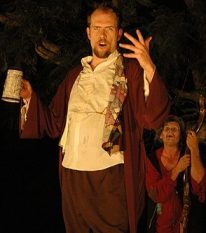
I started writing this story in 2003, and it’s been a labour of love in the true sense of the word. I’ve even delved into the photo album to dig out some old shots of me playing Petruchio in an Acting Factory production of Shakespeare’s The Taming of the Shrew, and thereby hangs a tale…

Merely Players: Acting like Shakespeare really matters is the story of two unconventional players whose lives are linked by the works of the world’s greatest playwright, in a story about acting, ageing, fame and forgetting… just in time for the 400th anniversary of Shakespeare’s death in April. Enjoy!


Ban the Bard if Safe Schools scares you

WESTERNERS have lived through many periods in which extreme Christians distributed anti-gay propaganda and thereby got the ear of authorities, and this month’s spat from Australia’s hard, religious right shows not much has changed in four hundred years.

It’s an old war, that between conservatives wanting to put the brakes on equality, and progressives trying to touch the accelerator.

During the reign of James I (1603-1625) in England, the fires of Puritanism were well on their way to blazing a lasting wound through societies in many continents, burning until well after the Salem Witch Trials in New England at the end of the century.

The Puritans were antsy about anything showy. They railed against the Elizabethan and Jacobean playhouses as much as they did the Roman Catholic church, with its theatre-like ceremonies and costumes.

One of their main bugbears was gender. At its very core, Puritanism called for men to be men and women to be women. Any variation was seen as a threat to stable society.

So it’s fascinating, and a little alarming, to see modern-day politicians using similar fear-mongering language.

When Senator Cory Bernardi complains about the very idea that children role-play in an attempt to teach them empathy for same sex-attracted teenagers in the Safe Schools program, he could be accused of overreacting.

When columnists like News Corp’s Angela Shanahan labels Safe Schools a “radical form of sex education that promotes a fluid gender ideology,” she’s probably venting her spleen a bit much.

prynn-sm
PURITAN POLEMIC Cover of William Prynne’s Histrio-Mastix (1633).

But when these and others, like MP George Christensen and Lyle Shelton (MD of the Australian Christian Lobby) deliberately obfuscate the program, muddying its concepts with pornography and what they label “disturbing” behaviours like penis tucking and breast-binding, the pack invective calls to mind one of the great forefathers of postmodern gender panic, William Prynne (1600-1669).

Prynne encapsulated every Puritan complaint of the millennium in his polemic Histrio-mastix: The Player’s Scourge, published in 1633 as an argument to close the playhouses of Britain.

“…sundry common Actors do usually once a day, at leastwise twice or thrice a week, attire themselves in women’s array to act their female parts; yea, they make a daily practice of it to put on women’s attire, it being inseparably incident to their lewd profession,” is just one mild quote from this extremist manifesto.

And it worked. By the English Civil War, the Puritans got their way and Britain’s playhouses were closed in 1642.

But one popular publication survived this century of censorship. First printed in 1623, and hated by the Puritans, the complete works of William Shakespeare was firmly entrenched in the Australian school syllabus decades ago.

So if the Safe Schools program is questionable to neo-Puritans like Bernardi et al., let’s put Shakespeare to the test and see if he should stay on the curriculum.

Well, on gender fluidity, Shakespeare gets knocked out straight away. Cross-dressing takes place in one-fifth of his works. Enduring crowd pleasers such as Twelfth Night, As You Like It and The Merchant of Venice see the playwright’s heroines in male attire for the bulk of the play, masquerading as young men who find themselves in comic sticky situations with heroes who are fooled into homoerotic attractions to them.

Twelfth-Nigh-portfolio
GIRL ON GIRL Lady Olivia wooing Viola in ‘Twelfth Night’.

Viola, the protagonist of Twelfth Night, even goes so far as to ask a sailor to secretly loan her clothes and present her to the local Duke as a eunuch.

Presumably this entails binding any breasts that might give her disguise away once Viola discards her “women’s weeds”.

When learning about the early production of Shakespeare’s plays, students will invariably come across a great reality: all the female roles were originally played by men.

But the end of that tradition in the 1660s didn’t end the fun. For centuries, whenever women played Viola, and these actresses dressed as a young man and encountered Lady Olivia who falls for ‘him’, endless girl-on-girl innuendo has entertained many a theatre and classroom.

Yet we do not hear the neo-Puritans within government crowing about these ‘gender-bending’ Shakespeare texts on the school curriculum, and no complaints about the 80,000 school students a year exposed to Shakespeare at the hands of the Bell Shakespeare Company, in receipt of $1.28 million in federal funding announced by George Brandis in the 2015 budget.

The neo-Puritans had their chance to rid Australian schools of Shakespeare, as part of a searching and robust review into the national curriculum by the Abbott government, reported under Turnbull in January, 2016.

But the Bard survived: “…drama, its different varieties, in tragedy, comedy, romance and historical plays, from Shakespeare (as a recurring presence) to the present will be represented,” the report confirmed.

I found one submission that called for more Shakespeare, but none that alerted the inquiry to the possibility that students might encounter all manner of sexual references in Shakespeare’s plays.

tumblr_noepfqqP7s1u44afdo1_540
SEXY SCENE Mel Gibson and Glenn Close in ‘Hamlet’ (1991)

“To live in the rank sweat of an enseamèd bed, stewed in corruption, honeying and making love over the nasty sty,” says Hamlet to his mother, accusing her of adultery and not washing the sheets.

“Come, you spirits that tend on mortal thoughts, unsex me here, and fill me from the crown to the toe top-full of direst cruelty,” prays Lady Macbeth to deities that are not the Christian God, explicitly requesting gender reassignment and a nasty streak.

Like most of my generation, I studied Hamlet and Macbeth at school and was taken to many productions. We read and role-played scenes from Shakespeare, but we were left to interpret the diversity for ourselves, probably out of prudishness more than any Puritanism.

“All Australian students deserve access to a world-class curriculum that encourages diversity and which allows schools flexibility over how it is taught,” the curriculum inquiry website leads off with, like an over-arching mission statement.

With Safe Schools now under serious attack, it seems the very meaning of ‘diversity’ and ‘flexibility’ is also up for grabs.

But William Shakespeare, creator of more than 1700 words in the English language, and many a figure of speech, left us with a saying that can be used when answering over-zealous critics of sexual diversity.

Play | COMING SOON
BUY NOW
eBook | Paperback

It’s a line from Hamlet, perfect for when someone vehemently attempts to convince about something where the opposite is true.

About your trashing of LGBTI dignity, Cory, George, Lyle and your chums, I say: “The lady doth protest too much, methinks.”

Michael’s literary non-fiction debut Merely Players: Acting like Shakespeare really matters is available in paperback and as an eBook. 

© Michael Burge, all rights reserved. 

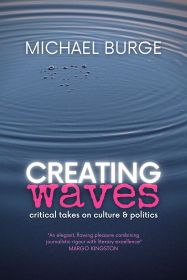
This article appears in Michael’s eBook Creating Waves: Critical takes on culture and politics.